
What if the biggest threat to your home comfort isn’t the 40 degree January heat, but the invisible salt spray drifting off the Pacific Ocean? Most Sydney homeowners expect their cooling to work perfectly when they need it, yet many are frustrated by electricity prices that rose by over 12% in the last year and outdoor units that corrode long before their time. It’s exhausting to try and navigate confusing technical jargon when you just want a reliable way to keep your family comfortable without overpaying. We understand that you want peace of mind, not a high-pressure sales pitch.
As a local family-owned team, we’ve designed this guide to help you choose a split system air conditioning setup that actually thrives in our unique coastal environment while keeping your running costs at a minimum. You don’t have to be an engineer to get the best results for your home. We’ll show you how to identify the most efficient models for 2026 and how to protect your investment from the harsh Sydney air. You’ll discover the exact brands that offer 10 plus years of reliability and how to avoid the common installation mistakes that lead to noisy operation and expensive repairs later on.
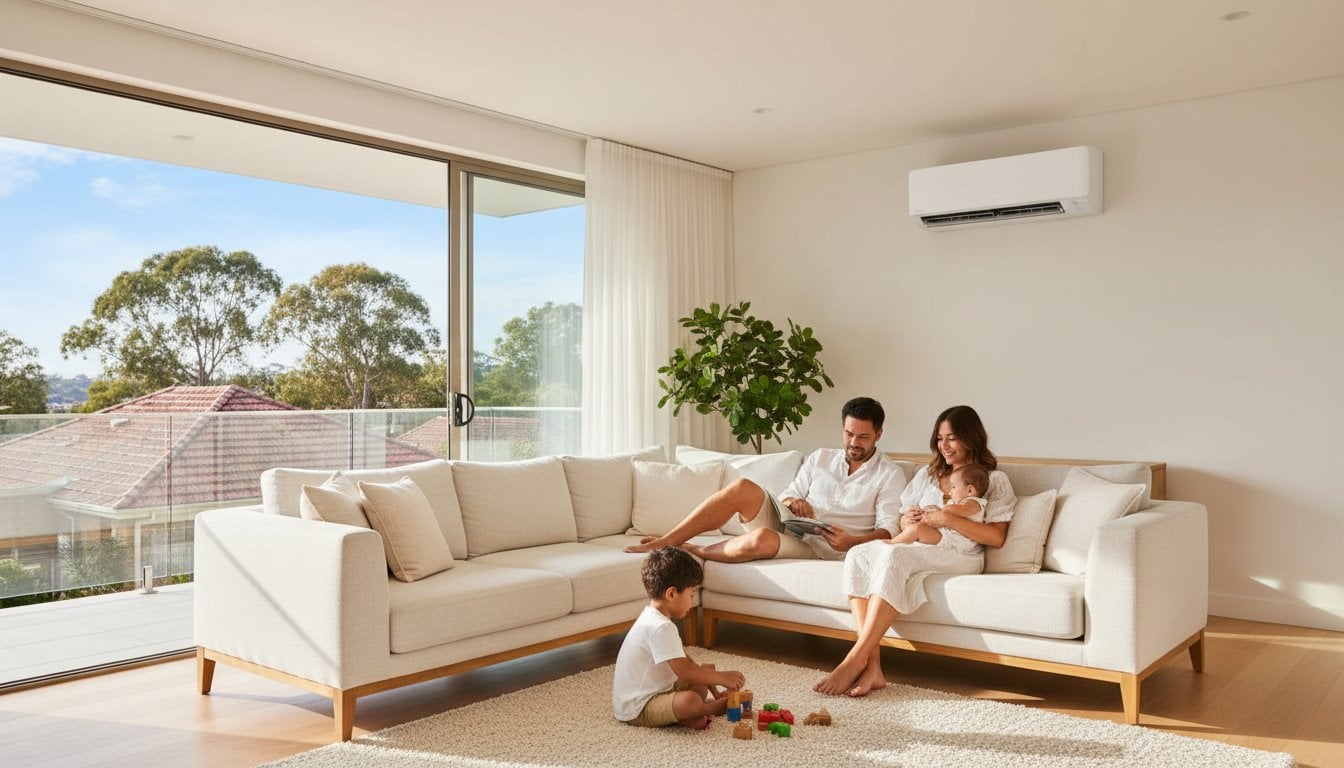
Choosing the right cooling for your home shouldn’t be a guessing game. In Sydney, we see a massive preference for split system air conditioning because it offers a practical balance of power and price. At its core, a split system consists of two separate parts: an indoor unit that stays on your wall and an outdoor compressor that does the heavy lifting. This design keeps the noise outside, allowing you to enjoy a quiet environment while you sleep or work.
For residents in high-density areas like Pyrmont or Parramatta, these units are the gold standard. They’re perfect for apartments where space is tight or for single rooms in larger houses that need targeted cooling. If you are looking for comprehensive Air conditioning Sydney solutions, understanding how these systems operate is the first step toward lasting comfort. Our team at PenAir has installed thousands of these units, and we’ve seen how modern reverse cycle technology has changed the game. It allows one system to provide crisp cooling in January and efficient heating in July, making it a year-round investment for your family.
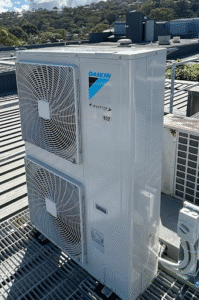
The indoor wall-mounted unit is designed to distribute air evenly across the room using motorized louvres. It operates at decibel levels as low as 19dB, which is quieter than a soft whisper. Outside, the compressor facilitates the heat exchange process by pumping refrigerant through copper pipes. To understand the physics behind this, you can read more about How air conditioning works to see how heat is moved rather than just created. By 2026, most leading split system models utilize R-32 or next-generation low-GWP refrigerants to maximize thermal transfer while reducing environmental impact.
Sydney’s weather is famously unpredictable. When temperatures in Western Sydney suburbs like Penrith climb above 40°C, a high-efficiency split system air conditioning unit is essential to maintain a liveable indoor temperature. These systems are built to handle extreme heat without failing. If you live closer to the coast, you’ll benefit from the “Dry” mode. This feature removes excess moisture from the air, which is vital on those 80% humidity days where the air feels heavy. A quality split system can drop a room’s temperature to a comfortable level within 10 minutes of arriving home from a humid commute.
Selecting the correct size for your split system air conditioning is the most critical step in ensuring long-term comfort and manageable energy bills. Many homeowners make the mistake of guessing capacity based on floor space alone, but factors like ceiling height, window orientation, and insulation quality play massive roles. Choosing the Right Capacity involves calculating the volume of the room and understanding how heat loads affect your specific Sydney suburb. An undersized unit will run constantly at maximum speed, failing to reach the target temperature while drastically shortening the lifespan of the compressor. On the other hand, an oversized unit will “short-cycle,” turning on and off too frequently. This prevents the system from properly dehumidifying the air, leaving your living room feeling cold but clammy.
To help you compare models, look closely at the Zoned Energy Rating Labels (ZERL) introduced across Australia. For Sydney residents, the “Mixed” climate zone (represented by the yellow map section) provides the most accurate estimate of annual energy use. By 2026, we expect to see even more systems equipped with advanced motion sensors and “Intelligent Eye” technology. These features detect when a room is empty for more than 20 minutes and automatically adjust the set point to save power, potentially reducing cooling costs by 20% in high-traffic households.
The transition from old fixed-speed technology to modern inverters has revolutionized home climate control. While a fixed-speed motor is either 100% on or completely off, an inverter functions like the accelerator on a car. It slows down or speeds up to maintain a precise temperature. This fluid control allows inverter systems to save up to 30% on power consumption compared to non-inverter models from a decade ago.
We frequently recommend Daikin inverters for Sydney homes because their proprietary “Swing Compressor” technology reduces friction and vibration. This makes them exceptionally reliable during the fluctuating temperatures we see between the coast and Western Sydney. Investing in a high-quality inverter might carry a slightly higher upfront cost, but the reduction in your quarterly electricity bill usually covers that gap within the first three years of operation. If you need help calculating the exact requirements for your floor plan, our family-owned team can provide a professional capacity assessment to ensure you get the perfect fit.
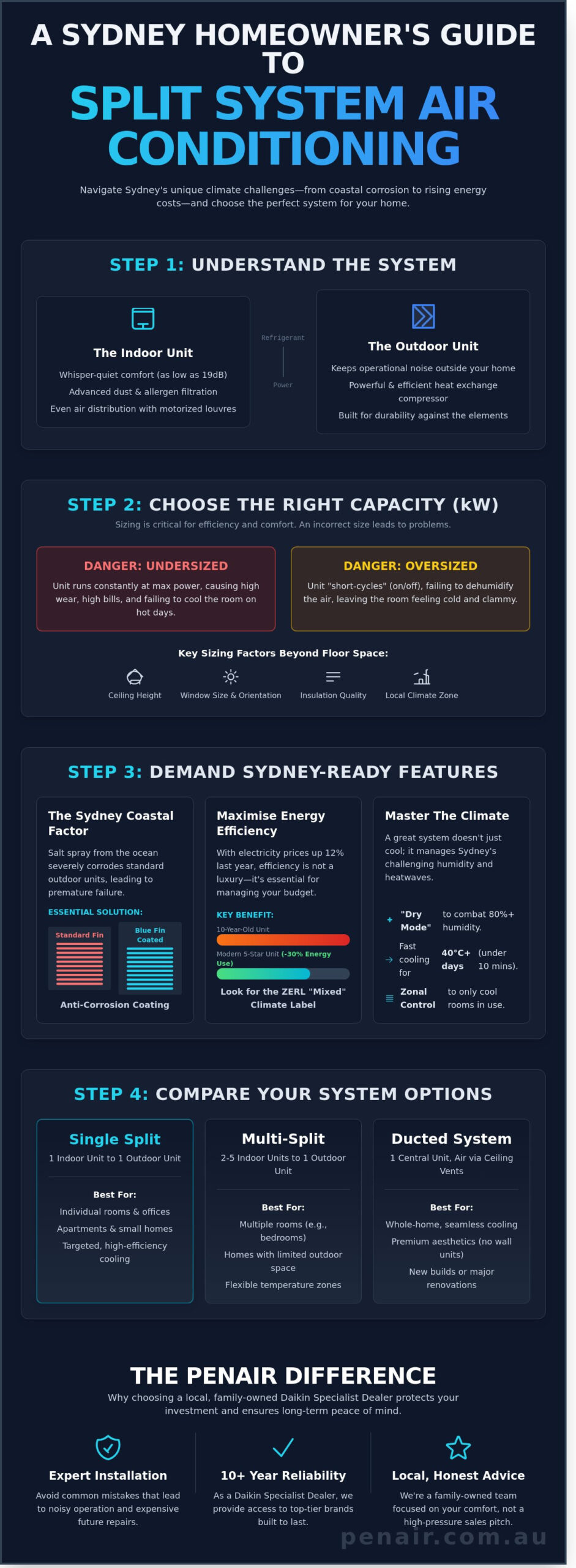
Choosing the right setup depends on your property layout and how you use your living spaces. A single split system air conditioning unit is the most affordable entry point for Sydney residents. These units are ideal for cooling a specific room, such as a master bedroom or a home office. Installation is typically completed within three to five hours, making it a low-stress option for quick comfort. We often suggest this path for renters or renovators who need an efficient solution without the complexity of major structural changes.
For those managing multiple rooms, the multi-split system provides a versatile middle ground. Instead of cluttering your exterior with several compressors, you can connect up to five indoor units to a single outdoor component. This design helps manage the environmental impact of air conditioning by allowing you to shut off units in empty rooms, which significantly reduces unnecessary energy consumption. It’s a smart way to maintain a comfortable home while keeping a close eye on your electricity bills.
Space is a premium commodity in Northern Beaches apartments and modern Sydney townhouses. A multi-split system is a lifesaver when balcony space is limited. You don’t have to sacrifice your outdoor entertaining area to a row of noisy fans. Each indoor unit operates independently, so your teenager can keep their bedroom at 20°C while the lounge room stays at a steady 24°C. You should be aware of technical limitations, though. Total pipe runs often have a maximum length of 75 metres, and the outdoor unit shares its total capacity. If every indoor unit runs at full blast simultaneously, the cooling power per room may slightly decrease.
If you’re looking for whole-home comfort, ducted systems are the gold standard. Unlike the visible wall-mounted split system air conditioning units, ducted systems use discreet vents in the ceiling or floor. This choice is primarily about aesthetics and seamless integration. For Sydney real estate, a high-quality ducted system is a significant asset. Local property experts often note that central climate control can increase a home’s resale value by A$15,000 to A$25,000. While the initial investment is higher, the ability to cool every corner of a large family home with one touch is a luxury that many homeowners find indispensable. We can help you weigh these costs against your long-term property goals to ensure you make the right investment for your family’s future.
Living in a coastal city like Sydney brings specific challenges for your home climate control. If you reside within 5 kilometers of the ocean, salt air corrosion is the primary threat to your unit’s longevity. This “silent killer” causes aluminum fins to oxidize and crumble, which forces the compressor to work harder and eventually fail. Our team specializes in split system installation that accounts for these local conditions. We prioritize units equipped with Blue Fin or Gold Fin anti-corrosion coatings. These epoxy-based layers protect the heat exchanger from salt and moisture, often extending the life of your unit by 3 to 5 years compared to unprotected models.
It’s vital to remember that in New South Wales, DIY installation isn’t just risky; it’s illegal. Under the Home Building Act 1989, only licensed technicians can handle refrigerants and electrical wiring. Attempting a self-install voids your manufacturer warranty and can lead to fines exceeding A$5,000 for individuals. As a family-owned business, we focus on safety and compliance, ensuring every split system air conditioning unit we install meets Australian Standard AS/NZS 3000. This professional approach guarantees that your system is efficient, legal, and safe for your family.
We don’t just bolt units to the wall; we find the thermal “sweet spot.” For indoor units, we avoid corners or “dead spots” where air gets trapped. We position the unit centrally to ensure even distribution across the room. Outside, your compressor needs room to breathe. We maintain a minimum clearance of 300mm to prevent the unit from recycling its own hot air. Noise is another critical factor. Sydney councils typically require that outdoor units don’t exceed 5dB(A) above the background noise level at a neighbor’s window. We select locations that minimize vibration and sound travel to keep you and your neighbors happy.
Our process begins with a thorough site audit. We check your electrical switchboard to ensure it can handle the additional load, as older Sydney homes often require a dedicated circuit. Most residents opt for a “back-to-back” install, where the indoor and outdoor units sit on the same wall, keeping pipe runs under 3 meters. For more complex layouts, we manage extended piping and drainage solutions. The final step is commissioning, where we use a vacuum pump to remove moisture from the copper lines. This precision ensures your split system air conditioning operates at optimal pressure from day one.
Ready to upgrade your home comfort with a system built for the Sydney climate? Contact our expert team today to book your professional installation and enjoy quality service you can trust.
PenAir has served as a trusted name in the Sydney community since 1999. As a family-owned and operated business, we’ve spent over 25 years building relationships based on transparency and technical excellence. We understand that your home is your sanctuary. Our team doesn’t just install hardware; we provide a climate solution tailored to the unique coastal and suburban conditions of the Northern Beaches and greater Sydney area. Being an Authorised Daikin Specialist Dealer allows us to offer specialized knowledge and exclusive product ranges that general contractors simply cannot access.
Our commitment to you extends far beyond the initial installation of your split system air conditioning. We believe in the longevity of your investment. This is why we provide comprehensive post-installation support and structured recurring maintenance programs. Regular servicing can improve energy efficiency by up to 15 percent and helps prevent the 40 percent of mechanical failures that stem from dust accumulation and neglect. We stay local to ensure we can reach your doorstep quickly whenever you need us.
Daikin remains our top recommendation because they design products specifically for the harsh Australian climate. Their Streamer Technology is a standout feature, using high-speed electrons to decompose 99.9 percent of bacteria, viruses, and allergens. This provides a level of air purification that is essential for families concerned about indoor air quality. The upcoming 2026 models are already generating excitement with built-in Wi-Fi and advanced smart home integration, allowing you to control your home temperature from your smartphone with ease.
We pride ourselves on a “no-pressure” consultative sales process. We won’t try to sell you the most expensive unit on the shelf; we recommend the one that fits your room’s cubic meterage and your family’s lifestyle. Every one of our technicians is fully licensed and ARC Tick certified. This certification is your guarantee that we handle refrigerants responsibly and meet all Australian environmental and safety regulations. We treat your home with respect, ensuring a clean and tidy workspace from start to finish.
Ready to upgrade your home comfort? You can book your Sydney split system air conditioning consultation today by calling our friendly local team. We’ll provide a clear, detailed quote and help you choose a system that delivers reliable cooling for years to come. Experience the difference that 25 years of local expertise makes for your family.
Choosing the perfect split system air conditioning involves more than just picking a brand. It requires a precise understanding of Sydney’s coastal conditions and your specific floor plan. We’ve highlighted how decoding kW ratings ensures you aren’t overpaying for energy, while selecting specialized units protects your investment from the corrosive salt air common in the Northern Beaches and North Shore. Since 1999, PenAir has operated as a family-owned business dedicated to these local communities. We take pride in being an Authorised Daikin Specialist Dealer, offering you access to industry-leading technology backed by over 25 years of hands-on expertise. Our team focuses on providing a consultative experience rather than a sales pitch, so you feel confident that your family’s comfort is in capable hands. Don’t settle for a one-size-fits-all approach when you can have a system tailored to your lifestyle by local experts who care about the details. We’re ready to help you create a sanctuary that stays cool all summer and warm throughout the winter months.
Request a Free Quote from PenAir’s Sydney Specialists
We look forward to helping you find the ideal climate solution for your home soon.
It costs between A$0.09 and A$0.15 per hour to run a 5-star energy-rated 2.5kW split system in Sydney. These figures are based on current IPART NSW electricity price averages of A$0.30 per kWh. Larger 7kW units for living areas typically cost between A$0.40 and A$0.60 per hour. Choosing a high-efficiency split system air conditioning unit can reduce your annual cooling bill by up to 30% compared to older, non-inverter models.
You should service your split system every 6 to 12 months if you live in coastal areas like the Northern Beaches. Salt spray and high humidity increase the risk of corrosion on outdoor condenser coils. Our team recommends a professional check-up before the summer peak to ensure the anti-corrosion coatings are intact. Regular maintenance prevents the 15% efficiency drop often seen in neglected coastal units.
Yes, a reverse cycle split system air conditioning unit provides both cooling and heating for your home. These systems are highly efficient, often delivering 3kW to 4kW of heat for every 1kW of electricity consumed. This makes them up to 400% more efficient than traditional electric plug-in heaters. Our family-owned business installs many of these units in Sydney to provide year-round comfort during chilly July nights and humid January afternoons.
Most residential installations fall under “Exempt Development” and don’t require formal council approval if they meet specific noise and placement criteria. Under the NSW State Environmental Planning Policy, the outdoor unit must be at least 450mm from the boundary and not exceed 5 decibels above background noise at the property line. If you live in a heritage-listed building or a strata complex, you’ll need to check your specific bylaws first.
A modern Daikin split system typically lasts between 10 and 15 years with regular professional maintenance. Daikin is a premium brand we trust because their units feature advanced swing compressors and high-quality internal components built for Australian conditions. While the standard manufacturer warranty is 5 years, many Sydney homeowners find their systems remain reliable well beyond the decade mark. We’ve seen well-maintained units reach 18 years of service in stable environments.
A 2.5kW unit is the ideal size for a standard Sydney bedroom measuring up to 20 square metres. Installing a unit that’s correctly sized prevents “short-cycling,” where the system turns on and off too frequently and wastes energy. If your bedroom has large west-facing windows or poor insulation, our experts might suggest a 3.5kW model instead. We always calculate the specific heat load of your room to ensure you get the most efficient performance.
A split system refers to the physical design of having one indoor unit and one outdoor compressor. A reverse cycle air conditioner refers to the technology that allows the unit to both heat and cool. Most modern split systems sold in Australia are reverse cycle by default. This means you’re getting a versatile 2-in-1 climate control solution that keeps your family comfortable regardless of the season or the unpredictable Sydney weather.
A standard back-to-back installation usually takes between 3 and 5 hours to complete. This timeframe includes mounting the units, connecting the refrigeration pipework, and testing the system for electrical safety. More complex jobs, such as those requiring internal wall piping or multi-storey access, can take a full day. Our professional team works efficiently to minimize disruption to your daily routine while ensuring every connection meets Australian Standards.