
Last February, a family in Cronulla realized their three separate outdoor units were not only eyesores but were also struggling against the harsh salt air and rising electricity prices. You likely agree that maintaining a comfortable home shouldn’t mean cluttering your backyard or paying to cool rooms you aren’t even using. It’s a common struggle for Sydney homeowners who want efficient climate control without the bulky footprint of multiple condensers. This guide shows how a modern aircon multi split system provides tailored comfort for every corner of your home while saving valuable outdoor space and reducing your monthly bills.
As we head into 2026, you’ll discover how the newest multi-head models can reduce cooling-related energy consumption by up to 30 percent compared to older, non-inverter configurations. We will walk you through the benefits of individual room temperature control, the importance of choosing corrosion-resistant technology for coastal properties, and how our family-owned team ensures a reliable installation. By the end of this guide, you’ll have a clear roadmap to a quieter, more efficient home that keeps every family member happy while standing up to the unique demands of the Sydney climate.
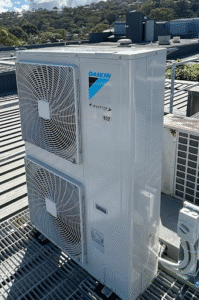
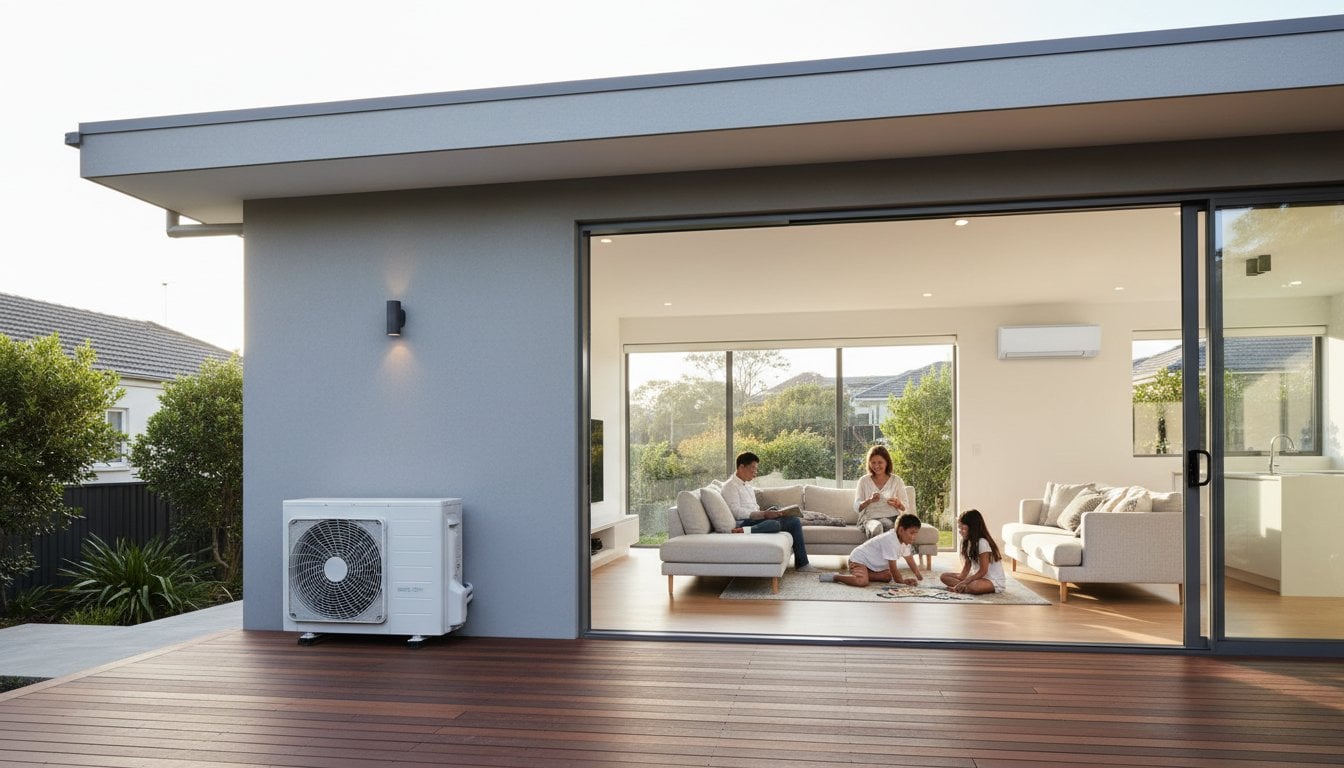
As we look toward the cooling requirements of 2026, many Sydney residents are moving away from bulky traditional setups that clutter their outdoor spaces. An aircon multi split system consists of one powerful outdoor condenser unit linked to as many as five or six individual indoor units. This configuration allows you to cool or heat separate rooms without the need for extensive ductwork or multiple outdoor units taking up your garden space. Our team at Pen Air sees this as the ultimate solution for local homes where every square metre counts.
In suburbs like Surry Hills or Balmain, where block sizes often sit below 250 square metres, space is at a premium. We frequently help homeowners navigate strict strata regulations that limit where outdoor equipment can be installed. By using a single condenser, you preserve your home’s aesthetic appeal and keep your balcony or side-passage clear for actual use. It’s a practical choice that doesn’t compromise on performance, ensuring your home remains a sanctuary during those humid January afternoons.
The system relies on high-grade refrigerant piping to connect the central outdoor unit to diverse indoor options. You aren’t locked into one style of head for the whole house. We often install a sleek wall-mounted unit in the master bedroom while using a low-profile floor console in the lounge or a discreet ceiling cassette in the kitchen. In 2026 engineering, the diversity factor refers to the system’s ability to intelligently distribute cooling capacity across different rooms based on real-time demand, allowing the total capacity of indoor units to exceed the outdoor unit’s nominal rating by up to 130%.
The biggest driver for this shift is the elimination of “condenser clutter.” Instead of five separate units buzzing on your patio, you have one quiet, efficient machine. This is vital for meeting 2026 Australian energy efficiency standards, as modern inverter technology allows the system to slow down once your desired temperature is reached. It avoids the energy spikes of older on-off models that used to drive up quarterly bills.
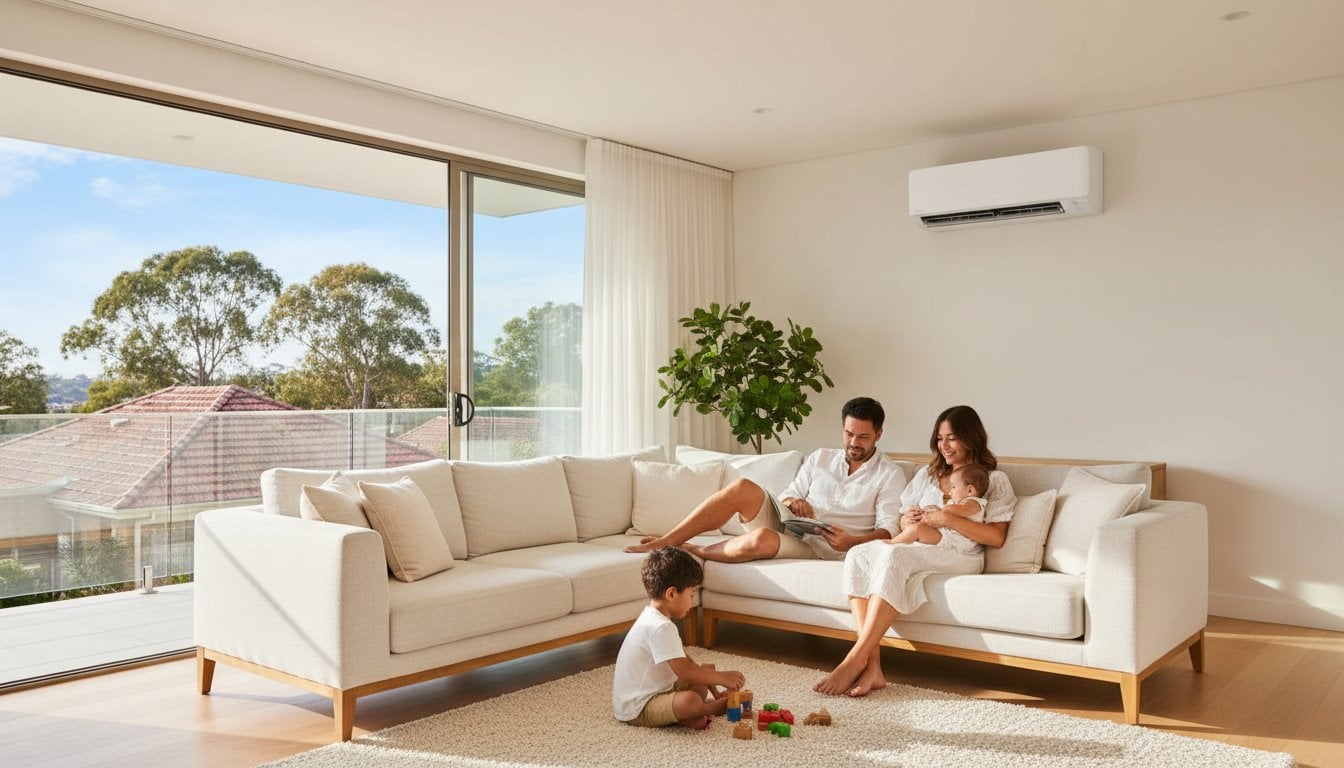
Modern families also demand “Zoned Comfort.” We know that a teenager studying in one room might want it at 22 degrees, while the living area stays at 24. An aircon multi split system gives you that granular control. It ensures you only pay to cool the rooms you’re actually using, which is a win for both your comfort and your electricity bill. We take pride in helping our neighbours find the most reliable, energy-efficient path to a comfortable home through honest advice and quality craftsmanship.
At the heart of every modern aircon multi split system is the DC Inverter compressor. Unlike older fixed-speed units that operate like a light switch, either 100% on or completely off, an inverter works more like a dimmer switch. Our team at Pen Air often explains to Sydney homeowners that this single outdoor motor intelligently adjusts its speed based on how many indoor units are running. If you’re only cooling the master bedroom at night, the compressor sips a fraction of the power it uses when the whole family is home on a 35°C Saturday afternoon.
Precision cooling relies on the distribution of R32 refrigerant. This gas travels through independent copper liquid and suction lines to each room. The Technical Advantage of Multi-Split Systems lies in this ability to deliver exact cooling loads without the energy loss typically found in large duct networks. As Daikin Specialist Dealers, we prioritize high-static pressure condensers because they’re designed to handle the restricted airflow often found in narrow Sydney side-passages, ensuring the system doesn’t overheat during a mid-January heatwave.
The biggest lifestyle shift for our customers is the move away from “all or nothing” cooling. Each indoor head unit features its own thermostat and smart sensors. Modern Daikin heads even utilize “human-eye” technology, which detects movement in a room and redirects airflow away from people to prevent cold drafts. You can set the nursery to a gentle 24°C while the home office stays a crisp 20°C. Most systems we install in 2026 integrate directly with Sydney smart home hubs via Wi-Fi, allowing you to pre-cool your living room from your phone before you leave the office.
In NSW, electricity prices make efficiency a top priority for every household. Multi-split systems frequently achieve higher Star Ratings than older ducted counterparts because they don’t lose conditioned air through leaky roof spaces. If your current quarterly summer electricity bill is roughly A$750, upgrading an aging system can often reduce the cooling portion of that bill by up to 30%. We find that the average Sydney family saves significantly by only conditioning the rooms they’re actually using. Inverter technology reduces peak power draw by eliminating the heavy electrical spikes caused by traditional motors cycling on and off. If you want to see how these savings apply to your specific floor plan, our professional installation team can provide a detailed efficiency assessment during a site visit.
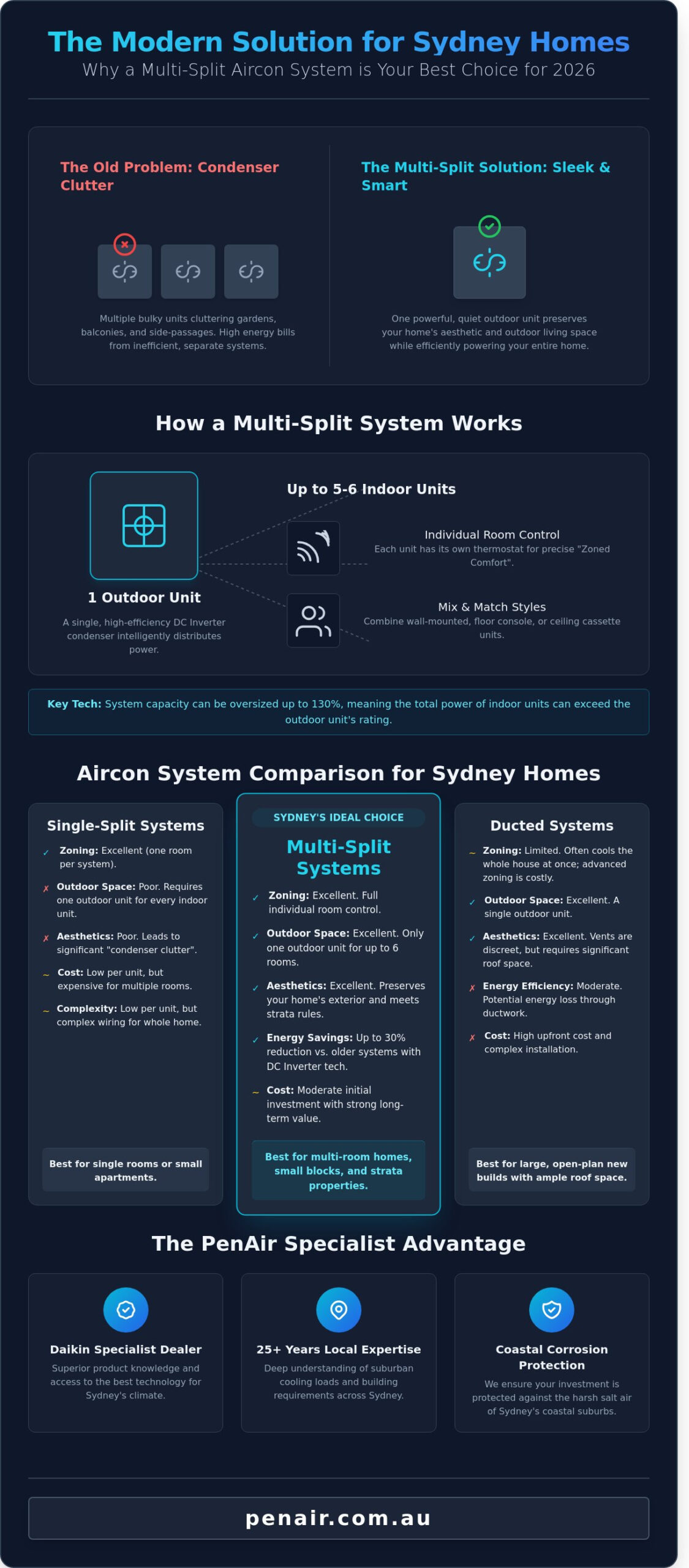
Choosing the right cooling setup depends heavily on your specific Sydney property type. While a ducted system offers a seamless look, it requires significant ceiling voids that many older homes simply don’t have. An aircon multi split system bridges the gap by providing multi-room comfort without the need for extensive ductwork. We often see homeowners weigh these options based on their immediate budget versus long-term lifestyle needs. A comprehensive Sydney HVAC System Comparison shows that while ducted systems are the gold standard for new builds, multi-splits offer 15% to 20% more flexibility for existing structures. We focus on finding the balance between your home’s architectural limits and your family’s cooling demands.
The “No Roof Space” dilemma is a reality for many of our clients in Sydney terrace houses or modern flat-roofed apartments. If your home lacks a 600mm crawl space in the ceiling, a ducted installation is physically impossible. Multi-split systems solve this by using small refrigerant pipes that fit into tight wall cavities. They’re also a favorite for North Sydney apartment owners dealing with strict Strata committees. Getting approval for one outdoor unit is significantly faster than requesting multiple condenser locations. If you’re planning a staged renovation, we can install the outdoor unit now and add indoor heads as you finish your home extension over the next two years.
Maintenance efficiency is the biggest winner here. Servicing one outdoor compressor is faster and more cost-effective than maintaining four separate units scattered around your property. We also consider the visual clutter in your outdoor living areas. Sydney gardens and balconies are premium spaces; you don’t want them crowded with a row of noisy metal boxes. A single aircon multi split system condenser keeps your backyard quiet and tidy. From a technical standpoint, the electrical requirements are simpler too. Running one dedicated 32-amp circuit for a multi-split is often less invasive than installing four separate 10-amp or 15-amp circuits across different areas of your switchboard. This reduces the labor time our team spends on your electrical upgrades, keeping your installation day smooth and organized.
Installing an aircon multi split system in a Sydney home involves more than just mounting units on walls. It requires a strategic approach to handle our city’s humidity and temperature swings. Our family-owned team follows a five-step process to ensure your investment provides reliable comfort for years to come.
If you live within 5 kilometers of the coast, salt-air corrosion is your system’s primary enemy. Salt spray can eat through standard aluminum fins in less than 36 months, leading to gas leaks and total failure. For these homes, we recommend “Blue Fin” or “Gold Fin” anti-corrosion coatings. These epoxy layers protect the heat exchanger from salt and moisture. We also strategically place units on the sheltered side of the property to block prevailing northeasterly winds. Regular maintenance, including a simple freshwater rinse of the outdoor coil every 3 months, can add 5 years to your system’s lifespan.
Many homeowners think a larger unit is a safer bet, but an oversized system is actually less efficient. When a unit is too powerful for the room, it reaches the target temperature too quickly and shuts off. This “short-cycling” prevents the system from properly dehumidifying the air, leaving your home feeling cold but damp. We carefully match kW capacity to your room volume and window orientation. For example, a north-facing Sydney lounge room with large glass doors requires significantly more cooling power than a shaded south-facing bedroom. Our experts use precise data from a site audit to find the perfect capacity for your specific floor plan.
Ready to ensure your home stays cool and efficient through the next decade? Our team provides the local expertise you need for a perfect fit. Book a professional site audit with PenAir today to get started on your custom climate solution.
We’ve spent over 25 years building a reputation as a family-owned business that cares about the comfort of Sydney families. Our team doesn’t just install units; we design climate solutions that last. Being a Daikin Specialist Dealer gives us a significant advantage, as it allows us to provide our customers with exclusive access to premium models and extended warranty support that standard retailers simply can’t offer. This partnership ensures your aircon multi split system is backed by the best technology and the most reliable after-sales care in Australia.
Our “Quality Service You Can Trust” philosophy is the backbone of everything we do. We manage the entire lifecycle of your installation, from the first transparent quote to the final commissioning of the system. We don’t believe in cutting corners. Our technicians follow a rigorous checklist to ensure every connection is secure and every setting is optimized for the Sydney climate. To protect your investment, we offer comprehensive maintenance plans that prevent unexpected breakdowns and keep your energy bills low for years to come.
Sydney homes present unique challenges, from coastal corrosion on the Northern Beaches to the strict electrical requirements of older properties in the North Shore. Based in Warriewood, we have a deep understanding of these local variables. Our family-led team takes a consultative, no-pressure approach. We listen to your needs rather than pushing the most expensive hardware. In March 2024, we successfully completed a complex installation in a restricted strata building in Manly. We navigated tight space constraints and noise regulations to install a high-efficiency system that served four separate rooms without disrupting the building’s aesthetic or the neighbors’ peace.
The PenAir process is built on transparency and technical precision. We provide expert design services to ensure your aircon multi split system is perfectly sized for your home’s layout, preventing the common mistake of over-powering or under-powering a space. We invite you to book a detailed site audit for your Northern Beaches or North Shore property. During this visit, we assess your switchboard capacity and identify the most efficient locations for your indoor and outdoor units. You’ll receive a clear, fixed-price quote with no hidden surprises.
Ready to upgrade your home comfort with a team that values quality and community? Don’t leave your climate control to chance.
Choosing an aircon multi split system ensures your home stays cool during sweltering Sydney summers and warm throughout the crisp winters. This technology allows you to power up to five indoor units from a single outdoor compressor, saving valuable backyard space and reducing your energy footprint. Because these systems offer individual room control, you’ll stop wasting money on cooling empty spaces. Since 1999, PenAir has operated as a family-owned business dedicated to local comfort. We are an Authorised Daikin Specialist Dealer, meaning our fully licensed and insured Sydney technicians have the specific expertise to protect your investment against coastal corrosion and high humidity levels. We pride ourselves on providing honest advice and professional craftsmanship that stands the test of time. It’s time to stop compromising on your indoor climate and start enjoying a home that adapts to your needs.
Book a Free In-Home Consultation with our Sydney Experts
We look forward to helping you create the perfect atmosphere for your family to enjoy for years to come.
You cannot connect different brands of indoor units to a single outdoor unit because each manufacturer uses proprietary communication protocols. For example, a Daikin indoor unit won’t communicate with a Mitsubishi Electric outdoor compressor. To ensure your aircon multi split system operates correctly, all components must belong to the same brand and series. Our team ensures compatibility by matching specific model numbers during the design phase.
Most residential multi-split outdoor units support between 2 and 5 indoor units. Specialized high-capacity models can accommodate up to 9 separate heads from a single compressor. The exact number depends on the total kilowatt capacity of the outdoor unit. We calculate the cooling load for each room to ensure the system handles 40-degree Sydney summer days without losing efficiency or straining the hardware.
If the outdoor unit fails, all connected indoor units will stop functioning until the repair is complete. This is the primary trade-off compared to having several individual split systems. Because the compressor is the heart of the system, a mechanical failure there affects every room. We recommend regular maintenance to prevent these outages, especially before the peak heat hits Sydney in December each year.
Multi-split systems are typically 20% to 30% cheaper to install than full ducted systems for homes requiring 2 to 4 zones. According to 2024 industry benchmarks, a 3-head multi-split installation often costs less because it avoids the extensive ductwork required in ceiling spaces. However, if you’re cooling more than 6 rooms, a ducted system might offer better long-term value for your Sydney property.
You can only add more indoor units if your outdoor compressor has unused ports and enough spare kilowatt capacity. If you install a 5-port outdoor unit but only use 3 indoor heads initially, adding 2 more later is straightforward. If the unit is already at its limit, you’ll need to replace the entire outdoor unit. We always suggest planning for future renovations during the initial installation process.
Modern multi-split outdoor units are very quiet, typically producing noise levels between 45 and 55 decibels. This is roughly equivalent to a quiet conversation or a refrigerator hum. Sydney councils often have specific regulations regarding noise at property boundaries, especially at night. We carefully select the installation location to ensure your system remains compliant and doesn’t disturb your neighbours’ sleep or outdoor activities.
A single aircon multi split system is slightly less efficient than a single-split unit when only one small room is being cooled. This happens because the larger compressor must run to support a small load. However, when you run 3 or 4 units simultaneously, the inverter technology manages power distribution effectively. This often results in lower total energy consumption compared to running 4 separate outdoor compressors.
You should have your system professionally serviced once every 12 months to maintain its warranty and efficiency. In coastal Sydney areas where salt air can cause corrosion, a bi-annual check is often safer for the outdoor coils. Regular maintenance includes cleaning filters, checking refrigerant levels, and inspecting electrical connections. This schedule ensures your system reaches its expected 15-year lifespan while maintaining peak energy performance.