
Heating and cooling account for around 40% of total energy use in Australian homes, but households running ducted systems often use nearly 80% more electricity than those without. When your vents start blowing a musty scent or your power bills climb unexpectedly, it’s usually a sign that Sydney’s coastal humidity and dust have taken up residence in your unit. We understand how important a healthy home environment is for your family, which is why we created this comprehensive ducted air conditioning filter cleaning guide tailored specifically for our local conditions.
You probably already know that a dirty filter forces your system to work harder, which shortens its lifespan and aggravates allergies. We’re here to show you exactly how to maintain your unit like a pro to ensure you get the reliable performance you deserve. This guide walks you through the simple steps to safely remove, wash, and dry your filters while addressing the specific challenges of our salty air and the latest Australian indoor air quality standards.
In a ducted system, the return air filter acts as the first line of defence for your home’s air quality. Most Sydney homeowners find this filter located behind a large grille in a central hallway ceiling. Its primary job is to trap airborne particles before they can enter the internal mechanical components of your unit. Understanding how air filters work helps explain why this simple mesh is so vital; it prevents dust from insulating the cooling coils, which would otherwise lead to poor performance and potential breakdowns.
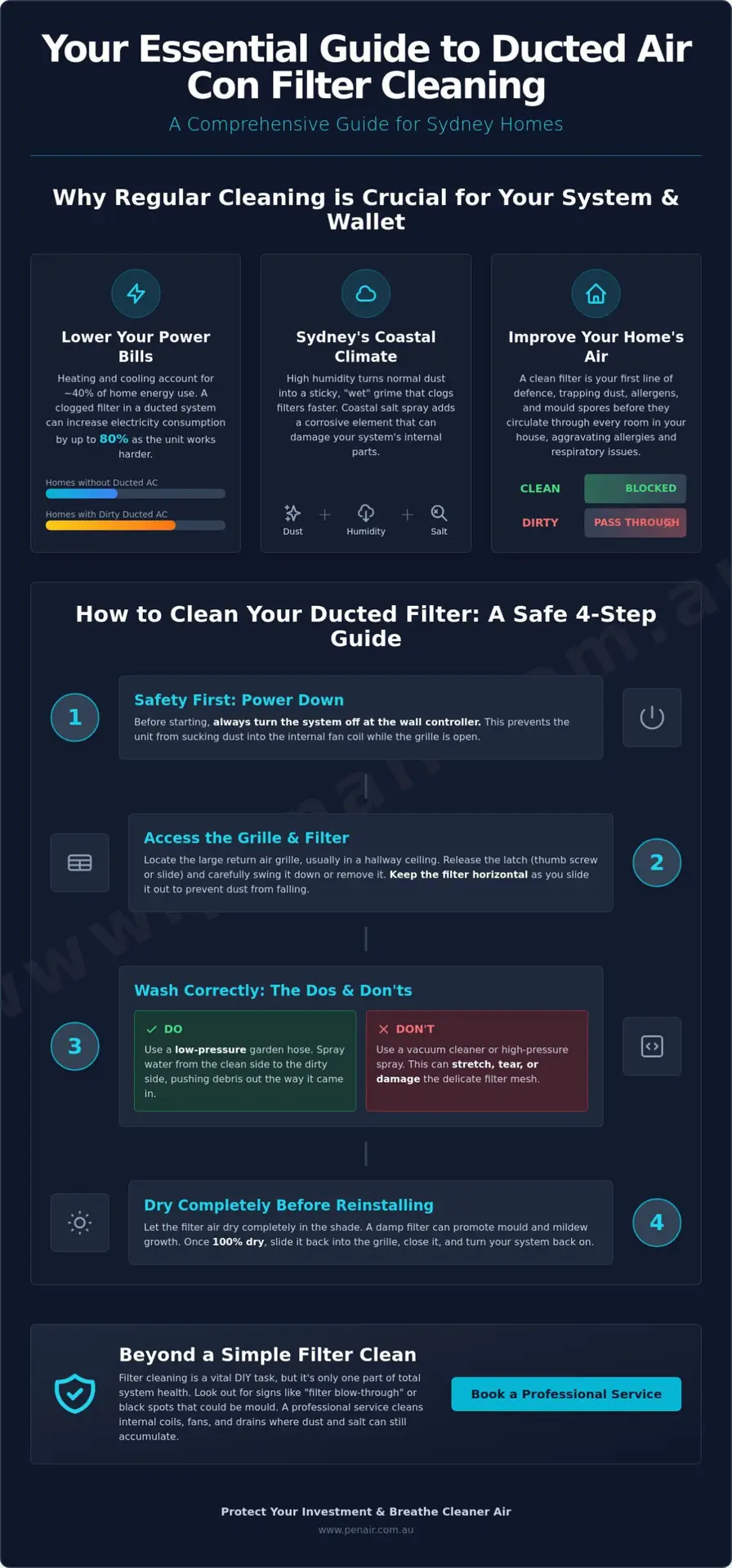
Sydney’s climate presents a unique challenge that many generic maintenance tips overlook. Our high humidity levels transform standard household dust into a “wet” grime. This sticky residue clings to filter fibres far more aggressively than dry dust, creating a stubborn barrier that a quick shake won’t fix. For families living in the Northern Beaches or near the harbour, this moisture often carries salt, which can be highly corrosive to the delicate aluminium fins inside your system if it’s allowed to bypass a saturated filter. Regular attention to your ducted air conditioning filter cleaning guide ensures these local environmental factors don’t compromise your system’s longevity.
A clogged filter is essentially a chokehold on your air conditioner. When airflow is restricted, the fan motor must ramp up its effort to pull air through the blockage. This increased workload directly translates to higher electricity consumption. Some people believe the myth that restricted airflow makes the air “colder,” but in reality, it just prevents the system from reaching your set temperature efficiently. Given that heating and cooling account for roughly 40% of home energy use in Australia, a neglected Daikin system can see a significant drop in efficiency, costing you more every time you turn it on. Keeping that filter clear is the easiest way to keep your running costs under control.
Our local air isn’t just about dust. Homes in coastal suburbs like Mona Vale or Palm Beach deal with constant salt spray that can settle in ceiling-mounted filters. We also see urban pollutants and bushfire smoke that linger in the air and eventually find their way into your return air grille. While some states might suggest a single annual check, Sydney’s conditions require a more proactive approach. Regularly checking your ducted air conditioning filter cleaning guide is a small task that makes a massive difference for family health, especially for those prone to allergies or respiratory issues. If you feel your system needs a deeper look beyond the filter, our team provides comprehensive service and maintenance to ensure every component is salt-free and running smoothly.
Before you even grab a ladder, your first priority is safety. Always turn your system off at the wall controller before starting. This prevents the unit from trying to pull air through an open grille while you’re working, which could suck loose debris directly into the internal fan coil. Most Sydney homes have the return air grille located in a central hallway ceiling. It’s the large, slatted vent that acts as the main intake for your home’s air circulation. Following this ducted air conditioning filter cleaning guide properly ensures you don’t accidentally damage your unit or create a messy cleanup on your carpets.
Most Daikin grilles feature a simple thumb screw or a sliding latch mechanism. If you have a hinged grille, it will swing down once released, so keep a steady hand on the frame to prevent it from dropping suddenly. Removable faces require a bit more care to lift out of their tracks. Because many Sydney hallways feature polished floorboards or tiles, ensure your ladder is stable and has rubber feet to prevent slipping. When you slide the filter frame out, keep it horizontal. This stops the “wet dust” from falling onto your floor. If the grille feels stuck, don’t force it; a gentle wiggle is usually enough to release years of accumulated dust seal.
While it’s tempting to use a vacuum, the suction can actually stretch or tear the delicate mesh fibres. A low-pressure garden hose is the superior choice. Take the filter outside and spray the water through the “clean” side (the side that faces the ductwork) to push the dirt out the way it came in. Avoid high-pressure washers, as they can destroy the weave of the material instantly. If the filter is particularly greasy, a tiny amount of mild dishwashing liquid is fine, but steer clear of harsh chemicals that could degrade the media. Clean filters have a significant impact on indoor air quality, but only if they’re handled with care. In Sydney’s afternoon sun, a filter usually takes about 30 to 60 minutes to dry completely. Never put a damp filter back in, as moisture trapped in the dark ceiling space is an open invitation for mould growth.
Once bone-dry, slide the filter back into its channel, ensuring there are no gaps around the edges. A poor seal allows “bypass air” to enter the system, which carries dust straight to the cooling coils and reduces efficiency. Close the grille and tighten the latch until it’s firm but not over-tightened. Finally, head back to your Daikin wall controller. You’ll likely see a “Filter” icon or light that needs resetting. Usually, this involves pressing the “Filter” or “Reset” button for a few seconds. If you notice any unusual noises or if the light won’t clear, it might be time for a professional check-up. You can always reach out to our local team if you’re unsure about your specific model’s requirements.
While following a standard ducted air conditioning filter cleaning guide helps maintain efficiency, there comes a point where a simple rinse under the hose won’t cut it. One critical sign to look for is “filter blow-through.” This occurs when the filter becomes so saturated with debris that air pressure forces dirt particles through the mesh or around the edges of the frame. If you notice fine dust streaks on the “clean” side of the grille or inside the duct opening, your filter has failed its primary job. This usually means dirt is now settling on your internal coils, which requires a professional ducted air conditioning deep clean to rectify.
You should also inspect the material for physical integrity. Over time, the constant air pressure and moisture from Sydney’s humid summers can cause the filter media to sag or develop tiny pinholes. Any breach in the mesh allows contaminants to bypass the system entirely. According to experts on maintaining your air conditioner, replacing a clogged filter with a clean one can lower your unit’s energy consumption by 5% to 15%. However, if the frame is warped or the mesh is thinning, cleaning won’t restore that efficiency; you’ll need a genuine replacement to protect your system’s motor.
If you’ve cleaned your filter but still notice a damp, earthy scent when the air kicks in, you might be dealing with “Dirty Sock Syndrome.” This happens when bacteria and mould colonise the dark, damp environment of the indoor coil. In areas like Sydney’s Inner West where humidity can linger, this growth happens faster than many homeowners realise. Normal dust is typically grey and dry; black spots or fuzzy patches that don’t wash away are clear indicators of mould. If these spores have moved beyond the filter and into the unit itself, a DIY rinse won’t solve the problem and could even spread the spores further into your living spaces.
Most ducted filters in a typical Sydney home have a lifespan of about 12 to 24 months. If you have pets that shed or young children running in and out, you’ll likely find that the fibres become “choked” much sooner. We recommend a full replacement once the mesh starts to look discoloured even after a wash. When ordering a new one, precision is vital. A “near enough” fit for a Daikin system isn’t sufficient. Even a five-millimetre gap allows unfiltered air to bypass the system, undoing all your hard work and leading to those high electricity bills we all want to avoid.
Australians spend roughly 90% of their time indoors, where pollutant concentrations can often be higher than outside. In a ducted system, your air is constantly recycled through every room in the house. This means if your return air filter is saturated with dust, you are essentially recirculating those particles across your bedrooms, kitchen, and living areas. This ducted air conditioning filter cleaning guide is a vital tool for maintaining a healthy environment, as it ensures your system acts as a purifier rather than a distributor of allergens.
Modern Daikin systems incorporate advanced filtration technology designed to trap microscopic triggers like dust mites and pollen. These premium units are engineered to provide a high level of protection, but their effectiveness depends entirely on the condition of the filter media. When we visit homes for a service, we often find that a single dirty filter is the root cause of persistent sneezing or itchy eyes among family members. By keeping the intake clear, you allow the system to catch these irritants before they have a chance to settle on your carpets or bedding.
Sydney’s coastal humidity doesn’t just make you feel sticky; it places an extra burden on your air conditioner’s dehumidification process. Clean filters are essential for maintaining the correct airflow speed across the cooling coils. If the airflow is restricted by a clogged filter, the temperature of the air around your vents can drop below the “dew point.” This causes the vents to “sweat,” leading to condensation that can drip onto your ceiling gyprock. Over time, this moisture can cause structural damage or encourage mould growth in your roof cavity. Keeping your filters clear is your best defence against these hidden moisture problems. If you’ve noticed any dampness around your ceiling vents, speak with our local specialists today to ensure your system is operating safely and efficiently.
While following a ducted air conditioning filter cleaning guide is a fantastic way to maintain your home’s air quality, it is important to remember that DIY cleaning only covers about 10% of your system’s total maintenance needs. The filter is just the gatekeeper. Beyond the return air grille lies a complex network of electrical components, refrigerant lines, and mechanical parts that require expert attention to remain in peak condition. A professional air conditioning service ensures that the parts you can’t see, like the internal drainage system and heat exchanger coils, are functioning safely and efficiently.
As a Daikin Specialist Dealer, we provide a level of technical expertise that goes beyond a surface-level wipe down. We check refrigerant levels to prevent compressor strain and inspect all electrical connections to ensure your system meets Australian safety standards. These proactive checks don’t just prevent unexpected breakdowns during a Sydney heatwave; they extend the overall life of your investment. When your system is perfectly calibrated, it runs quieter and uses less power, which is exactly what every homeowner wants to see on their next quarterly bill.
Our comprehensive maintenance visit includes several critical tasks that require specialised tools and training. We thoroughly clean the indoor evaporator coil and the outdoor condenser unit to ensure maximum heat transfer. We also test your zone motors to make sure air is actually going where you want it and check the balance of the barrel fan to prevent vibration damage. A common issue we find in Sydney roof spaces is damage from vermin or nesting birds. Our team specifically looks for chewed wiring or compromised ductwork insulation, catching these problems before they lead to expensive repairs or safety hazards.
We’ve been looking after the comfort of Sydney families since 1999. As a family-owned business, we take immense pride in our heritage and the long-term relationships we’ve built across the Northern Beaches and beyond. When you contact our team, you aren’t just booking a technician; you’re inviting a local specialist into your home who genuinely cares about your well-being. Our team is fully licensed and insured, providing you with total peace of mind that your ducted system is in safe, capable hands. Let us help you keep your home environment healthy and your system running at its absolute best for years to come.
Maintaining your ducted system doesn’t have to be a chore. By using this ducted air conditioning filter cleaning guide, you’ve taken a major step toward lowering your power bills and protecting your family’s respiratory health. Remember that while clean filters are the first line of defence against Sydney’s humidity and salt air, they’re only one part of a healthy system. Regular maintenance prevents small issues from turning into expensive repairs down the track.
For total peace of mind, an annual professional check ensures every internal component is running exactly as it should. As an authorised Daikin Specialist Dealer, we bring decades of technical expertise to every household we visit. We’re a family-owned and operated business that has served the Sydney community since 1999. Our fully licensed and insured technicians are ready to look after your home’s well-being with the care it deserves. Book your professional ducted air conditioning service with PenAir today. We look forward to helping you enjoy a cooler, cleaner, and more efficient home.
We recommend cleaning your filters every three to six months to keep up with Sydney’s dusty and humid conditions. If you live near the coast or have indoor pets, you might find that a quarterly check is necessary to prevent build-up. Regular attention ensures your system doesn’t have to work overtime to pull air through a clogged mesh, which keeps your running costs as low as possible.
You should avoid using a vacuum cleaner because the high suction can stretch or tear the delicate filter fibres. Instead, follow a proper ducted air conditioning filter cleaning guide and use a low-pressure garden hose. Washing from the clean side out is the safest way to remove trapped particles without compromising the filter’s integrity or performance.
Neglecting your filter leads to restricted airflow, which forces the fan motor to work much harder and significantly increases your electricity bills. Over time, this strain can cause the system to overheat or lead to ice formation on the cooling coils. It also means you’re breathing in recycled dust and allergens that the saturated filter can no longer trap.
A persistent smell usually indicates that mould or bacteria have colonised the indoor cooling coil or the drainage tray. While the filter stops surface dust, the damp environment inside the unit is where “Dirty Sock Syndrome” typically starts. If a thorough filter wash doesn’t fix the odour, it’s a sign that the internal mechanical components need a professional deep clean.
It is perfectly safe to use a small amount of mild dishwashing liquid to help break down greasy residue or salt build-up. Avoid using any harsh household cleaners or bleach, as these can degrade the filter material and leave behind strong chemical scents. Always rinse thoroughly with fresh water and ensure the filter is bone-dry before you slide it back into the grille.
To clear the ‘Filter’ icon on most Daikin wall controllers, you simply need to press and hold the ‘Filter’ or ‘Reset’ button for about five seconds. This icon is a simple timer-based reminder rather than a sensor, so it won’t know you’ve cleaned the filter until you manually reset it. If the light stays on, check your specific model’s manual for the exact button sequence.
You must always turn the system off at the wall controller before you open the return air grille. This prevents the unit from sucking loose debris or the filter itself into the fan while you’re handling it. It also ensures your safety while you’re working on a ladder to reach the ceiling-mounted intake in your hallway.
You should call a professional once a year for a comprehensive maintenance audit or if you notice unusual noises or lingering smells. While this ducted air conditioning filter cleaning guide helps with basic surface maintenance, a specialist is needed to check refrigerant levels, electrical connections, and the internal hygiene of the coils to ensure long-term reliability.