Have you ever had to mute your microphone during a crucial video call because your air conditioner sounded like a freight train in your spare room? It’s a common frustration for Sydney professionals who’ve traded the CBD office for a home workspace. Finding the best aircon for a home office setup requires more than just raw cooling; it’s about creating a quiet, high-performance sanctuary where you can actually hear yourself think. We understand that a noisy unit or a humid room doesn’t just cause discomfort, it actively hurts your productivity.
In this guide, we’ll show you how to choose a whisper-quiet, energy-efficient system that transforms your office into a professional-grade environment. You’ll learn how to eliminate the hot spots created by your computers and monitors while keeping your electricity bills under control. We will preview the latest Daikin technology for 2026, compare the benefits of split systems versus ducted options, and explain how a sleek, professional installation adds genuine value to your property and your peace of mind.
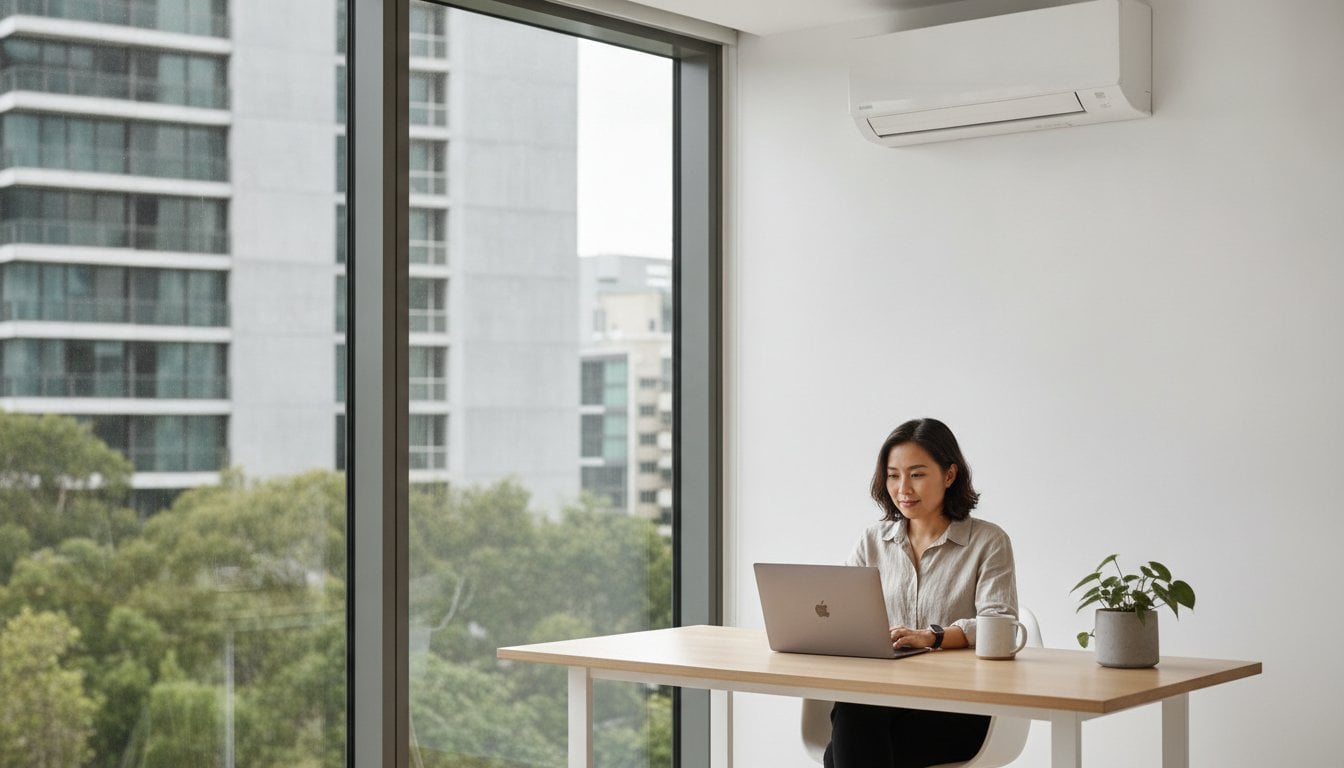
A home office isn’t just another room in your house; it’s a high-stakes environment where focus is your most valuable asset. When we talk about the best aircon for a home office setup, we aren’t just looking at how quickly a unit can chill the air. We’re looking at “Acoustic Comfort.” In a living room, the sound of a television or family conversation might mask the hum of a budget unit. In a quiet office, that same hum becomes a distracting roar that can shatter your concentration. A premium Daikin split system typically operates between 19 and 25 decibels, which is barely louder than a whisper. In contrast, many portable units can exceed 60 decibels. That is the difference between a calm library and a busy office canteen.
We also have to account for the unique “Heat Load” found in modern workspaces. Your desktop computer, multiple monitors, and external drives generate constant heat. This means your office often stays significantly warmer than the rest of your home. To maintain a steady temperature, you need a system designed for precision. For those seeking a comprehensive overview of air conditioning and how different systems handle these thermal loads, it’s clear that fixed installations offer the stability that portable alternatives simply cannot match.
Noise is the ultimate enemy of “flow state,” that mental zone where you’re most productive. Constant background mechanical noise forces your brain to work harder to filter out distractions, leading to quicker mental fatigue. Silent operation is especially critical if your day involves client video calls or recording presentations. Choosing a split system air conditioning unit with a dedicated “Quiet Mode” is a non-negotiable for a professional WFH setup. It ensures you remain the focus of the meeting, not the rattling of a poorly made fan.
Sydney’s coastal humidity can make a 24 degree day feel like 30 degrees, creating a sticky environment that’s tough on both you and your electronics. High humidity can lead to moisture buildup inside sensitive computer hardware, potentially shortening its lifespan. As a Daikin air conditioning leader, we’ve seen how technologies like the Flash Streamer can transform a workspace. These systems don’t just cool; they decompose allergens and odours while providing superior filtration. This keeps the air fresh and reduces the amount of dust settling on your equipment, helping you stay alert and your gear stay clean.
Selecting the right hardware is the first step toward a productive workspace. While many Sydney homeowners consider ducted systems for whole-house comfort, cooling a single room all day while you work can be incredibly inefficient. For most people, the best aircon for a home office setup is a dedicated wall-mounted unit. This allows you to target the specific room where your computer and monitors are pumping out heat without wasting energy on empty bedrooms or the kitchen. Ducted systems can lose cooling energy through long runs of ductwork in the roof space, whereas a split system delivers air directly where it’s needed.
Modern units are designed to be slim and unobtrusive. They blend into contemporary office decor rather than standing out as a bulky appliance. When evaluating your options, reviewing ENERGY STAR buying guidance can help you understand how different configurations impact your long-term running costs. We often find that a high-efficiency inverter model is the most sensible choice for the Sydney climate, especially during those humid February afternoons when the heat load from electronics is at its peak.
A split system air conditioning installation is widely regarded as the gold standard for single rooms. It’s a cost-effective upgrade because it doesn’t require extensive ductwork, making it perfect for existing Sydney apartments, Victorian terraces, or modern North Shore homes. These systems are incredibly quiet. If you’re looking for specific details on how these units perform in a quiet room, our Daikin air conditioning guide provides a look at the whisper-quiet technology that makes them so popular for home offices. The ease of installation means we can often have your office cooled with minimal disruption to your working week.
Sometimes a single unit isn’t enough. If you have a dual-office household or your office shares a wall with a bedroom you also want to cool, a multi-split system is an excellent alternative. This setup allows you to run multiple indoor units from just one outdoor compressor, saving valuable balcony or garden space. You gain independent temperature control for each room. This means you can keep the office crisp and cool while your partner organises a different climate in the room next door. Balancing the initial investment of a multi-split with the long-term energy savings of not running a whole-home system is a smart move for any professional. If you aren’t sure which configuration fits your floor plan, feel free to chat with our local team for some friendly advice.
Many homeowners assume that buying the largest unit they can afford is a smart move. In reality, an oversized system can be just as problematic as one that’s too small. This leads to a phenomenon known as “short cycling,” where the unit turns on and off rapidly. It cools the room quickly but fails to run long enough to dehumidify the air, leaving you in a cold but clammy office. Finding the best aircon for a home office setup requires balancing the room’s dimensions with the heat generated by your high-end PC and western-facing windows. For most Sydney professionals working from a spare bedroom, a unit in the 2.0kW to 2.5kW range is usually the sweet spot.
Modern inverter technology is a game-changer for maintaining this balance. Unlike older fixed-speed motors that are either 100% on or completely off, an inverter slows down and speeds up to maintain a consistent temperature. This prevents those annoying power spikes that occur when a compressor kicks in, and it keeps your environment stable so you can stay in a flow state. When you choose a split system air conditioning unit with a high-quality inverter, you’re investing in a system that adapts to your room’s specific needs throughout the day.
Standard sizing usually follows a simple path for most Australian households. A 10m2 space often needs a 2.0kW unit, while 15m2 to 20m2 rooms are best served by a 2.5kW model. However, we always look at the “Sydney context” during an assessment. An older terrace in Paddington with high ceilings and original single-glazed windows will have a much higher thermal load than a modern, insulated apartment in Mona Vale. Capacity is formally defined as the amount of heat a system can remove from an enclosed space, measured in Kilowatts (kW) or British Thermal Units (BTUs).
The Zoned Energy Rating Label (ZERL) is your best friend when comparing models for the local climate. It provides a rating specific to Sydney’s mixed conditions, showing how the unit performs in both heat and humidity. When you look at energy efficiency ratings, you’ll see that a 5-star Daikin unit is designed to sip power rather than gulp it. To keep your running costs low during an 8-hour shift, we recommend using “Eco Mode” and scheduling the unit to start 15 minutes before you sit down at your desk. Regular service and maintenance also ensures your system stays as efficient as the day it was installed.
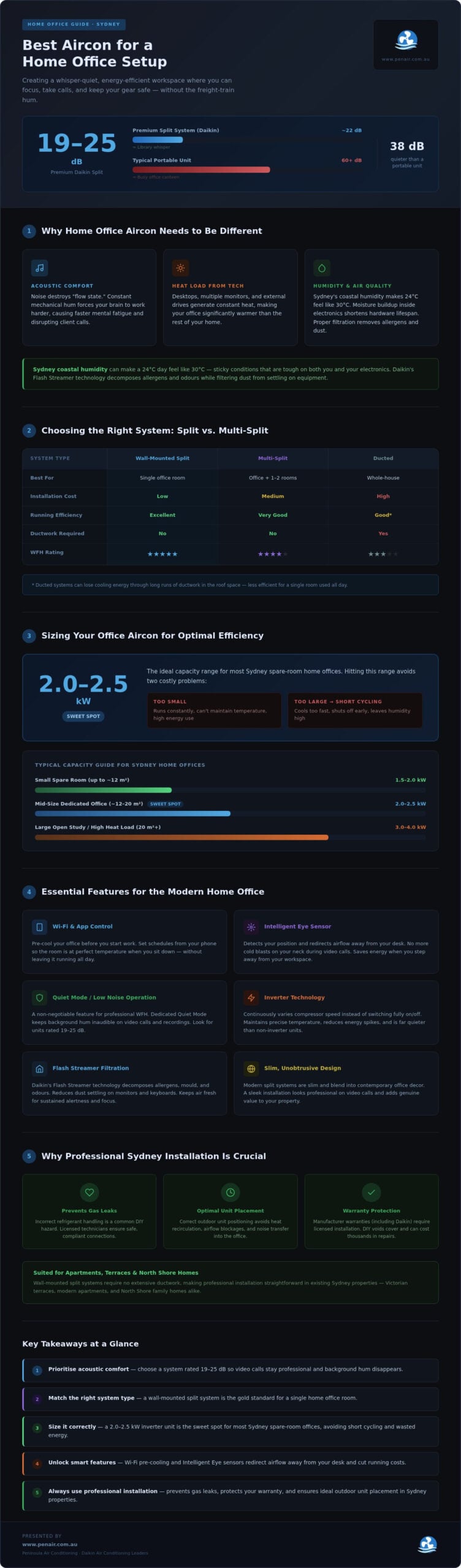
When searching for the best aircon for a home office setup, it is easy to focus solely on the temperature. However, the features that define a premium 2026 model are what truly separate a standard bedroom unit from a professional workspace solution. Modern systems now include intelligent sensors designed specifically for people who sit in one spot for long periods. Daikin’s “Intelligent Eye” technology, for instance, detects your presence in the room. If it senses you are at your desk, it can redirect the airflow away from you to prevent uncomfortable draughts, ensuring you don’t end up with a stiff neck by lunchtime.
Sydney’s “muggy” summer afternoons require more than just cold air; they require effective moisture control. Dedicated dehumidification modes are essential for maintaining a crisp environment that keeps you alert. By removing excess humidity without over-cooling the room, these systems prevent that heavy, lethargic feeling that often leads to a mid-afternoon slump. You can also programme weekly timers to match your specific work hours. This ensures your office is perfectly conditioned by 8:55 am and automatically powers down when you clock off, preventing unnecessary energy spend after hours.
Integration with your broader home ecosystem is no longer a luxury. Using the Daikin Mobile Controller app, you can pre-cool your office from the kitchen while making your morning coffee. Many professionals now integrate their air conditioning with Google Home or Alexa, allowing for hands-free adjustments during intense deep-work sessions. Some of the latest models even offer geofencing. This feature uses your phone’s location to sense when you are approaching home, ensuring your workspace is at the ideal temperature the moment you step inside. You can also monitor your energy usage in real-time, helping you keep those quarterly bills predictable and manageable.
The link between indoor air quality and cognitive function is well-documented. Flash Streamer and Titanium Apatite filters work to neutralise odours, bacteria, and common Sydney allergens like pollen. This results in fresher air that can help reduce the “brain fog” often associated with poorly ventilated rooms. To keep these health benefits effective, regular aircon cleaning is vital to prevent dust buildup within the internal components. A clean system doesn’t just run more quietly; it ensures the air you breathe while working is as pure as possible. If you want to discuss which smart features best suit your specific room layout, reach out to our friendly Sydney team for a consultative chat.
You can invest in the best aircon for a home office setup, but its performance will only ever be as good as the installation. In our 25 years of providing air conditioning Sydney wide, we’ve seen too many “Solar Cowboy” installers cut corners to offer a cheaper price. These rushed jobs often lead to refrigerant gas leaks, poor electrical connections, and excessive vibration noise. If a unit isn’t perfectly level or the wall brackets are flimsy, the low-frequency hum can travel through your house frame, completely defeating the purpose of buying a whisper-quiet Daikin system.
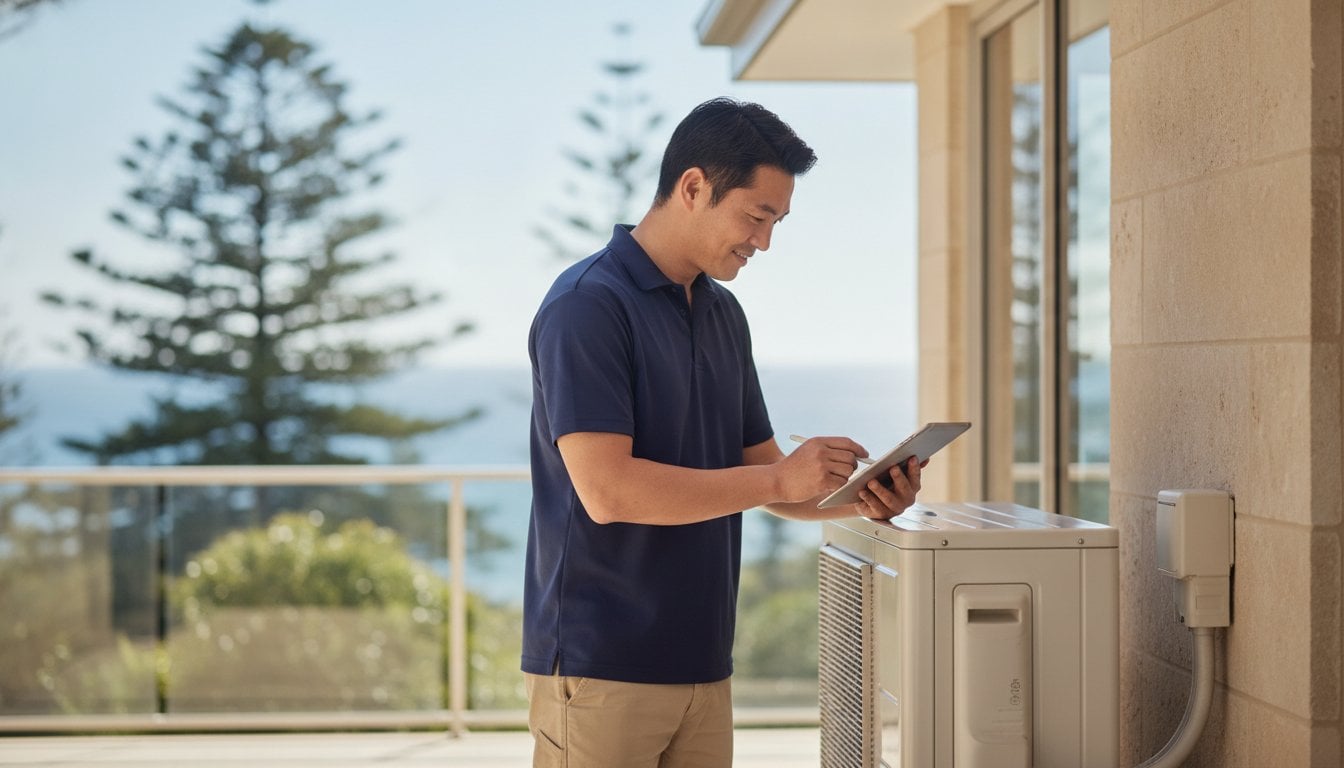
Positioning the outdoor unit is another critical factor that DIY enthusiasts or inexperienced contractors often overlook. If the compressor is placed too close to your office window or against a resonant wall, it can disrupt your concentration or be picked up by your microphone during calls. We also consider your neighbours. Sydney’s high-density suburbs have strict noise regulations, and a poorly placed unit can lead to unwanted council complaints. A professional installer ensures the system complies with Australian Standards and manufacturer warranty requirements, protecting your investment for the long term.
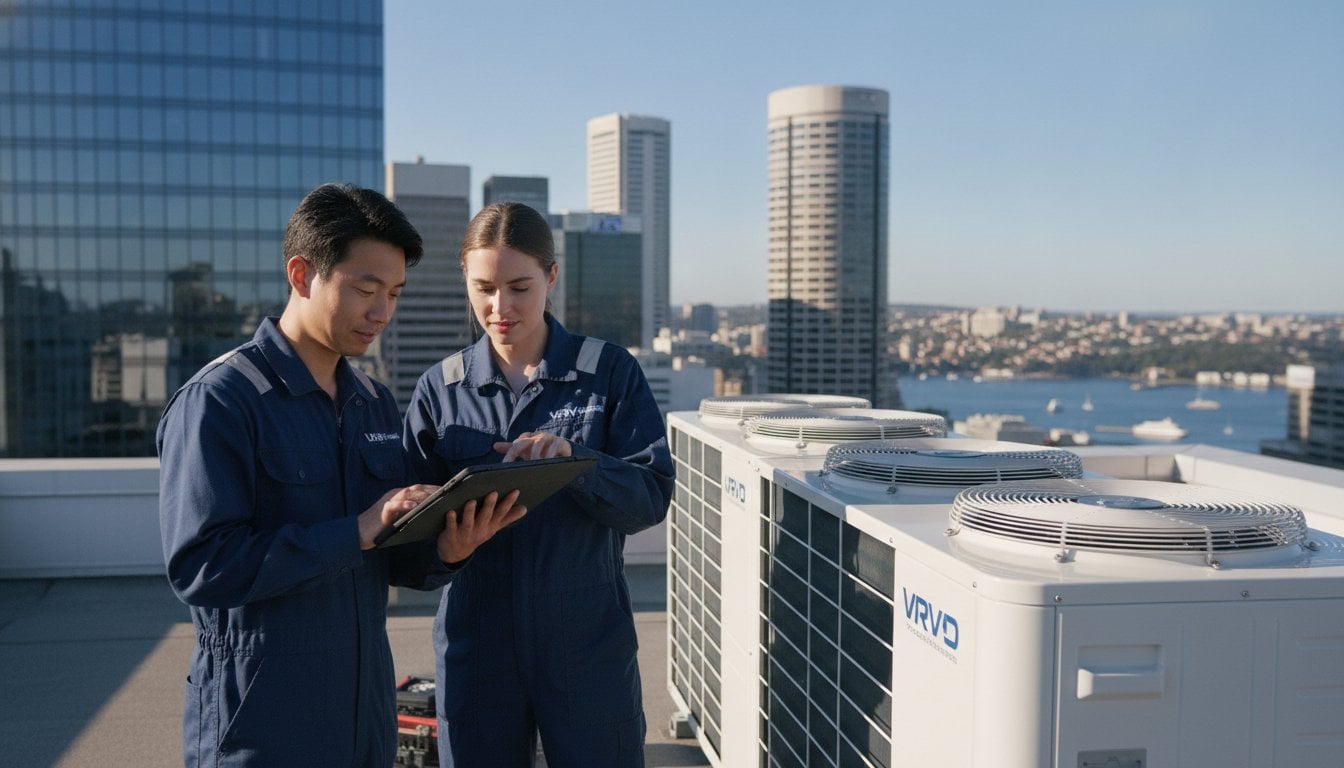
We are a family-owned and operated business that has served the Northern Beaches and North Shore communities since 1999. Our team doesn’t just install boxes; we provide a consultative service that treats your home with the respect it deserves. As an Authorised Daikin Specialist Dealer, we exclusively recommend their systems because they’ve proven to be the most reliable for the local humidity and coastal conditions. We take pride in our craftsmanship and the long-term relationships we’ve built with our clients. You can learn more about our commitment to excellence on our Why Choose Us page.
The process begins with a comprehensive site audit of your home workspace. We don’t just look at the floor space; we examine your window orientation, ceiling height, and where your desk is positioned to ensure the airflow is perfect. We plan for a neat, unobtrusive installation that hides pipework and respects the aesthetics of your home. Our goal is to leave your office better than we found it, with a system that’s ready to support your productivity for years to come. If you’re ready to upgrade your workspace, contact the PenAir team today for a professional assessment.
Creating a high-performance home office is about more than just furniture; it’s about controlling your environment. We’ve explored how whisper-quiet operation and smart humidity control can eliminate the distractions that derail your workday. By choosing a system that matches your room’s specific heat load and ensuring it’s installed by local specialists, you’re setting yourself up for long-term professional success. Investing in the best aircon for a home office setup is an investment in your own daily output and comfort.
As a family-owned Sydney business since 1999 and an Authorised Daikin Specialist Dealer, we take pride in helping our neighbours across the Northern Beaches and North Shore achieve the perfect climate. Our team is ready to help you transition from a sweltering spare room into a professional-grade sanctuary. Get a Professional Quote for Your Home Office Aircon and take the first step toward a more focused, comfortable working life. We look forward to looking after your home’s well-being and helping you do your best work.
Installing a fixed air conditioner in a rental property requires written permission from your landlord. While NSW tenancy laws have become more flexible regarding minor changes, a split system is considered a permanent fixture that involves drilling through external walls. We suggest highlighting the increased property value and energy efficiency to your landlord. If they agree, ensure the installation is performed by a licensed professional to protect your bond and comply with the rental agreement.
Daikin is widely recognised as the quietest brand available for Australian homes in 2026. Their premium models are engineered to operate at sound levels as low as 19dB, which is virtually undetectable in a standard office environment. This makes them the best aircon for a home office setup where maintaining a professional atmosphere during Zoom calls and recordings is a top priority. Their focus on acoustic comfort ensures your workspace remains a sanctuary for deep work.
The daily running cost depends heavily on your unit’s energy star rating and how well your office is insulated. Modern 5-star inverter systems are designed to be extremely frugal, especially when cooling a single room rather than an entire house. Since heating and cooling can account for 20% to 50% of a typical Australian household’s energy usage, choosing a high-efficiency model and using “Eco Mode” can keep your quarterly power bills predictable and manageable.
Yes, a 2.5kW unit is generally the ideal size for a 15 square metre space. Standard Australian guidelines suggest approximately 0.15kW of cooling power per square metre, which means a 15sqm room requires about 2.25kW. Opting for a 2.5kW model provides a small buffer for the heat generated by your monitors and computer hardware. This ensures the system doesn’t have to run at maximum capacity, which improves its lifespan and maintains better energy efficiency.
You can usually claim the work-related portion of your air conditioning costs if you are working from home. The ATO typically allows you to claim a percentage of your electricity costs and the depreciation of the unit itself. Because tax laws can change and depend on whether you use the fixed-rate or actual cost method, it’s important to keep accurate records of your working hours and consult with a qualified accountant to maximise your claim.
We recommend a professional service once every 12 months to ensure your system remains reliable and efficient. Regular maintenance is vital for preventing the buildup of dust and allergens in the filters, which can impact your health and productivity. Between professional visits, you should aim to clean the internal dust filters yourself every few months. This simple task helps the unit breathe easier and keeps the air in your office fresh and clean.
Setting your thermostat between 22°C and 24°C is generally considered the sweet spot for office productivity in Australia. This range keeps the room comfortable without being so cold that it becomes a distraction. On those humid Sydney days, using the dedicated dehumidification mode can make the air feel much crisper at 24°C than it would at a lower temperature with high humidity. This approach also helps reduce the overall strain on your system.
Most licensed electricians will recommend a dedicated circuit for any split system installation. This is a safety measure that prevents your office’s circuit breaker from tripping when the air conditioner and your computer equipment are all drawing power simultaneously. Having a dedicated line ensures your system has a stable power supply and prevents sudden outages that could cause you to lose unsaved work during a busy afternoon.