
A split system should generally receive professional servicing every 12 months, while its filters need vacuuming and washing every 1-3 months when the system is in use. For AC cleaning, a monthly filter clean is a sensible routine in homes with pets, allergies or a dusty location.
It’s easy to focus on the filters and forget the rest of the unit. Regular filter care is useful, but it doesn’t replace professional AC cleaning to address internal build-up and assess how the system is operating.
This guide explains how often to clean a split system in Sydney, which simple tasks you can handle at home, and when professional cleaning may help. You’ll also learn what a service can involve and what to consider when deciding on the next step, so you can keep your home comfortable without taking on work that needs a technician.
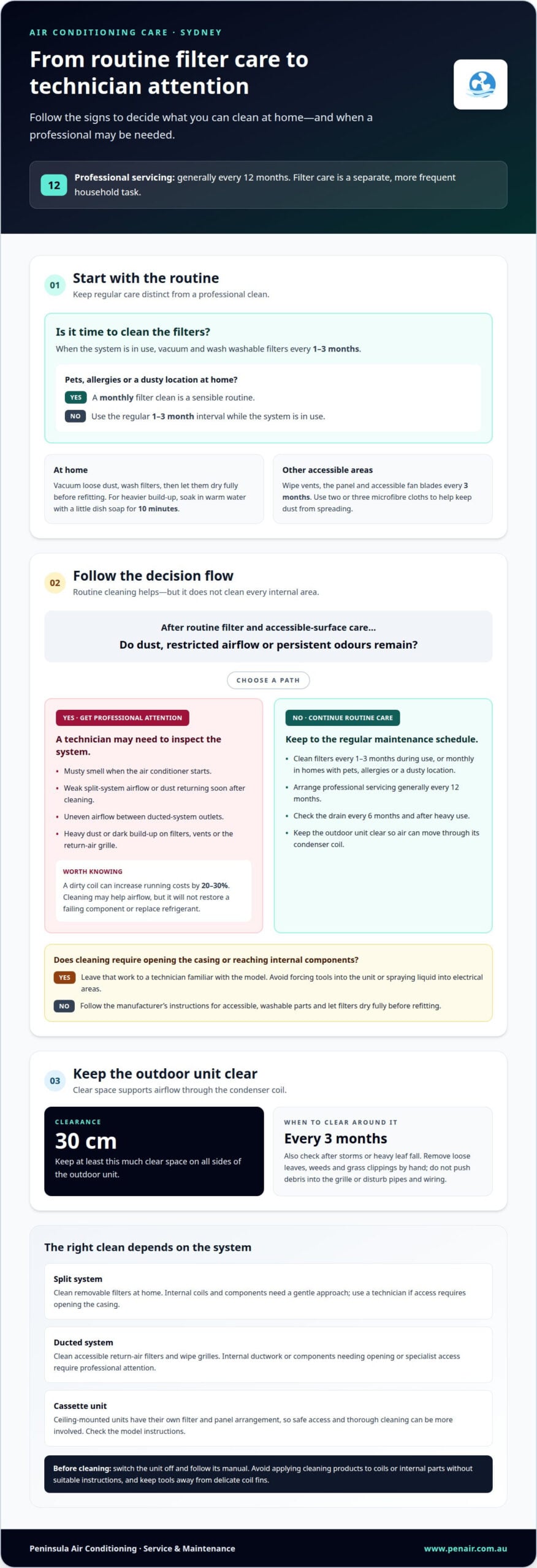
A split system air conditioner should generally receive professional servicing every 12 months. During use, vacuum and wash its filters every 1-3 months, or monthly in homes with pets, allergies or a dusty location. These routines address different areas: filter care is regular household maintenance, while servicing can assess the wider machine.
For split system air, start with the removable filters. Vacuum away loose dust, then wash the filters and let them dry before refitting. For heavier build-up, soak them in warm water with a little dish soap for 10 minutes. Wipe the vents, panel and accessible fan blades every 3 months; use two or three microfibre cloths to keep dust from spreading between surfaces.
The indoor coil needs a different approach from a washable filter. When cleaning the indoor coil, use a gentle approach and avoid forcing tools into the unit. Check the drain every 6 months and after heavy use. If cleaning requires opening the casing or reaching internal components, leave that work to a technician familiar with the model.
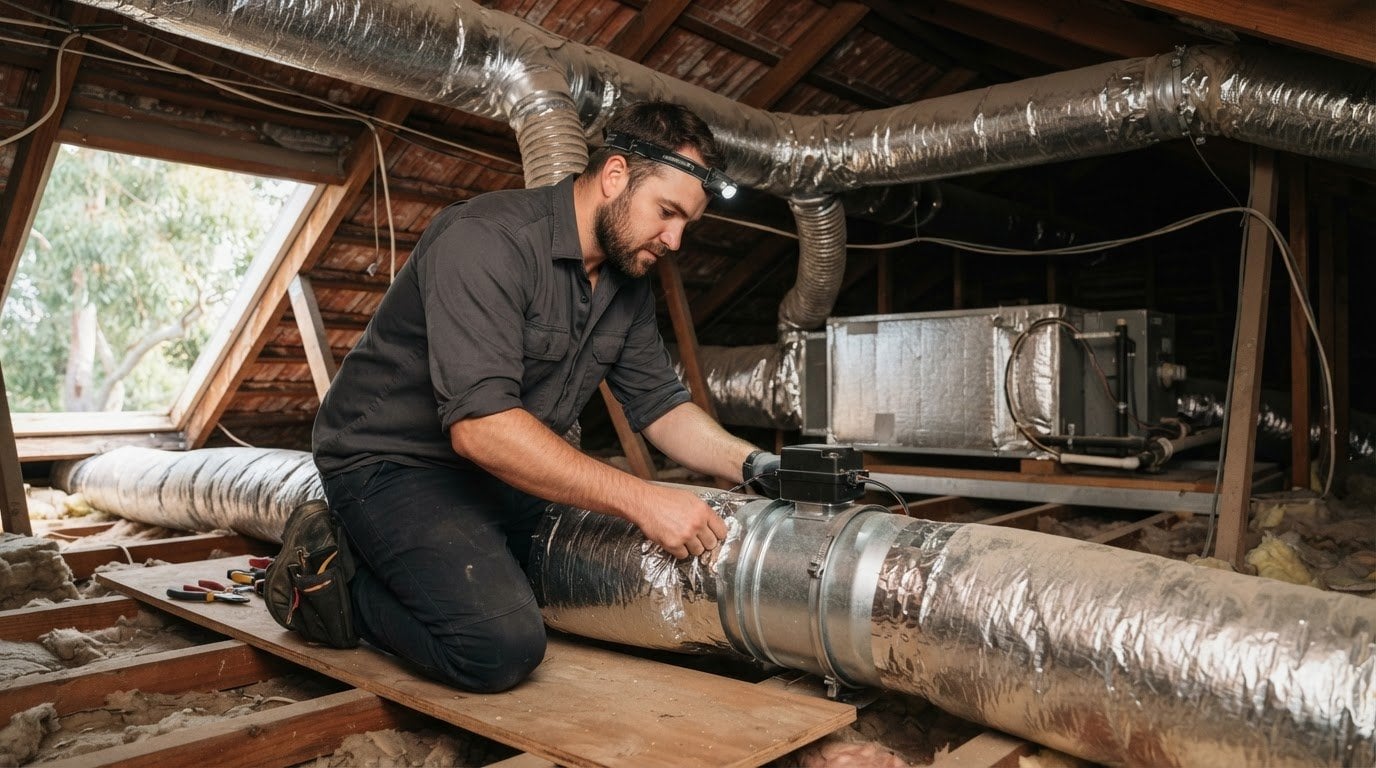
Ducted systems distribute conditioned air through ceiling outlets and connected ductwork, so cleaning involves more than wiping a wall-mounted head. A practical routine is to clean accessible return-air filters, wipe grilles and arrange professional attention for internal parts or ductwork that need access. Cassette units sit in the ceiling and have their own filter and panel arrangement, so safe access and thorough cleaning can be more involved.
To clean a ducted air conditioning system, start with accessible return-air filters: remove, vacuum and wash them, then let them dry fully before refitting. Wipe accessible grilles and arrange a technician for internal components or ductwork that require opening or specialist access.
Choosing an AC cleaning service in Australia starts with a clear scope: the provider should explain which system components the service covers and distinguish filter care from internal cleaning. Look for an approach suited to your unit, whether it’s a residential split system, commercial ducted system or industrial installation.
Supplies depend on the task and system. For routine filter care, use a vacuum, two or three microfibre cloths and water; avoid applying cleaning products to coils or internal parts without suitable instructions. Residential, commercial and industrial systems differ in layout, access and operating demands, so one cleaning method won’t suit every machine. For Sydney homes and businesses, local air-conditioning support across Sydney can help match the service approach to the equipment.
For Sydney homes, consider professional AC cleaning if dust, restricted airflow or persistent odours remain after routine care. These signs can help distinguish a surface clean from work that needs a technician.
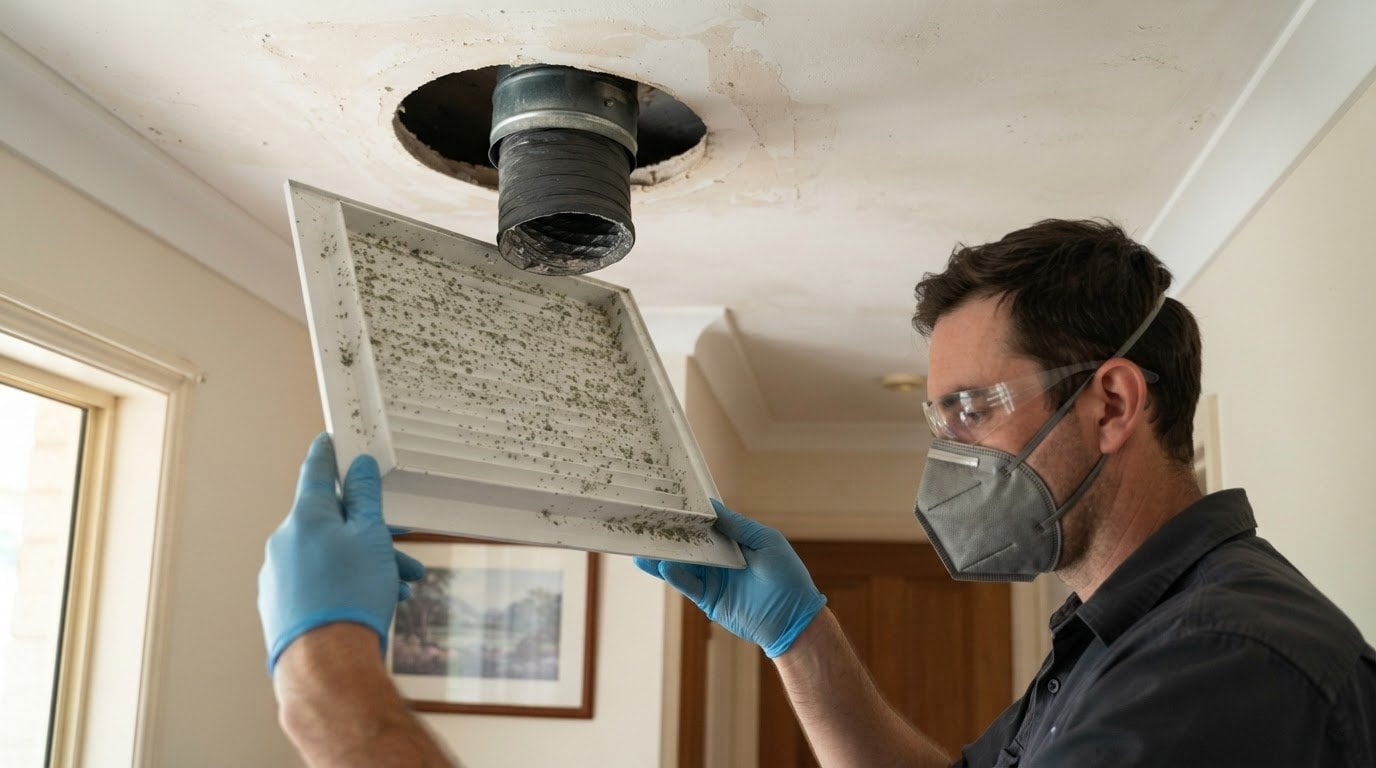
Check indoor filters, vents and the return-air grille for heavy dust or dark build-up. A musty smell when the air conditioner starts, weak airflow from a split system or dust returning soon after cleaning can point to dirt deeper inside.
For ducted air, check for uneven airflow between rooms, such as one ceiling outlet delivering less air than others. A dirty coil can increase running costs by 20 to 30 percent. If cleaning accessible surfaces doesn’t resolve the issue, a technician can inspect the indoor unit and outdoor unit.
Professional AC cleaning reaches internal areas that routine filter care can’t address, including cooling fins and metal coils. Removing accumulated dirt can help airflow through the machine and support more consistent cooling across rooms.
A technician can also assess drainage and identify whether poor performance relates to dirt or another fault. Cleaning won’t restore a failing component or replace refrigerant, but it can help distinguish a maintenance need from a repair issue. This can be useful for split systems and ducted installations.
To clean split-system filters and coils safely, switch the unit off and follow its instructions. Remove and clean washable filters as directed, then let them dry before refitting. Avoid spraying liquid into electrical areas or pressing tools against delicate coil fins.
A professional indoor clean may include washing air filters with a mild cleaning solution, then cleaning the cooling fins and metal coils. The technician can also inspect the drain and check for obstructions. After cleaning, run the unit on cooling for 10 minutes to check airflow and drainage.
For ducted systems, the return-air filter and ceiling grilles are accessible cleaning points. Internal ductwork and components need appropriate access and handling. Professional AC cleaning can be tailored to the system’s layout and condition.
Read the manual for your specific model before removing a panel or cleaning a filter. Instructions explain which parts are washable, how filters are released and which products or methods to avoid. A ceiling-mounted cassette unit can have different access points from a wall-mounted split system.
Keep the model details handy when arranging air conditioner cleaning in Sydney. They help a technician identify the unit and follow its care requirements. For advice about your system or to arrange a service, contact the local team.
The outdoor unit needs clear space for air to move through its condenser coil. Regular cleaning around the unit helps prevent leaves, grass and other debris from restricting airflow.
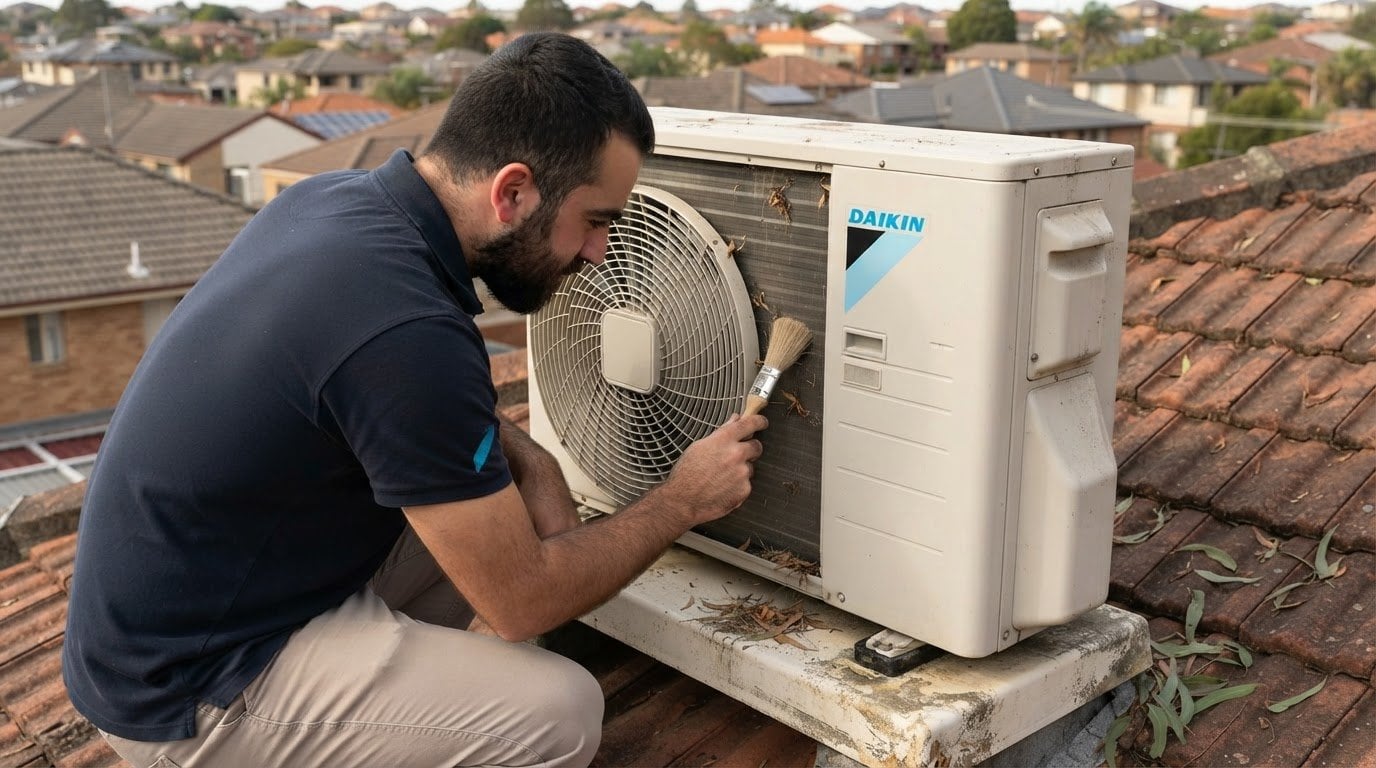
Keep at least 30 cm of clear space on all sides of the outdoor unit. Clear the surrounding area every 3 months, and again after storms or heavy leaf fall. Remove loose leaves, weeds and grass clippings by hand, taking care not to push debris into the grille or disturb pipes and wiring.
Before surface cleaning, switch the air conditioner off using its controls. Keep water away from electrical components, and don’t open the casing or reach inside. If dirt is lodged in the grille or fan, leave it to a technician. This keeps routine tidying separate from work on internal components.
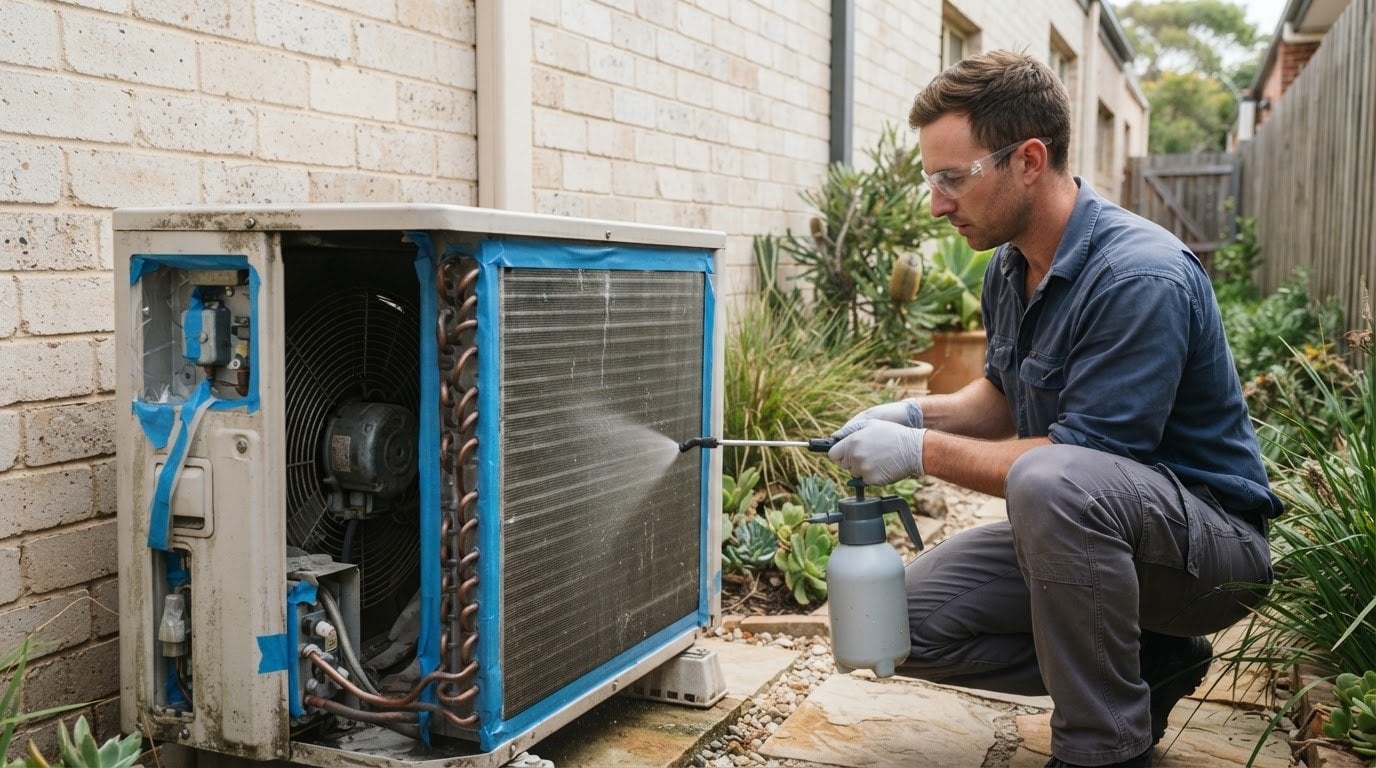
The outdoor coil’s fins help transfer heat as the system operates. Dust, garden debris or matted grass can obstruct airflow across the coil, making it harder for the machine to run efficiently. Look for visible build-up through the grille, but don’t insert tools or brush firmly against the fins, which can bend easily.
A technician can assess the coil and use a cleaning method suited to the unit. The right approach depends on the coil’s condition, access and the manufacturer’s instructions. Avoid directing a pressure washer at the outdoor unit: forceful water can damage delicate fins or push debris further inside.
Indoor and outdoor cleaning address different parts of the same air-conditioning system. At the indoor unit, accessible tasks include cleaning the filter and wiping the panel and vents. At the outdoor unit, focus on clearing nearby vegetation and loose debris, not opening the cabinet. Professional AC cleaning can assess internal areas that household cleaning can’t safely reach.
In Sydney, check the outdoor unit after heavy leaf fall, especially if trees or garden beds are nearby. A clear area supports airflow, while blocked access can make inspection and maintenance more difficult. Keep stored items, bins and garden equipment away from the casing, and avoid covering the unit while it’s running.
Outdoor cleaning doesn’t remove every cause of poor cooling. If airflow remains weak after you clear visible debris, or the unit makes an unfamiliar sound, arrange a professional inspection rather than dismantling it. A technician can assess whether the condenser, indoor unit or another system component needs attention.
Routine cleaning means removing debris around the unit and observing the coil, not attempting internal repairs. Keep the outdoor space clear, and leave coil work that requires access inside the casing to a trained technician.
Cleaning removable filters is a practical household task, but it won’t reach every internal surface. The right approach depends on the filter’s condition, the unit’s instructions and whether dust or blocked airflow persists after cleaning.
For a washable split-system filter, switch the unit off, remove the filter as the manual directs, and vacuum loose dust. If it needs washing, use water and allow it to dry fully before refitting. A full DIY clean takes around 45 minutes, plus drying time, so don’t restart cooling while the filter is damp.
Check the filter before putting it back. A torn frame, damaged mesh or stubborn residue can affect how it sits in the unit. Don’t scrub it with a stiff brush or apply an unapproved chemical: either can damage the material or leave residue inside the air conditioner.
Professional AC cleaning is useful when dust remains beyond the accessible filter or airflow stays weak after household cleaning. A technician can clean filters with a mild cleaning solution, then assess cooling fins and metal coils. This broader process reaches areas that a vacuum and cloth can’t clean thoroughly without opening the indoor unit.
For example, a filter may look clean while dirt remains on the coil behind it. A technician can inspect both areas and assess drainage, helping distinguish a cleaning need from a separate operating fault. Professional attention is also useful when filter access is awkward or the unit’s cleaning instructions require care.
Cleaning suits a filter that remains intact and can be washed according to its manual. Replacement is the better option if the filter is cracked, misshapen or won’t sit securely in its slot. A poorly fitted filter can let dust bypass the mesh and collect inside the machine.
Use a replacement made for the specific model, rather than trimming a generic filter to fit. Check the manufacturer’s instructions for the correct filter type and fitting method. If the filter’s condition is uncertain, a service technician can assess it alongside the indoor unit.
Filters catch airborne dust and other particles as air circulates through a system. A blocked filter can restrict airflow, affecting cooling and the way air moves through a room. Cleaning the filter supports normal circulation, but it doesn’t remove every source of indoor dust or clean the whole system.
For example, dust around a return-air grille or residue on a coil needs attention beyond the removable filter. Keep the filter clean and note whether airflow changes after refitting it. If the room still feels poorly ventilated, arrange a system assessment rather than repeatedly washing an undamaged filter.
If filter cleaning hasn’t restored airflow, arrange a service assessment to identify the next practical step.
Peninsula Air Conditioning (PenAir) provides AC cleaning, service and maintenance when routine filter care isn’t enough or cooling remains uneven. Our team works with split, multi-split and ducted systems, tailoring attention to the equipment and the issue you’ve noticed.
If dust or blocked airflow keeps returning, or the outdoor unit needs more than clearing around its casing, professional maintenance can help identify the next step. PenAir can assess your system and address cleaning or maintenance needs without treating every unit the same way.
For support with your air conditioner, contact Peninsula Air Conditioning (PenAir).
Keep a simple record of changes you notice after cleaning, such as unusual odours, weaker airflow or uneven cooling. These details can help pinpoint what needs attention when routine filter care no longer addresses the issue. Good AC cleaning means looking after accessible parts while leaving internal work to a technician.
Peninsula Air Conditioning (PenAir) provides service and maintenance for split and ducted systems. If your system needs attention beyond routine care, share what you’ve noticed and the type of unit in your home. This gives the team a useful starting point for discussing the next step.
Get in touch with Peninsula Air Conditioning (PenAir) to discuss your air-conditioning needs. A clear plan for looking after your system can make ongoing home comfort easier to manage.
The scope depends on the system and the areas requiring attention. For a split system, a technician may clean the filters, cooling fins and metal coils, then assess drainage and airflow. Ducted equipment has different access points, including return-air components and ceiling grilles. Before work begins, clarify which parts are included so you understand whether the service covers accessible surfaces, internal components or both.
Professional AC cleaning is useful when dirt sits beyond the parts you can safely reach, or routine care hasn’t resolved a problem. For example, a technician can inspect the indoor unit if airflow remains weak despite a clean filter. They can also distinguish build-up from a separate operating fault, helping you understand whether cleaning, maintenance or repair is the relevant next step.
Cleaning can help if a musty smell comes from accumulated dirt inside the air conditioner. The source matters: odours can also persist when the cause isn’t on an accessible filter or surface. Note when the smell occurs, such as only during cooling or after the unit starts, and tell the technician. That detail helps focus attention on relevant parts rather than just wiping the front panel.
The cost of AC cleaning in Sydney depends on the system type, number of units, access, build-up and work required. The price is provided after a quote request. For example, cleaning accessible areas of a split system involves a different scope from reaching internal components in a ducted installation. Understanding which areas need attention helps define the work and the factors that shape the quote.
Ducted AC cleaning should suit the system’s layout and the parts requiring attention. A Sydney home with dust around its return-air grille presents a different task from a building with build-up inside ductwork. PenAir provides ducted systems, service and maintenance. Share your system type and the issue you’ve noticed when arranging an assessment, so the discussion can focus on relevant areas and access.
A clean focuses on removing dirt from specified parts, while a service is broader maintenance that assesses how the air conditioner operates. For example, filter cleaning addresses dust on the filter, whereas servicing can include attention to the system’s condition and operation. The terms can describe different scopes, so focus on the work included, not the label alone. Ask for the scope in plain terms before proceeding.