
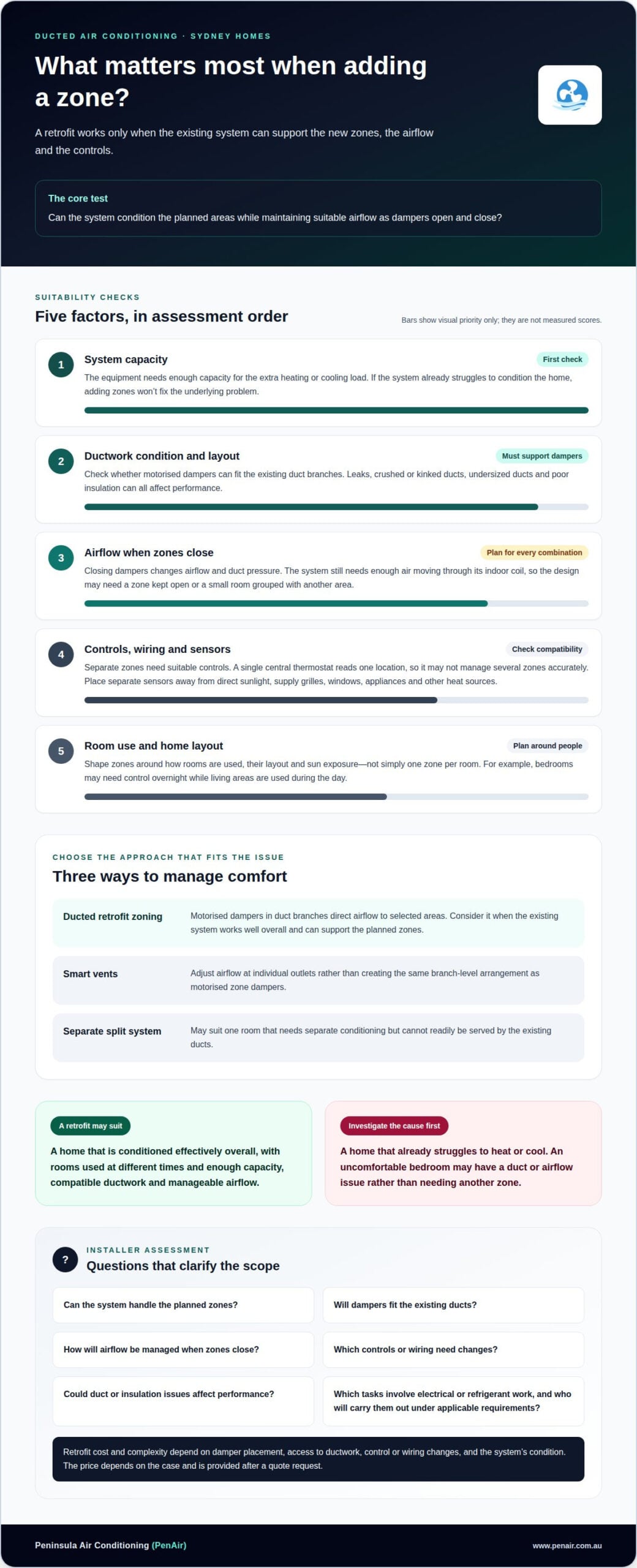
Adding a zone to existing ducted aircon doesn’t automatically improve comfort. It may be possible if the system has enough capacity for the extra heating or cooling load and the ductwork can accommodate motorised dampers to control airflow to different areas.
It’s understandable to look for a way to make bedrooms, living areas or other parts of your home more comfortable without conditioning every room. But zoning won’t fix an existing problem if your ducted system is already struggling to heat or cool the home. Leaking, damaged or poorly sized ducts and insulation issues can also affect the performance of new zones.
This guide explains how zoning works and what shapes a practical retrofit, from dampers and compatible controls to room use, airflow and temperature sensors. You’ll learn why the number of zones alone doesn’t determine comfort, and how a careful assessment can show whether adding a zone is a suitable option for your Sydney home.
You may be able to add a zone to existing ducted aircon if the system’s capacity, ductwork and controls can support the change. In Sydney homes, the key question is whether it can condition the proposed areas while maintaining suitable airflow.
Assessing suitability means checking the air conditioner, duct layout and airflow before adding separate zone controls. This matters because dampers alone can’t fix poor system performance.
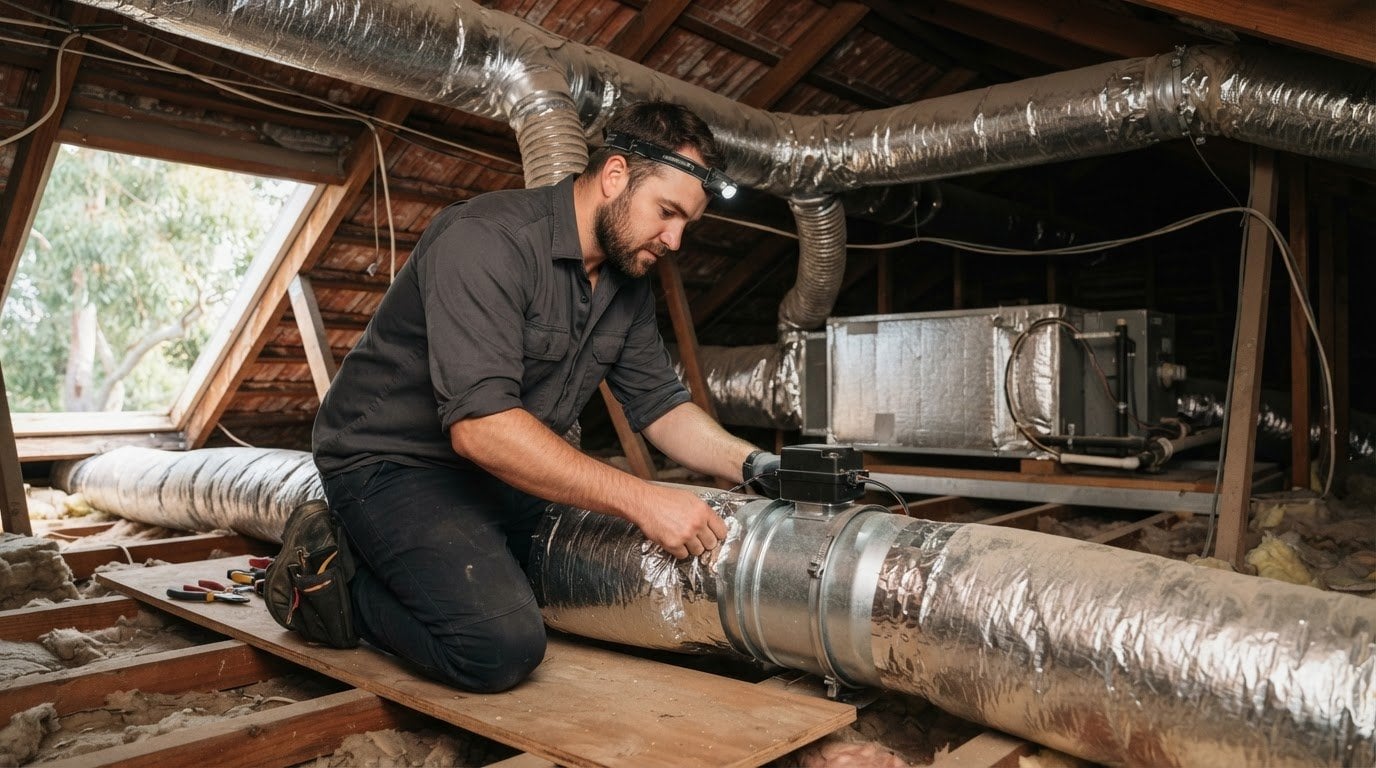
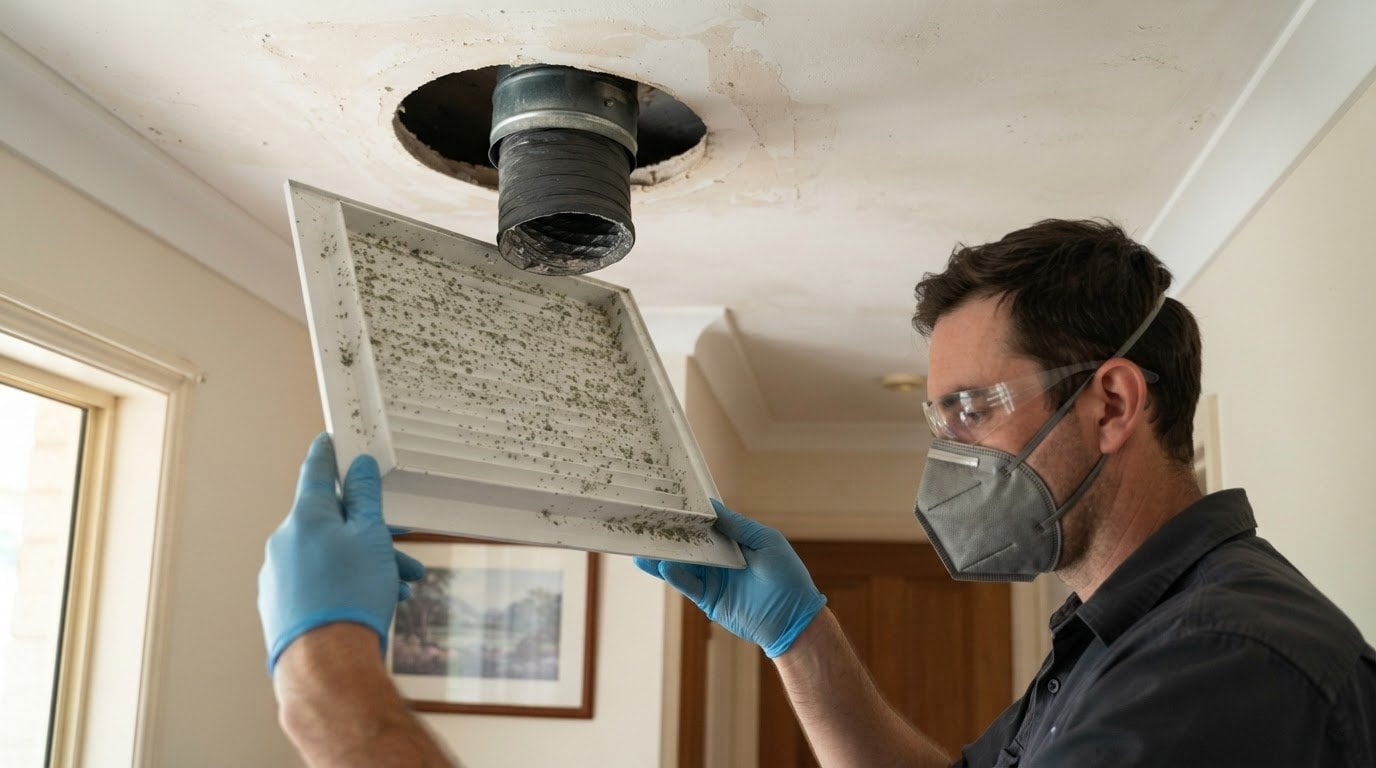
Retrofitting zones can work with different ducted air conditioning systems when the equipment has sufficient capacity and the ducts can serve the planned areas. A technician assesses whether dampers can be fitted to the existing ductwork and how airflow will behave as zones open and close. Leaks, crushed or kinked ducts, undersized ducts and poor insulation can all affect performance.
If the system already struggles to heat or cool the whole home, adding zones won’t resolve the underlying problem. For example, a bedroom that stays uncomfortable may have a duct or airflow issue, rather than needing another zone. An assessment should identify the cause before a zoning plan is settled. Sydney homes vary substantially in layout, so the arrangement needs to suit the actual duct network.
The ducted air conditioning service across Sydney is shaped by those home-specific conditions.
Retrofitting adds zoning components to the existing system, while replacement changes the system itself. The distinction helps you decide whether to keep equipment that conditions the home effectively or address broader performance issues.
Adding a zone to existing ducted aircon may suit a home where the system works well overall but occupants use rooms at different times. A household might want bedroom control overnight and living-area control during the day. If the system can’t adequately condition the home, adding a zone won’t fix underlying capacity or ductwork issues.
Compare the options by considering the system’s condition and capacity, the ductwork, and the comfort problem you want to solve. The number of zones alone doesn’t determine whether a retrofit is suitable.
Retrofit zoning uses dampers in duct branches. Smart vents adjust airflow at outlets, while a separate split system conditions a specific area. These options manage comfort in different ways, so the home’s layout and needs should guide your choice.
For example, a split system may suit one room that needs separate conditioning but can’t readily be served by the existing ducts. If several connected areas need coordinated control, assess whether the ducted system can support zoning. Smart vents adjust airflow at individual outlets rather than creating the same branch-level arrangement as motorised zone dampers.
Retrofit cost and complexity depend on damper placement, access to ductwork, control or wiring changes, and the condition of the system. The price depends on the case and is given after a quote request; the required components and scope shape the cost.
Australian requirements depend on the work involved. Ask which tasks require electrical or refrigerant work and who will carry them out under applicable requirements. Useful questions for an installer include: Can the system handle the planned zones? Will dampers fit the existing ducts? How will airflow be managed when zones close? Which controls or wiring need changes? Could duct or insulation issues affect performance?
Zoning uses dampers to direct heating or cooling through selected duct branches. Effective control depends on room temperatures and airflow working together across different zone combinations.
Room-level zoning uses dampers and controls to direct airflow to separate areas, allowing their temperatures to be managed independently. This can help when rooms have different comfort needs or usage patterns.
For example, occupants can condition bedrooms at night while limiting airflow to an unused living area. A single central thermostat measures temperature in one location, so it can’t accurately manage several independent zones. Place separate zone sensors away from direct sunlight, supply grilles, windows, appliances and other heat sources. This helps the controls respond to the room rather than a local heat source.
Airflow balancing adjusts how much conditioned air reaches each zone, while pressure management accounts for branches closing. This matters because closing dampers changes the path and volume of air moving through the ductwork.
Test the system with different zone combinations, then balance airflow for those arrangements. Return-air pathways matter too: air needs a route back to the indoor unit when doors are closed and zones run separately. A bedroom door undercut of a centimetre or two can provide a return-air path. Without a suitable pathway, closing a door can affect circulation through the room.
Minimum airflow is the volume of air the system needs to move through its indoor coil. Keeping a zone open can help maintain that flow, because closing every zone may restrict airflow beyond what the system can handle.
Zone design needs to account for the system’s minimum airflow requirement. A small room may need to share a zone with another area so the remaining open duct branches can carry enough air. Dampers should also manage the airflow continuing through open areas when other zones close. Testing different combinations helps identify pressure changes and guide the final airflow balance.
Yes. Closing zones can restrict airflow and increase duct pressure, potentially causing noise and affecting system performance. If airflow drops below the system’s minimum requirement, the indoor coil may not receive the air it needs, placing strain on operation.
For instance, running one small zone while every other damper is shut may leave too little open duct area. A constant zone, appropriate damper settings and testing across combinations help manage this risk. If you’re planning a zoning change, discuss your home’s ducted air conditioning and how its airflow can be assessed.
A zoning retrofit can combine motorised dampers, controls, temperature sensors and changes to wiring or ductwork. Each component must work with the existing system and your room-use patterns, such as heating a bedroom overnight.
Motorised dampers open or close duct branches, while a zoning controller coordinates airflow to selected areas. The controller needs to operate the dampers according to the zones you select.
For example, a bedroom zone can call for heating while the living-area branch is closed or has reduced airflow. The controller signals the relevant damper, directing air through that branch rather than treating the house as one space. Temperature sensors provide readings for the zones, and their position affects what the controller detects. A sensor near a sunny window may register local warmth rather than the room’s overall condition.
Controls can be wired or wireless, depending on the retrofit design and system compatibility. The zoning arrangement also needs to account for combinations of open and closed branches, not just the situation where every zone is operating. In a six-zone system, running two zones overnight is estimated to use 30 to 40 per cent of the electricity used when all six zones are running. The actual benefit depends on the system and how it is operated.
Wiring and controller compatibility means matching zoning controls and sensors to the existing ducted air conditioning system. This matters because dampers need clear control signals and the controller must support the planned zones.
A retrofit may require additional wiring or wireless controls, temperature sensors and a compatible zoning system. The existing controller’s capabilities and duct layout determine what can be integrated. For instance, a home with central control may need additional zone controls and sensors to manage bedrooms separately from living areas.
Installation planning considers where dampers can be fitted, how their actuators connect, and how controls communicate with the system. Ductwork changes may also be needed to create usable branches for the planned zones. Compatibility isn’t just a matter of whether a controller powers on: the system must coordinate zone calls with heating or cooling and maintain appropriate airflow through the indoor unit.
Controlling occupied areas can reduce the need to condition unused rooms. The controller can direct operation to the bedroom at night, then shift control to living areas during the day. Room-use patterns should shape the zoning plan, rather than adding controls without considering when each space needs heating or cooling.
Plan zones around room use, how spaces connect and the effect of sunlight on comfort. A ducted system also needs a central area that can remain supplied with air.
Room grouping means placing spaces with similar schedules and comfort needs in the same zone. This matters because rooms in a zone are more likely to need heating or cooling at similar times.
For example, bedrooms used overnight may suit a shared zone, while a living area used during the day can operate separately. A study used during the day might fit with the living area, depending on its layout and sun exposure. Rooms with different usage patterns, ceiling heights or sun exposure may need separate control.
A typical Australian family home is advised to have four to six zones, while many three- and four-bedroom Sydney homes may suit four to eight. These are planning guides, not a room-by-room formula. The ducted system’s minimum airflow also affects grouping: combining smaller rooms can help keep enough duct area open when other zones close.
Connected spaces need particular care. An open-plan living, dining and kitchen area may work as one broad zone, or need separate control if its layout and use differ. A central zone that remains supplied with air can also support the system’s airflow needs. Final room grouping should reflect how occupants move between spaces, not just the number of doors or outlets.
Room-size and storey planning matches zone boundaries to space, orientation and floor level. This matters because a small enclosed bedroom responds differently from a large, sunlit living area.
As a guide, one zone may suit a room smaller than 12 sqm2, such as a small bedroom, study or laundry. A master bedroom measuring 12-16+ sqm2 is also listed for one zone. A kitchen larger than 14 sqm2 may warrant one zone, while an open-plan living, dining and kitchen area larger than 35 sqm2 may need one or two.
Windows, natural light and passive heating or cooling influence how quickly rooms gain or lose warmth. A west-facing room with strong afternoon sun may need separate control from a shaded room used on the same schedule. Consider these factors alongside floor area: assigning zones by room size alone can overlook real comfort differences.
In a larger two-storey home or one with multiple living areas, six to eight zones may be appropriate. Separate zones for each floor can help manage different conditions between storeys. The layout still needs a central area supplied with air and enough open ductwork for the selected zone combinations. Discuss your home’s layout and zone plan before deciding which rooms should share control.
Peninsula Air Conditioning (PenAir) can assess your ducted system and plan zoning around its capacity, ductwork and room use. This is a practical next step if areas of your Sydney home need different heating or cooling, or you’re unsure whether the existing system can support extra zones.
Our Ducted Systems service considers how the equipment and airflow suit the proposed layout. If the system needs attention before zoning, Service & Maintenance can address its condition as part of the wider plan. If a separate room needs conditioning, a split system may also be worth discussing.
Contact Peninsula Air Conditioning (PenAir) to discuss your home and ducted air conditioning needs.
If you’re considering adding a zone to your existing ducted aircon, start with the comfort change you want to make. Think about which rooms feel uncomfortable, when you use them and how they connect to other areas. These details help turn a general request into a practical zoning plan for your household.
Peninsula Air Conditioning (PenAir) can assess your ducted system and discuss options suited to its layout and condition. If the system needs attention, Service & Maintenance can be part of the wider conversation. If one room needs its own conditioning, a Split System may also be relevant. Match the equipment and proposed work to your home rather than choosing zones by room count alone.
Share the areas you’d like to manage differently and what you want to improve. Talk with Peninsula Air Conditioning (PenAir) about your zoning plans and take a considered next step towards a more comfortable home.
Often, yes, if the existing system works with compatible zoning controls. An older unit’s age alone doesn’t determine suitability. The control interface, damper actuators, wiring and sensor options all matter. Some retrofits use additional wiring, while others may use wireless controls. The controls need to operate the dampers and coordinate with the air conditioner, not simply offer app or smart-home features.
Zone dampers have moving parts, so their operation can be checked during system maintenance. A damper that sticks, makes unusual noise or fails to direct air as expected may affect comfort in its zone. Mention symptoms such as a room receiving little airflow when its zone is selected. A technician can inspect the damper and its controls when assessing system operation.
Zoning can reduce the energy used to condition unoccupied areas, such as living rooms overnight. The actual effect depends on which zones remain open, how the system operates and conditions in the home. For a useful comparison, consider similar weather and settings, then compare operation when conditioning occupied areas with operation across the whole home. Savings aren’t automatic.
A technician balances airflow by assessing how the system performs with different zones operating, then adjusting the distribution. For example, they can compare a bedroom-only setting with a living-area setting and check whether each receives suitable airflow. The assessment should also consider the return-air path and how the system behaves as dampers open or close. Avoid changing damper settings without understanding the effect on other zones.
Retrofitting can be worthwhile when household routines differ by area, such as bedrooms being used overnight and living spaces during the day. It gives you more control over where conditioned air goes, but the benefit depends on whether the existing system can support the arrangement. If the system already struggles to condition the home, address that performance issue before treating zoning as the solution.
Yes, you can add zones to an existing ducted air conditioning system in Australia if its capacity, ductwork, controls and airflow support the proposed layout. An assessment helps determine whether the existing ducts can serve separate areas and compatible controls can operate them. The design also needs to account for how the system performs as zones open and close, rather than relying on room count alone.