
Air conditioning can be used in homes with babies and children when the system is correctly positioned, installed and operated according to the manufacturer’s instructions. Child friendly aircon solutions also keep cool air from blowing directly onto cots or play areas and prevent little hands and toys from reaching vents.
It’s understandable to want a cooler room without creating new worries about airflow, filters or access to the unit. This guide explains how to manage room temperature, choose a safe position for the system, use vent covers and filters, and reduce overheating risks for children.
You’ll also find practical ways to make hot nights more comfortable and learn when the priority should be keeping children cool, rather than adjusting the air conditioner. The aim is a comfortable home where the cooling works well and suits the people using each room.
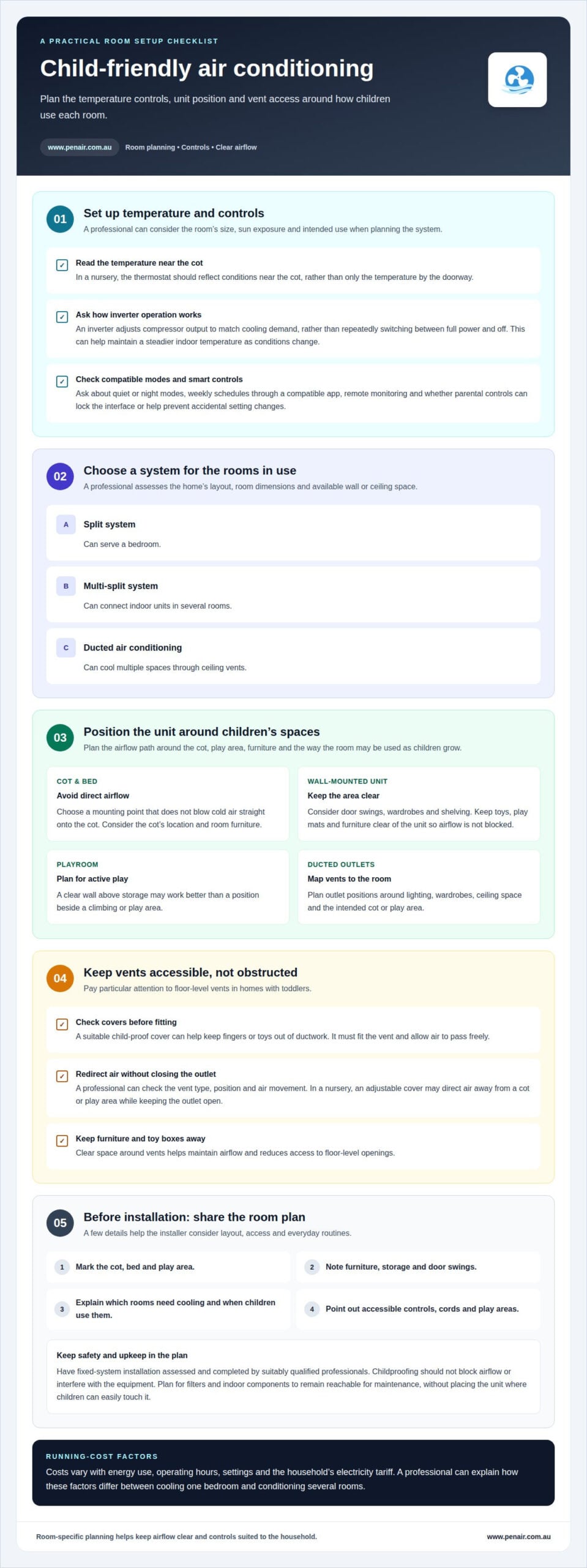
A comfortable bedroom temperature can support a child’s comfort and sleep. A professional considers the room’s size, sun exposure and intended use when setting up air conditioning. In a nursery, the thermostat should reflect the conditions near the cot, not just the temperature by the doorway. In Sydney homes, afternoon sun and room layout can affect how evenly a space cools. Well-planned child friendly aircon solutions consider those room-specific conditions from the outset.
An inverter air conditioner adjusts compressor output to match cooling demand instead of repeatedly switching between full power and off. This can help maintain a steadier indoor temperature as conditions change. A professional assesses system capacity and placement, then explains how to use its settings. Parents can ask about quiet or night modes on compatible systems, which can reduce operating noise and suit a child’s bedtime routine.
Smart controls add flexibility. During installation, a professional can show parents how to set a weekly schedule through a compatible smartphone app, so the bedroom, for example, starts cooling before bedtime. Some smart thermostats allow the interface to be locked or settings to be managed remotely. If parental controls are available on the selected system, the installer can demonstrate how they help prevent children from changing the temperature accidentally.
Remote monitoring can help parents adjust settings while they’re away, if the air conditioner supports app control. A professional can explain which controls work through the wall unit and which are available in the app. Parents might use the app to adjust a schedule when a child’s routine changes. This practical setup is another part of child friendly aircon solutions, especially when several adults care for the child.
Running costs for split-system, ducted and portable air conditioners vary with energy use, operating hours, settings and the household’s electricity tariff. A professional can explain how these factors differ between cooling one bedroom and conditioning several rooms.
During an assessment, parents can describe which rooms need cooling, when children use them and any bedtime concerns. Those details help guide system selection and controls. In Sydney, thoughtful planning can match temperature settings to the home’s layout and daily routine.
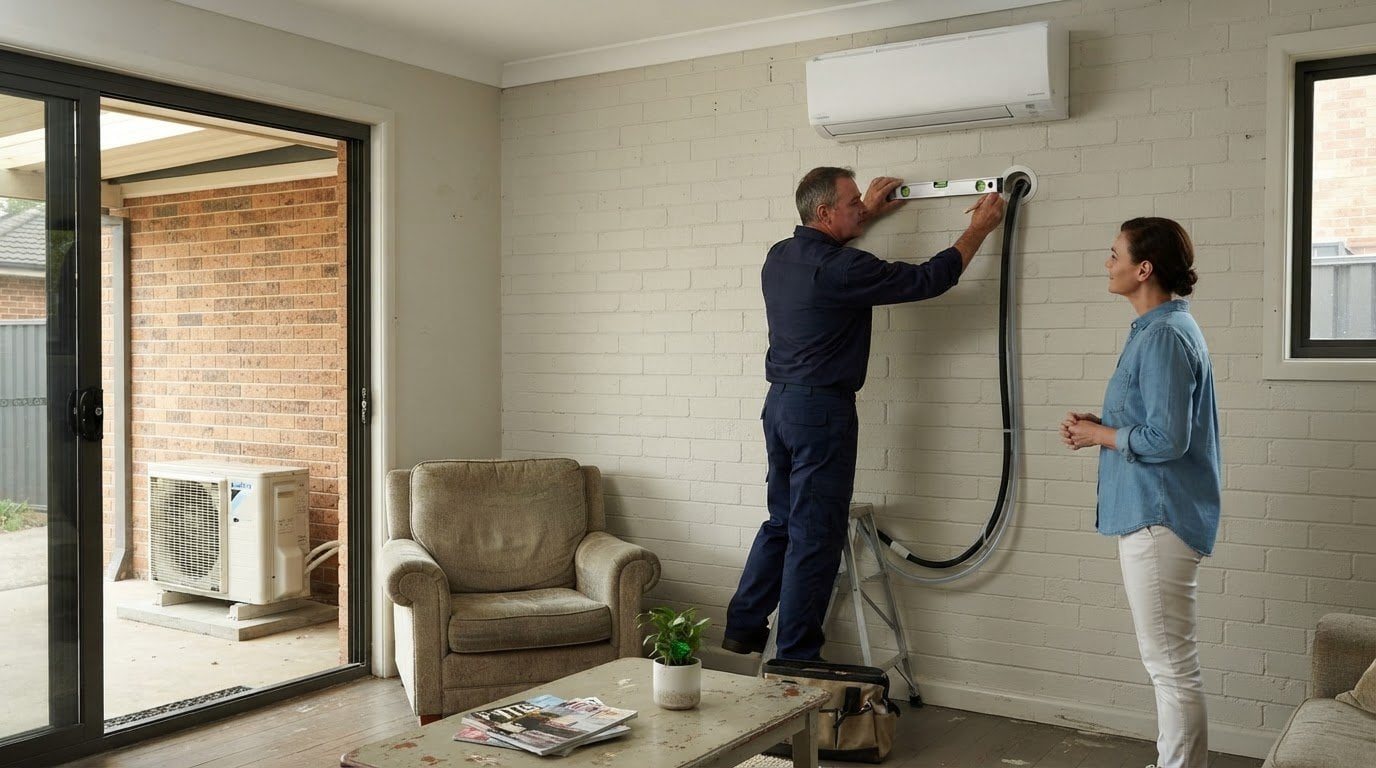
For families with young children, the right system depends on the home’s layout and which rooms need cooling. A split system can serve a bedroom, while a multi-split system can connect indoor units in several rooms. Ducted air conditioning can cool multiple spaces through ceiling vents. A professional assesses room dimensions, available wall or ceiling space, and how the family uses each room before recommending a setup.
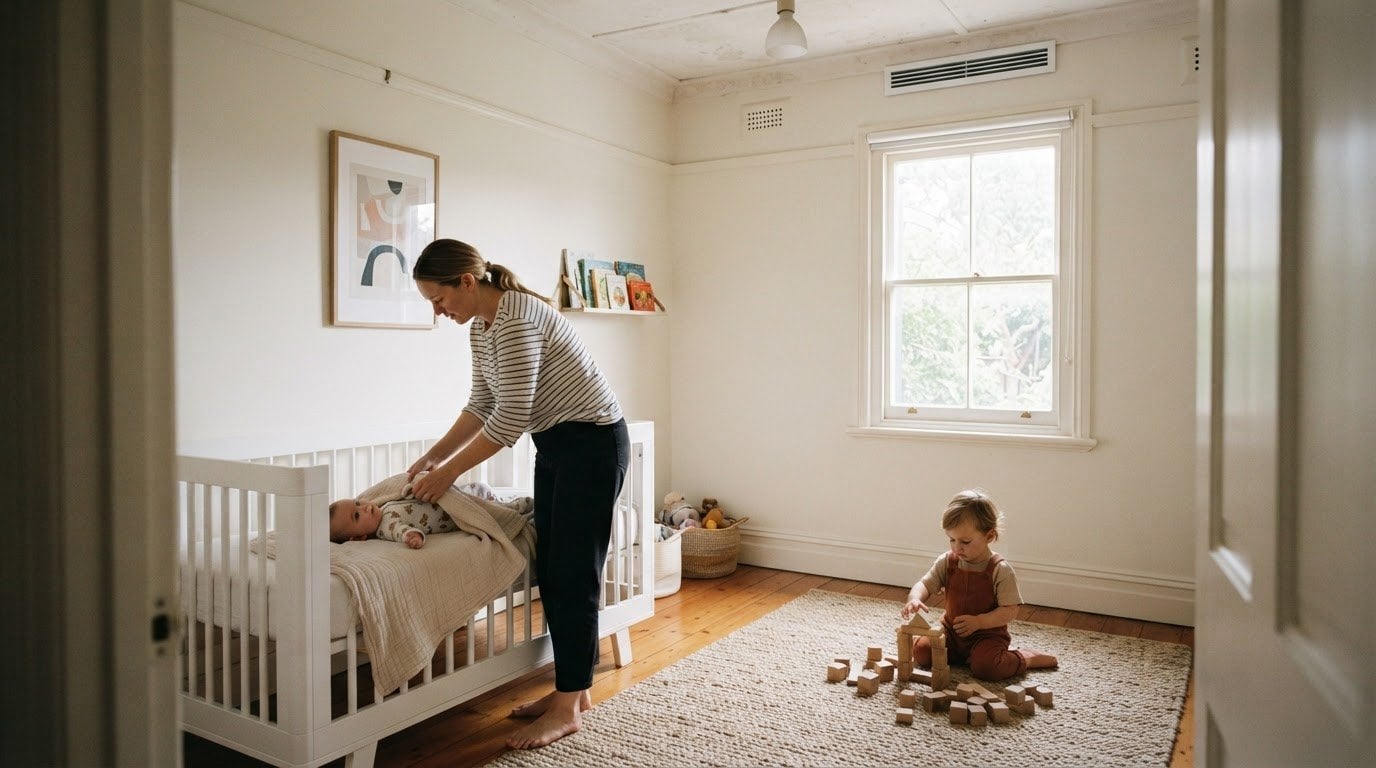
In a nursery, position the indoor unit so it doesn’t direct cold air onto the cot. The installer considers the airflow path, cot location and room furniture before selecting a mounting point. A high wall position may preserve floor space, for example, but the airflow still needs to circulate without blowing straight across where a baby sleeps. Parents can explain the room’s usual layout, including planned cot or change-table positions.
Plan for the way a room will be used as children grow. Keep toys, play mats and furniture clear of indoor units and vents so they don’t block airflow or invite tampering. When positioning a wall-mounted unit, an installer can consider door swings, wardrobes and shelving. In a playroom, a clear wall above storage may work better than a spot beside a climbing or play area.
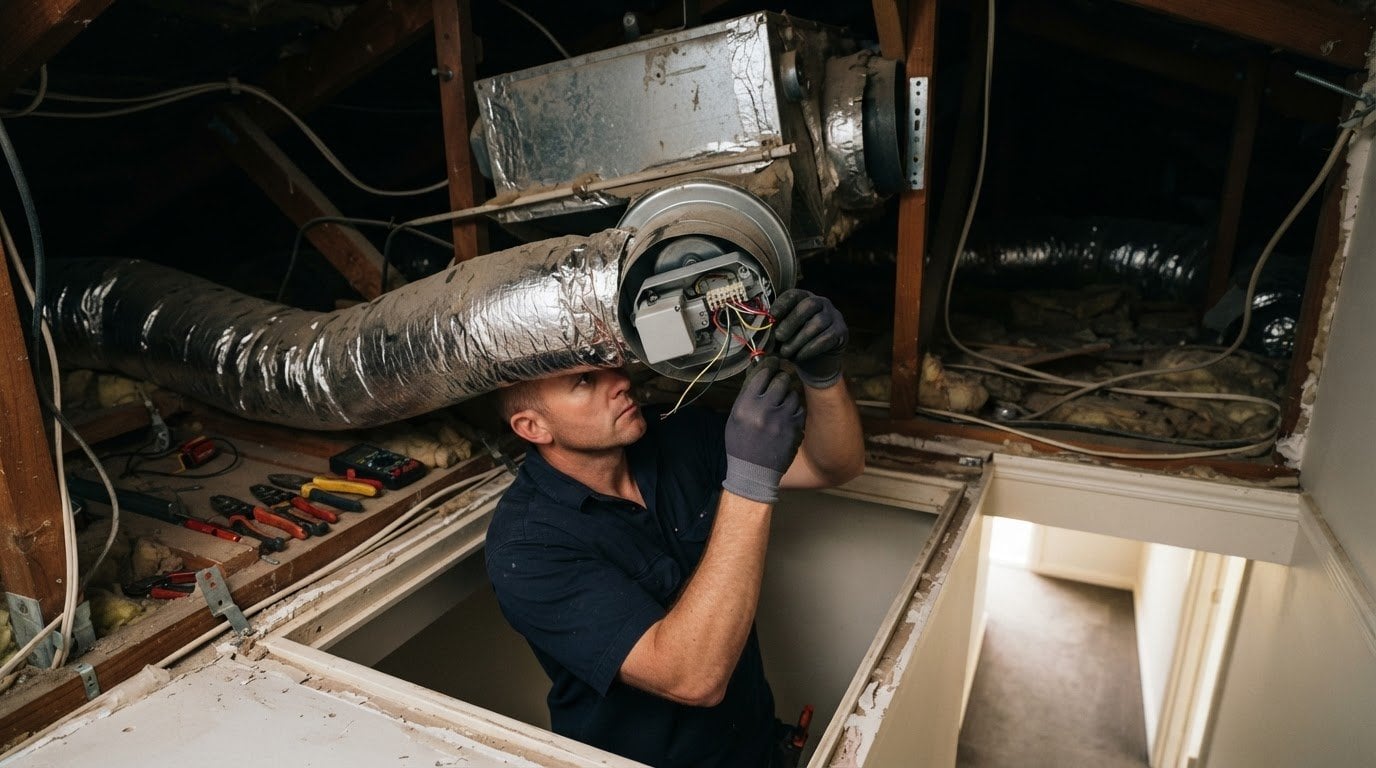
For ducted systems, vent positions affect how air reaches the room and how much ceiling space installation uses. A professional plans outlet locations around lighting, wardrobes and the intended cot or play area. Floor-level vents need particular attention in homes with toddlers, as small fingers and toys can reach them. Keeping furniture and toy boxes away from vents also helps maintain clear airflow.
Australian electrical safety considerations include keeping children away from electrical components and having fixed-system installation assessed and completed by suitably qualified professionals. Childproofing should not block airflow or interfere with the equipment. During installation, parents can point out accessible controls, cords and children’s play areas so these can be considered in the layout. Covers or barriers should not obstruct a vent or create another hazard.
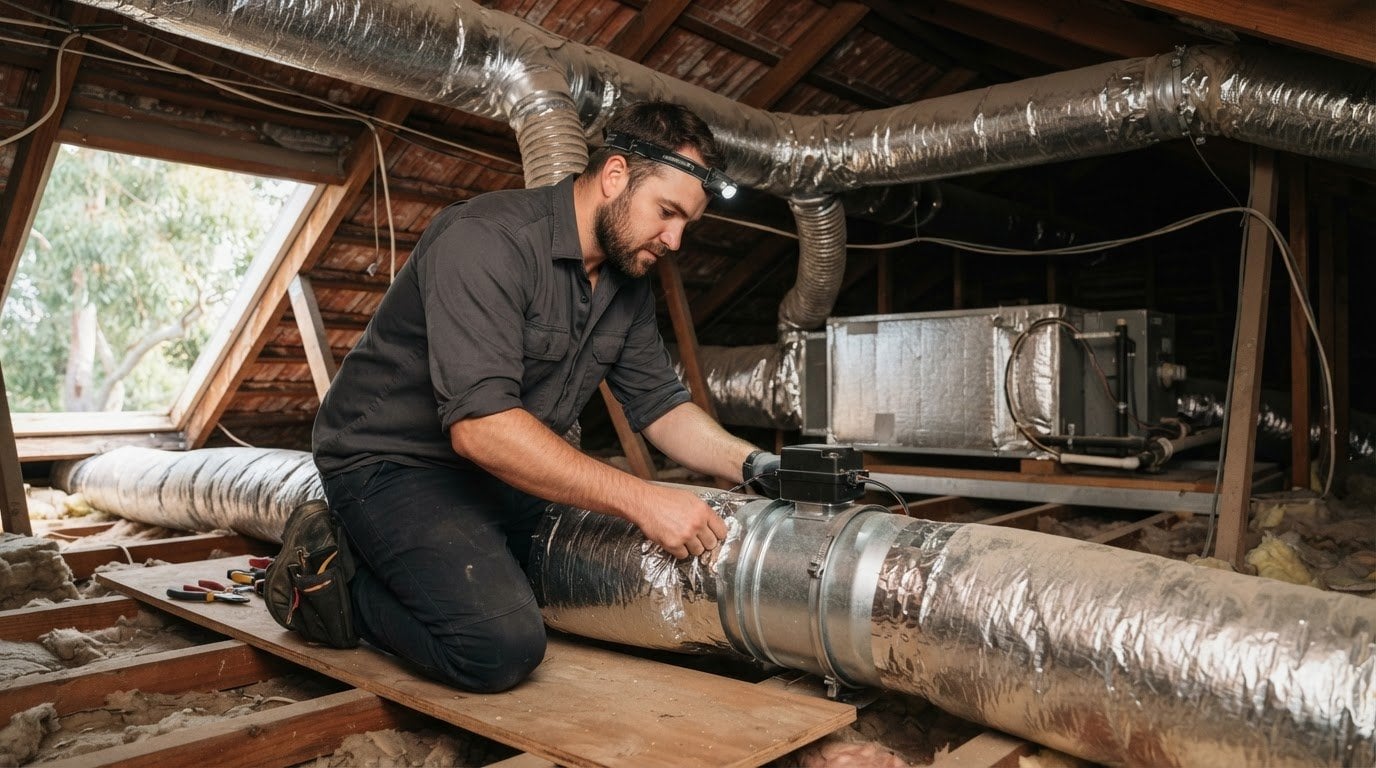
Good placement balances access for servicing with a clear, usable room. The installer needs to consider how filters and indoor components can be reached for maintenance, without placing the unit where children can easily touch it. Before work begins, parents can share a simple room plan and identify the cot, bed, play area and storage. For advice on an installation suited to your home, contact the team.
For families considering child friendly aircon solutions, vent covers need to protect curious children without restricting airflow. A professional checks the vent type, position and air movement before recommending a suitable cover or redirector. In a nursery, an adjustable cover can help direct air away from a cot or play area while keeping the outlet open. The aim is to preserve airflow and keep the room comfortable during cooling or heating.
Floor-level vents need particular care in homes with toddlers. A child-proof cover can help prevent fingers or toys from entering ductwork, but it must fit the vent and allow air to pass freely. During installation, a professional can also check older vents for loose edges, sharp corners and exposed screws. Covering these or replacing them with child-safe alternatives can help reduce accessible hazards during everyday play.
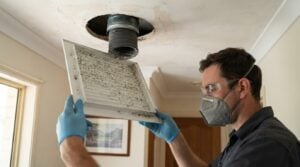
Choose a filter to suit the system and household’s needs. Suitable high-quality filters can trap dust, pollen and pet dander, which may help children with allergies or sensitive respiratory systems. Titanium apatite and silver allergen filters can help trap pollen and odours from pets and tobacco smoke. A professional matches the filter to the equipment rather than fitting one that could interfere with airflow.
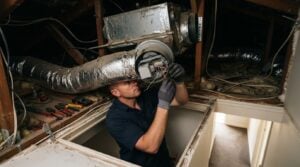
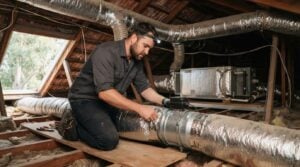
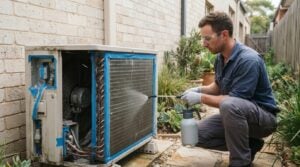
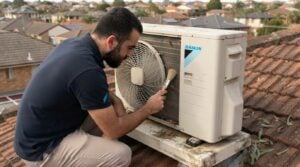
Professional filter maintenance helps reduce dust build-up and supports indoor air quality. During a service, a technician checks the filter’s condition, cleans or replaces it as appropriate, and inspects accessible components for dirt or moisture. Routine maintenance can reduce the risk of air-quality concerns and help identify leaks or other issues. The filter type and manufacturer’s instructions guide maintenance for each system.
A filter may capture some airborne particles, but it won’t remove mould growing on a surface or address the source of moisture. If a technician notices signs of moisture or visible build-up during maintenance, they can assess accessible air-conditioning components and explain appropriate servicing. Addressing leaks and keeping system components clean can support a more comfortable indoor environment, including in children’s bedrooms.
Tell the technician which vents children can reach and where they usually play. This context helps them assess covers, airflow direction and filter access together. A planned approach to child friendly aircon solutions considers both protection and system operation. Professional air conditioner cleaning can form part of a maintenance routine, while the manufacturer’s instructions guide filter care between visits.
A comfortable indoor temperature can help children rest, but their comfort needs may vary. Use the air conditioner to keep the room comfortable, rather than directing cold air straight at a child. Babies need particular care during extreme heat, so follow current Australian safe-sleep advice on clothing, bedding, room temperature and fans or air conditioning.
Children may not recognise or explain that they’re becoming too hot. During warm weather, offer water regularly rather than waiting for them to feel thirsty. Lightweight sleepwear and bedding can make hot nights more comfortable, while suitable fans or air conditioning can cool indoor spaces. Avoid extremely cold water and never put ice directly on a child’s skin.
Take practical steps around the home as outdoor temperatures change. Close curtains and blinds before direct sunlight reaches windows, and keep windows shut while outdoor air is hotter than indoors. Open windows again when temperatures drop and conditions allow. Check the Bureau of Meteorology forecast and heatwave warnings, then plan outdoor activities for early morning when conditions are suitable.
If the house becomes uncomfortably hot, spend time in its coolest area and use fans or air conditioning where available. Families can also find relief in an air-conditioned public place, such as a library, shopping centre, museum or community centre. For example, plan indoor activities during the hottest part of a heatwave, then ventilate the home when outdoor air cools.
Pay close attention if a child becomes unwell in hot conditions. Move them to a cooler place and seek appropriate medical advice. For current information about heat-related illness, dehydration and caring for children in extreme heat, consult Healthdirect and your state or territory health department. These steps support comfort, but they don’t replace urgent care if a child may be seriously unwell.
In Australia, call Triple Zero (000) if someone is seriously unwell or may have heatstroke, according to the Australian Communications and Media Authority. Keep this emergency number in mind during hot weather, especially when caring for babies or young children who may struggle to describe how they feel.
For professional help planning air conditioning around children’s comfort and room use, contact the team about your home.
Keep these measures practical and consistent: offer water often, choose lightweight sleepwear and bedding, and use fans or air conditioning appropriately when available.
If a child becomes unwell, move them to a cooler place and seek appropriate medical advice.
Peninsula Air Conditioning (PenAir) helps Sydney families plan air conditioning around children’s comfort, room use and safe system placement. We install and maintain split, multi-split and ducted systems, taking the home’s layout and the rooms needing cooling into account. If you’re planning a new system, changing how bedrooms are cooled or arranging maintenance, we can help you consider suitable options for your household.
Share which rooms your children use, where they sleep and any airflow concerns. These details help guide the discussion about system placement and temperature control. For help with your home’s air conditioning, contact Peninsula Air Conditioning (PenAir).
A child’s room changes over time, and the cooling setup should suit those changes. As furniture moves or a nursery becomes a playroom, the system’s position, airflow and controls need to work for how the space is used. Thinking ahead helps you discuss practical options for your home, rather than focusing on equipment alone.
Peninsula Air Conditioning (PenAir) helps families consider child friendly aircon solutions with split systems, ducted systems, and service and maintenance. Start with your household’s needs, such as which rooms matter most and how you use them throughout the day. A professional can then discuss an appropriate system or maintenance support without adding unnecessary complexity.
When you’re ready to plan a comfortable home for your family, contact Peninsula Air Conditioning (PenAir) to discuss your air-conditioning needs. A considered next step can help you feel more confident about the spaces where your children sleep and play.
Yes, air conditioning can be used in family homes when the system is correctly positioned, installed and operated according to the manufacturer’s instructions. Safety also depends on the room setup: keep children away from equipment, cords and vents, and make sure airflow doesn’t blow directly onto a cot. For babies, follow current Australian safe-sleep advice on room temperature, clothing, bedding and fans or air conditioning.
A suitable system fits the home’s layout and the rooms that need cooling. A split system cools a specific area, a multi-split system allows individual climate control across multiple rooms, and ducted systems condition air in more than one area. Suitability also depends on positioning indoor units and vents away from cots and play zones, while considering controls and accessible components during installation.
Ask the installer to assess the unit’s position in relation to the child’s bed, windows and usual play space. Airflow direction, system settings and room layout all affect comfort. If the unit offers a quiet or night mode, use it as directed in the manufacturer’s instructions. Parents can also keep a consistent bedtime routine and note whether the room feels too cool or warm overnight.
Portable units need careful positioning because children can reach their hoses, cords and water tanks. Place the unit where it cannot be pulled or tipped during play, route cords away from walking paths, and secure the exhaust hose as directed by the manufacturer. An adult should empty the tank and keep the water container out of children’s reach. Supervise children around the appliance and follow its operating instructions.
During hot nights, use air conditioning or a fan appropriately, choose lightweight sleepwear and bedding, and offer children water regularly. Follow current safe-sleep advice when caring for babies. If a child becomes unwell, move them to a cooler place and seek medical advice. According to the Australian Communications and Media Authority, call Triple Zero (000) if someone is seriously unwell or may have heatstroke.