
A smart controller can make ducted air conditioning easier to manage, but compatibility with your existing system comes first. Smart home ducted aircon integration can add app-based temperature control, mode selection and scheduling. Some Australian ducted systems with 240V zone motors may need an upgrade to 24V motors for smart controller compatibility.
It makes sense to want convenient control without replacing equipment that still works well. The right setup depends on how your ducted system communicates, which controller it supports and whether its zone motors are compatible. This guide explains when smart home ducted aircon integration may suit your home, what affects the upgrade and installation scope, and how compatibility shapes the work. You’ll also learn what installation involves, so you can weigh practical options before choosing a setup.
A smart controller can add app-based temperature, mode and scheduling controls to a compatible ducted system. The benefits depend on how the air conditioner communicates and manages its zones.
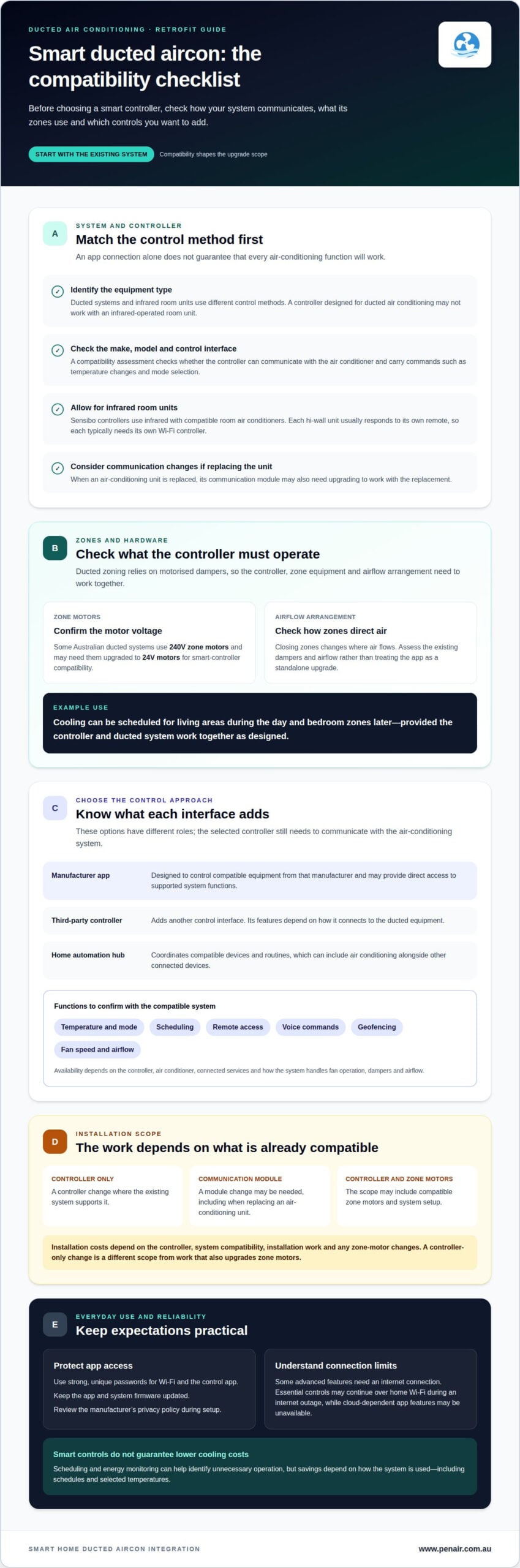
A smart controller links air-conditioning controls to an app, but ducted systems and infrared room units use different control methods. This matters when selecting equipment: a controller designed for ducted air conditioning may not work with a room unit operated by infrared.
Sensibo controllers use infrared to control compatible room air conditioners. Because each hi-wall unit usually responds to its own infrared remote, each typically needs its own Wi-Fi controller. Ducted system compatibility depends on the control interface. If you replace an air-conditioning unit, its communication module may also need upgrading to work with the replacement.
A compatibility assessment matches the controller to the air conditioner’s make and model, then checks whether the system can carry commands such as temperature changes and mode selection. This helps avoid assuming that an app connection alone will make every function available.
Ducted zone control directs conditioned air to selected areas through motorised dampers in the ductwork. Smart integration can make those zones easier to manage, but the controller must operate the existing zone equipment correctly.
For example, a household might schedule cooling for living areas during the day and bedroom zones later. Closing zones changes where air flows, so the controller and ducted system need to work together as designed. A retrofit assessment considers the controller, zone motors and airflow arrangement, rather than treating the app as a standalone upgrade.
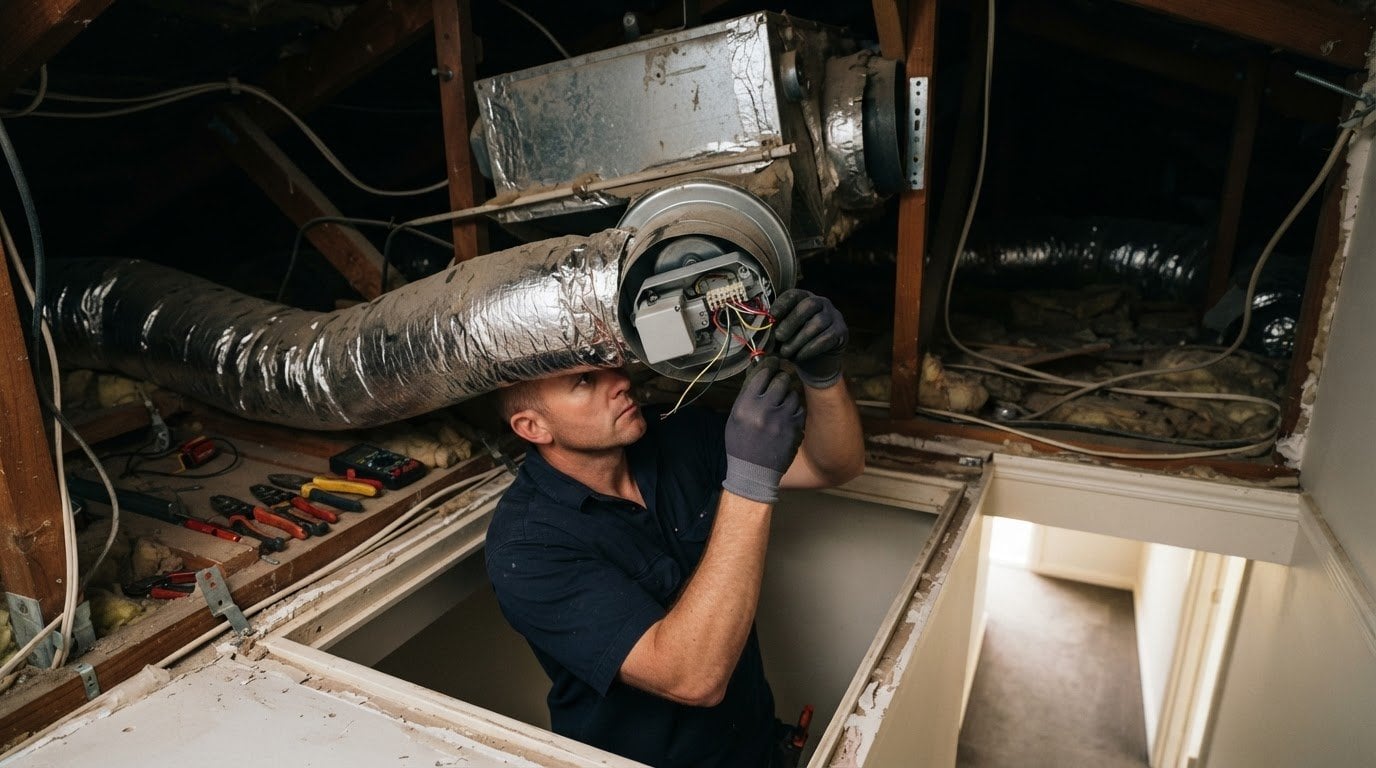
Some Australian ducted systems with 240V zone motors may require 24V motors for smart-controller compatibility. The motor type can therefore affect the retrofit scope. In Sydney homes, an assessment of the existing air conditioning system helps determine how controller integration relates to the ducted equipment already installed.
Smart ducted control connects household settings to an app and network, making privacy and account security important. Use strong, unique passwords for your Wi-Fi network and control app, keep the app and system firmware updated, and review the manufacturer’s privacy policy during setup.
Some advanced features need an internet connection, while essential controls may continue to work over home Wi-Fi during an internet outage. This affects remote access and reliability: app features that rely on cloud services may be unavailable even when local network functions remain accessible.
Scheduling and energy monitoring can help identify unnecessary operation and support informed cooling choices. However, savings depend on how you use the system, including schedules and selected temperatures. Smart controls alone don’t ensure lower cooling costs. Check which monitoring and control functions your compatible system provides before relying on them.
Upgrade costs depend on the controller, how it communicates with the ducted system, installation work and any related changes. A manufacturer app controls compatible equipment directly; a third-party controller adds another control interface, while a home automation hub connects compatible devices and routines.
Smartphone and tablet controls can let you adjust compatible air conditioning remotely, schedule operation and, on some systems, use voice commands. These features are useful if you want to change settings from elsewhere or organise cooling around your routine.
Some smart systems support Amazon Alexa and Google Assistant, while some models also support Apple Siri. Geofencing uses a smartphone’s GPS to adjust settings as you approach or leave home. Check the selected controller’s supported functions, as remote access, schedules, geofencing and voice control may depend on compatibility and connected services.
App controls may also let you adjust fan speed and airflow direction if the air conditioner and controller provide those settings. A ducted system may manage airflow through its zones rather than offer a separate direction setting for each room. Available controls depend on how the system handles fan operation, dampers and airflow.
A manufacturer app is designed to control compatible equipment from that manufacturer. A third-party controller offers another way to send commands, while a home automation hub coordinates compatible devices and routines. Understanding the difference helps clarify what an upgrade adds and which interface will manage everyday settings.
For example, a manufacturer app may directly control supported system functions, while a hub can include air conditioning in routines with other connected devices. A third-party controller’s features depend on how it connects to the ducted equipment. Compatibility is key: the controller must communicate with the air conditioner and provide the functions you want.
These are different scopes of work, not interchangeable estimates.
The project scope depends on whether the existing system supports the controller, whether a communication module needs changing and whether zone motors need upgrading. Installation work also affects the total. A controller-only change, for example, differs from a project that includes compatible zone motors and setup.
The price depends on the case and is provided after a quote request, with the controller, system compatibility, installation work and any zone-motor changes shaping the scope. To discuss a ducted controller upgrade, contact PenAir.
Before installation, the controller must match the air conditioner, zone motors and communication method. For Australian installations, requirements depend on the work involved, particularly if fixed wiring is changed. Warranty conditions are set by the equipment manufacturer.
A Wi-Fi adaptor connects a compatible air conditioner to a home network, while zone motors operate dampers that direct ducted airflow. Matching these components matters: the adaptor must communicate with the unit, and the controller must operate the zone hardware correctly.
Compatible split systems can often gain smart functions through a manufacturer’s Wi-Fi adaptor. Ducted systems need a controller suited to their interface and zone setup. An assessment considers the air-conditioner model, adaptor connection, existing controller and motor type. This clarifies whether existing components can be used or further work is needed.
Planning smart home ducted aircon integration starts with identifying the system components, not choosing an app first. An assessment also helps define the retrofit scope. Keeping a suitable air conditioner and upgrading its controls differs from replacing the system, which changes the equipment too. The right option depends on the existing unit’s condition and compatibility, as well as the control features you want.
Pre-installation checks cover the air-conditioner model, controller communication method, adaptor connection, zone motors and home Wi-Fi. Wiring requirements depend on the equipment and work involved. These details help establish whether the proposed controller can provide the intended functions.
For smart home ducted aircon integration, setup involves connecting compatible hardware, pairing the controller with its app and testing commands. The installer can test temperature, operating mode and zone selection. If a command fails, troubleshooting can follow the connection from the network and app pairing through controller communication to the relevant zone.
Start by identifying what isn’t working: app access, the whole-system response or one zone. An app that won’t connect points to pairing or network setup. A system that ignores app commands may have a communication issue, while an unresponsive zone directs attention to its control path or motor. Leave wiring work to a qualified installer and follow the equipment instructions for app setup.
For example, a home may need a controller compatible with its ducted system while retaining suitable zone motors. Reviewing the ducted air-conditioning setup clarifies how the controls and airflow arrangement fit together. That assessment keeps the installation focused on practical outcomes: dependable control and comfort in the areas that matter to your household.
Digital and analogue controls send instructions between a ducted air conditioner and its controller in different ways. Ducted systems installed in the last 10-15 years mostly use digital communication, but age alone doesn’t identify the control method in a particular home.
Digital communication uses encoded signals to carry commands between system components. Depending on the equipment, these may include operating mode, temperature or other settings. Analogue control uses changing electrical signals to operate equipment. The distinction matters because a smart controller must communicate in a way the air conditioner recognises. A device designed for one control method cannot be assumed to work with another.
For example, a digital controller may exchange specific instructions with the indoor unit, while an analogue interface may respond to changing signal levels. This affects which functions the controller can access. The system’s control method also influences whether integration can use existing equipment or requires a compatible interface. The controller’s product information and the air conditioner’s model details help identify the communication requirements.
System age offers a useful starting point, not a final diagnosis. The 10-15-year guide describes what is common among ducted installations, not a rule for every home. A newer system may still have particular compatibility requirements, while an older one may use controls that support a suitable upgrade. The actual model and control interface are more useful than installation date alone.
During an assessment, the installer can identify the indoor unit, existing wall controller and communication connection. They can then compare those details with the smart controller’s supported system types and functions. This helps establish whether the technology can issue the commands the air conditioning system needs, rather than merely appearing in an app.
Digital compatibility can also determine which controls are available. A controller might support basic on-and-off commands but not every function of the original system. For instance, temperature adjustment and mode selection may be available, while other settings depend on the communication link and controller design. The product specifications and system interface determine the practical control options.
For a Sydney home, identifying digital or analogue communication is a useful part of planning an integration. It narrows down compatible devices and helps define the installation scope before work begins. If you’re considering a compatible controller for your ducted system, contact PenAir to discuss your setup.
Peninsula Air Conditioning (PenAir) installs and maintains ducted air conditioning systems for homes across Sydney. If you’re considering smart home ducted aircon integration, the existing system’s communication method, zone motors and condition all shape the upgrade. PenAir’s ducted systems service can help you understand how installation, maintenance or repairs relate to your home’s setup.
For an existing system, service and maintenance can address its condition as you plan future control changes. For a new installation, discussing your preferred controls early helps align system selection and setup with how you use different areas of your home.
Contact Peninsula Air Conditioning (PenAir) to discuss your ducted air conditioning needs.
Before making changes, consider how your household wants to use its air conditioning day to day. Which rooms need comfort at different times? Who should be able to adjust the settings? Clear priorities can shape a setup that suits your routines, rather than adding technology for its own sake. Smart home ducted aircon integration works best as part of a considered plan for your home.
Peninsula Air Conditioning (PenAir) provides ducted systems, service and maintenance, and split systems across Sydney. If you’re planning an upgrade or reviewing an existing setup, discuss how you use your system and what you want its controls to do. This can help identify the right next step for your household.
Talk with Peninsula Air Conditioning (PenAir) about your home’s air conditioning needs. A well-planned approach can make everyday comfort simpler to manage.
The cost depends on what your existing system needs, and is provided after a quote request. A controller-only upgrade has a different scope from work involving zone motors, communication components or broader system changes. The main factors are your air conditioner’s compatibility, the controller selected and the installation required. These details define the project before you decide how to proceed.
Smart-control support depends on the air conditioner’s model, control interface and compatible controller, not just its brand. Some ducted systems can connect to smart controls, while others need compatible communication hardware or changes to zone controls. Smart climate-control technology can be used with compatible ducted systems. Start by matching the specific system and controller functions to the controls you want at home.
Connect through the compatible air-conditioning app, then link a supported voice assistant if the controller and system allow it. Some smart air-conditioning systems support Amazon Alexa or Google Assistant, while Apple compatibility depends on the model. Check whether your chosen controller supports the assistant and commands you want, such as changing temperature or operating mode. HomeKit support also depends on compatible equipment.
Yes, an existing ducted system may be retrofitted with smart controls if its communication interface and zone equipment are compatible. This can suit a home where the air conditioner still meets household needs but its controls are due for an upgrade. The retrofit scope depends on the existing controller and motors. If wider changes are needed, compare those requirements with replacing the equipment.
Controller and installation costs depend on the system and work involved, with pricing provided after a quote request. Consider whether the job covers a controller alone or also requires communication hardware, zone-motor changes or additional installation work. For example, an existing system that can use its current zone equipment has a different scope from one requiring motor upgrades.
A compatible system and controller can manage schedules and ducted zones where those functions are supported. Independent room temperatures require suitable sensing and zone-control features, so they aren’t automatic in every setup. For example, a schedule could operate selected living areas at one time and bedroom areas later, while sensor-based temperature control depends on compatible equipment. The controller’s available functions determine the level of independent control.