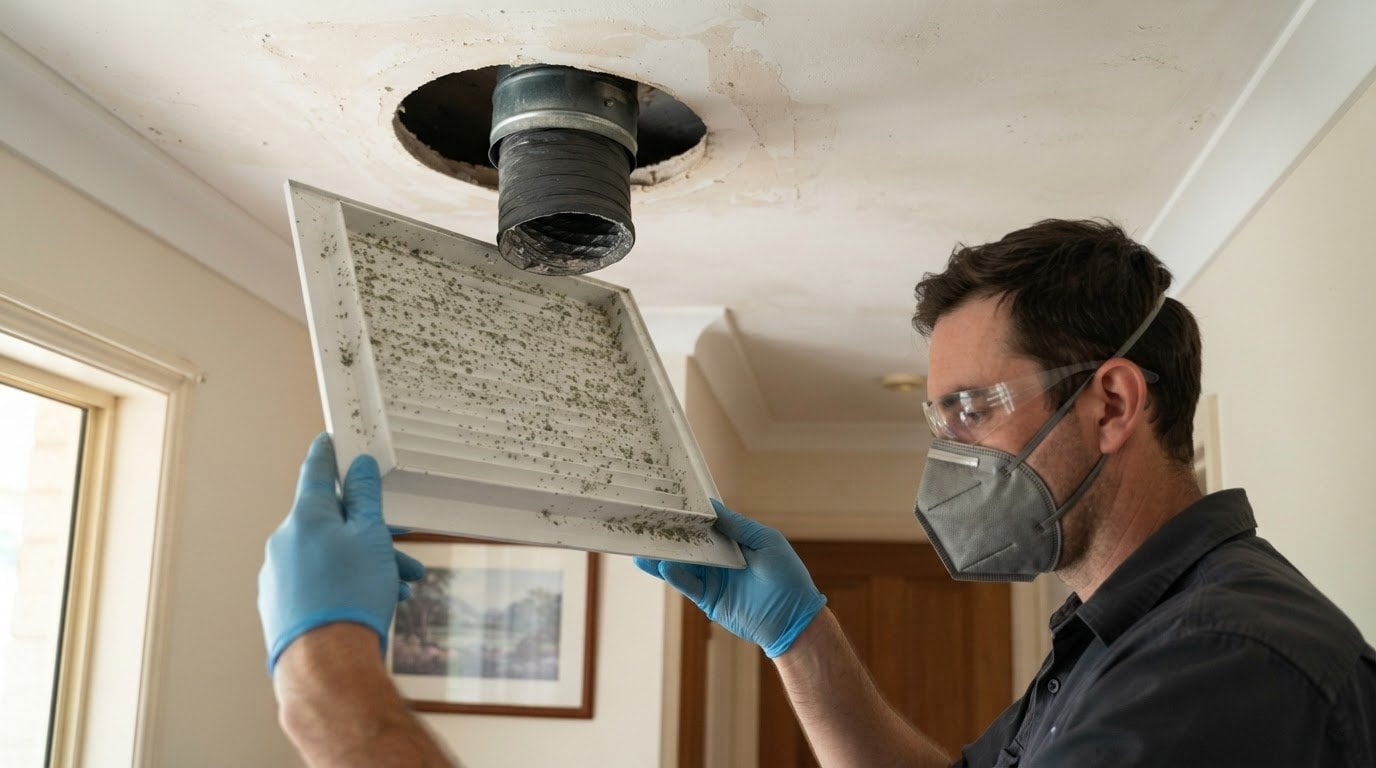

A musty smell that grows stronger when the air conditioner runs, or visible growth around a vent or drip pan, can point to mould. Knowing how to clean mould from aircon vents starts with checking whether it’s limited to an accessible vent cover or may extend deeper into the system. Moisture, condensation and blocked or faulty drainage can all help mould take hold.
It’s understandable to want to wipe away visible marks and get back to comfortable, fresh-smelling air. But if mould is inside the ducts, cleaning only the vent cover may not address the source. Airflow can also carry mould through the home.
This guide explains the signs to look for, how moisture and drainage contribute to mould, and what you can safely clean yourself. You’ll also learn when persistent odours or visible growth call for a closer inspection, so you can choose a sensible next step for your home.
Mould can develop when moisture remains inside an air conditioner or its ductwork. High indoor humidity, condensation and poor drainage can leave damp surfaces where mould grows. Dust and other debris can collect inside vents, providing material for mould to grow on. A musty smell that gets stronger when the system runs may mean the issue extends beyond the vent cover.
Air conditioners remove moisture as they cool air. That water needs to drain away; if a drain channel is blocked or water collects in a drip pan, nearby surfaces can stay damp. A leak, persistent condensation or restricted airflow may also contribute to moisture build-up. In Sydney homes, the same distinction matters: visible residue on a removable louvre differs from growth deeper in ductwork. Find local Sydney air-conditioning information for context on systems in the area.
Mould exposure can cause symptoms such as nasal congestion, throat irritation, wheezing and eye irritation. People may notice these symptoms while an air conditioner is running, but symptoms alone cannot establish that mould is the cause. If you suspect mould inside the system, avoid spreading dust by disturbing affected areas. Persistent odours or visible growth around several vents are reasons to look beyond routine surface cleaning.
For a split-system unit, switch it off and ensure it is fully powered down before cleaning. Remove accessible vent covers or louvres, wash them in soapy water, then let them dry completely. Vacuum loose dust from accessible vent openings without pushing debris further inside. Clean a washable filter with a soft brush under running water and let it air-dry fully before refitting. Follow the unit’s instructions for removing parts, and don’t spray liquid into internal components.
Replace a filter if it is non-washable, heavily damaged or still visibly mould-affected after appropriate cleaning. A dirty filter can hold dust and moisture, while a damaged one may not sit correctly in its housing. Check the filter’s care instructions before washing it, as not every filter is designed for water.
For extensive mould in an Australian home, avoid disturbing widespread growth or attempting to clean hard-to-reach areas. Leave the affected area undisturbed and arrange an assessment by a suitable mould-remediation professional, particularly if growth is inside ducts or linked to an ongoing leak. Fixing the moisture source is essential to reduce the chance of mould returning after cleaning.
Air-conditioning ducts can support mould when moisture lingers on internal surfaces. Condensation, humidity and poor drainage can leave damp patches that need more than surface cleaning.
Moisture in ducts is water that remains inside the air pathway instead of draining away or drying. A blocked drain, leak or ongoing condensation can keep nearby surfaces damp. Dust carried through the system can settle on those surfaces, creating conditions where mould can grow. If a musty smell returns after cleaning a vent cover, moisture or mould may remain further inside.
Mould can follow moisture build-up, excessive humidity and organic material such as accumulated dust. Air conditioners produce condensation as they cool air, so drainage needs to work properly. A clogged drain channel or leak can leave water sitting around the system. Dirty filters may also collect dust and moisture. Finding the source matters because removing visible mould alone won’t address an ongoing damp condition.
Car air-conditioning systems have a related moisture pathway, but their layout differs from home systems. As air cools over a car’s evaporator, condensation forms and should drain outside the vehicle. If that drain is blocked, water can overflow into the cabin and leave carpet or trim damp. A musty smell from car air-conditioning vents, especially when the system runs, can signal mould in the vents or evaporator area.
A mouldy car air conditioner can circulate mould through the vehicle interior. The odour may persist, while mould in the evaporator core or vents can restrict airflow and reduce cooling performance. Mould may also affect air-conditioning components over time. Cleaning cabin surfaces or replacing filters might not resolve the problem if water continues to collect around the evaporator. The vehicle’s drainage system needs attention if dampness or odour keeps returning.
After cleaning or servicing, address leaks and control indoor humidity to reduce the chance of mould returning. If the air conditioner continues to smell musty or shows visible growth, contact the team about an inspection.
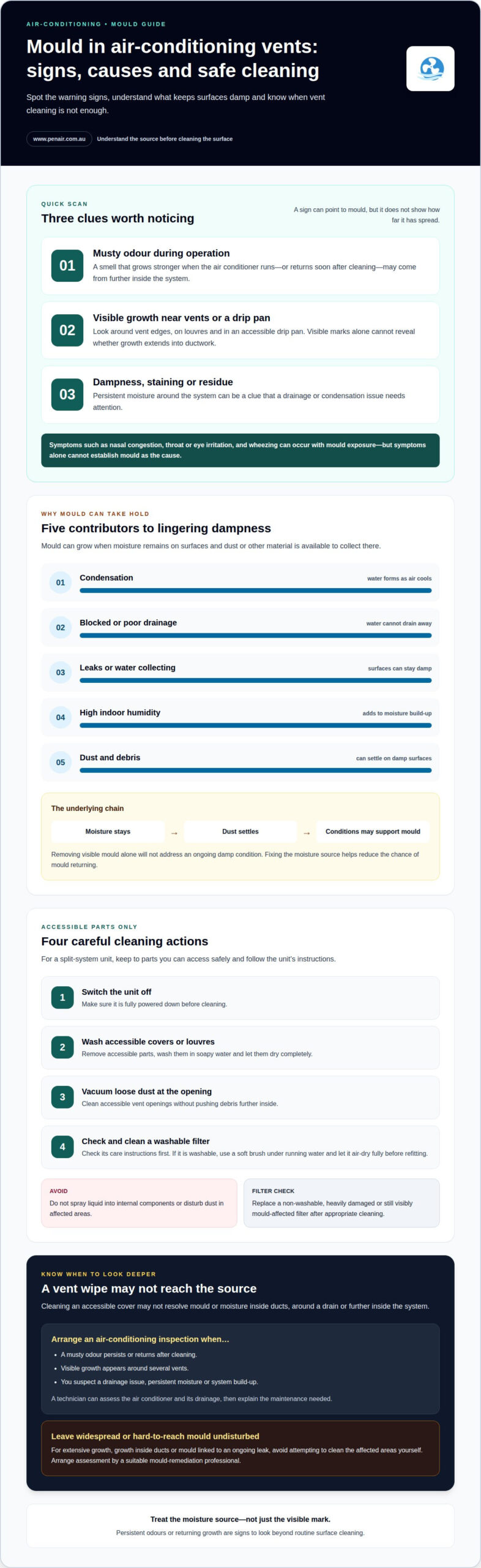
A musty odour that gets stronger while the air conditioner runs is a useful warning sign. The airflow may be carrying the smell from a damp part of the system, not just from the room. Notice whether it appears when the unit starts, continues while it operates, or returns soon after airing the room. A smell that follows the air conditioner between rooms can suggest the source is inside the system.
Look for visible growth around vent edges, on louvres and inside an accessible drip pan. Mould may appear as patches or specks, but appearance alone cannot show how far it extends. Check for dampness, staining or residue close to the vent as well. If several vents show similar marks, or visible growth returns after cleaning, the problem may extend beyond a removable cover.
Distinguish a local mark from a pattern. A dusty vent may have dry, loose debris that wipes away, while a damp patch or recurring musty smell deserves closer attention. Check nearby ceilings and walls for water marks, and look around the indoor unit for signs of water collecting. Visible mould in a drip pan is particularly relevant because standing moisture can support further growth.
Airflow can offer another clue. If one vent has a persistent odour or weaker airflow than nearby outlets, note its location and whether the difference continues while the system runs. Mould in ducts can circulate through a home with the airflow, so don’t assume a single visible patch represents the entire affected area. A room-by-room note can help distinguish an isolated vent from a broader pattern.
Keep a simple record of what you observe: the affected vent, any visible growth, dampness, and when the smell occurs. For example, note whether the odour appears only at start-up or continues throughout operation. These details can help show whether the signs recur and coincide with use of the air conditioner. Avoid scraping or brushing extensive growth, which can disturb affected material.
Visually inspect vents and ducts at least once a year for mould build-up. Check accessible areas in good light, including vent covers and drip pans, and note fresh marks or moisture. If a musty odour persists, growth is visible inside ducts, or the same patch returns after cleaning, arrange an inspection instead of treating the vent as the only source. The key is to look for recurring signs and dampness, not just one mark.
For a small amount of mould on an accessible vent cover, use gloves, eye protection and a well-fitting mask. These help limit contact with mould, dust and cleaning splashes while you work. Wear clothing that covers your arms and legs, plus closed shoes. Protective gear reduces direct exposure, but it doesn’t make extensive mould or inaccessible ductwork suitable for DIY cleaning.
Choose equipment that stays secure while you remove and wash a vent cover. A loose mask can shift as you bend or reach overhead, while unprotected eyes may be exposed to dust falling from the grille. Keep the task to parts you can reach safely. Don’t climb on unstable furniture or dismantle the air conditioner to reach internal components.
Before cleaning, switch the air conditioner off and make sure it is fully powered down. This prevents airflow from disturbing dust during the task. Place a washable vent cover in a sink or basin for cleaning, and keep the surrounding floor clear. Don’t spray cleaning liquid into the unit, wiring or duct opening, as moisture in those areas can create another problem.
After washing an accessible cover, dry it fully before refitting. Remove gloves carefully, then wash your hands and any exposed skin. Put used cloths and disposable materials straight into a rubbish bag, and clean any tools you plan to reuse. Keep children and pets away from the work area until surfaces are clean and dry.
Stop rather than continue if mould covers a large area, appears inside ductwork, or returns after surface cleaning. A mask and gloves cannot address a hidden moisture source or make hard-to-reach areas safe to clean. Persistent musty odours, dampness around the unit, or visible growth beyond the removable cover call for a closer system inspection.
If the affected area extends into the air conditioner or keeps returning, arrange an air-conditioning inspection instead of trying to clean internal components yourself.
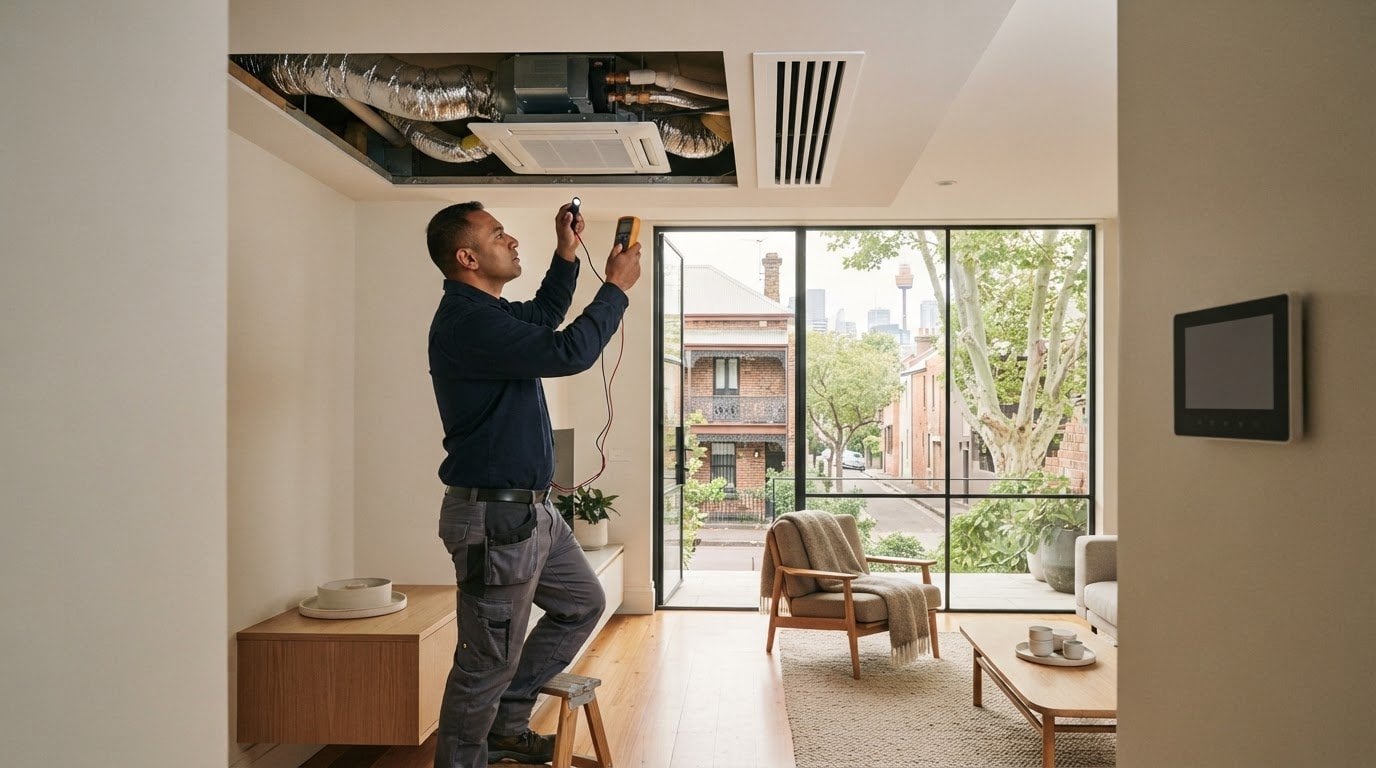
Peninsula Air Conditioning (PenAir) provides Ducted Systems and Service & Maintenance for homes with air-conditioning concerns beyond an accessible vent cover. If musty odours persist, visible growth returns, or dampness suggests a drainage issue, maintenance can help assess the system and identify the next practical step. Cleaning a removable grille may suit surface residue, but it won’t resolve a problem inside ductwork or address ongoing moisture. PenAir also works with Split Systems and Multi-Split Systems, so its services can suit the type of air conditioner in your home. For recurring mould signs or concerns about your system, contact Peninsula Air Conditioning (PenAir) to discuss your air-conditioning needs.
Use what you’ve noticed to decide whether the issue is limited to an accessible surface or needs attention within the system. If you’re unsure how to clean mould from aircon vents without disturbing growth you can’t reach, pause before taking the unit apart. A considered assessment can help you avoid repeated surface cleaning that leaves the underlying concern unresolved.
Keep the affected area undisturbed if the problem extends beyond a vent cover, then share what you’ve observed when arranging support. Peninsula Air Conditioning (PenAir) can discuss your air-conditioning needs and the next practical step for your home. Contact Peninsula Air Conditioning (PenAir) to talk through your concerns and move towards a more comfortable indoor environment.
A recurring musty smell when the system runs, visible patches near vents, or mould in a drip pan are warning signs. Note which rooms are affected and whether the smell appears at start-up or continues during operation. A single dusty mark may not show how far growth extends, so look for repeated signs across different outlets. If several rooms share the same odour, record that pattern for an inspection.
Duct cleaning can address mould or dust inside ductwork, but it can’t diagnose or treat allergies or breathing problems. Mould in ducts can circulate through a home with airflow, and reported exposure symptoms include nasal congestion, throat irritation, wheezing and eye irritation. If symptoms concern you, speak with a health professional. For persistent mould or dust in the system, an inspection can help identify whether duct cleaning is appropriate.
If you suspect mould inside the system, avoid running the air conditioner and arrange an inspection. Before the visit, note the affected vents, when odours occur, and whether you’ve seen dampness or water near the indoor unit. Avoid disturbing growth inside ducts or dismantling equipment. These observations can help distinguish a surface issue from signs of a deeper moisture or drainage problem.
To understand how to clean mould from aircon vents safely, limit DIY cleaning to accessible, removable covers and follow the unit’s care instructions. Switch the system off and fully power it down before removing a cover. Wash it with soapy water, then dry it completely before refitting. Don’t spray liquid into the unit or reach into ductwork. If mould is extensive or keeps returning, leave it undisturbed and arrange an inspection.
For a removable vent cover, use soapy water rather than applying vinegar or bleach to the air conditioner. Don’t pour or spray either product into the vent opening, ducts or internal components. Those areas aren’t the same as a washable cover, and liquid can reach parts that aren’t intended to be cleaned that way. If growth is inside the system, stop at the accessible cover and arrange an inspection.
Knowing how to clean mould from aircon vents doesn’t mean you should attempt to clean growth deep inside ducted air conditioning. Clean only accessible covers. If mould is visible in ducts or musty odours persist, avoid running the system and arrange an inspection. Professional cleaning may be appropriate when mould or dust issues continue. Fixing leaks and controlling humidity can also help reduce the conditions that allow mould to return.