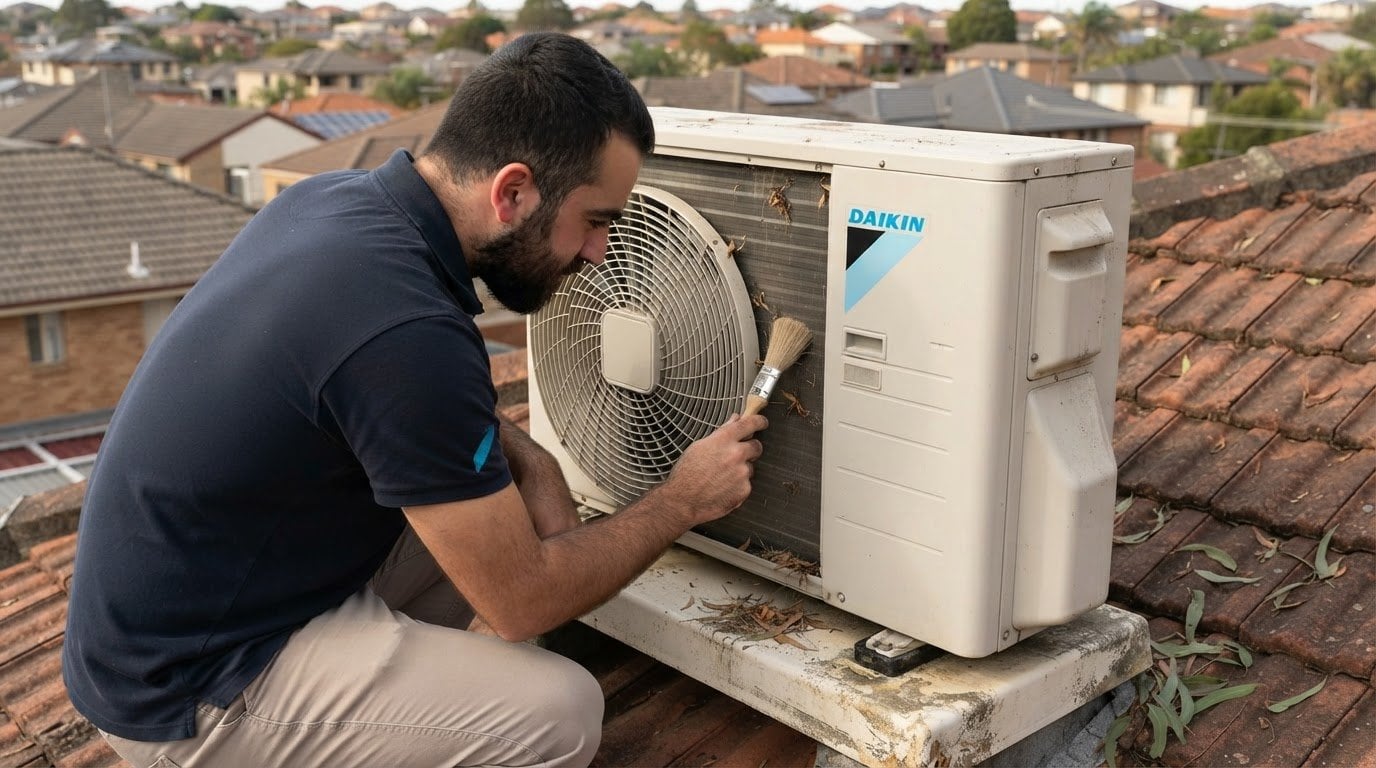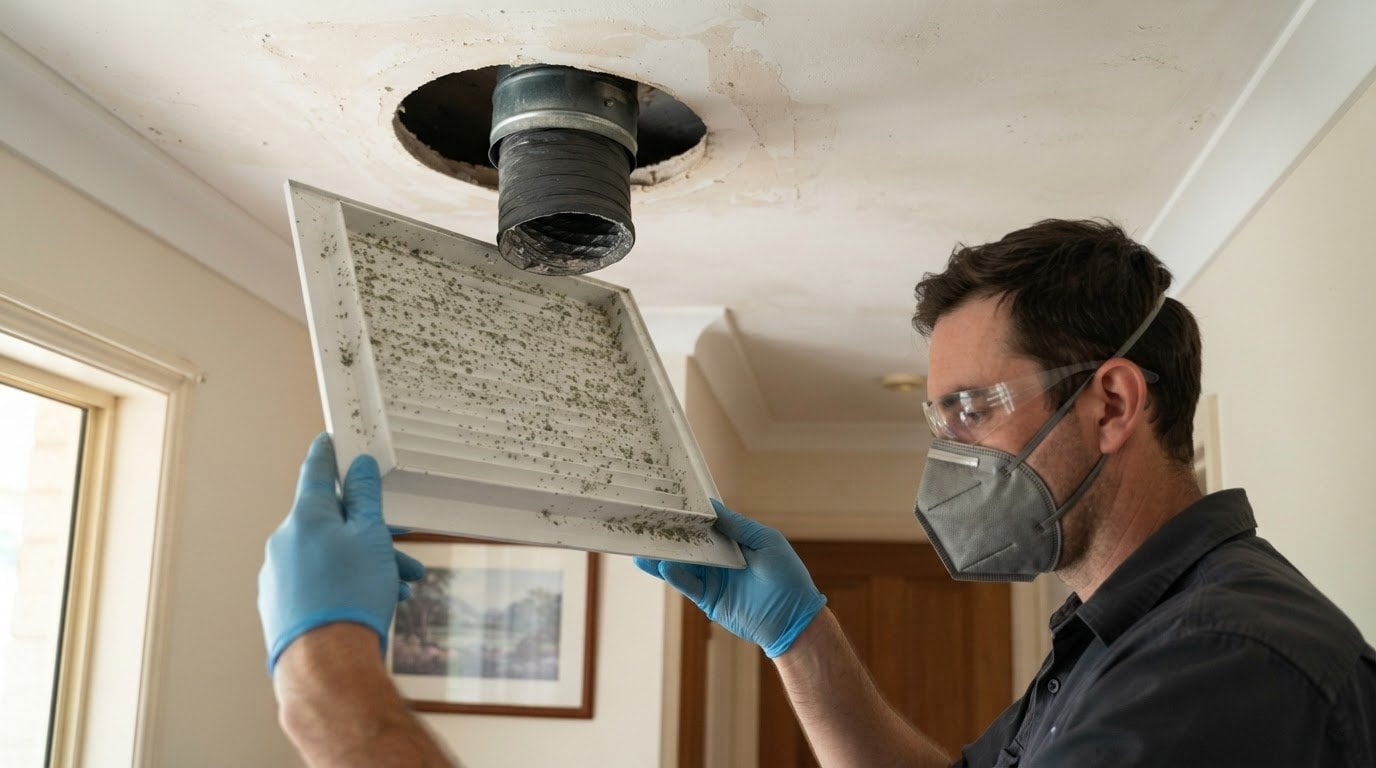

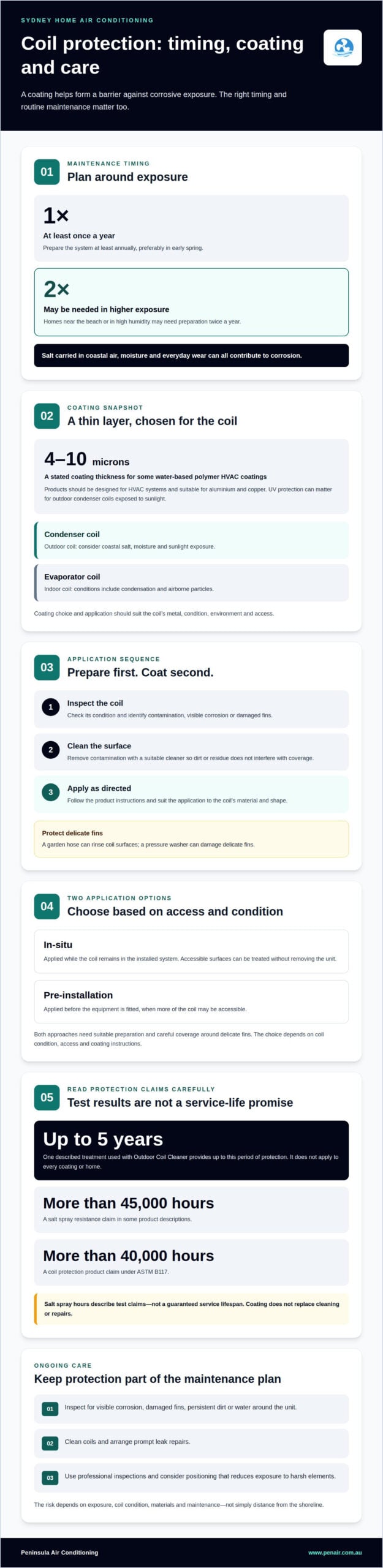
Coil protection is as much about timing as coating. For Sydney homes, AC corrosion protection uses a barrier coating to help shield air-conditioning coils from moisture, salt and other corrosive elements. Plan to prepare the system at least once a year, preferably in early spring; homes near the beach or in high humidity may need preparation twice a year.
It’s easy to focus on a coating and overlook the conditions around the unit. Salt carried in coastal air, moisture and everyday wear can all contribute to corrosion, so maintenance timing matters for effective AC corrosion protection.
This guide explains what condenser and evaporator coil coatings do, what can cause corrosion and how to spot when maintenance may be due. You’ll also learn how inspections and cleaning fit into a practical plan to protect your system and support reliable cooling at home.
Air-conditioning coil corrosion protection means reducing damage to exposed metal surfaces. A coating can create a barrier between coil metal and corrosive elements. In Sydney, coastal salt, humidity and airborne pollutants can all affect outdoor equipment. The risk depends on exposure, coil condition, materials and maintenance, not just distance from the shoreline.
Salt-laden air can settle on an outdoor condenser coil, while moisture can encourage corrosion. Indoor evaporator coils face different conditions, including condensation and airborne particles. Protection should suit the coil’s metal and HVAC application. A coating designed for air-conditioning equipment can help protect aluminium and copper surfaces without treating a household system like industrial infrastructure.
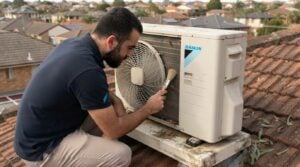
For a Sydney home, start with an inspection. Look for visible corrosion, damaged fins, persistent dirt or water around the unit. A garden hose can rinse coil surfaces, but a pressure washer can damage delicate fins. Positioning the unit to reduce exposure to harsh elements may also help. In coastal areas, regular maintenance matters because salt and moisture can accumulate between visits.
AC corrosion on pipelines means something different: electrical interference from alternating current, not ordinary coil rust. Cathodic protection controls metal corrosion through an electrical protection system. Coil coatings instead form a surface barrier. These methods address different assets and risks, so pipeline cathodic protection isn’t a substitute for protecting a home air conditioner.
There is no single household-coil measurement that translates into an accepted pipeline AC-corrosion limit. For an air conditioner, a specialist assesses visible surface condition, coil damage, contamination and surrounding exposure. Pipeline risk assessment uses electrical measurements and asset-specific engineering judgement. A numerical pipeline threshold should not be applied to a Sydney home coil.
Australian requirements for pipeline AC-corrosion protection and household coil coatings are not interchangeable. For home equipment, choose a coating designed for HVAC use and suitable for the coil metals. Pipeline standards and project requirements relate to pipeline assets, not residential air-conditioning coils. The right assessment starts by identifying the equipment and corrosion mechanism.
Costs for Australian pipeline AC-corrosion surveys and protection systems depend on the asset, survey scope, site access and proposed work. They are priced after a quote request, rather than at a universal household-coil rate. Those pipeline costs don’t describe the cost of maintaining or coating a home air conditioner.
Engineers assess pipeline risk by reviewing the pipeline route, nearby electrical infrastructure and measured electrical conditions. They consider where exposure occurs and whether protective measures are needed. For a home system, the relevant next step is different: arrange an inspection if corrosion is visible or cooling performance changes. Sydney homeowners can explore air-conditioning services in Sydney for residential system support.
Coatings form a protective layer over coil surfaces exposed to corrosive conditions. Product choice and careful application matter for both outdoor condensers and indoor evaporators. For home systems, AC corrosion protection means choosing a coating suited to the coil and its environment.
Some HVAC coatings use water-based polymers on metal surfaces. A coating thickness of 4 to 10 microns can cover a surface while keeping the layer thin. Products should be designed for HVAC systems and suitable for aluminium and copper. UV protection can also matter for outdoor condenser applications exposed to sunlight. A coating is not a substitute for cleaning or repairing damaged coils.
Grounding mats and gradient-control wires address electrical interference around infrastructure, not household coil coatings. They aren’t coating methods for condenser or evaporator surfaces.
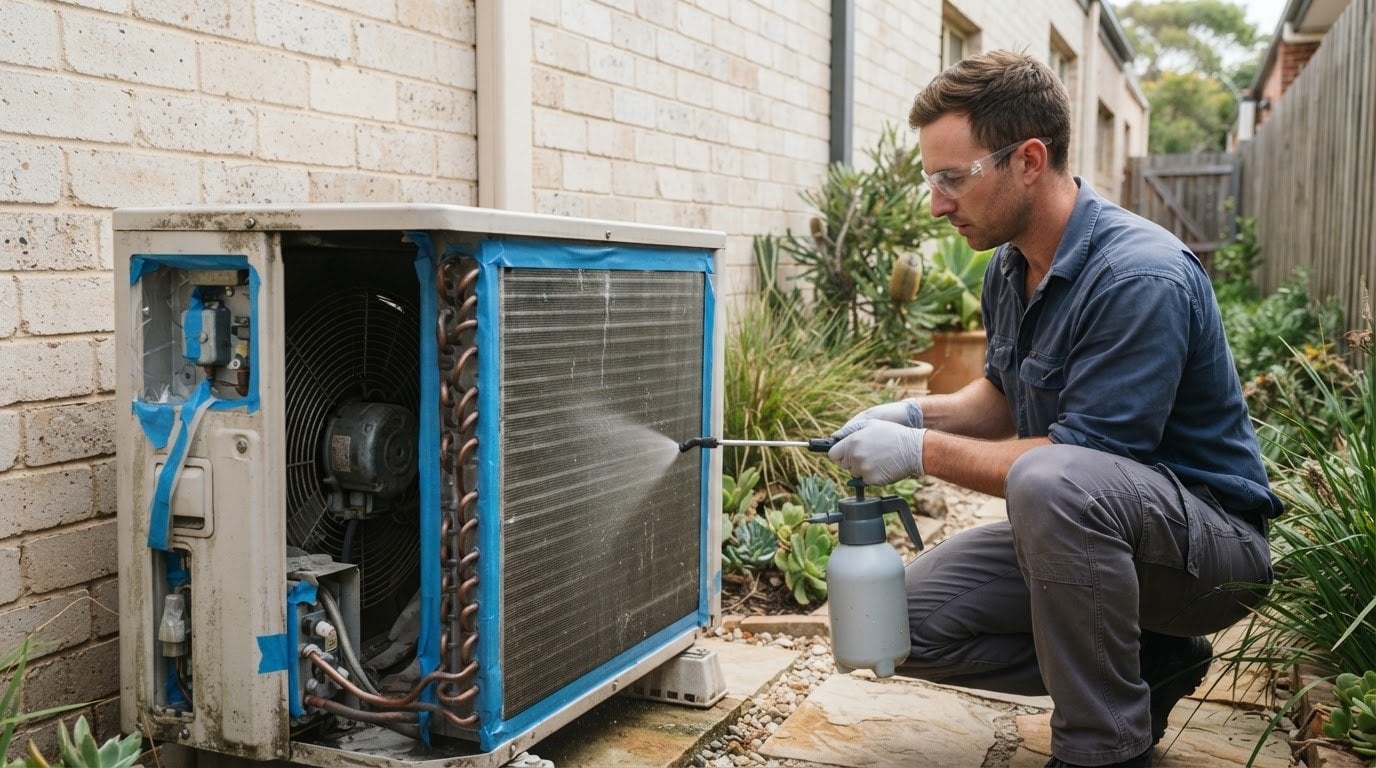
Preparation starts with inspecting the coil and removing contamination with a suitable cleaner. The surface needs to be clean before coating, so dirt or residue doesn’t interfere with coverage. Apply the protective coating as directed for the product and coil. In one described process, coating is step 2, following Outdoor Coil Cleaner. The application must suit the coil’s material and shape.
In-situ coating is applied while the coil remains in the installed air-conditioning system. It can treat accessible surfaces without removing the unit. Pre-installation coating is applied before the equipment is fitted, when more of the coil may be accessible. The choice depends on the coil’s condition, access and coating instructions. Both approaches need suitable preparation and careful coverage around delicate fins.
Protection claims depend on the coating and application process. One described treatment, used with Outdoor Coil Cleaner, provides up to 5 years of protection. That figure relates to the stated process, not every coating or home. Other product descriptions cite more than 45,000 hours of salt spray resistance, while a coil protection product cites more than 40,000 hours under ASTM B117. These are test claims, not a promised service lifespan.
For a Sydney home, consider the coil’s exposure, metal type and access before choosing a coating. A product designed for HVAC use, suitable for aluminium and copper, and offering UV protection fits these selection criteria. AC corrosion protection is a considered choice for condenser or evaporator surfaces, not a replacement for routine cleaning and inspection.
If you’d like help with inspection and upkeep, explore air-conditioning service enquiries.
Coating decisions should sit alongside routine care, not replace it. Regular cleaning, inspections, prompt leak repairs and proper installation are recommended to help prevent or minimise corrosion in air-conditioning units. Assess the coil and its coating needs while keeping up with cleaning, inspection, leak repairs and installation. This puts the focus on prevention and timely attention, rather than relying on a coating alone.
Air-conditioning corrosion begins when metal components encounter moisture and oxygen. In Sydney, salt carried inland from the coast adds another corrosive element. An outdoor condenser faces this exposure directly, while an evaporator coil experiences condensation during normal operation. The surrounding environment, equipment materials and maintenance history all influence how quickly damage develops.
Several conditions can contribute to corrosion on a home system:
These causes can overlap. For example, a coastal unit with accumulated dirt may stay damp for longer after humid weather. If cleaning is neglected, deposits can remain against the coil surface. The result depends on the equipment and its exposure, so corrosion may affect one area before another. A coating also cannot correct an existing defect or replace metal already lost to corrosion.
Corrosion can reduce cooling performance by affecting heat transfer through the coil. Damaged components may contribute to refrigerant leaks, higher energy bills or early system failure. You might notice that cooling feels less effective or that running the air conditioning seems to require more energy. These symptoms can have other causes too, so an inspection should assess the coil and the wider system rather than assume corrosion is the only cause.
Visible changes can show where closer attention is needed. Look for discoloured or pitted metal, damaged fins, or corrosion around coil connections. Compare the affected area with the surrounding surface: isolated marks and widespread deterioration raise different inspection concerns. Consider the unit’s location too, since a condenser exposed to coastal air faces a different environment from equipment sheltered from salt and pollutants.
AC interference and pipeline corrosion near power lines describe a separate engineering issue. Alternating current can couple from nearby electrical infrastructure onto a pipeline, creating electrical conditions that may promote corrosion at exposed locations. This is not the same process as salt or moisture corroding an air-conditioning coil, and pipeline assessment requires specialist electrical measurements.
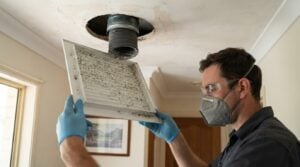
For home air conditioning, prompt attention to leaks, regular cleaning and inspections can help limit corrosion-related damage. A professional can assess visible deterioration, coil condition and system performance together. This provides a clearer basis for deciding whether cleaning, repair or further maintenance is appropriate, instead of treating every discoloured surface as the same problem.
Set a maintenance routine around your home’s exposure, not the calendar alone. Prepare the air conditioner for corrosion protection at least once a year, preferably in early spring. Homes near the beach or in high humidity may need preparation twice a year. Salt exposure and damp conditions can call for closer attention.
Early spring is a practical time to assess the outdoor unit before heavier cooling use. A professional inspection can identify early corrosion, accumulated dirt, leaks or damage that needs attention. Annual professional inspections are recommended to find and treat early signs. The inspection should consider the condenser, accessible coil surfaces and signs of water or refrigerant leaks.
Protection treatments generally provide 12-24 months of protection, depending on the environment. That period is not a replacement for routine inspections. Coastal salt, persistent humidity, debris and the unit’s condition all affect how often attention is useful. A home close to the coast may need more frequent preparation than a sheltered inland home.
A practical yearly routine can include these steps:
Cleaning and inspection work together. A clean surface makes deterioration easier to spot, while an inspection can reveal issues that a rinse won’t fix. Don’t use a pressure washer on delicate coil fins. If a coil is damaged or heavily corroded, cleaning alone won’t restore the metal. The coil’s condition helps determine whether repair or replacement is appropriate.
Correct installation also helps reduce avoidable exposure. Unit position, drainage and access can affect how moisture and debris collect around equipment. Industrial refrigeration systems may face different operating conditions from a residential air conditioner, so their maintenance schedule shouldn’t automatically be applied to a home. Use the household system’s environment and inspection findings to guide decisions.
Keep a simple record of inspection dates, cleaning, repairs and coating work. If a visit finds corrosion, that record helps show whether the condition is stable or changing. It also gives a technician useful context for the next assessment. Arrange air-conditioning maintenance support to plan an inspection around your home’s exposure.
If your home is near the beach or in a high-humidity area, prepare the air conditioner for corrosion protection twice a year. Keep that schedule in mind when reviewing the system’s condition, rather than relying on a single annual visit. Regular attention can help prevent corrosion from progressing unnoticed and gives you a chance to act when a concern appears.
Make regular cleaning and inspections part of the maintenance routine, and arrange prompt repairs if leaks are found. Proper installation is also recommended to help prevent or minimise corrosion in air-conditioning units. These measures work together: cleaning and inspection help you assess the equipment, while repairs and sound installation address conditions that can contribute to corrosion. Use the home’s exposure and each visit’s findings to decide whether the routine remains appropriate.
Peninsula Air Conditioning (PenAir) can assess corrosion concerns during air-conditioning Service & Maintenance. An inspection can consider the coil’s visible condition, system performance and signs of leaks, helping identify whether cleaning, repairs or further maintenance are appropriate. This is useful for Sydney homes where coastal exposure, humidity or recurring dirt may affect outdoor equipment.
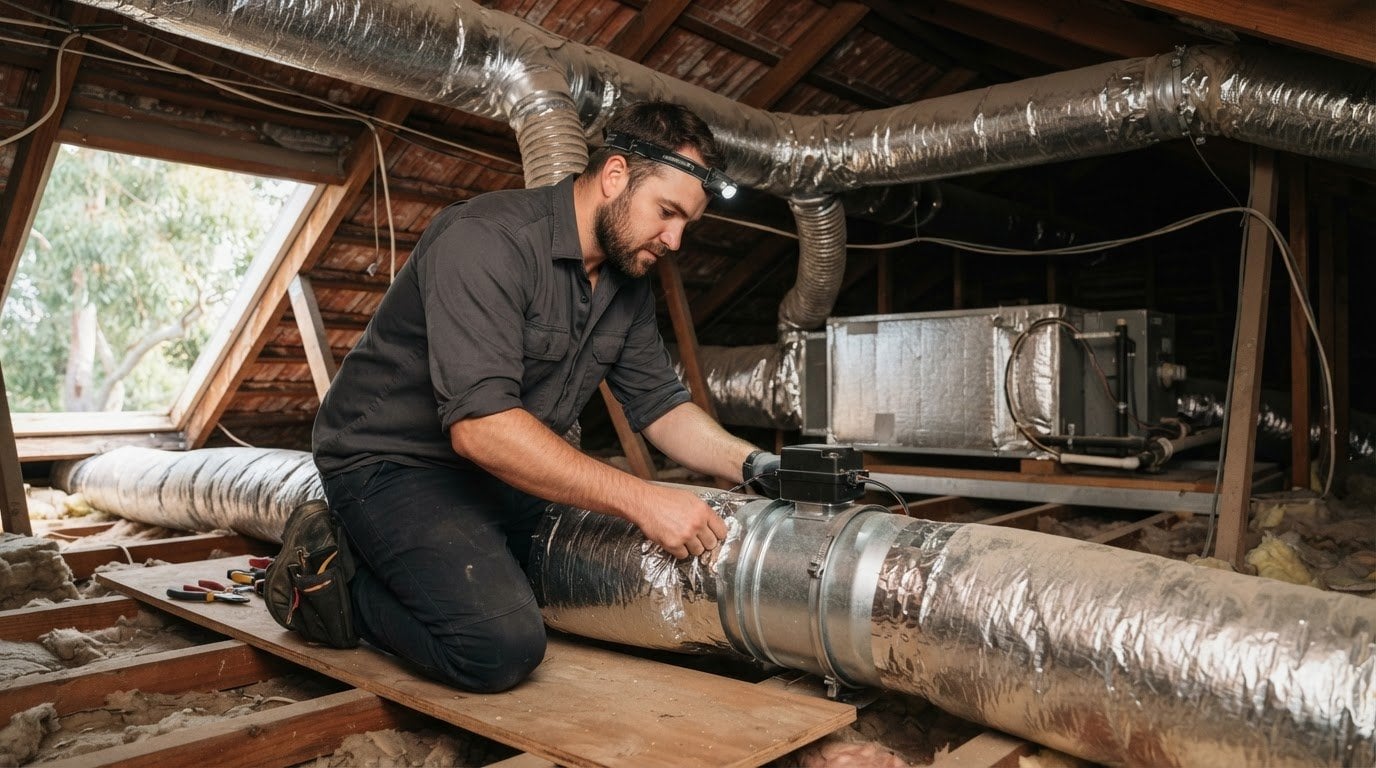
PenAir works with residential split, multi-split and ducted systems. If you’ve noticed visible deterioration, reduced cooling or a change in energy use, maintenance can help identify what needs attention. The right next step depends on the system’s condition and exposure.
Contact Peninsula Air Conditioning (PenAir) to discuss your air-conditioning maintenance needs.
Base your next maintenance decision on your system’s condition and exposure at home. A planned approach to AC corrosion protection can help you address concerns before they become harder to assess. If you’ve noticed a change in cooling or visible deterioration, arrange an inspection and discuss what the system needs.
Peninsula Air Conditioning (PenAir) offers Service & Maintenance for residential air conditioning, including split and ducted systems. The team can assess the equipment and explain practical next steps, whether that means routine upkeep or attention to a specific concern.
Contact Peninsula Air Conditioning (PenAir) to talk through your air-conditioning maintenance needs. A clear assessment is a sensible starting point for caring for your home’s comfort.
A/C corrosion develops when coil metals meet moisture and oxygen, with salt, pollutants or chemicals adding to exposure. In a Sydney home, a coastal outdoor unit may collect salt from sea air, while an indoor evaporator encounters condensation during cooling. Age, wear, poor upkeep, manufacturing defects and inferior materials can also make equipment more vulnerable. Several conditions can act together, so the unit’s location and condition both matter.
Start by assessing the system’s location, coil condition and metal type. During installation, positioning the outdoor unit to limit harsh exposure can help; a suitable HVAC coating may be applied before fitting or to an accessible installed coil. For maintenance, arrange professional inspection, cleaning and any needed leak repairs. Keep a record of coating and service work so future assessments can account for the system’s condition and exposure.