
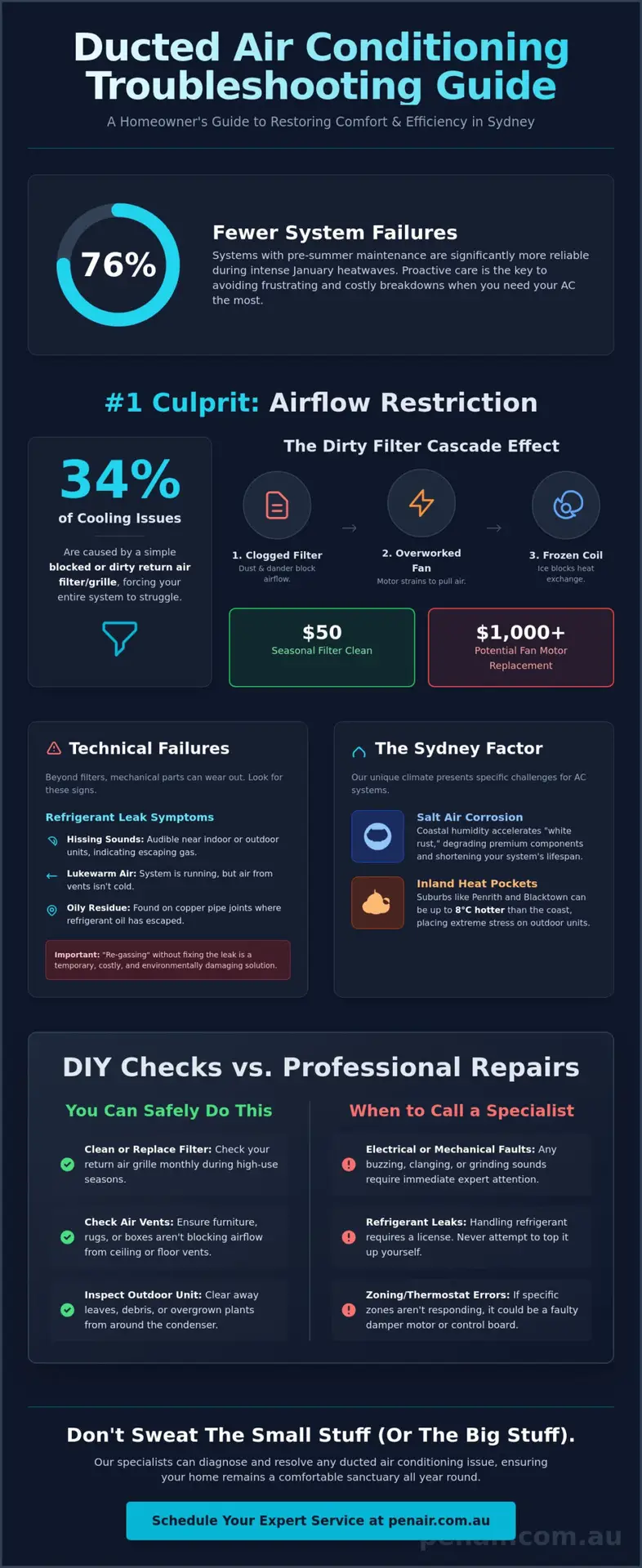
Did you know that systems receiving pre-summer maintenance have 76% fewer failures during those intense January heatwaves? It’s incredibly frustrating when your home feels like a sauna despite the vents running, especially in suburbs like Blacktown or Penrith where temperatures often soar 8 degrees higher than the coast. We understand the stress of facing high energy bills without the comfort you expect from your investment. This guide explores common ducted air conditioning problems and solutions to help you regain control over your home’s climate and comfort levels.
We’ll show you how to identify why your Daikin or premium system is underperforming and explain which issues you can safely fix yourself versus when it’s time to call a Sydney specialist. From clearing blocked return air grilles, which cause 34% of cooling issues, to managing the effects of salt air corrosion in coastal areas, we’ve got you covered. You’ll learn how to restore whole-home comfort while lowering your monthly running costs and extending your system’s lifespan. We’re here to ensure your household stays cool and your equipment remains in safe, capable hands.
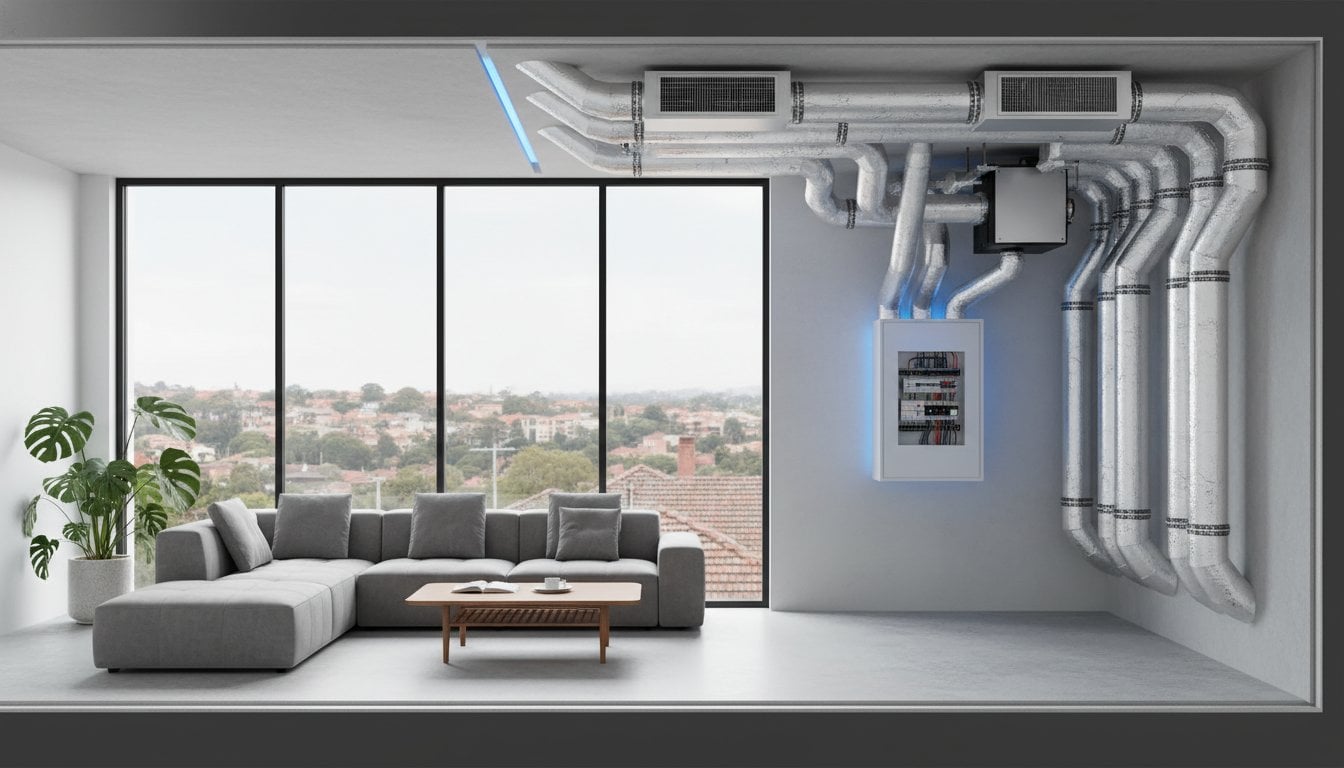
Think of your ducted air conditioning as a balanced pressure system that needs to “breathe” just as much as you do. For the system to maintain whole-home comfort, it relies on a continuous cycle of pulling air in through a return air grille and pushing it back out through ceiling or floor vents. When we look at Understanding Your Ducted AC Ecosystem, we see that any interruption to this flow disrupts the delicate mechanical balance. When discussing common ducted air conditioning problems and solutions, airflow restrictions are the most frequent culprits behind a system that feels like it’s struggling.
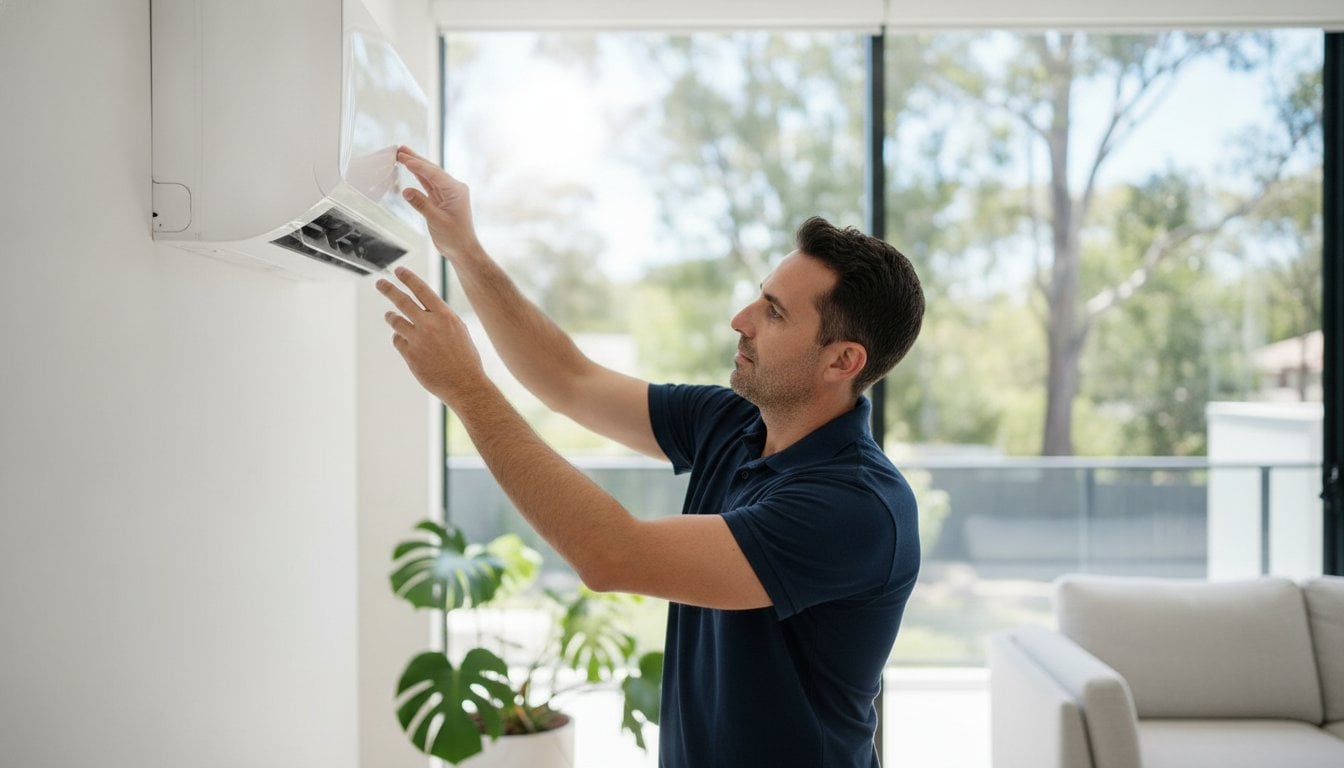
Your return air filter is the first line of defense for your indoor unit, but it’s also a major point of failure if neglected. When dust and pet dander clog the filter, it creates a buildup of static pressure. This forces your fan motor to work significantly harder to pull air through the restriction, which eventually leads to mechanical fatigue. Research shows that dirty filters account for roughly 22% of cases where a system stops cooling effectively.
A restricted filter also leads to the “frozen coil” phenomenon. Without enough warm air passing over the evaporator coil, the refrigerant inside stays too cold, causing the condensation on the coil to turn into a thick block of ice. This ice acts as an insulator, stopping any heat exchange and potentially causing water to leak into your ceiling. Industry estimates suggest that a $50 filter clean can prevent a $1,000 fan motor replacement. Most Sydney homes use a washable mesh filter that requires a simple rinse every season, though some homeowners prefer high-efficiency disposable options for better indoor air quality.
Sometimes the problem isn’t inside the machine, but in how the air moves through your home. We often find that a lounge or bedroom isn’t cooling because a piece of furniture has been placed directly over a floor vent. In other cases, items stored in the roof space might have accidentally crushed the flexible ducting. Crushed ducts create “hot spots” where the air simply cannot reach the intended room, forcing the rest of the system to run longer to compensate.
You should also keep an ear out for whistling noises or look for dark dust patterns around your ceiling vents. These are classic signs of duct leakage or disconnected joins. If the air we’ve spent money to cool is escaping into your roof cavity instead of your living room, your energy bills will climb while your comfort drops. Ensuring your ducts are straight and sealed is a vital step in restoring your system’s efficiency.
Your ducted system relies on a specialized refrigerant gas to move heat from inside your home to the outdoors. Unlike a car’s petrol tank, this gas is part of a hermetically sealed loop; it doesn’t get consumed during normal operation. If your cooling levels have dropped, you are likely facing one of the most Refrigerant Leaks and Mechanical Breakdowns that Sydney homeowners encounter. Understanding these common ducted air conditioning problems and solutions starts with recognizing that a loss of gas always indicates a physical breach in the copper pipework or coils.
Hissing sounds near the indoor or outdoor units, oily residue on pipe joints, or air that feels lukewarm even on the highest setting are clear indicators of a leak. Simply “re-gassing” the unit is never a permanent fix. Without finding and sealing the source, the new gas will eventually escape too. We often recommend a nitrogen pressure test to find microscopic holes that are invisible to the naked eye. This proactive approach prevents the environmental damage of leaking HFCs and keeps your system running efficiently. Low refrigerant levels also force the compressor to run hotter, which can lead to a total mechanical failure if left unaddressed.
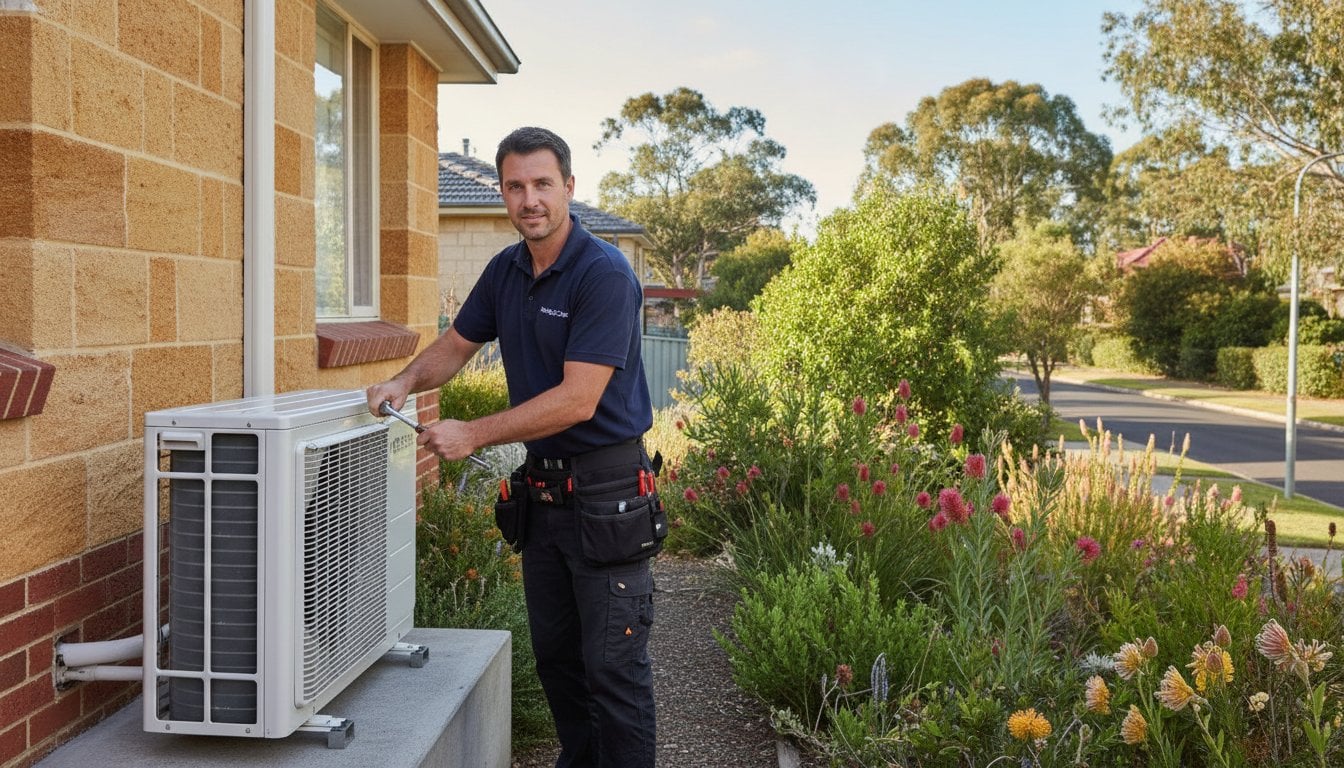
The outdoor condenser unit is the workhorse of your system. During a Sydney heatwave, it faces extreme stress. The compressor is the heart of this unit, and its failure often means the end for older systems. You might notice the outdoor fan spinning but no cooling happening, or the unit making a loud, rhythmic clanging sound. Often, the issue is actually a failed start capacitor. This is a small electrical component that provides the “kick” needed to start the motor. It is a very common fail point in units over ten years old.
Debris like leaves and sticks can also jam the fan motor, causing it to burn out. If your system is a Daikin, keep an eye on the wall controller for specific error codes. These are designed to put the unit into protection mode to prevent further damage. If you’re seeing odd codes or hearing strange noises, our team can provide a thorough service and maintenance check to catch these small electrical issues before they turn into a full compressor breakdown. Addressing these common ducted air conditioning problems and solutions early is the best way to avoid the high cost of a full outdoor unit replacement.
While airflow and refrigerant levels are the muscles of your air conditioner, the control system is undoubtedly the brain. In many premium Sydney homes, we see sophisticated Daikin systems designed to manage different temperatures across multiple levels or wings. However, when the communication between your wall controller and the mechanical components fails, even the most expensive unit becomes ineffective. Addressing these common ducted air conditioning problems and solutions often requires looking beyond the filters and into the electronics that dictate how your home stays cool.
Modern ducted systems rely on zoning to provide energy-efficient comfort. This process is managed by damper motors, which are essentially motorized shutters installed inside your roof’s ductwork. When you turn off the “Bedroom” zone on your controller, a signal tells the damper motor to physically close. If these motors fail or the thermostat loses its calibration, you’ll find your system running constantly without ever reaching the set temperature. For more technical insights on how these components interact, you can refer to the U.S. Department of Energy maintenance guide, which highlights the importance of sensor accuracy.
A tell-tale sign of a zoning failure is when one room remains freezing while another stays sweltering. This is usually caused by a stuck damper motor or a broken zone barrel. In older systems, these were often pneumatic, but modern Sydney installations almost exclusively use electronic 24V motors. If a damper is stuck in the closed position, it creates a pressure imbalance that can actually make the rest of the system noisier. We find that roughly 15% of “not cooling” complaints are actually just a single zone motor that has reached the end of its mechanical life.
Your wall controller is your primary interface, but it’s susceptible to both environmental and power-related glitches. We frequently see issues where:
Whether your controller is hardwired or battery-operated, keeping it clean and away from heat sources is vital. If a reset doesn’t fix a blank screen, it’s usually a sign that the internal circuit board or the communication cable has developed a fault.
Living in Sydney offers incredible lifestyle benefits, but our unique coastal climate presents specific challenges for home climate control. While standard guides might focus on general wear, we know that local environmental factors like salt air and high humidity are responsible for many common ducted air conditioning problems and solutions. For families in the Northern Beaches, the reality is that outdoor units face corrosion rates up to three times faster than those located further inland. This isn’t just a cosmetic issue; it’s a structural threat to the efficiency and lifespan of your system.
If you look at an outdoor unit in a suburb like Manly or Cronulla, you might notice a chalky substance on the aluminium fins. This is the ‘white rust’ phenomenon, a form of oxidation that occurs when salt-laden air reacts with the metal. Over time, this corrosion eats through the heat exchanger fins, reducing the system’s ability to shed heat and eventually causing refrigerant leaks. To combat this, we recommend units with ‘Blue Fin’ or specialized anti-corrosion coatings. Daikin’s premium treatments are particularly effective here, as they provide a protective barrier against the harsh sea spray. Sacrificial anodes are components made of more reactive metals that are designed to corrode first, effectively drawing the chemical attack away from your system’s critical copper and aluminium parts.
Humidity is the other half of the Sydney factor. During the sweltering weeks of February, your ducted system acts as a massive dehumidifier, pulling litres of water out of the air every hour. This moisture collects in an indoor drain pan before being piped outside. If dust or debris blocks this condensate drain, the water has nowhere to go. You might notice water stains on your ceiling or a distinct musty smell when the vents start up. These are clear signs of a blockage that could lead to mould growth inside your ductwork if not addressed promptly.
Preventing mould and ensuring your drainage system remains clear is a core part of a professional air conditioning service Sydney. Our team checks the pitch of the drain trays and clears any sludge buildup that occurs during high-use periods. If you’ve noticed a drop in performance or strange smells during a humid spell, it’s often a symptom of these common ducted air conditioning problems and solutions. We can help you protect your investment from the elements. To ensure your system is ready for the next coastal heatwave, contact our local team today for a comprehensive health check.
While cleaning a return air filter is a simple task most homeowners can manage, the majority of common ducted air conditioning problems and solutions involve high-voltage electrical circuits and high-pressure refrigerant gases. Attempting a DIY repair on these components isn’t just risky for your safety; it can also void your manufacturer’s warranty and lead to more expensive damage. We believe in empowering our customers with knowledge, but we also know that technical precision is what keeps a household running smoothly during a Sydney summer.
As an authorised Daikin Specialist Dealer, our team provides a level of diagnostic accuracy that generalists often struggle to match. We don’t just guess which part is failing. We use specialized tools to read system error logs and test component integrity, ensuring we fix the root cause rather than just the symptom. Sometimes, the best solution isn’t a repair at all. If your system is over 15 years old or requires a major part like a compressor, we’ll provide an honest appraisal on whether a modern, high-efficiency replacement is more cost-effective for your budget.
Our family-owned business has spent more than 25 years looking after the comfort of our Sydney neighbors. This long-standing heritage means we take personal accountability for every job we do; we treat your home with the same care we would our own. Using licensed and insured technicians is vital for protecting your investment and ensuring your system stays within its warranty period. If you are currently facing a breakdown or a system that refuses to start, you can visit our dedicated page on air conditioning repairs to book an inspection and restore your peace of mind.
A comprehensive maintenance audit is far more valuable than a reactive repair. During a professional ducted system service, we perform a multi-point check that includes tightening electrical connections, clearing condensate drains to prevent ceiling leaks, and inspecting the coils for the “white rust” corrosion mentioned earlier. We also verify that your zoning dampers are moving freely and that your thermostat is calibrated correctly.
These regular check-ups maintain the energy efficiency of your system, which helps keep your monthly bills as low as possible. By catching small issues like a worn capacitor or a minor duct leak early, we can prevent the total system failures that usually happen on the hottest day of the year. We’re here to look after your household’s well-being and ensure your climate control system remains a reliable asset for years to come. Contact PenAir today for a system health check and let our local experts ensure your home stays perfectly cool.
Maintaining a reliable climate control system means staying ahead of the unique environmental pressures our city faces. From ensuring your filters are clear to protecting your outdoor unit against coastal salt air corrosion, understanding common ducted air conditioning problems and solutions is the first step toward a more efficient home. We’ve seen how small airflow restrictions or minor sensor glitches can quickly lead to high energy bills and unnecessary mechanical strain if left unaddressed.
Our team has been serving the Sydney community since 1999, and we take pride in looking after your family’s well-being. As an Authorised Daikin Specialist Dealer with fully licensed and insured technicians, we provide the diagnostic accuracy needed to extend your system’s lifespan. Don’t let a minor issue turn into a major breakdown during a January heatwave. Book Your Ducted AC Diagnostic with PenAir’s Sydney Experts today. We’re here to ensure your home remains a sanctuary of comfort all year round.
Warm air typically indicates a refrigerant leak, a failed compressor, or a simple thermostat setting error. It can also happen if the outdoor circuit breaker has tripped or if the return air filter is so clogged that airflow has completely stalled. We recommend checking your wall controller settings first before inspecting the outdoor unit for power.
Repair costs vary depending on whether the issue is a simple electrical fix or a major mechanical failure. Minor repairs like replacing a start capacitor or clearing a blocked drain are much more affordable than replacing a compressor or a main circuit board. You should check current industry labor rates and call out fees in the Sydney region to get a baseline for professional service.
A loud banging or clanging noise usually points to a mechanical obstruction or a loose part within the outdoor condenser. It could be a fan blade hitting a stray branch or a mounting bolt that has vibrated loose over time. If the sound is rhythmic and metallic, it might be the compressor internal mounts failing, which requires an immediate inspection to prevent total system collapse.
We recommend a professional service at least once every twelve months to keep your system running efficiently. Scheduling this before the peak of summer is one of the best common ducted air conditioning problems and solutions for avoiding mid-season breakdowns. Systems that receive regular attention have significantly fewer failures during extreme Sydney heatwaves.
No, you cannot fix a refrigerant leak yourself because handling these gases requires a specific license from the Australian Refrigeration Council. It is illegal and dangerous for unlicensed individuals to work on pressurized gas systems. A professional technician must find the breach, seal the copper pipework, and then precisely weigh in the correct amount of gas.
Water leaks are almost always caused by a blocked condensate drain or an overflowing safety tray. During humid Sydney months, your system pulls a lot of moisture from the air; if the drain pipe is clogged with dust or algae, that water has nowhere to go but into your ceiling. This is a common issue that we resolve by flushing the drainage lines and checking the tray’s pitch.
Error codes are the system’s way of telling you exactly which sensor or component has failed. For instance, a “U4” code is a common signal for a communication error between your indoor and outdoor units. While some codes can be cleared with a simple power reset at the isolator, most indicate a specific technical fault that needs a specialist’s diagnostic tools.
It is usually more cost-effective to replace a system that has reached the 15 year mark. Older units use outdated refrigerants and consume significantly more electricity than modern inverter models. When you factor in the high cost of major parts for obsolete machines, the energy savings from a new 6-star rated system can often pay for the upgrade within a few years.