
Could choosing a smaller upfront price tag on your air conditioning actually be the most expensive mistake you make for your Sydney home this year? We understand how frustrating it is to open a quarterly electricity bill only to find it’s jumped by over 8 per cent since last year. When you’re weighing up the ducted aircon vs multiple splits running cost, it’s easy to feel overwhelmed by technical jargon and conflicting advice. You want a home that stays cool during a Western Sydney heatwave without draining your bank account, but the choice between one central system and several separate units isn’t always clear-cut.
We’ve put together this 2026 guide to help you cut through the confusion and find the genuine sweet spot for your property’s floor plan. You’ll discover how modern smart zoning can slash your energy consumption and why the new 7-star energy standards are changing the maths for local homeowners. We’ll break down the real-world impact of Sydney’s current electricity rates on both systems and reveal which setup truly wins for long-term savings. The best solution depends on more than just the initial purchase price. We’re here to help you ensure your home environment is in safe, capable hands.
When you’re planning a renovation or building a new home, the ducted aircon vs multiple splits running cost is often the first thing our team is asked about. It makes perfect sense. With average electricity rates in Sydney now reaching up to 36.73 cents per kilowatt-hour, finding an efficient way to manage Heating, ventilation, and air conditioning (HVAC) has become a major financial priority for local families. Both systems offer excellent climate control, but they approach the task of cooling your home in very different ways. A ducted system acts as a single, powerful engine for your whole property, while the multiple split approach relies on several independent units working room by room.
The choice often comes down to how you use your home. Are you cooling the whole house for a busy family, or just one or two rooms at a time? Beyond the daily power usage, you also need to consider the outdoor footprint. One large central system requires a single outdoor condenser, whereas multiple split systems can lead to a forest of small compressors lining your side passage. This affects everything from your home’s kerb appeal to your long-term maintenance schedule.
A ducted reverse cycle system is essentially a central hub for whole-home comfort. We install a large indoor unit, usually tucked away out of sight in the roof space, which connects to various rooms via a network of flexible ducting. Conditioned air is then delivered through discreet vents in the ceiling or floor. The real advantage lies in “zones”. This technology allows you to group rooms together, ensuring you aren’t wasting energy on an empty guest wing or formal dining room. For many of our clients, Daikin ducted systems remain the benchmark for Sydney residential installations because they are specifically engineered to handle our local humidity and high summer temperatures.
The multiple split strategy involves installing individual wall-mounted units in specific areas, such as bedrooms and living spaces. Each unit operates with its own thermostat and remote, giving everyone personal control over their immediate environment. You can choose to install several independent split systems, or you can opt for a multi split system air conditioning setup. In a multi-head configuration, up to five indoor units connect to just one outdoor condenser. This is a brilliant solution for Sydney homeowners who want the flexibility of individual room control without cluttering their outdoor areas with multiple bulky compressors.
Deciding between these systems often comes down to a battle of the star ratings. For 2026, all new air conditioners sold in Sydney must display the Zoned Energy Rating Label (ZERL), which provides climate-specific efficiency data for the “Average” zone where our city is located. While individual split systems often boast higher star ratings for single-room use, calculating the ducted aircon vs multiple splits running cost requires looking at the total power draw when your whole family is home. With Sydney electricity rates currently ranging between 28.5 cents and 36.73 cents per kilowatt-hour, even a small difference in efficiency can change your annual bill significantly.
Modern inverter technology is the secret weapon for both configurations. These units don’t just turn on and off; they “throttle down” using part-load functionality once your room reaches the desired temperature. This is crucial because heating and cooling now account for roughly 40 per cent of the average Australian home’s energy usage. In a city where residential electricity bills have risen by 8.2 per cent over the last year, choosing a system that matches your lifestyle is more important than ever. The efficiency of your home’s thermal envelope, such as meeting the new 7-star NatHERS rating, also plays a massive role in how hard your aircon needs to work.
If you only need to cool a single bedroom overnight, a small 2.5kW split system is virtually unbeatable. These units are designed to operate at extremely high efficiency in confined spaces. Running a large ducted system just to cool one small room carries a heavy energy penalty, as the central fan must still work to push air through the duct network. Individual thermostats on split units also ensure you aren’t accidentally cooling empty hallways or guest rooms, keeping your daily usage low.
The maths changes when you need to cool four or five rooms simultaneously. Running multiple independent split systems can actually consume more peak power than one large, high-efficiency ducted unit. A single Daikin inverter compressor is often more effective at maintaining a consistent temperature across an open-plan Sydney home than several smaller units fighting for control. For a deeper look at how these ratings impact your household budget, the Australian government energy guide provides a detailed breakdown of appliance performance. If you’re unsure which configuration fits your floor plan best, our team can provide a professional assessment of your home’s specific needs.
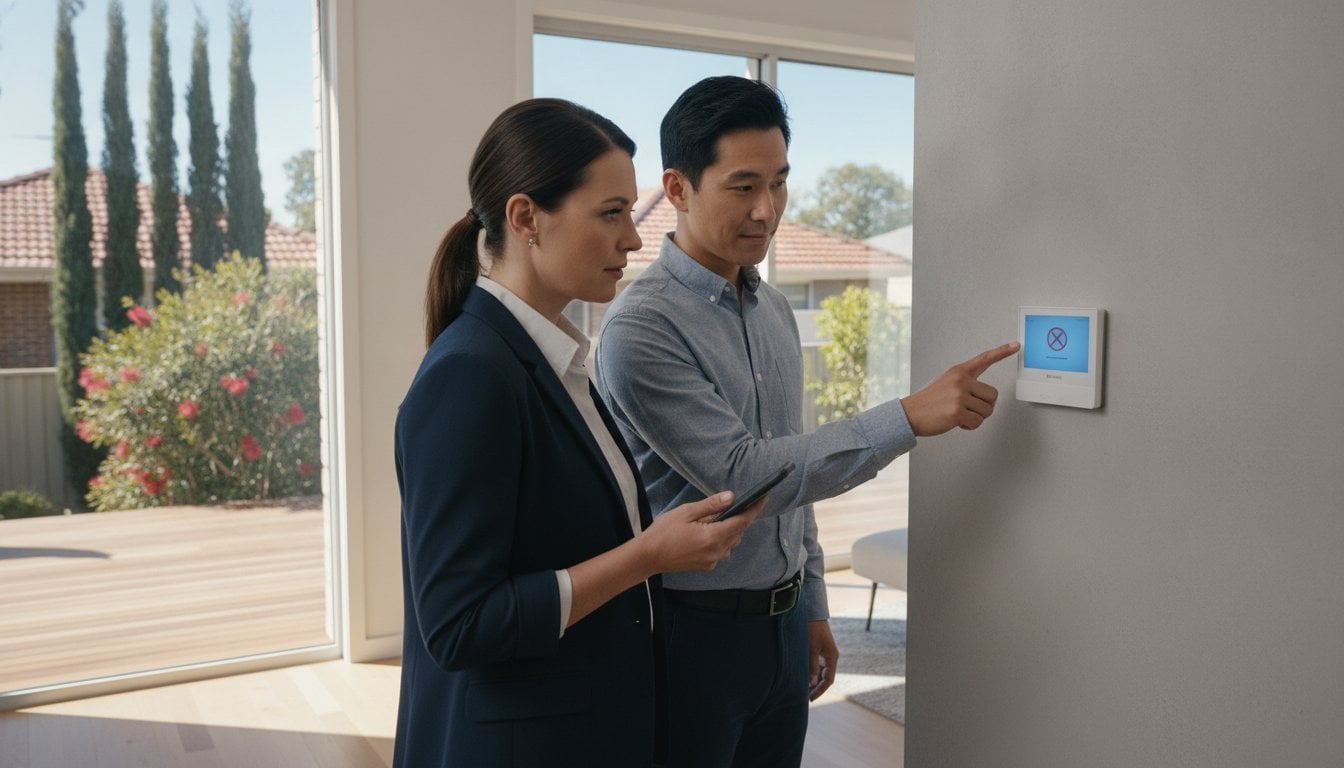
One of the biggest myths we hear from Sydney families is that a ducted system is an “all or nothing” choice. This couldn’t be further from the truth in 2026. While older systems might have wasted energy cooling empty hallways, modern technology has turned the ducted aircon vs multiple splits running cost debate on its head. Today, we can install smart controllers that give you granular control over every square metre of your home. You can easily turn off the airflow to your kitchen and living areas while you’re sleeping in the bedrooms, or vice versa during the day. This level of precision means you aren’t paying to condition air in rooms that nobody is using.
Day/Night zoning is a simple yet effective way we help our clients manage their daily kilowatt-hour consumption. By grouping your home into logical sections, you can significantly reduce the load on your compressor. If you are researching the ducted air conditioning Northern Beaches locals prefer for whole-home comfort, you will find that these smart zoning features are now considered essential rather than optional. They provide the flexibility of multiple units with the sleek, hidden aesthetic of a central system.
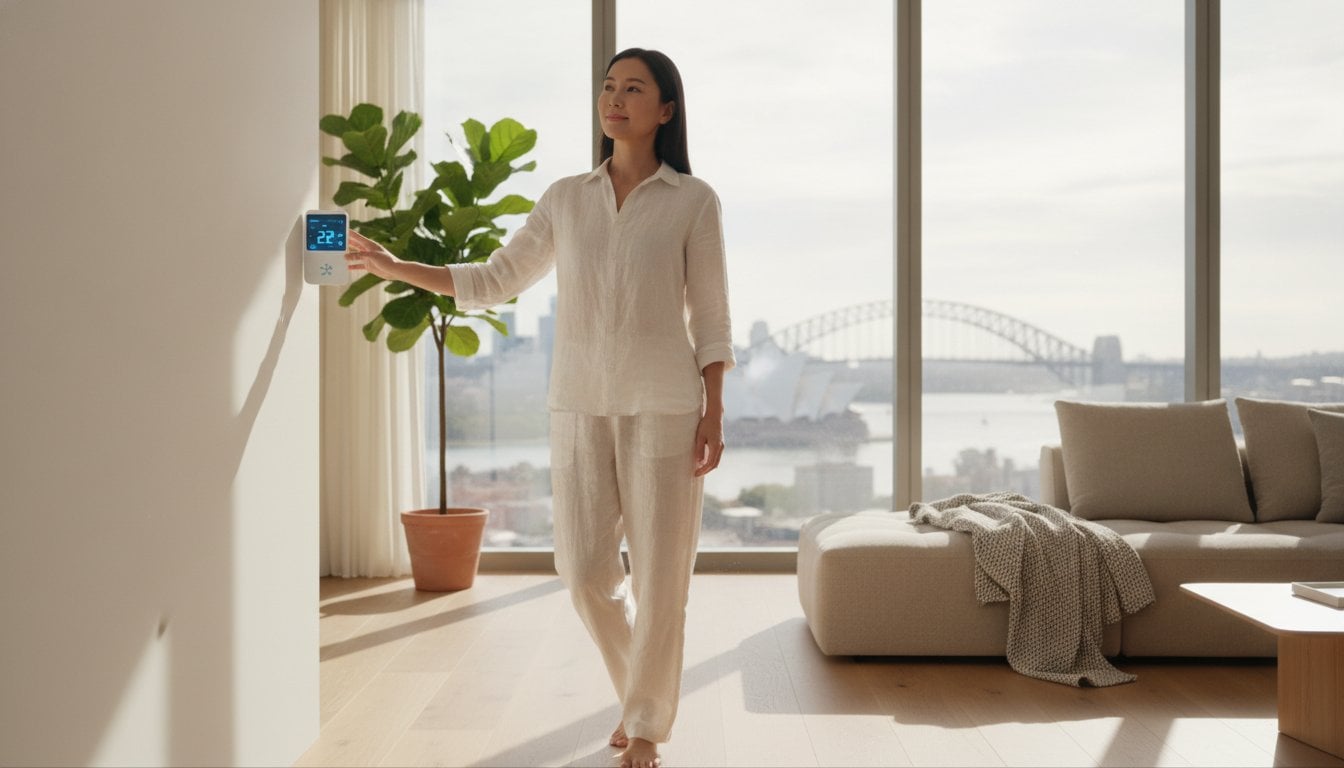
Individual Temperature Control (ITC) takes zoning a step further by placing high-precision sensors in each room. These sensors communicate directly with the central indoor unit, telling it exactly how much conditioned air to send to each space. If your sun-drenched master bedroom is warmer than a south-facing study, the system adjusts itself automatically. This prevents the common problem of over-cooling rooms that have already reached their target temperature. By only delivering the precise amount of cooling required, the system stays in its most efficient “part-load” state for longer, which is a major win for your quarterly power bill.
With 32 per cent of New South Wales homes now sporting rooftop solar, integrating your air conditioning with your energy production is a brilliant way to lower costs. A central ducted system is often easier to automate with solar monitoring apps than five separate split units. We often recommend “pre-cooling” your home during the middle of the day when your solar panels are hitting their peak production. By using your own free energy to bring the house to a comfortable temperature before the evening peak rates kick in, you can maximise your self-consumption. Research shows that NSW solar owners save an average of $840 per year, and a smart-zoned ducted system is the perfect partner to help you reach those savings.
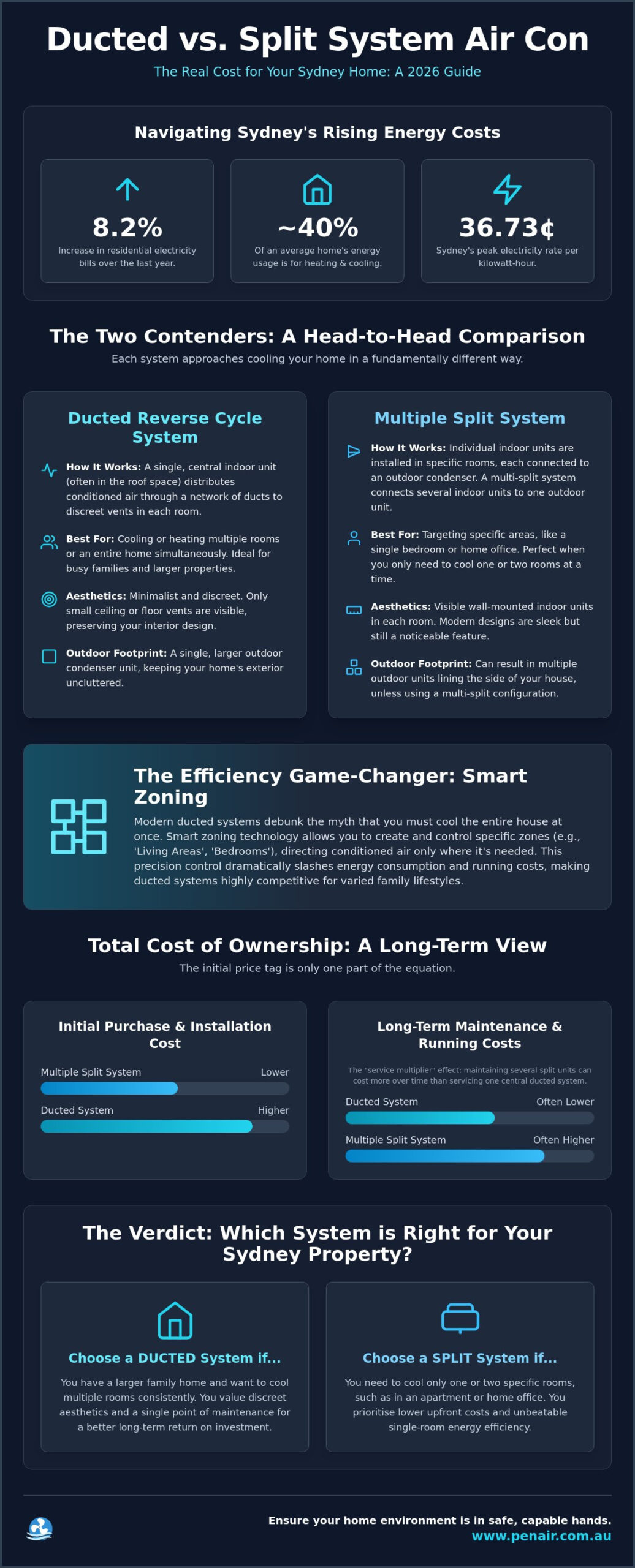
While the ducted aircon vs multiple splits running cost often focuses on the monthly power bill, long-term maintenance is where many Sydney homeowners get caught out. We often see families choose multiple split units for a lower initial price, only to realise later that owning five separate machines is essentially five times the work. Every independent unit has its own set of moving parts, filters, and electronics that require attention to stay efficient. When you multiply those requirements across a whole house, the logistical and financial burden of keeping everything running smoothly starts to climb.
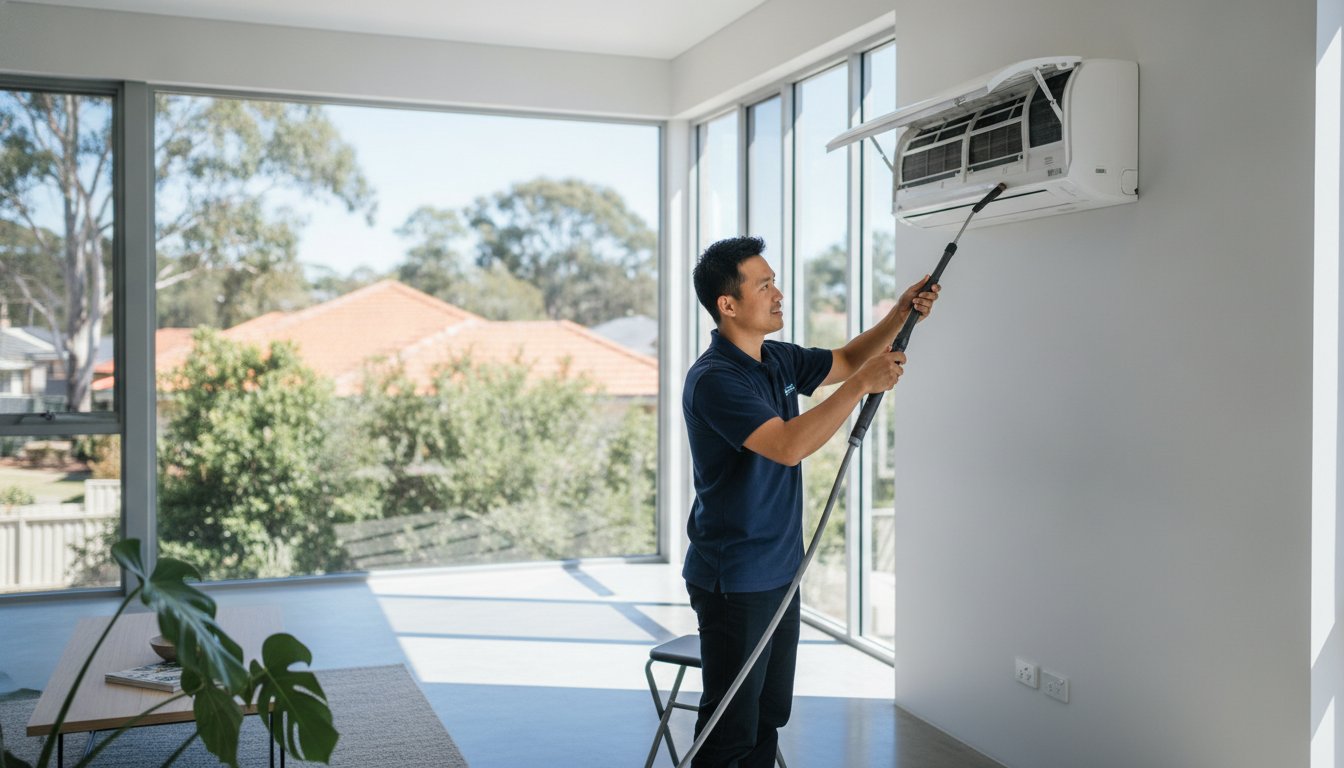
Engaging a professional air conditioning service Sydney specialist is critical for keeping your manufacturer’s warranty valid and ensuring your system doesn’t lose its efficiency over time. Without regular check-ups, even the most expensive units will begin to consume more power as they struggle against clogged filters or low refrigerant levels. We always recommend a proactive approach to protect your investment and keep your home environment healthy.
Maintaining five split systems means five filters to wash, five condensate drains to check for blockages, and five individual fan motors that could eventually fail. It’s what we call the “Service Multiplier”. A single ducted system, while larger, centralises these components into one indoor unit and one outdoor compressor. This makes the technician’s visit much more straightforward and cost-effective. Over a 15-year lifespan, the cumulative cost of replacing several smaller compressors versus one high-quality central unit can be significant, especially when you factor in the labour required for multiple separate repairs.
The “clutter” factor is a hidden cost that many people overlook until the installation is finished. Multiple split units on external walls can seriously impact your home’s street appeal and ruin the look of a carefully planned renovation. In the 2026 Sydney property market, a discreetly installed ducted system is viewed as a premium asset that adds genuine value to your home. It operates quietly and stays tucked away in the roof space, whereas a “forest” of small compressors outside bedroom windows can create unwanted noise and vibration. For our neighbours on the Northern Beaches, having just one outdoor unit also makes it much easier to apply specialised anti-corrosive coatings to protect against the harsh salt air.
If you’re ready to see which system fits your home’s layout and long-term budget, you can book a consultation with our local team today for honest, expert advice.
Finding the winner in the ducted aircon vs multiple splits running cost debate depends entirely on your lifestyle and your property’s footprint. If you are managing a busy family home with multiple storeys or large open-plan living areas, a zoned ducted system is almost always the more cost-effective choice over the long term. It offers a streamlined, high-efficiency solution that simplifies your home’s maintenance and provides a superior level of comfort. Conversely, for those living in Sydney apartments, smaller terraces, or homes where only one or two rooms need cooling at any given time, a series of individual split systems will likely provide the lowest daily running costs and a more manageable upfront investment.
There is no single correct answer for every property, but there is a right answer for your specific home. We believe in providing honest, local advice that looks at your total cost of ownership over ten to fifteen years, not just the price on the day of installation. Our team is dedicated to ensuring you find a solution that keeps your family comfortable without any nasty surprises when the electricity bill arrives.
To help you decide, we recommend asking three key questions about your property:
The only way to get a truly accurate running cost estimate is through a professional site audit. Every Sydney home is unique, and factors like ceiling height, window orientation, and insulation levels will all impact how your system performs. We will visit your property to assess your floor plan and provide a clear, technical recommendation based on your budget and comfort goals. As an authorised Daikin Specialist Dealer, we have the expertise to design a system that meets the latest 2026 energy standards while ensuring your home environment is in safe, capable hands. Contact our friendly team for a tailored air conditioning quote today and let us help you find the perfect fit for your household.
Choosing the right climate control for your Sydney home is about balancing today’s installation price with tomorrow’s energy bills. We’ve explored how smart zoning and individual temperature control have transformed the ducted aircon vs multiple splits running cost equation, making whole-home systems more efficient than ever. You also now understand how the “service multiplier” and solar integration play vital roles in your total expenses. Every property is unique, and the best choice depends on your specific floor plan and lifestyle.
As a family-owned and operated business since 1999, we’ve spent decades helping our neighbours across the Northern Beaches and North Shore navigate these technical choices. Our team of expert installers works as an authorised Daikin Specialist Dealer to ensure your system is perfectly calibrated for our local climate. We’re ready to provide the honest, unhurried advice you need to make an informed decision for your household’s well-being.
Get a Professional Efficiency Audit for Your Sydney Home – Contact PenAir
We look forward to helping you create a comfortable, energy-efficient home environment that you can enjoy with complete peace of mind for years to come.
The answer depends on how you use your home. If you need to cool four rooms at the same time, a single high-efficiency ducted system is often cheaper to run because it uses one large, optimised compressor. However, if you only ever cool one bedroom at a time, four separate split systems will be more cost-effective as you aren’t paying to move air through a large duct network for a single small space.
On a room-by-room basis, split systems are incredibly efficient and often have higher star ratings for single-zone cooling. The ducted aircon vs multiple splits running cost changes when you look at the whole property. Running multiple split units simultaneously can draw more peak power than a modern ducted inverter that has throttled down to its most efficient part-load state once the entire house reaches temperature.
Zoning can reduce your running costs significantly by ensuring you only condition the air in rooms you are actually using. By utilising “Day/Night” zoning to turn off airflow to empty bedrooms during the day or living areas at night, you can slash your daily kilowatt-hour consumption. Modern smart sensors ensure the compressor only works as hard as necessary to cool the active zones.
Daikin remains the benchmark for energy efficiency in the Australian market for 2026. Their advanced inverter technology and “US7” innovations are specifically designed to handle Sydney’s humid summers and cool winters. As authorised specialists, we find that their systems consistently deliver the best balance of performance and long-term energy savings for local residential properties.
You can certainly run your system during the day using solar power, especially with the 32 per cent solar uptake currently seen across New South Wales homes. By pre-cooling your home during peak daylight hours when your panels are producing the most energy, you can maintain a comfortable temperature well into the evening while keeping your grid consumption and running costs near zero.
We recommend an annual professional service for both types of systems to maintain efficiency and warranty compliance. The main difference is the logistical effort involved. A ducted system requires one technician to check a single indoor and outdoor unit. Maintaining multiple split systems involves cleaning and testing every individual wall unit and compressor, which often leads to higher long-term maintenance costs.
Both systems use reverse-cycle technology, which is the most efficient way to heat a home in Sydney. Ducted systems generally provide a more even heat distribution, as the air is delivered through ceiling vents that prevent the “cold spots” sometimes found with wall units. This creates a more consistent and comfortable environment across the entire floor plan during those chilly July nights.
In the 2026 Sydney real estate market, ducted air conditioning is considered a premium value-add. It is highly sought after by buyers for its “invisible” comfort and sleek aesthetic. While split systems are excellent for climate control, they don’t carry the same prestige or offer the same seamless integration into a home’s design as a fully zoned ducted system.