
If your aircon is blowing warm air, switch it off rather than letting it keep running. Continued operation may overheat and permanently damage the compressor. If you’re wondering why your aircon is blowing hot air, possible causes include a thermostat setting, restricted airflow, an electrical fault or a refrigerant problem.
It’s frustrating when the system runs but doesn’t cool your home. A technician can assess its operation, trace the loss of cooling and determine whether it needs repair. Refrigerant leaks and electrical faults require professional attention.
This article explains how a technician diagnoses warm air, which simple checks can help identify possible causes and when to arrange professional repairs. You’ll also learn why switching the system off matters and what to expect when a fault goes beyond a setting or airflow issue.
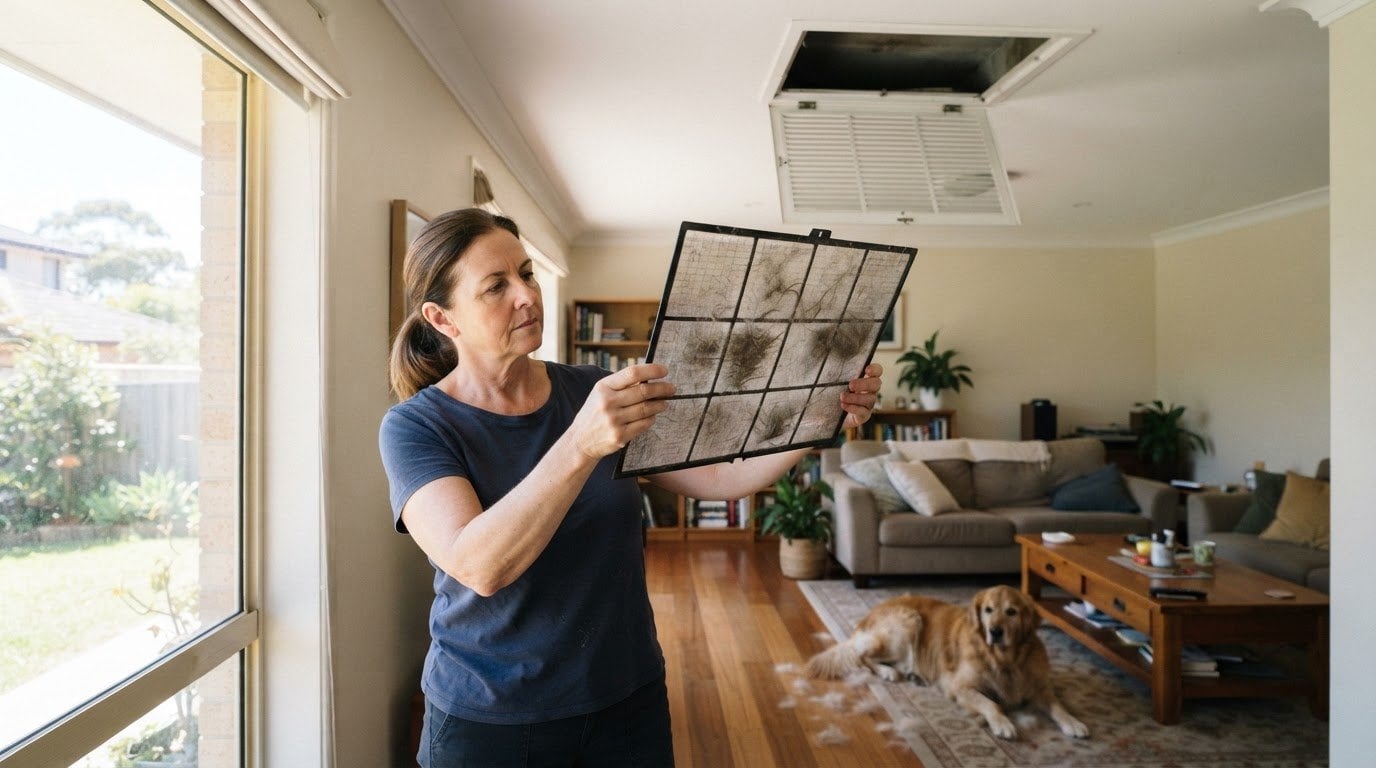
A dirty filter can restrict airflow and reduce how effectively an air conditioner cools a room. In Australian heat, the system needs to move heat from indoors to outdoors. Restricted airflow can make cooling feel slower.
A clogged air filter limits the air passing through the indoor unit. With less air moving across the cooling components, the system may struggle to distribute cool air evenly around the room.
Dust and household debris can build up on a filter, while one that is poorly seated can leave gaps around its edges. A technician checks its condition, fit and airflow to see whether it could be contributing to warm air or weak airflow from the vents.
Filter maintenance starts with assessing its condition and deciding whether it needs cleaning or replacement. The right approach depends on the filter type, its condition and the system’s instructions.
A technician can remove a reusable filter for suitable cleaning, or replace a damaged or disposable one with the correct type. Filters are commonly recommended for replacement every 1-3 months, though dust levels and system use affect how quickly they become dirty.
This assessment forms part of professional air-conditioning cleaning. It helps distinguish a blocked filter from another cause, such as an airflow problem elsewhere in the system. Cleaning alone won’t resolve warm air if the filter isn’t the underlying issue.
If the system has a pollen filter, its condition matters too. Pollen or dust buildup can restrict airflow, just like a clogged standard filter. A technician checks the filter’s surface and fit, then determines whether cleaning or replacement suits its design.
Extreme Australian heat and high outdoor temperatures increase the amount of heat an air conditioner must transfer outside. If indoor airflow is restricted as well, the system may take longer to cool the space and feel less effective in hot weather.
During an assessment, a technician can compare the filter’s condition with airflow at the vents and the system’s cooling performance. If a clean, correctly fitted filter doesn’t improve airflow, further diagnosis is more useful than repeatedly cleaning the filter.
If you’re asking why your aircon is blowing hot air, a dirty filter is one possible cause, not a diagnosis. A professional can determine whether filter maintenance is relevant or another fault needs attention.
Yes. Switch off the air conditioner if it keeps blowing warm air, as continued operation may overheat and permanently damage the compressor. A refrigerant fault is one possible cause, but it requires professional diagnosis.
Refrigerant absorbs heat inside your home and transfers it outside. A leak can reduce the system’s cooling capacity, leaving the air less cool and the room warmer than expected even while the system runs.
Low refrigerant usually points to a leak or another fault, not a routine need for a top-up. Refilling without finding the cause leaves the underlying problem unresolved. A technician checks for leaks, assesses the refrigerant circuit and identifies the necessary repair before recharging the system.
For Australian homeowners, the practical rule is to leave refrigerant handling and repairs to a professional HVAC technician. Don’t release, refill or repair the refrigerant circuit yourself. A technician can assess the fault and carry out the work safely.
A refrigerant leak and a compressor fault can both leave an air conditioner running without cooling effectively. Warm air alone can’t confirm which component has failed, so a technician assesses how the system operates rather than relying on one symptom.
A technician may ask whether cooling faded gradually or stopped suddenly, and whether the indoor and outdoor units are operating. Changes in sound, repeated starting attempts or a system that runs without cooling can help guide the assessment. These signs indicate a need for diagnosis, but don’t prove a leak or compressor fault.
During troubleshooting, a technician checks the refrigerant circuit for leaks and assesses whether the compressor is operating correctly. They also consider other causes, such as a control or electrical fault. Identifying the actual problem helps determine whether the system needs a leak repair, compressor repair or another service.
Turn the system off while arranging an assessment if warm air continues or the compressor seems to be struggling. Note what changed, such as a sudden loss of cooling or unusual operation, and share that with the technician. For help with a suspected refrigerant or compressor problem, contact a professional air-conditioning repair team.
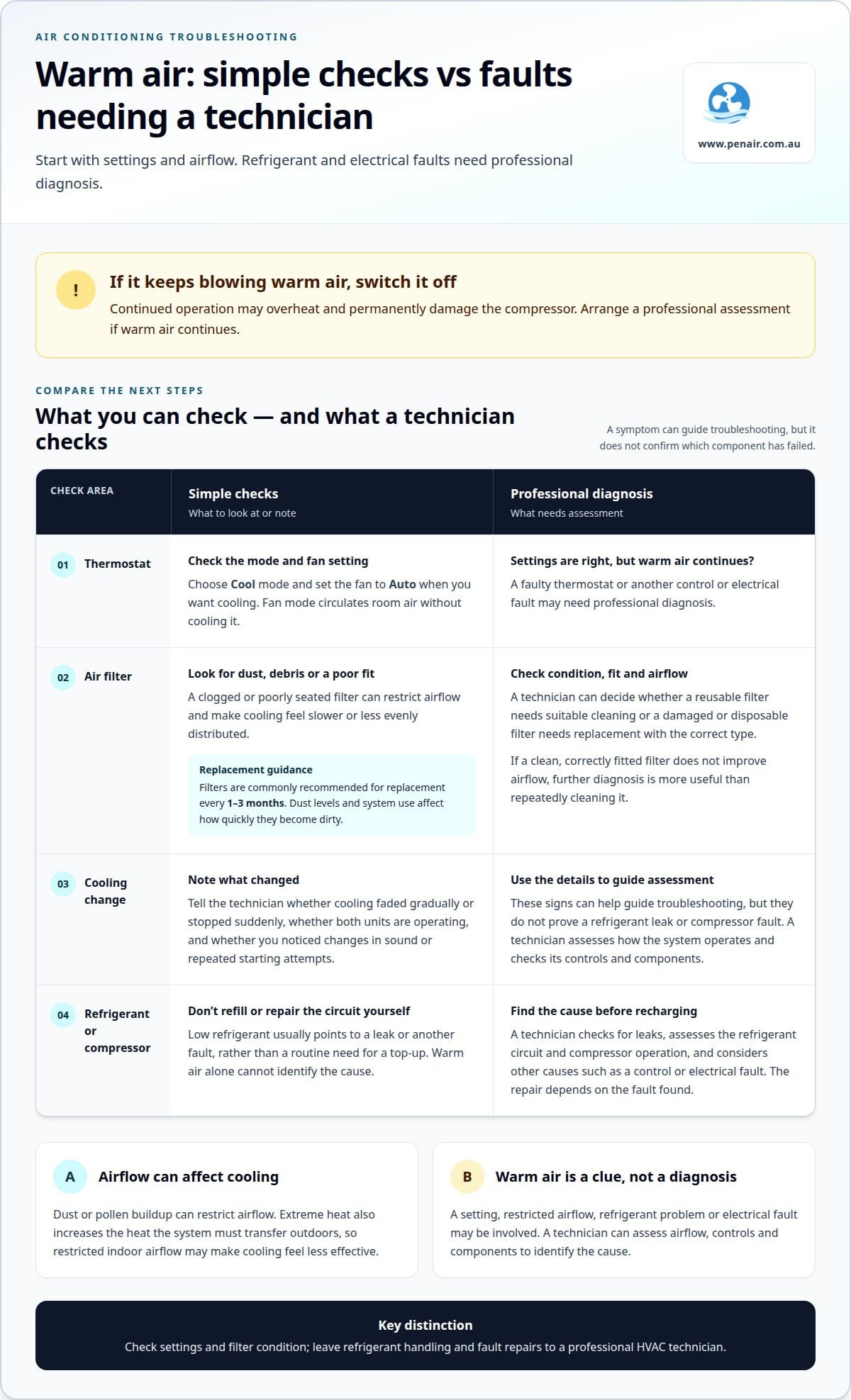
A thermostat setting can make a working air conditioner seem faulty. If the settings are correct but warm air continues, a control or electrical fault may need professional diagnosis.
The thermostat controls whether the air conditioner cools, circulates air or rests. Select Cool mode and set the fan to Auto when you want cooling.
In fan mode, the system circulates room air without cooling it. This can explain why the unit sounds as though it’s running while warm air comes from the vents. Auto lets the system run the fan as part of its cooling cycle, rather than circulating air continuously.
Choose a temperature that suits your household’s cooling needs. If the indoor temperature is warmer than the selected setting, the air conditioner should be calling for cooling. A mismatch between the mode, fan setting and intended operation can make the unit seem ineffective, even when the thermostat is simply set incorrectly.
A faulty thermostat may send an incorrect signal or fail to communicate properly with the air conditioner. The system may not start cooling, may stop too soon or may run without responding to the selected setting.
A technician can assess whether the thermostat needs resetting or replacing. Smart thermostats also need accurate calibration: an incorrect temperature reading can affect when the system starts or stops. The technician compares the control’s behaviour with the air conditioner’s operation before recommending a change.
If the settings are correct, the next step is to consider the controls and electrical components. A wiring or component fault can interrupt the signal between the thermostat and the indoor or outdoor unit. Have a licensed technician inspect and repair electrical problems. This helps establish whether the fault is in the thermostat, its connections or another part of the system.
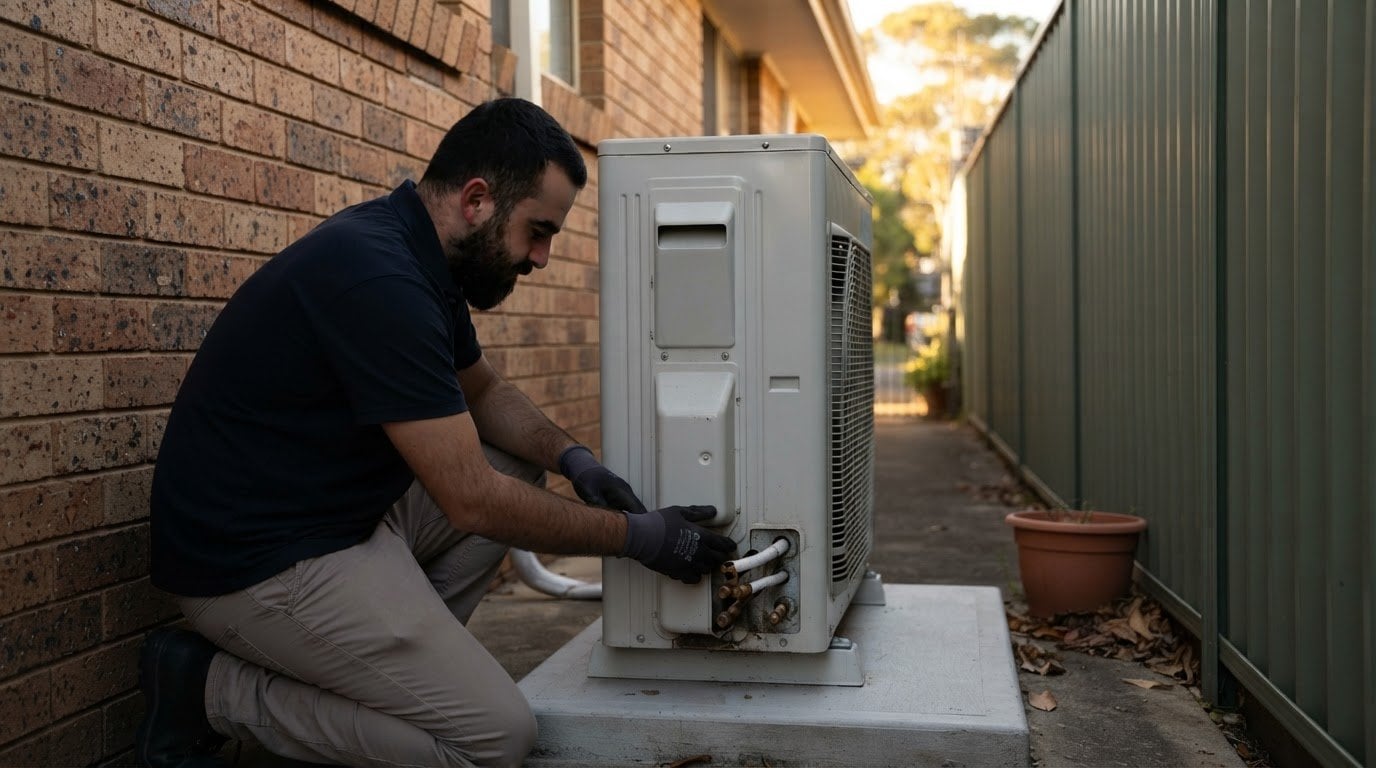
The outdoor condenser needs to operate as part of the cooling cycle. If it isn’t running while the indoor unit blows air, cooling may not reach your home. That observation alone doesn’t identify the cause. A technician assesses the condenser and related components to determine whether an electrical fault, control issue or compressor problem is preventing effective operation.
A compressor fault can affect the system’s ability to move heat outside. A technician considers the unit’s behaviour alongside thermostat signals and condenser operation, rather than replacing a component based on warm air alone. These checks help distinguish a control issue from a mechanical or electrical failure.
Before arranging an assessment, note the selected mode, fan setting and whether the outdoor condenser appears to be running. These details help you describe the fault without opening the unit or handling electrical components.
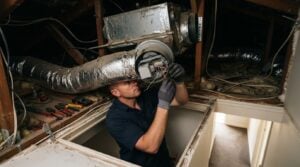
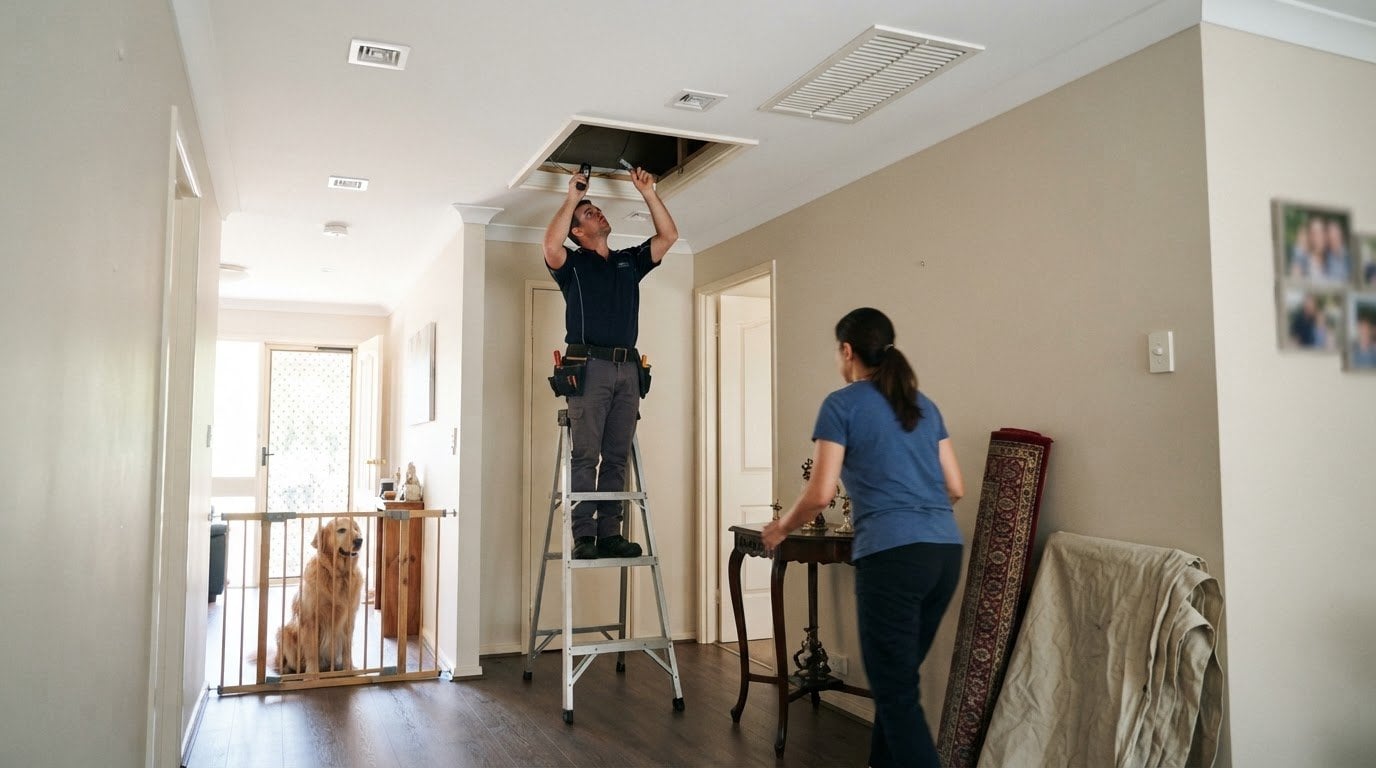
A technician traces the cause of warm air through the air conditioner’s controls, airflow and mechanical components. This helps identify the fault before deciding whether repair or replacement makes sense.
A professional diagnosis considers the whole system because several faults can cause similar symptoms. The technician assesses thermostat operation, airflow, filters, coils, wiring, refrigerant levels and the outdoor unit.
A system that runs without cooling, for example, may have a refrigerant leak, an electrical fault or a problem with heat transfer. A technician can test performance and compare findings across components instead of assuming the first visible issue is the cause.
Annual maintenance can include inspecting refrigerant levels, cleaning coils, checking wiring and testing system performance. These checks can identify developing issues that affect cooling efficiency. If leaking ductwork is causing a ducted system to lose air, a professional can inspect the ducts and identify where repairs are needed.
Arrange a technician’s visit if the air conditioner keeps blowing warm air after you set it to cool, or repeatedly stops cooling. A suspected refrigerant leak, frozen coil, unusual operation or electrical problem also needs professional attention.
A professional should handle refrigerant leaks and refills, while a licensed technician should inspect and repair electrical faults. Don’t keep running a system that may have a serious fault. Continued operation can overheat and permanently damage the compressor.
A technician’s diagnosis is especially useful when symptoms don’t point to one clear cause. Weak cooling, for instance, may relate to airflow, a refrigerant problem or a component fault. Testing helps distinguish these possibilities and guide the repair plan.
Whether to repair or replace the system depends on the fault, its condition and how effectively it cools after repair. A repair may fix a specific failed component, while recurring problems or poor overall performance may call for a broader assessment.
An air conditioner more than 10-15 years old may be due for replacement. Age alone doesn’t establish that replacement is necessary, so a technician considers the system’s condition, performance and repair needs before explaining the options.
Ask for the diagnosis and the reasoning behind the recommended work. Clear findings, such as a confirmed leak or faulty component, help you understand what a repair addresses. If warm air persists or the system’s performance keeps declining, arrange a professional air-conditioning assessment.
Peninsula Air Conditioning (PenAir) diagnoses why a home air conditioner is blowing warm air and recommends suitable repairs. A technician assesses the system’s operation to identify whether the issue relates to airflow, controls, refrigerant or another component. This helps you understand the fault before deciding what to do next.
Turn to PenAir when warm air continues, cooling performance drops or the system repeatedly develops problems. Professional repairs address faults, while Service & Maintenance helps assess system condition and performance. The right response depends on the technician’s findings and your air conditioner’s condition.
For a clear assessment of your air conditioner, contact Peninsula Air Conditioning (PenAir).
If you’re still asking why your aircon is blowing hot air, a professional assessment can turn uncertainty into a clear next step. Describe what the system is doing, when the problem began and whether its performance has changed. These details help the technician understand the issue and assess what needs attention.
Peninsula Air Conditioning (PenAir) provides air-conditioning repairs and ongoing Service & Maintenance for residential systems, including Split Systems and Ducted Systems. The right advice starts with your system’s condition and the cause of the fault, helping you make an informed decision about keeping your home comfortable.
Contact Peninsula Air Conditioning (PenAir) to discuss your air-conditioning problem and arrange the next step. A clear diagnosis can help you move towards a more comfortable home.
An air conditioner removes heat from indoor air and transfers it outside using refrigerant. The indoor unit draws room air across cooling components, then circulates the treated air back into the space. The outdoor unit releases the absorbed heat. A split system cools the room served by its indoor unit, while a ducted system distributes conditioned air through ducts to multiple areas.
Yes, a dirty filter can restrict airflow and reduce cooling performance. If a bedroom feels warm while the system is running, limited air movement through the indoor unit could be one contributing cause. Filter condition alone doesn’t establish the fault, though. A technician considers airflow and other components to determine whether cleaning or replacement is relevant.
Dust and debris on a filter make it harder for air to pass through the system. This can reduce airflow to a room and make cooling feel uneven. For example, a lounge may receive weaker airflow than another area. Filter suitability matters too: the system needs a filter that fits properly and suits its design.
Frozen evaporator coils can interfere with heat absorption and reduce cooling or airflow from the indoor unit. You may see ice around the indoor coil, or notice weaker airflow from the vents. Switch off the air conditioner while the coils thaw. A technician can then investigate the cause instead of treating the ice as the underlying fault.
A technician first identifies where cooling is failing, then recommends a repair based on the findings. The assessment may cover the thermostat, airflow, electrical components, refrigerant circuit and outdoor unit. For example, a leak needs to be located and repaired before the system is recharged. The repair depends on the diagnosed cause, so warm air alone can’t determine which component needs attention.
Repair costs depend on the fault and work required, including the system type, parts, labour and access to the affected component. A filter-related service and a refrigerant leak repair involve different work. To get an accurate price, request a quote; the cost is provided after assessing the issue and required repairs. Don’t rely on a general figure before the fault is diagnosed.