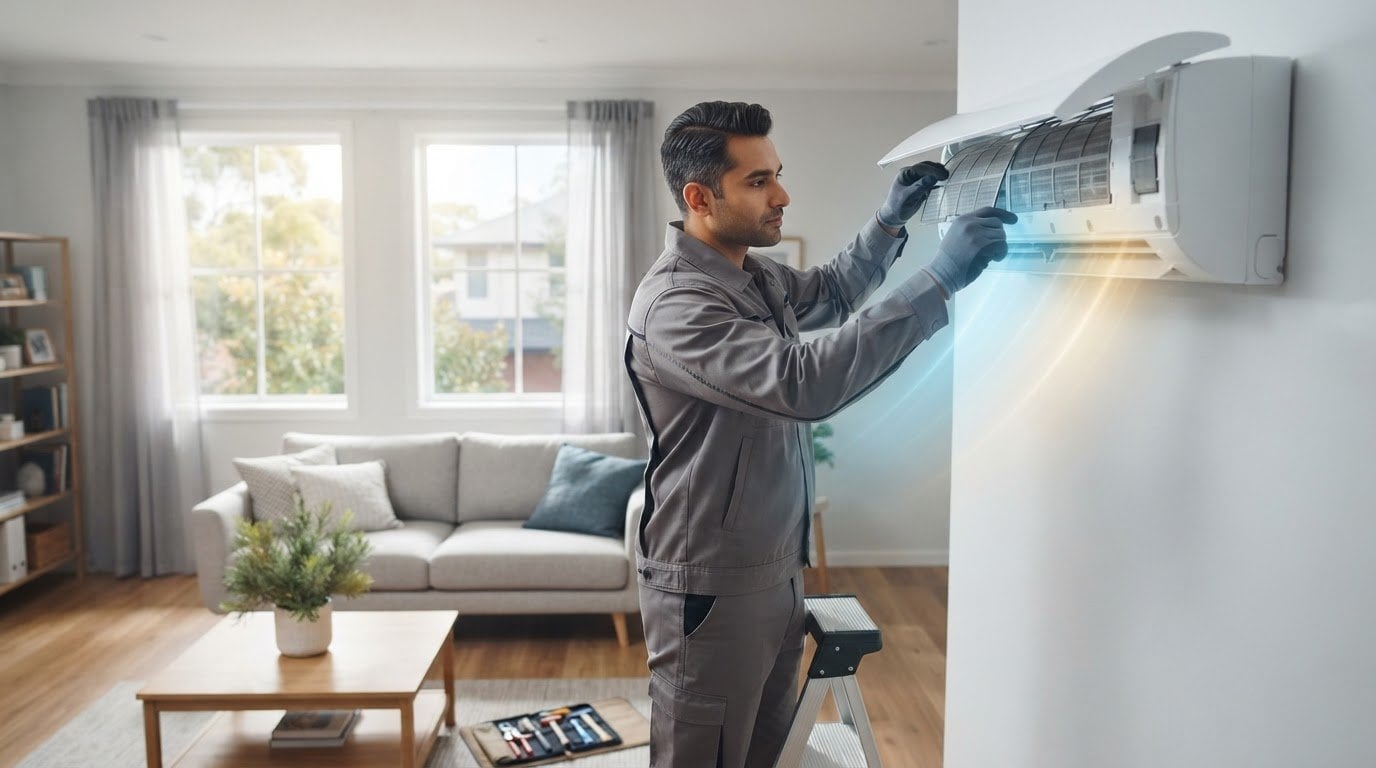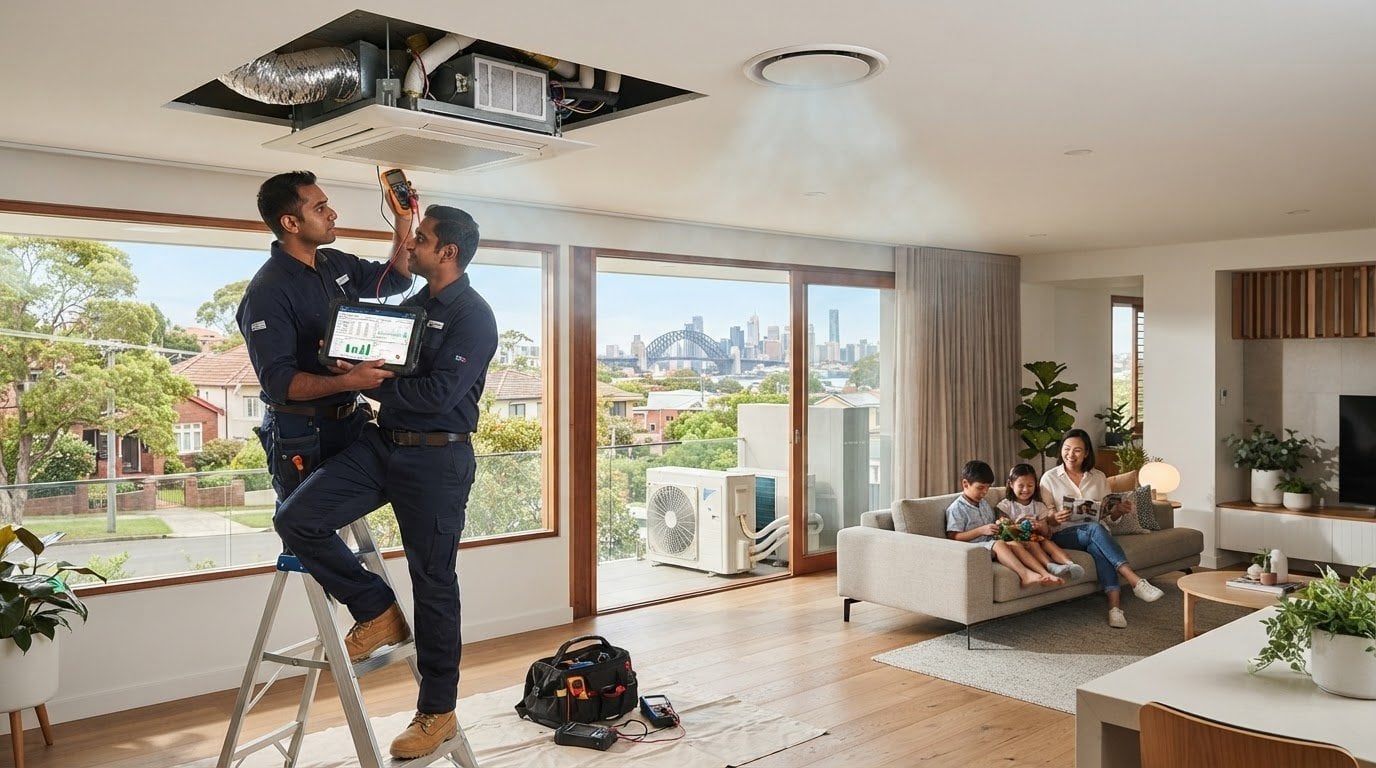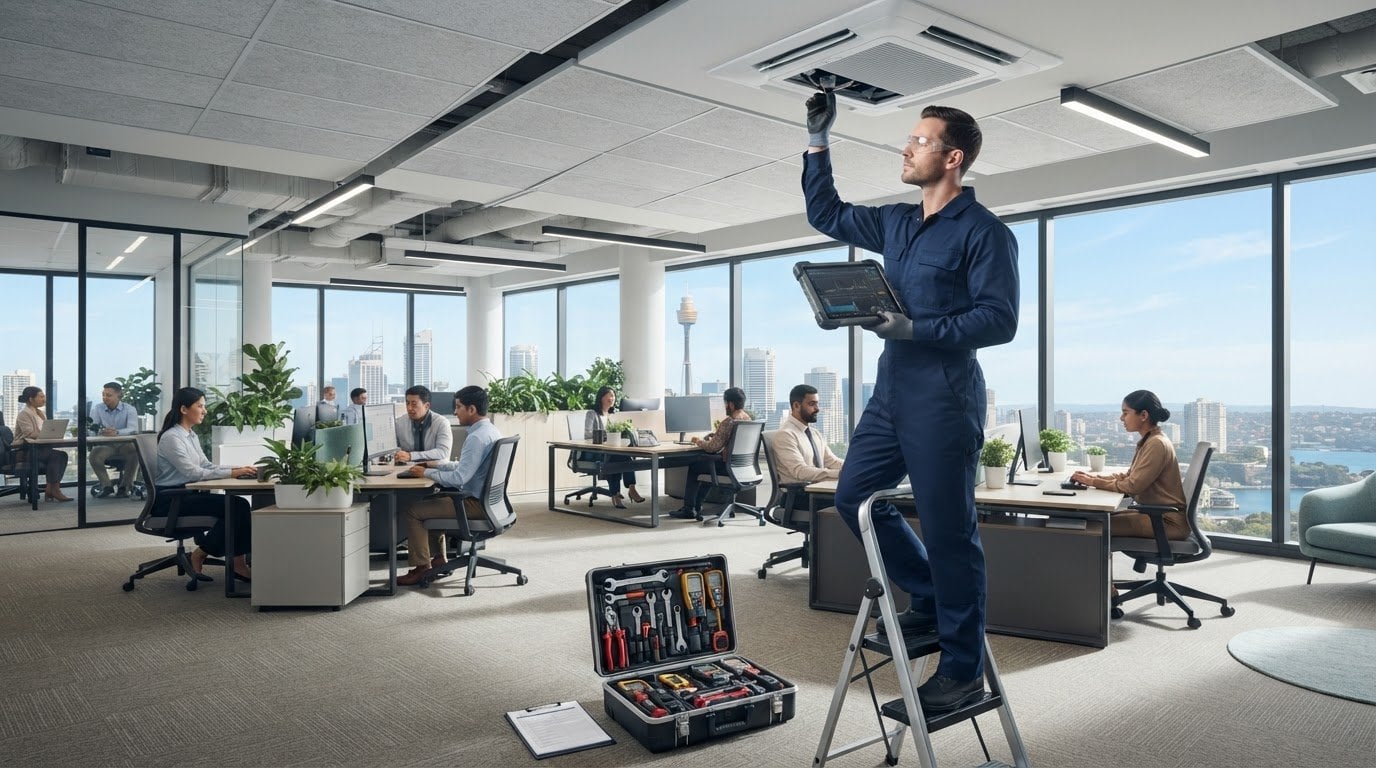

A yearly service can do more than keep your air conditioner running smoothly: it can help catch small faults before they lead to bigger repairs. The benefits of regular aircon servicing include maintaining efficient operation and giving heavily used systems the attention they may need beyond an annual check.
It makes sense to think about servicing when the seasons change, especially before your system has to work hard through a Sydney summer or winter. Clean filters and clear airflow help the unit operate efficiently, while a professional inspection can identify developing issues such as a refrigerant leak that could contribute to compressor damage.
This article explains the benefits of regular aircon servicing, when to book maintenance, and how it can support efficient operation and help identify developing faults. You’ll also learn which care tasks you can handle at home and when to arrange professional servicing.
Regular maintenance helps an air conditioning system run efficiently and gives a technician the opportunity to spot wear before it develops into a larger fault. Annual professional servicing is generally recommended in Australia, with more frequent attention suited to systems used heavily.
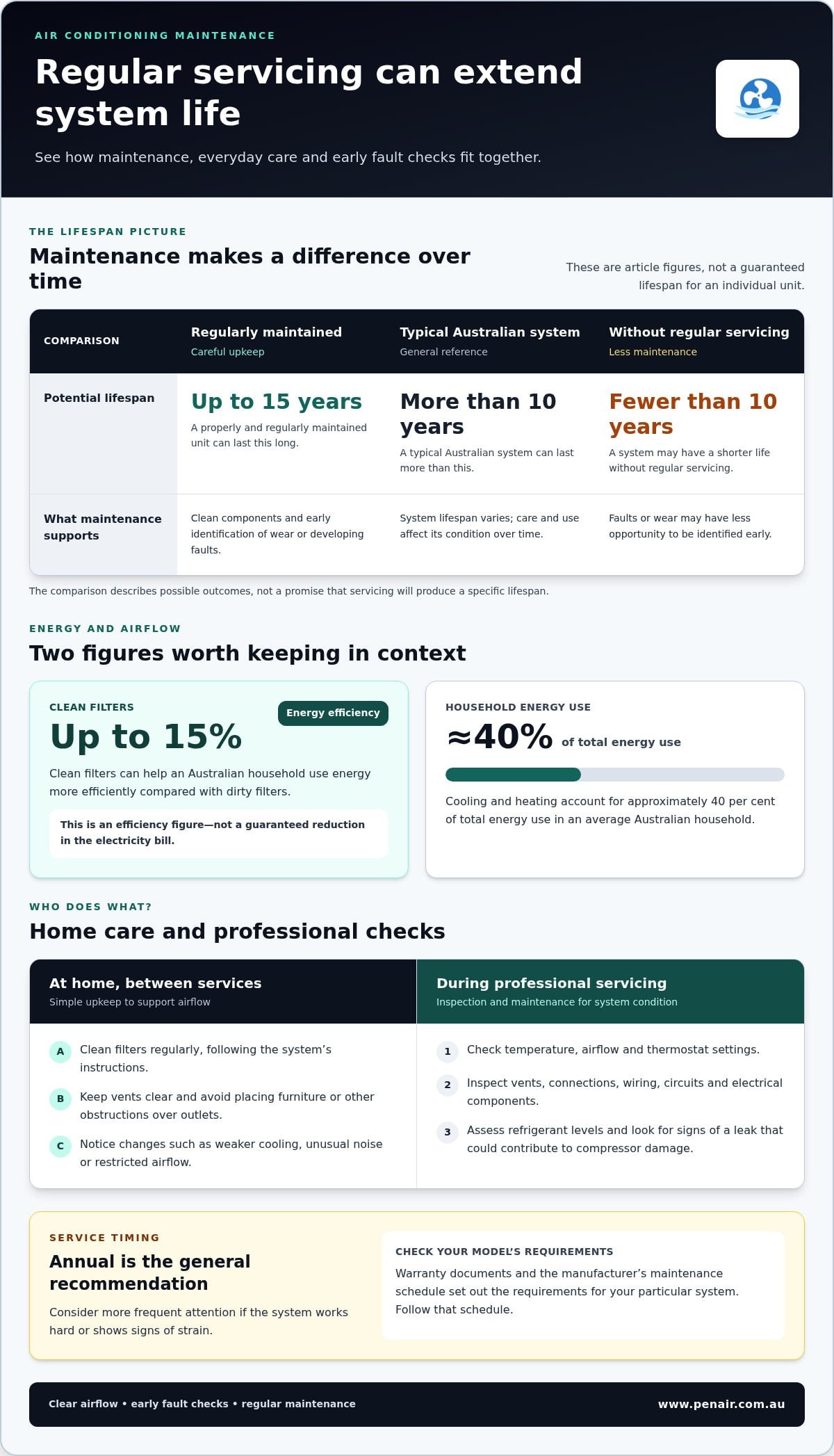
Maintenance supports an air conditioner’s lifespan by keeping its components clean and helping identify developing faults. A typical Australian system can last more than 10 years, while a properly and regularly maintained unit can last up to 15 years. Without regular servicing, a system may last fewer than 10 years, making early attention worthwhile for households planning around replacement.
Efficiency is how effectively an air conditioner cools or heats while using energy. Clean air filters can help an Australian household use up to 15 per cent more energy efficiently compared with dirty filters. That figure describes energy efficiency, not a guaranteed reduction in an electricity bill. Cooling and heating systems account for approximately 40 per cent of total energy use in an average Australian household, so airflow and filter condition matter.
Pay attention to changes during normal use, such as weaker cooling or unusual noise. Keep furniture and other obstructions away from vents too, so conditioned air can circulate effectively through the room.
A service includes checking components that affect airflow, operation and system condition. A technician can inspect vents, connections, wiring and circuits, and check refrigerant levels. These checks can reveal issues such as restricted airflow or signs of a refrigerant leak. At home, clean filters regularly and keep vents clear to help air move freely between professional visits.
Professional servicing combines inspection with maintenance suited to the system’s condition and use. Tasks can include checking temperature, airflow and thermostat settings, inspecting electrical components, and assessing refrigerant levels. Servicing is generally recommended annually, or more often when heavy use calls for it. For Sydney households, professional air conditioning servicing in Sydney can help prepare a system before summer.
Annual servicing is a general recommendation, but your warranty documents and the manufacturer’s maintenance schedule set out the requirements for your particular model. Follow that schedule to keep the system properly maintained.
How much does servicing cost? The price depends on the system, its condition and the work required, and is given after a quote request. How much can servicing reduce energy use or bills? Clean filters can help a household use up to 15 per cent more energy efficiently than with dirty filters, but the resulting bill change depends on usage and other household factors.
Air conditioning affects household energy use and comfort, especially during Sydney’s hot summers. Servicing checks system condition and airflow, both of which influence how efficiently a unit cools your home.
Energy consumption is the electricity an air conditioning system uses while heating or cooling. Clean components and unobstructed airflow help the unit move conditioned air through a room without unnecessary strain. Cooling and heating systems account for approximately 40 per cent of total energy use in an average Australian household, so their operation can influence overall consumption.
During a service, a technician can assess airflow, temperature and thermostat settings. For example, a system that struggles to reach its set temperature may run for longer and use more electricity to maintain comfort.
Running costs depend on the electricity an air conditioner uses and your household’s electricity rates. Longer run times increase consumption, so equipment condition and everyday settings both matter. A unit running through a hot Sydney afternoon has a different demand pattern from one used briefly in a single room.
The final bill also depends on system size, weather, thermostat settings and how often rooms are occupied. Servicing addresses the equipment’s condition, but it does not change your electricity tariff. These factors help explain why energy bills can vary between seasons.
Airflow is the movement of conditioned air through the system and into your living spaces. Dusty filters, blocked vents and furniture placed over outlets can restrict it. The system may then work harder to distribute cooling, leaving some rooms less comfortable than others.
Keep vents clear and clean filters according to the system’s instructions. During servicing, a technician can assess airflow and temperature to identify restrictions that may not be obvious from the controls. If one room stays warm while others cool, for example, the issue may be airflow rather than the thermostat setting.
Potential energy-bill savings come from using less electricity to achieve the comfort your household needs. Servicing can identify issues affecting performance, while clean filters and clear airflow support efficient operation. Results depend on system use and condition, the weather and household electricity rates, so savings vary from home to home.
Set a comfortable temperature rather than repeatedly changing the controls, and avoid cooling unoccupied rooms where possible. These habits work alongside maintenance; neither one replaces the other. If you’d like help assessing your system’s condition and energy performance, contact the service team to discuss air conditioning maintenance.
Filters, vents and airflow all influence how an air conditioning system circulates air indoors. Routine maintenance helps keep these parts working as intended and can identify issues affecting cooling comfort.
Servicing can support cooling performance by checking airflow, temperature and thermostat settings. Regular filter care also helps limit dust and debris moving through the system. A technician can inspect vents and check refrigerant levels, though indoor air quality depends on more than servicing alone.
Indoor air quality describes the condition of the air circulating through your home, including particles and microbial growth. Dusty filters and dirty vents can collect debris, then restrict airflow as the system runs. Vacuuming filters during summer and cleaning ceiling vents and the return air grille once a month helps limit debris entering the filters.
High-quality air filters and UV light treatments can help reduce microbial growth in air conditioning systems. They support cleaner system conditions but do not replace routine filter and vent maintenance. A dusty return grille, for example, can carry collected debris towards the filter.
Maintaining healthy indoor air includes keeping the system’s air pathways clean and checking its operation. A service can assess airflow, temperature and thermostat settings, helping identify uneven cooling that affects comfort. Households with people who have respiratory sensitivities are advised to arrange servicing every six months.
Filter care matters between professional visits. Follow the air conditioner’s instructions when cleaning or replacing filters, and keep ceiling vents free of dust. If one room feels stuffy while the rest of the home cools comfortably, a blocked filter or restricted vent may be affecting circulation.
Clear airflow helps conditioned air reach the rooms served by the system and supports consistent temperatures. If a bedroom remains warm even when the thermostat shows its set temperature, check for a blocked outlet or a filter that needs attention. During servicing, a technician can assess airflow and temperature to help determine whether the problem relates to system operation.
Regular filter care supports air quality, but it does not replace inspection of the wider system. Cleaning a filter, for instance, will not fix a cooling fault or a persistently obstructed vent. Professional maintenance can assess system components and performance together, including airflow, thermostat settings and refrigerant levels. These checks help distinguish a simple maintenance need from an operational problem.
Make filter and vent care part of your home routine: clean filters as directed, keep ceiling vents and the return air grille free of dust, and note any changes in airflow or comfort. This practical upkeep helps reduce debris entering the system and makes it easier to recognise when professional attention is needed.
Small faults can put extra strain on an air conditioning system if they go unnoticed. Regular maintenance helps identify changes in performance, so a developing issue can be assessed before it causes further damage.
Skipping regular servicing can mean reduced cooling, restricted airflow or faults that remain hidden until the system struggles. For example, an undetected refrigerant leak can contribute to a major compressor breakdown.
A refrigerant leak is one reason early inspection matters. When a system loses refrigerant, cooling performance may fall while the compressor continues operating under unsuitable conditions. A technician can check refrigerant levels and investigate signs of leakage. Identifying the cause early can help prevent a minor fault from progressing into damage to a major component.
Notice changes between services. Strange noises, weaker cooling or difficulty maintaining the usual temperature can indicate strain. Note when the change began and whether it occurs during cooling, heating or both. That information helps a technician focus the inspection on relevant components rather than addressing the symptom alone.
Debris and restricted airflow can contribute to avoidable wear. Keep furniture away from vents, and clean or replace filters according to the manufacturer’s instructions. These steps support airflow but do not replace inspection of internal components. A clean filter, for example, will not resolve an electrical connection fault or a refrigerant issue.
Professional servicing can include inspecting electrical connections, wiring and circuits, checking refrigerant levels, and assessing temperature and airflow. Each check examines a different aspect of system performance. If cooling has weakened despite a clean filter and clear vents, an inspection can help distinguish a routine maintenance need from a fault requiring repair.
Regular attention can also help you make a more informed repair-or-replace decision as equipment ages. A system that repeatedly loses cooling, makes unusual noises or develops faults needs assessment based on its condition and the components affected. Cleaning may resolve some airflow problems, while a leak or damaged component requires a different response.
Don’t ignore persistent changes in operation or attempt work on refrigerant components yourself. Arrange professional air conditioning repair support if your system shows signs of strain. Early assessment can help identify the problem and determine the appropriate next step before further damage develops.
Peninsula Air Conditioning (PenAir) provides Ducted Systems and Service & Maintenance for Sydney households with system upkeep or performance concerns. If your ducted air conditioner has reduced airflow, uneven temperatures or unusual noises, professional servicing can assess its condition and identify areas needing attention.
Regular maintenance is also useful before periods of heavy use, such as Sydney’s summer, when dependable cooling matters at home. PenAir also works with Split Systems and Multi-Split Systems, helping homeowners address servicing needs across different system types. The right maintenance approach depends on the equipment and how it is used.
For help with your air conditioning system, contact Peninsula Air Conditioning (PenAir) to discuss your servicing needs.
Turn what you’ve learned into a practical plan: note changes in cooling, airflow or system noise, and schedule maintenance regularly. The benefits of regular aircon servicing are most useful when care is part of looking after your home, not just a response to a breakdown.
Peninsula Air Conditioning (PenAir) provides Service & Maintenance for Ducted Systems and Split Systems. If your system’s performance has changed or it is due for attention, get in touch to discuss the next step for your setup.
Contact Peninsula Air Conditioning (PenAir) to make an enquiry. A well-maintained system can help you feel more prepared for the seasons ahead.
Arrange professional servicing annually, ideally before the season when you rely on your system most. In Sydney, October or November is a practical time to prepare for summer cooling. If you use reverse-cycle air conditioning for heating, April or May is recommended before colder weather. Heavy use may call for more frequent servicing, so consider how often the unit runs and whether its performance has changed.
The benefits of regular aircon servicing include supporting efficient operation, identifying developing faults and maintaining comfortable airflow. These advantages matter most when a system is used frequently or works hard during Sydney’s hot weather. A technician may, for example, identify a performance issue before you rely on the unit for daily cooling. Maintenance also helps you understand the system’s condition and plan appropriate care.
Annual professional servicing is a general recommendation, adjusted for use and system type. A split system typically needs an annual service, while ducted systems often need comprehensive servicing every six months. Commercial units with high usage may need attention every three months. Check the manufacturer’s maintenance schedule too, as it may set out specific care requirements for your air conditioner.
A professional service can include checking temperature, airflow and thermostat settings, inspecting vents and electrical components, and checking refrigerant levels. The technician assesses the system’s condition and focuses on issues affecting its operation. The work can differ between a split system and a ducted unit. If you’ve noticed weaker cooling or an unusual noise, describe when it occurs so the inspection can take that symptom into account.
Regular servicing can support a longer working life and help identify faults before they cause further damage, although it can’t prevent every breakdown. A properly and regularly maintained air conditioner can last up to 15 years. Early assessment is particularly useful if cooling has weakened, the unit makes unusual noises or it struggles to maintain its usual temperature. These signs help indicate when the system needs professional attention.
Yes. You can clean accessible filters yourself by following the instructions for your model, and keep vents clear of dust and obstructions. Professional servicing goes further by inspecting electrical connections, checking refrigerant levels and assessing system performance. Leave technical servicing tasks to licensed service engineers rather than attempting them as DIY work. This helps you maintain basic cleanliness without handling internal components or refrigerant.