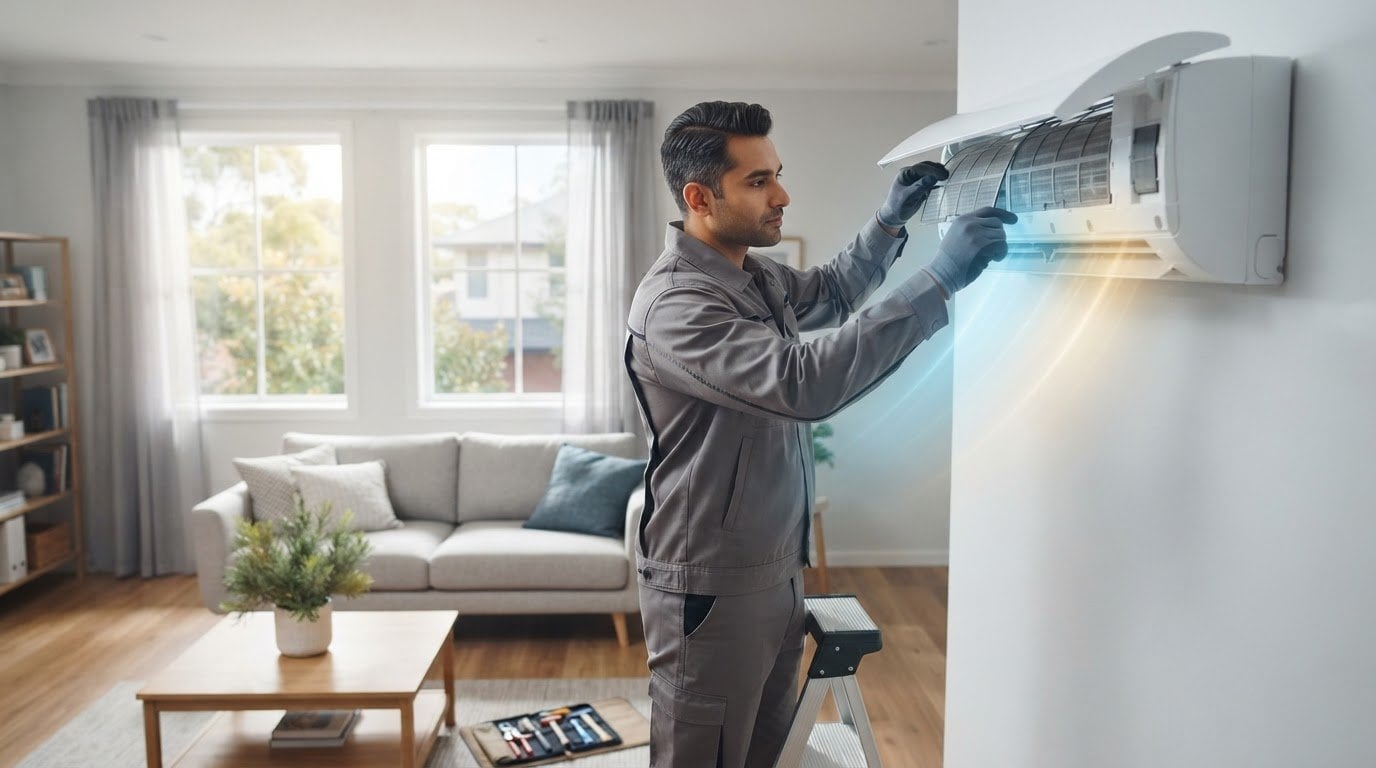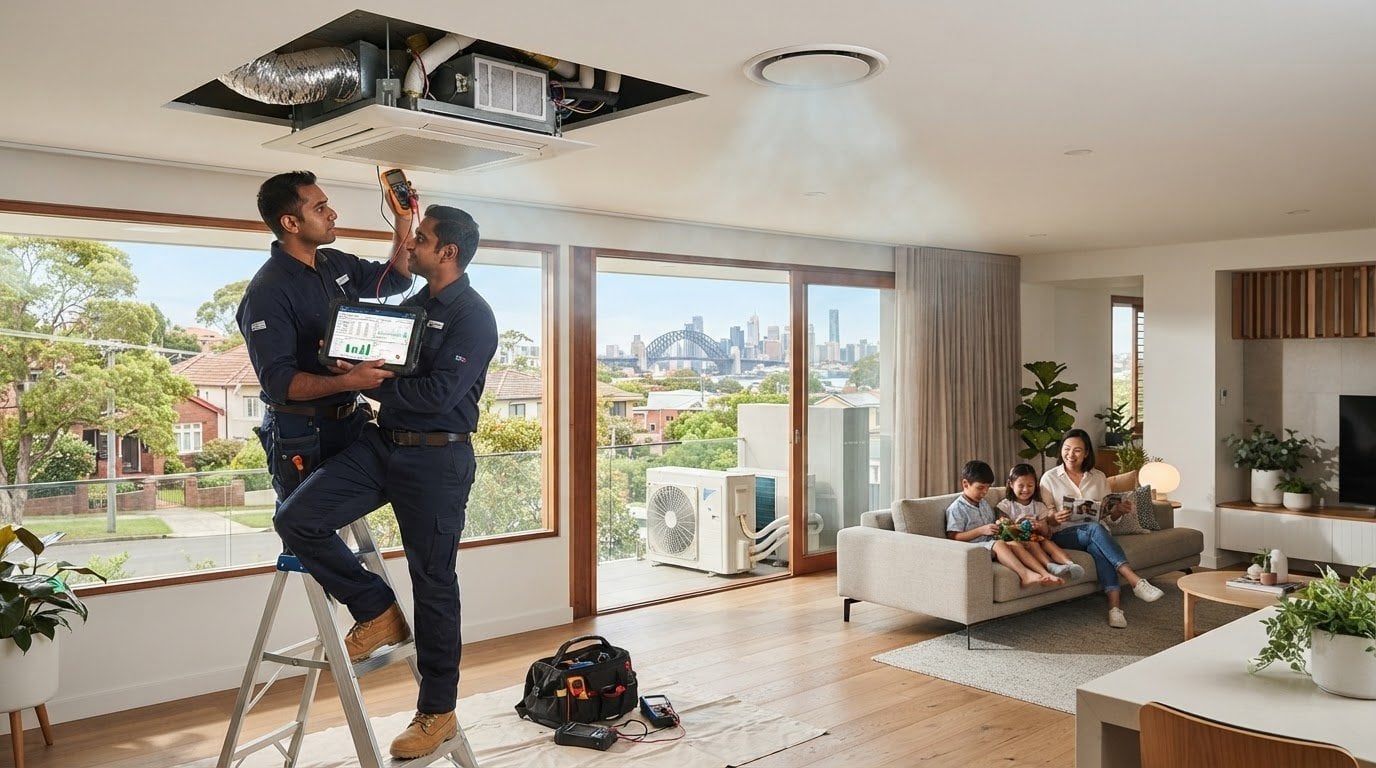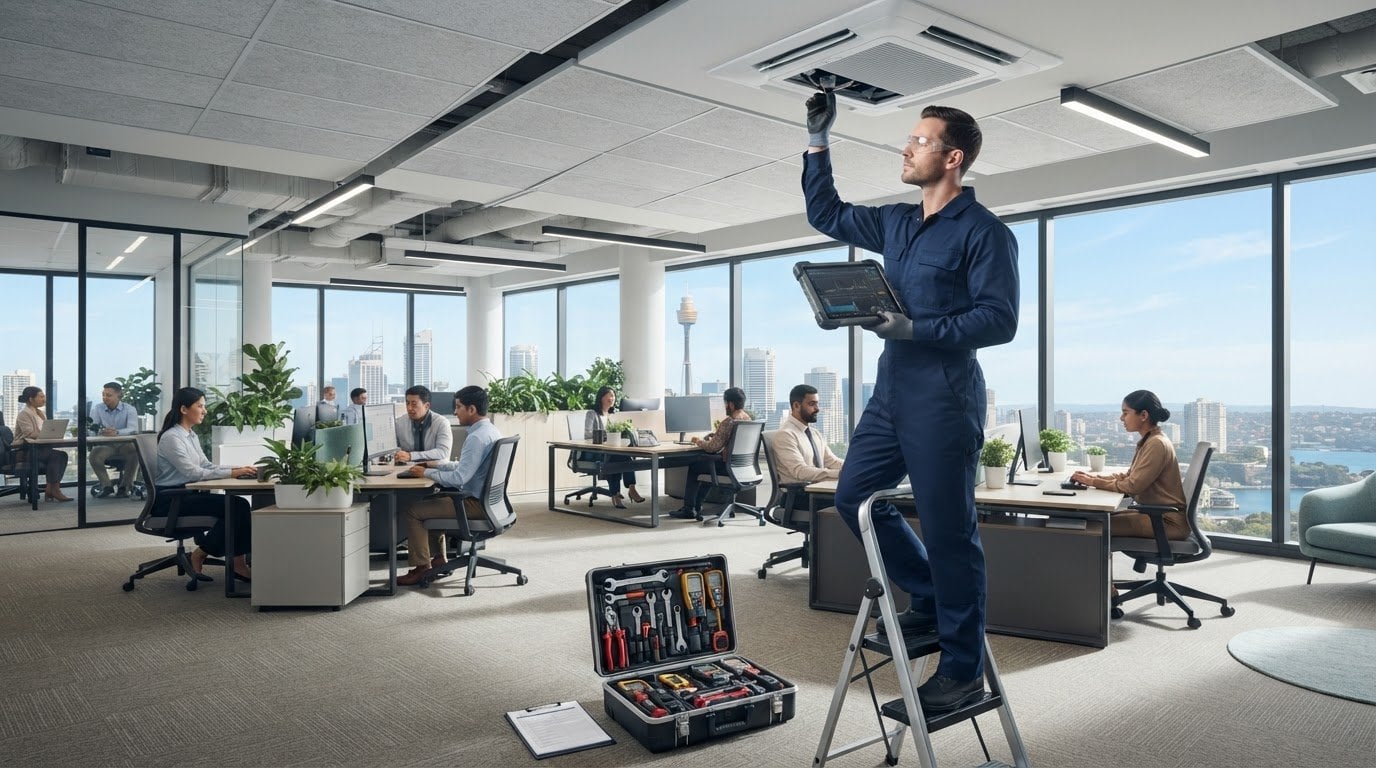

Regular servicing is one of the simplest ways to catch air conditioning faults before they disrupt your comfort. Have your system serviced at least once a year, before the season you use it most; if it runs year-round, twice-yearly servicing is a better fit. For ducted air conditioning repair in Sydney, understanding the difference between routine maintenance and a repair can help you decide what your system needs.
It’s frustrating when rooms feel stuffy, airflow drops or the system stops responding as it should. A fault may involve filters, airflow, controls or a mechanical component. The symptoms can point to a problem, but they don’t always reveal its exact cause.
This guide explains when to arrange servicing, which warning signs may call for repairs and what can affect the repair process. It also covers how repair needs can vary across Sydney homes and properties, helping you decide how to restore reliable indoor comfort.
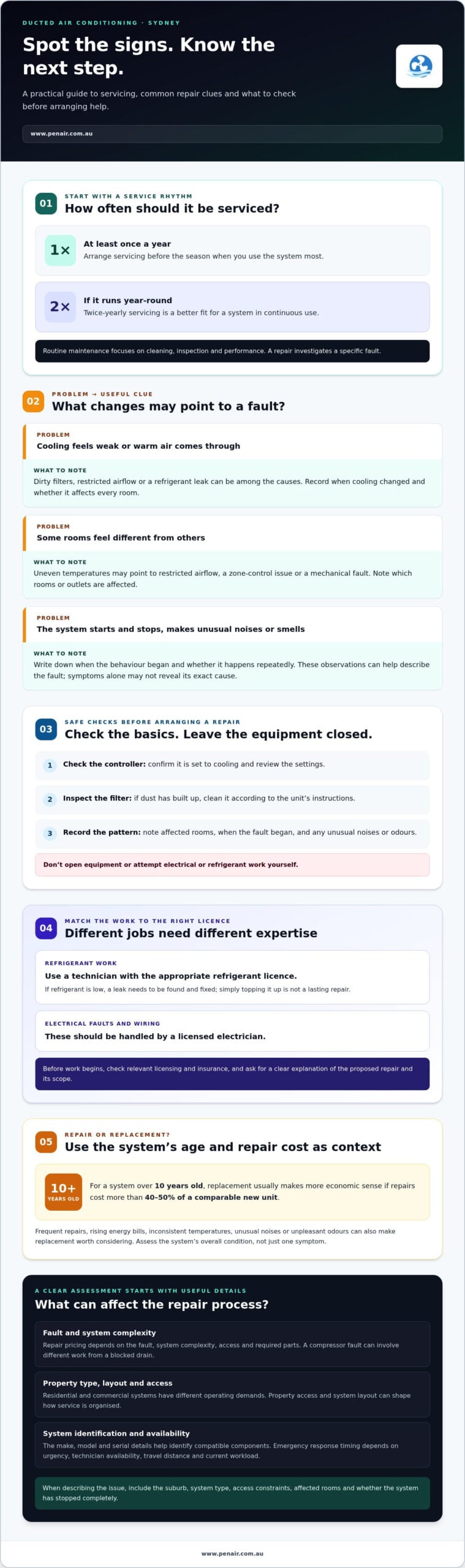
Arrange air conditioning servicing at least once a year, preferably before the season when you use the system most. If your ducted system runs year-round, schedule servicing twice a year. Regular checks can identify dirt, restricted airflow or worn components before they affect comfort throughout your home.
A ducted service typically covers the indoor and outdoor units, filters, air outlets, controls and drainage. The technician can assess whether airflow is consistent between rooms and whether the system responds correctly to its settings. For example, if a bedroom stays warm while the living area cools, there may be an airflow or zone-control issue.
Servicing and repairs address different needs. Maintenance focuses on cleaning, inspection and system performance. A repair investigates a specific fault, such as a compressor that won’t start or a unit that stops cooling. Refrigerant handling must be carried out by a technician with the appropriate refrigerant licence.
Repair pricing depends on the fault, system complexity, access and required parts. The final amount is provided after a quote request. A clear assessment should explain the diagnosed issue and required work, rather than treating every loss of cooling as the same repair. A compressor fault, for instance, can involve different work from a blocked drain.
Residential and commercial systems have different operating demands. A home’s ducted system may mainly serve household routines, while a commercial building can have multiple zones and longer operating hours. These differences affect inspection priorities, access and the repair plan. When arranging service, describe the building and the symptoms.
Emergency response timing in Sydney depends on the fault’s urgency, technician availability, travel distance and current workload. No single arrival time applies to every emergency. Explain whether the system has stopped completely, whether any rooms still receive airflow and whether the property is residential or commercial.
Brand coverage depends on the technician’s training, diagnostic equipment and access to suitable parts. The make and model help identify the system specifications, while symptoms and test results help pinpoint the fault. Have the unit’s brand and model details ready when arranging ducted air conditioning repair in Sydney.
For refrigerant work, use a technician with the appropriate refrigerant licence. Electrical faults and wiring should be handled by a licensed electrician. Before work begins, check that the person attending has relevant licensing and insurance, and ask for a clear explanation of the proposed repair and its scope.
Across Sydney, property access and system layout can shape how service is organised, from apartment plant areas to roof-mounted equipment. The Sydney air conditioning service area page outlines local coverage. Share the suburb, system type and any access constraints when booking, so the service can be planned around the property.
Changes in cooling, airflow or system behaviour can signal a fault. Before arranging an inspection, note what has changed and where it happens.
A ducted system may need attention if it blows warm air, starts and stops unexpectedly or makes unusual noises. Uneven temperatures between rooms can point to restricted airflow, a zone-control issue or a mechanical fault. Look for patterns: is one outlet weaker, or does the problem affect every room? These details help distinguish a local airflow concern from a system-wide fault.
Weak cooling can have several causes, including dirty filters, airflow restrictions or a refrigerant leak. Low refrigerant indicates a leak, and topping it up without finding and fixing the leak wastes money. Don’t treat a refrigerant top-up as a lasting repair. A technician needs to find and address the leak before restoring the system’s refrigerant charge.
Before booking, check the controller settings and confirm the system is set to cooling. Inspect the filter and clean it if dust has built up, following the unit’s instructions. Note which rooms are affected, when the fault began and any noises or odours. These observations help you describe the issue without opening equipment or attempting electrical or refrigerant work yourself.
Depending on the diagnosis, filters, sensors, control boards, fan motors and compressors may need repair or replacement. The make, model and serial details help identify compatible components. A technician can assess whether a part needs cleaning, adjustment or replacement, then explain the work involved. Parts ordering depends on the component and its compatibility with the system, so an accurate diagnosis matters.
Frequent repairs, rising energy bills, inconsistent temperatures, unusual noises or unpleasant odours can make replacement worth considering. For a system over 10 years old, replacement usually makes more economic sense if repairs cost more than 40-50% of a comparable new unit. Consider the system’s overall condition, not one symptom alone.
For a ducted air conditioning repair in Sydney, share your observations and system details when requesting help. If the fault persists after basic checks, contact the team about a repair.
Licensing matters because refrigerant work and electrical repairs involve different responsibilities. Before work begins, match the technician’s credentials to the task.
In NSW, ask to see the licence relevant to the work and confirm that the licence holder is doing that task. Refrigerant work requires an appropriate refrigerant licence. Electrical faults or wiring should be handled by a licensed electrician. These checks help clarify who is responsible for each part of the repair.
Qualifications should match the equipment and fault being assessed. Share the system’s make and model, along with symptoms such as a stopped fan or an unresponsive controller. Ask the technician to explain the diagnosis and proposed work in plain language. A written scope helps distinguish inspection and cleaning from component repairs.
Before the visit, note when the fault began, which rooms are affected and any error code shown on the controller. This gives the technician useful context. If the proposed work involves refrigerant handling or electrical repairs, confirm that the person doing that specific task holds the relevant licence.
Refrigerant work can include investigating a suspected leak, recovering refrigerant or restoring the system’s charge. In Australia, a technician with the appropriate refrigerant licence must handle refrigerant. A top-up alone won’t resolve a leak: it needs to be found and fixed. Ask for the fault and proposed repair steps to be explained before work proceeds.
A licensed electrician should handle electrical faults and wiring, such as damaged wiring, a faulty electrical connection or a problem that prevents the system from powering up. Don’t open electrical panels or attempt repairs yourself. Describe what the controller displays and whether the whole system has stopped, rather than testing live components.
Ducted systems combine controls, fans and other components, so a symptom doesn’t automatically identify the cause. A filter that needs cleaning, for example, calls for a different response from a refrigerant leak or wiring fault. A clear diagnosis distinguishes routine maintenance from work that requires a licensed specialist.
Reviews can offer another point of comparison, alongside credentials and a clear explanation of the work. Sydney air conditioning repair services have a reported average rating of 4.96 out of 5, based on 27 reviews. Read comments for specific examples, such as communication, fault diagnosis and whether the repair addressed the reported problem. Treat the rating as context, not a substitute for checking the technician’s licence.
Sydney repair visits involve more than finding the nearest available technician. Property access, system type and the fault all shape the work. A ducted system with a rooftop unit may need different access planning from a split system serving one room. Sharing your suburb, system type and symptoms helps clarify the job before the visit.
Repair work across Sydney includes areas such as East Sydney, Glebe, Rosebery and Mascot. Travel and building access can affect how a visit is organised, particularly when equipment is on a roof or in a restricted plant area. In an apartment, note access arrangements for shared spaces. In a house, identify where the indoor and outdoor units are located.
Diagnosis starts with the symptoms, followed by system checks. A technician may compare airflow across outlets, inspect controls and assess whether the outdoor unit operates. For a ducted system, note whether one zone or the whole home is affected. For a split system, record whether the fault appears in one room or across connected units.
Repair scope depends on the cause, required parts and access to the equipment. A blocked drain, control issue and compressor fault each involve different work. The cost depends on the diagnosed fault, system complexity, access and required parts, and is provided after a quote request. Ask for the diagnosis and proposed repair to be explained before work begins.
Booking time depends on demand and the property’s location. A local ducted repair team serving central Sydney may be able to book customers within a few days, depending on demand. Workload and travel requirements can affect that timing. If the system has shut down completely, explain the impact when arranging the visit.
Make the appointment more useful by noting the system’s make and model, which rooms are affected, when the problem started and any controller error. Include changes in noise, airflow or temperature. These details help the technician prepare for the assessment and consider which parts may be relevant without assuming an untested cause.
For ducted air conditioning repairs across Sydney, choose a repair service that can assess the system and explain the next steps. A clear scope helps you understand whether the work addresses a component fault, airflow problem or control issue. Arrange an air conditioning repair enquiry with the system details and symptoms ready.
Peninsula Air Conditioning (PenAir) can help with ducted system repairs, servicing and maintenance. Its team works on residential and commercial air conditioning systems, assesses faults and explains practical next steps for your property.
PenAir’s fully licensed and insured team also services split and multi-split systems. As an authorised Daikin Specialist Dealer, the business provides professional care for air conditioning systems. Whether you’re dealing with uneven airflow, reduced cooling or a system that has stopped working, sharing the symptoms and property details helps frame the repair enquiry.
Contact Peninsula Air Conditioning (PenAir) to discuss your ducted air conditioning needs.
Make your repair enquiry more useful by describing the rooms affected, changes in airflow or temperature, and any controller message. Include the system’s make and model if available, along with access details for the indoor and outdoor units. This gives the conversation a practical starting point and helps clarify what you need assessed.
For ducted air conditioning repair in Sydney, Peninsula Air Conditioning (PenAir) can help with ducted systems, repairs and Service & Maintenance. The team also works with split systems, so you can discuss the system that best suits your property and concern.
Share your observations and ask about the appropriate next step for your home or business. Contact Peninsula Air Conditioning (PenAir) to discuss your air conditioning needs. A clear first conversation can help you move towards a more comfortable space with confidence.
If the proposed repair seems disproportionate to the system’s condition, compare the work with replacement options before deciding. Ask for the fault, required parts and scope to be itemised, then consider the system’s reliability, operating efficiency and history of repeat faults. A major component failure on an ageing system can change the decision. Compare the overall value of continued repairs, not just the fault alone.
Start by checking the controller mode and whether the affected zone is switched on. If one room is uncomfortable while others feel normal, note the zone and compare airflow at its outlets. If the whole home is affected, record whether the indoor and outdoor units appear to operate. Don’t open the equipment. These observations help distinguish a control setting from a broader system fault.
Use symptoms to guide your observations, not to assume a diagnosis. Weak airflow at one outlet draws attention to that room’s airflow path, while weak airflow throughout the house suggests a system-wide concern. An unresponsive controller may point to a control or power issue. Water near an indoor unit needs prompt assessment. Note when each symptom occurs and whether it affects one zone or all zones.
Arrange an assessment if cooling becomes inconsistent, airflow changes, the system stops unexpectedly or a new noise develops. A persistent unpleasant odour is another reason to investigate rather than mask the smell. Note whether the change began gradually or suddenly, and whether it appears during heating, cooling or both. That pattern gives the technician more useful context than a general report that the unit is “not working”.
The price depends on the fault, system complexity, access and required parts, and is provided after a quote request. A control issue and a compressor repair involve different diagnosis and work, so one figure can’t describe every job. For ducted air conditioning repair in Sydney, ask for the quote to distinguish labour, parts and any further investigation. This clarifies what the proposed repair covers before you approve the work.
A call-out fee varies according to the provider’s pricing and what the visit includes; there isn’t one figure for every Sydney job. Check whether the quoted charge covers travel, initial diagnosis or repair labour, and whether parts are separate. For ducted air conditioning repair in Sydney, equipment access and the fault under investigation can also affect the visit. Ask for the fee and inclusions to be explained before booking.