What makes a ducted system a good fit often comes down to more than the number of rooms. If you’re considering ducted reverse cycle air conditioning in Sydney, start with your home’s layout, including its storeys, available roof or ceiling space, and the rooms you want to heat and cool.
It’s natural to wonder whether one system can keep different areas comfortable through Sydney’s warm summers and cool winters, or how zoning and energy use may affect everyday comfort. A considered design takes these details into account instead of relying on a one-size-fits-all approach.
This guide explains how ducted reverse-cycle air conditioning works and what to consider when deciding whether it suits your home. You’ll learn how heating and cooling are distributed, how to think about zones and outlets, and why a site assessment is an important starting point. PenAir is a family-owned Sydney business established in 1999, serving the Northern Beaches, North Shore, Inner West and Eastern Suburbs. Use the practical points below to prepare for a system design discussion.
Choosing a whole-home air conditioning system involves more than deciding whether you need heating, cooling or both. Consider whether your property can accommodate the system and how your household uses different rooms. For anyone comparing ducted reverse cycle air conditioning in Sydney, these practical details help identify what the system needs to do and whether ducted is an appropriate option.
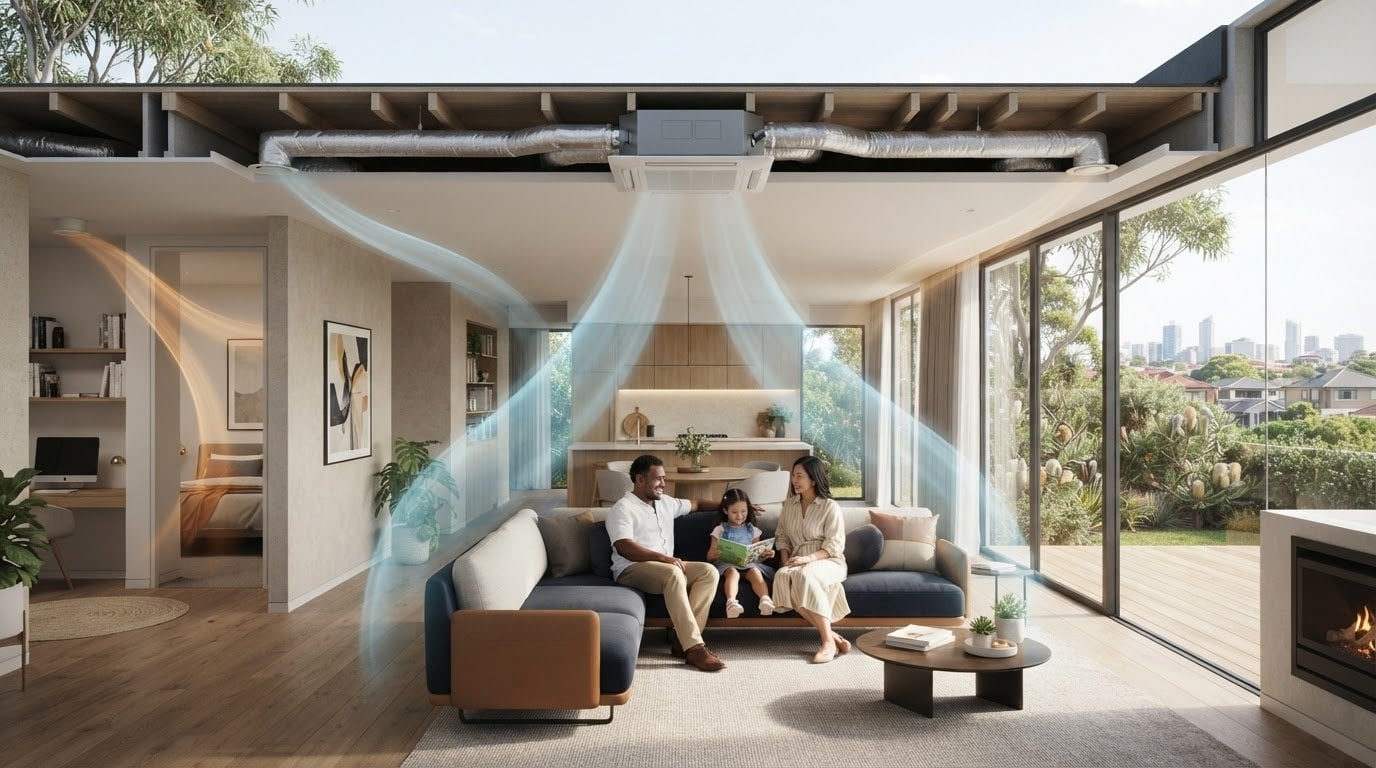
Ducted reverse-cycle air conditioning uses a central system and ductwork to distribute conditioned air through outlets in selected rooms. The reverse-cycle function provides heating and cooling, while the ducted layout determines how air reaches different parts of the home. In plain English, it’s one central air conditioning system that can heat or cool your home and deliver air through ducts to room outlets.
“Reverse cycle” describes the system’s ability to provide both heating and cooling. “Ducted” describes how the air is distributed: ducts connect the central system to outlets in selected rooms. They refer to different parts of the system, not two names for the same feature. For a general introduction to air-conditioning systems and their operation, see the Air conditioner Wikipedia overview.
Ducted air conditioning may suit households looking to heat and cool several rooms through one system. Start by thinking about your daily routine: which rooms are occupied during the day, where people gather in the evening, and whether you want conditioned air in multiple areas. These answers help clarify which parts of the home the system should serve.
Property features matter as well. The home’s layout, number of storeys and available ceiling or roof space can all influence the design and installation approach. A site assessment brings those details together with your household’s needs before the system is planned. PenAir provides air conditioning across Sydney, including the Northern Beaches, North Shore, Inner West and Eastern Suburbs. A suitable ducted design starts with understanding both the property and the people living in it.
A ducted system combines a central air conditioning unit with a network that carries conditioned air to different rooms. When considering ducted reverse cycle air conditioning in Sydney, it helps to understand the role of each component and how the system is used across the seasons.
The process is straightforward:
A ducted system conditions air centrally, then distributes it through ducts to outlets in the rooms the system serves. The unit provides the heating or cooling, ducts form the pathway, outlets deliver air into rooms, and controls let household members operate the system.
Reverse-cycle systems transfer heat rather than relying on a separate heating source. In cooling mode, the system moves heat from indoors to outside. In heating mode, it moves heat from outside into the home. Switching between these modes gives Sydney households one air conditioning system for warm summer days and cooler winter weather.
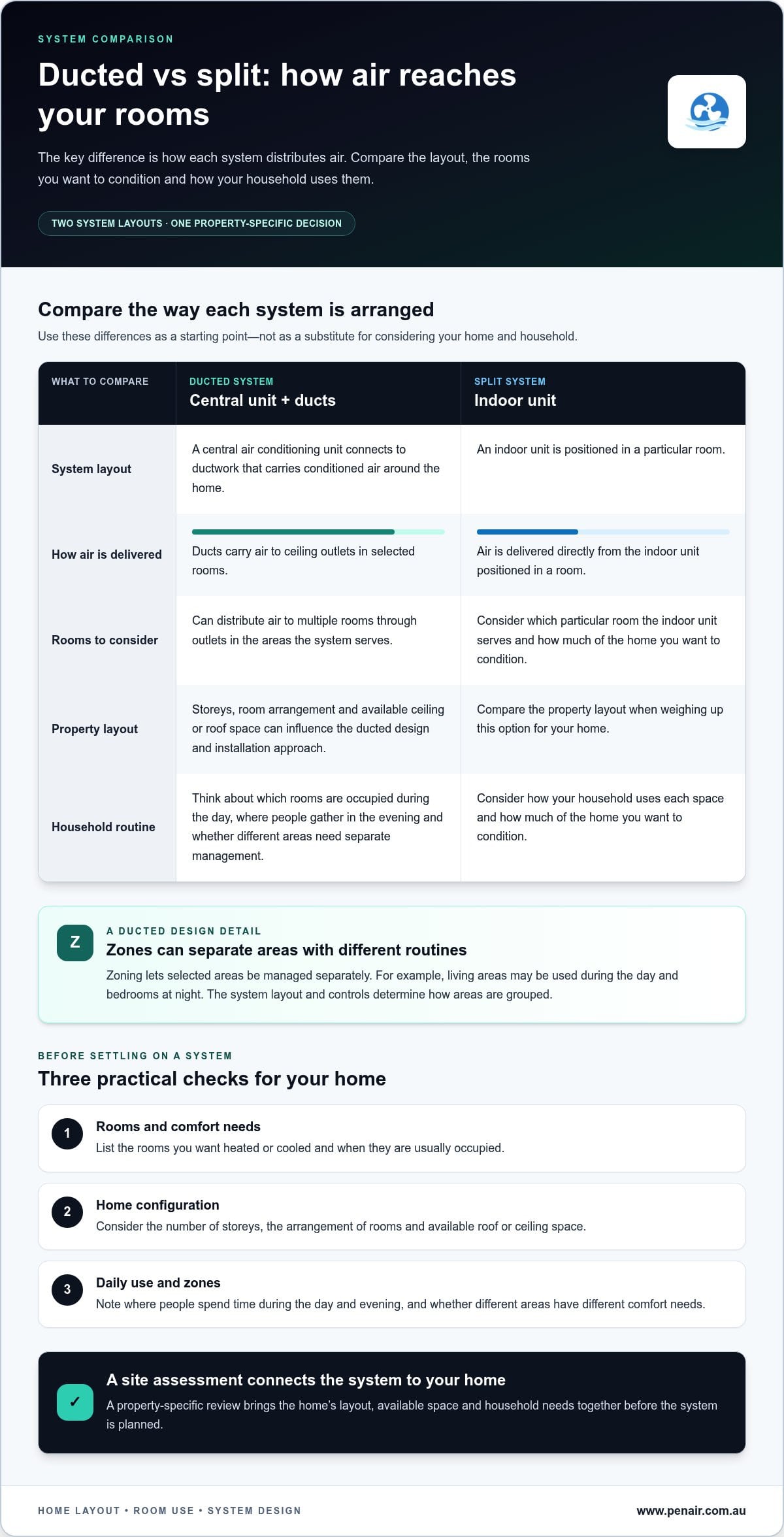
Ducts carry conditioned air from the central unit to outlets positioned in rooms around the home. Zoning lets selected areas be managed separately, which can be useful when household routines differ, such as when living areas are used during the day and bedrooms at night. The system layout and controls determine how areas are grouped. AirTouch is a smart climate control system that can be considered when planning how to manage the system.
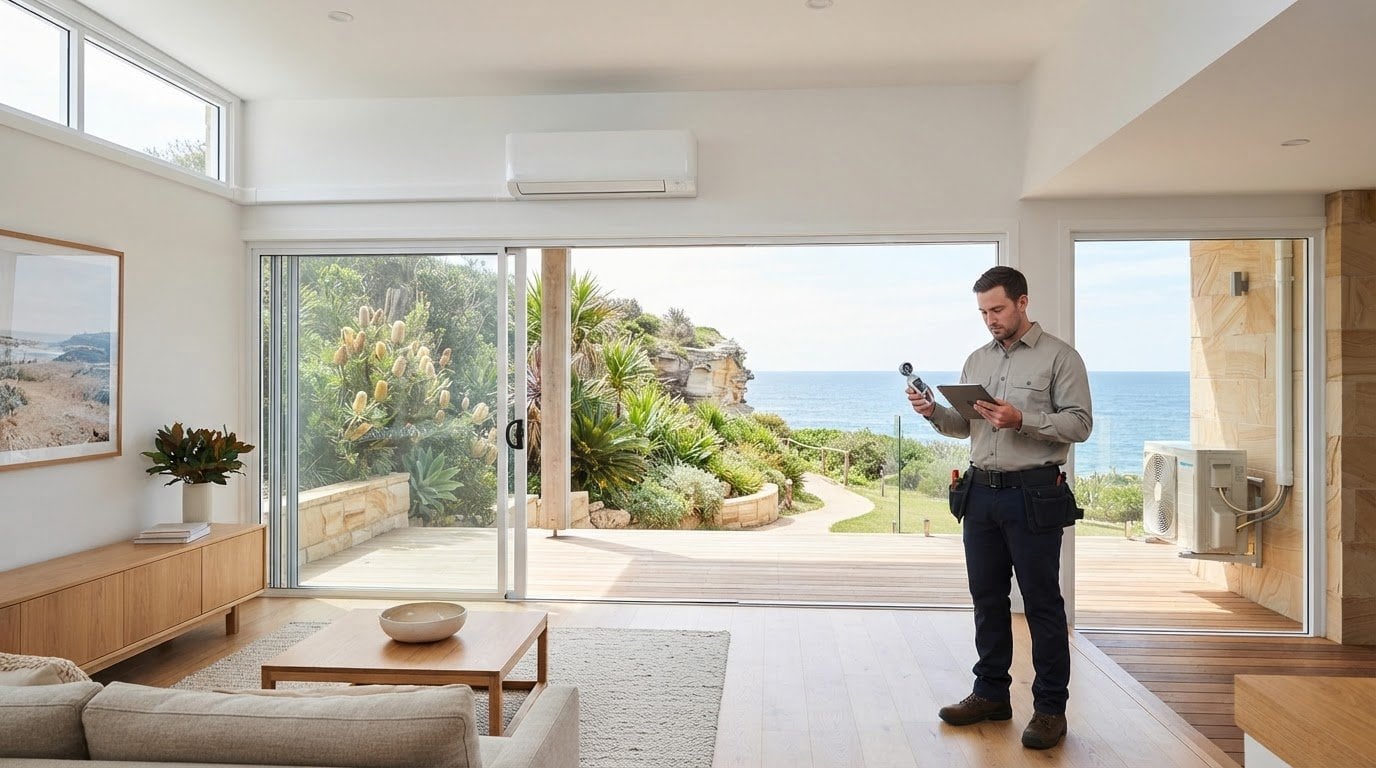
A ducted system distributes air through ducts to outlets in multiple rooms. A split system typically delivers air directly from an indoor unit positioned in a particular room. To compare the options, consider how much of the home you want to condition, the property layout and how your household uses each space. See how split system air conditioning is arranged as you weigh up which approach may suit your home.
PenAir installs ducted systems and can discuss how a ducted layout may suit your property. Explore a ducted system with PenAir.
Good planning starts with how your household lives, then considers the details of the property. For ducted reverse cycle air conditioning in Sydney, a site assessment connects your daily comfort needs with the home’s layout and available space. Use this sequence to prepare for a design discussion:
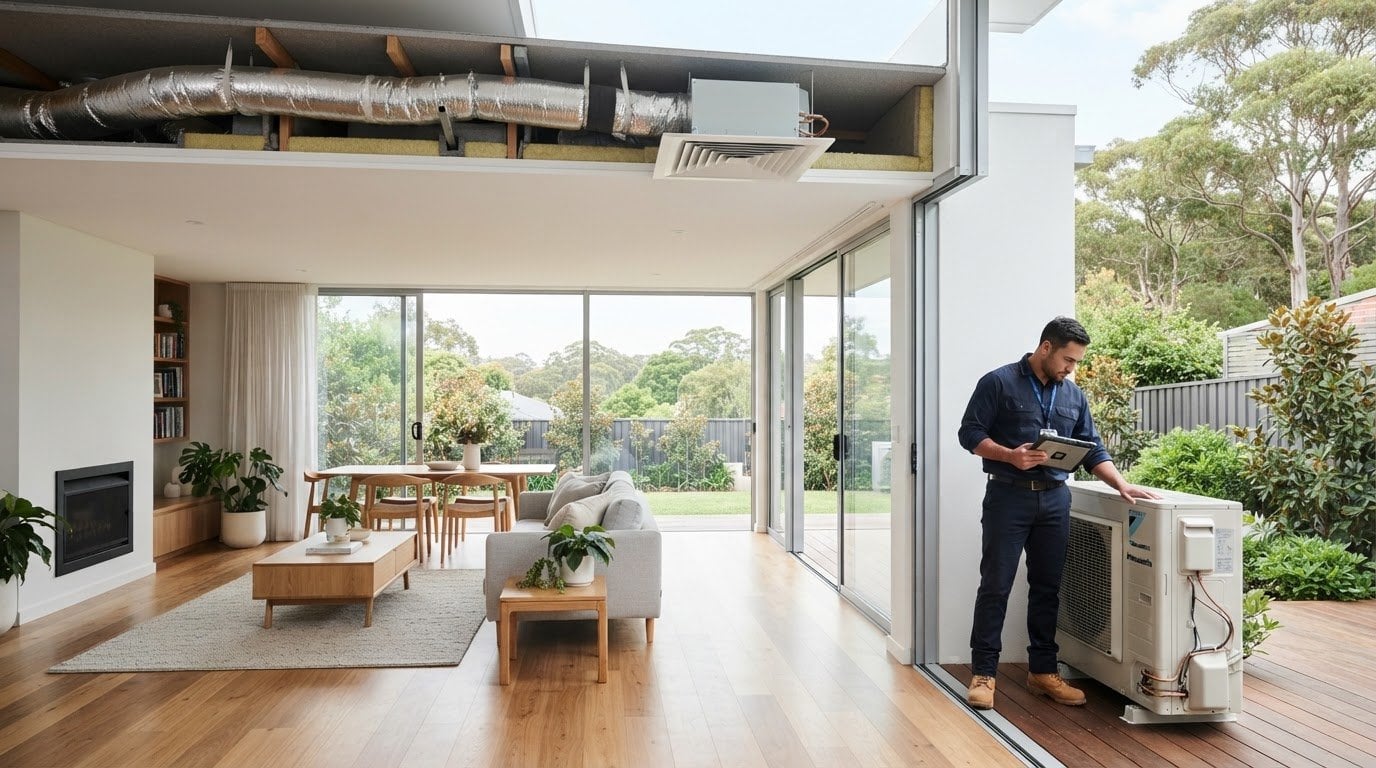
A site assessment considers the home as it is, not just its floor plan. Room purpose and layout help determine which areas the system needs to serve, while roof or ceiling access affects how the design can be arranged. It’s also useful to discuss where you’d prefer outlets. A site audit brings these practical details together to inform a system design for the property.
Consider when each part of the home is occupied. For example, a household might use living areas during the day and bedrooms later in the evening. Sharing those patterns helps inform how zones could be arranged. Zoning provides a way to manage selected areas, but its suitability depends on the home and how you plan to use the system. Don’t assume it will deliver a particular energy saving without considering the design and your use of the system.
Professional design turns your household’s needs and the property assessment into an installation plan. Installation puts that plan in place, and commissioning involves checking and setting up the system for operation. PenAir’s ducted air conditioning service brings design and installation together around your home’s requirements.
Take this short checklist into your project discussion:
These details give the design discussion a useful starting point. Discuss a ducted system for your home with PenAir.
Choosing a system is only part of the decision. The design also needs to account for your home’s layout and how your household uses its rooms. PenAir is a family-owned Sydney air conditioning business established in 1999, with a local team supporting residential and commercial ducted projects.
PenAir installs, services and repairs residential and commercial ducted systems. The team is fully licensed and insured, and PenAir is an authorised Daikin Specialist Dealer. The business serves the Northern Beaches, North Shore, Inner West and Eastern Suburbs. A site assessment is a practical starting point for discussing how your property and household needs can shape a ducted system design.
If you’re considering ducted reverse cycle air conditioning in Sydney, system design is an important part of the decision. A project discussion can help bring the main considerations into focus. Installation is completed within 30 days from the date of approval.
The next step is straightforward: Get in Touch → Book a Time → Stay Cool. Start by sharing what you’re looking for and what matters in your home. A time can then be booked to discuss the project. The conversation is an opportunity to talk through household needs, the property layout and system design considerations. You don’t need to have every detail worked out beforehand.
Before getting in touch, it may help to note which rooms you use most, when comfort matters in different areas, and any questions about your ceiling or roof space. Those details can make the discussion more useful and keep it focused on a design that fits your home.
For a related local perspective, PenAir’s Northern Beaches ducted air conditioning guide explores whole-home comfort in that part of Sydney.
To take the next step, contact PenAir about ducted air conditioning. The team can discuss your home and project considerations with you.
Turn your day-to-day comfort priorities into a clear brief for your home. Note what matters most to your household, any concerns about the property, and what you’d like to understand before making a decision. You don’t need to settle every technical detail first. A focused conversation can help make the choices easier to work through.
When considering ducted reverse cycle air conditioning in Sydney, treat system design as part of the decision, not an afterthought. Explain what you want the system to do and which questions you still have. That gives you a practical starting point for discussing whether the approach suits your home.
PenAir is a family-owned business, and the team can talk through the project with you. Share your priorities, explore the next steps and decide how you’d like to proceed. A clear plan starts with understanding what matters to your household.
Start a conversation about your ducted air conditioning project with PenAir.
Yes, a ducted reverse-cycle system can provide both heating and cooling, with ductwork carrying conditioned air to outlets around the home. The areas it serves depend on the system design and the property’s layout. For example, an open living area and separate bedrooms may call for different design considerations. A site assessment helps establish which rooms the proposed system is designed to serve.
Cooling can remove some moisture from indoor air as part of the cooling process, but the result depends on indoor conditions and how the system is operating. Ducted air conditioning shouldn’t be treated as a guaranteed humidity-control solution. If persistent dampness or a clammy feeling is affecting comfort in your Sydney home, mention it during a professional assessment so it can be considered alongside your other needs.
Yes, an older home can be considered for ducted air conditioning; age alone doesn’t determine suitability. Roof or ceiling access, the layout and the property’s existing conditions all matter. For instance, limited accessible ceiling space may shape the design discussion. A PenAir site assessment is a practical way to discuss how a ducted design could suit your home.
There isn’t one service interval that suits every system. Follow the guidance for your specific product, and consider its condition and how often your household uses it. Routine servicing helps assess how the system is operating and identify maintenance needs. If you notice a change in performance, unusual operation or reduced airflow, arrange an assessment rather than waiting for the next planned service.
Uneven room comfort can relate to the home’s layout, outlet placement, zoning, how rooms are used and the system’s settings. A room that’s occupied at a different time or served by a different zone may feel unlike the main living area. Note which rooms feel different and when you notice it. If the issue continues, a professional assessment can help investigate the cause.
Start with simple user-level checks: make sure furniture or other items aren’t blocking accessible outlets, then review the system’s operating instructions and settings. Don’t remove covers or attempt electrical or mechanical work yourself. If airflow remains weak, PenAir provides ducted system servicing and repairs. Arrange an assessment so the team can investigate the change rather than guessing at its cause.