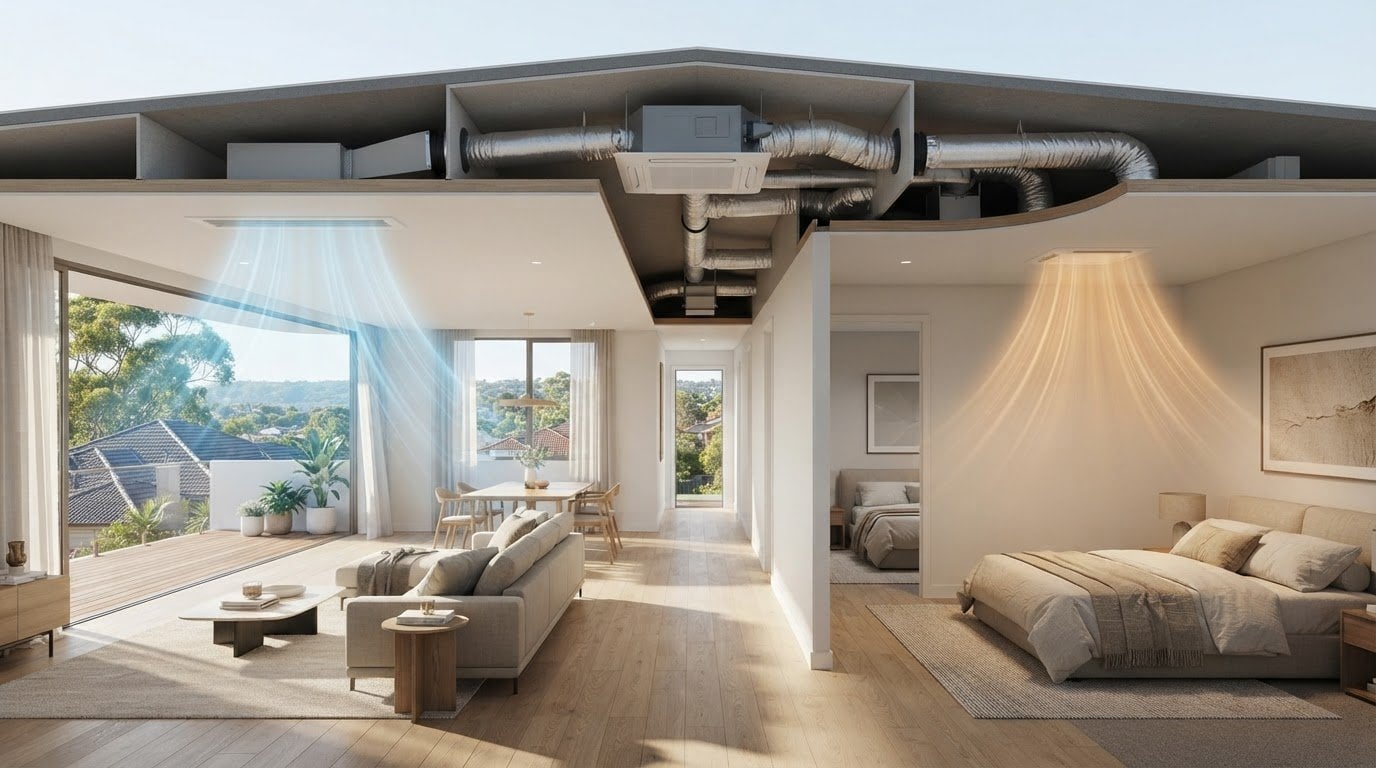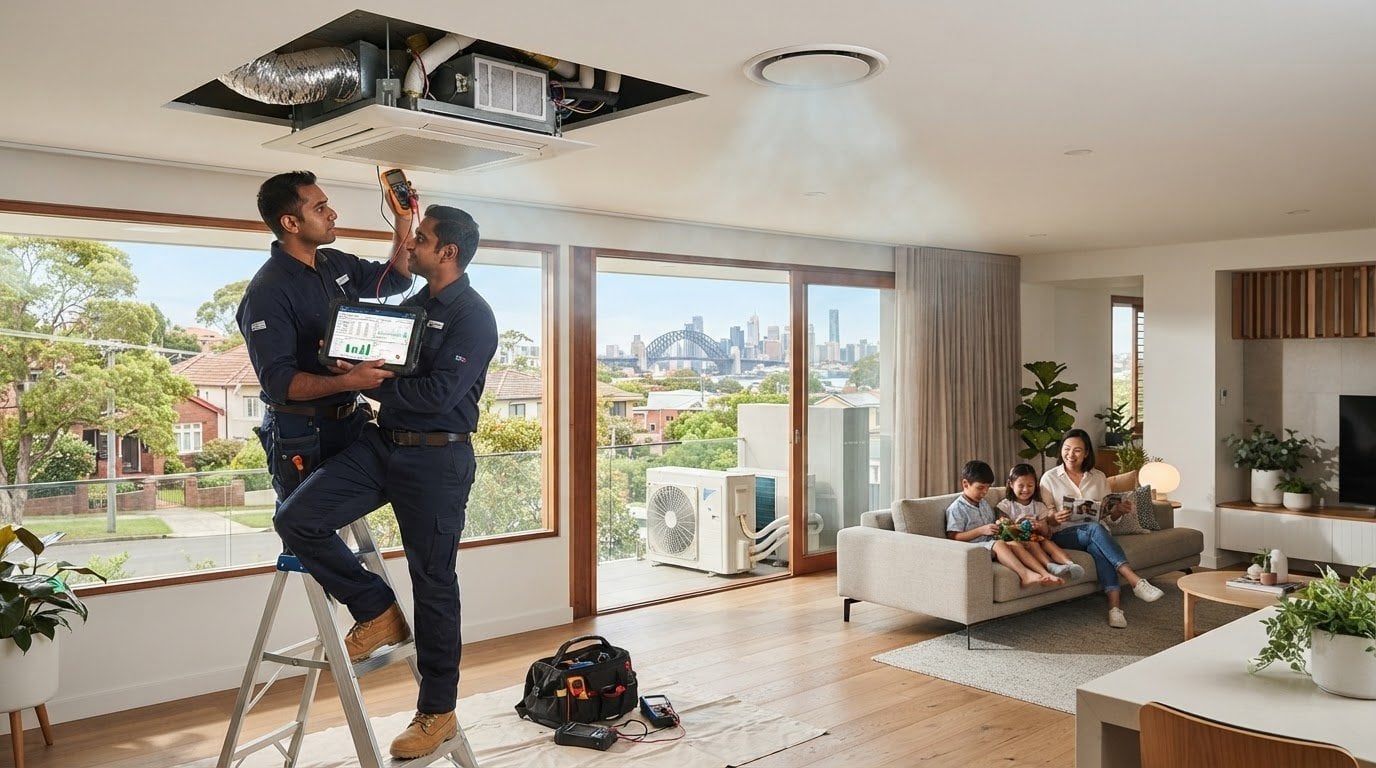

One central system can heat or cool multiple rooms, or the whole house, through hidden ducts. For ducted air conditioning in the Inner West, the visible indoor components are the controller, return air grille and discharge grilles. July and August average temperature lows in Sydney’s Inner West are 6°C, so year-round comfort matters when choosing a system.
It’s understandable to want reliable installation, servicing or repairs without guesswork. The right choice depends on your home’s layout, the rooms you want to condition and how you prefer to control temperatures. This guide explains how ducted systems compare with split and multi-split options, what affects installation and how routine maintenance can help keep a system working well.
You’ll also find practical points to consider when planning a system for an existing or new home, and when to arrange professional service. The aim is to help you make a clear, informed decision about comfort in your Inner West home.
No single brand or system suits every Inner West home; Daikin is one brand to consider. The right choice depends on room coverage, building layout and how you want to control temperatures.
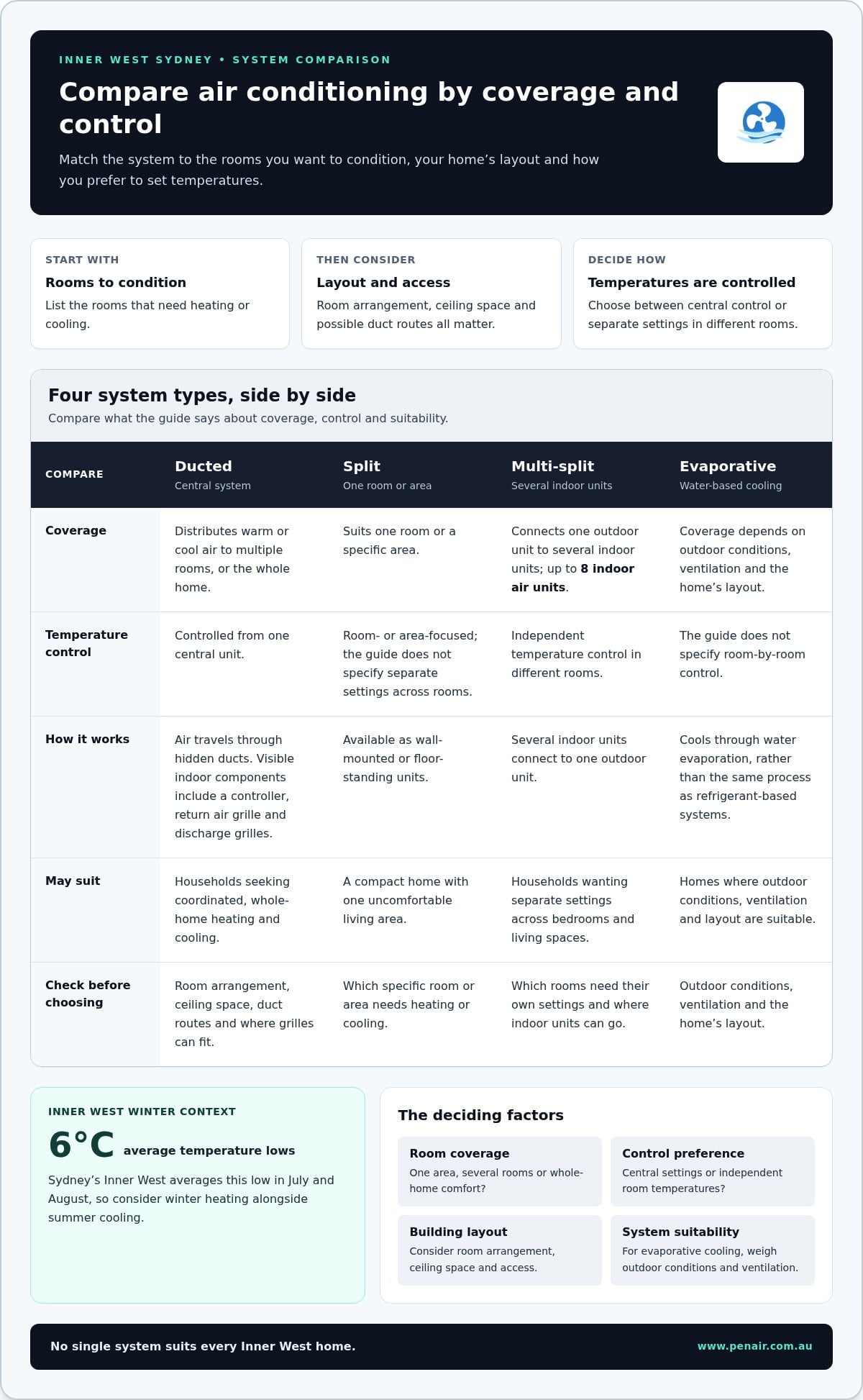
Start by listing the rooms that need heating or cooling, then consider how they connect. Sydney’s Inner West has July and August average temperature lows of 6°C, so winter heating matters alongside summer cooling. A compact home with one uncomfortable living area may suit a split system. A larger home needing coordinated comfort across several rooms may need a different approach.
Split systems suit one room or a specific area and come in wall-mounted or floor-standing types. Multi-split systems connect one outdoor unit to several indoor units, allowing independent temperature control in different rooms. They can connect up to 8 indoor air units to one outdoor unit. This arrangement can suit households that want separate settings across bedrooms and living spaces.
Evaporative systems cool through water evaporation, rather than using the same cooling process as refrigerant-based systems. Their suitability depends on outdoor conditions, ventilation and the home’s layout. Compare the rooms you want to condition and how much control you need before choosing between evaporative cooling and refrigerated options.
Ducted air conditioning distributes cool or warm air through hidden ducts to multiple rooms, controlled from one central unit. It can suit households seeking whole-home heating and cooling rather than separate equipment in each room. The visible indoor components are the controller, return air grille and discharge grilles. Consider where these can fit and which rooms need airflow.
Building size alone doesn’t decide whether ducted systems are suitable. Room arrangement, ceiling space, duct routes and the areas you want conditioned all shape the design. Ducted air conditioning in the Inner West can be installed in a new home or adapted to an existing one. Explore ducted air conditioning systems when comparing whole-home coverage with room-based options.
For repairs, note what the system is doing: weak airflow, uneven temperatures, unusual noise or a controller that doesn’t respond. These symptoms can point to restricted airflow, a control issue or a mechanical fault; a specialist can diagnose the cause. Arrange an air conditioning service to address performance concerns, and look for the ARC tick when arranging servicing or repairs. Matching the fault to the system type helps identify the next practical step.
Installation planning starts with the building, the rooms to condition and the duct routes available. Ducted air conditioning can be installed in a new home or adapted to an existing one.
In a new residential build, the duct layout can be planned alongside ceilings and room divisions. For an older Inner West home, the installer needs to assess roof space, access points and existing construction before recommending a layout. Apartments and businesses bring different constraints, including limited space for equipment and the need to plan around occupied rooms or daily operations.
For each property, clarify which spaces need heating and cooling. A terrace with several enclosed rooms may need a different duct arrangement from an open-plan home or commercial premises. The installation plan should explain equipment placement, duct routes and grille locations, so the system fits the building rather than obstructing its use.
Inner West properties can differ in ceiling access, room configuration and available outdoor equipment locations. These details affect how discreetly ducts and grilles can be positioned. Ask for the proposed locations of the return air grille, discharge grilles and controller to be explained before work begins.
Also discuss which rooms need airflow and how the layout will serve them. In an existing home, access to ceiling or roof spaces can shape the installation sequence. For a business, consider how installation work can be organised around staff, customers and normal operations. A clear scope helps identify practical requirements early.
The price depends on the property and is provided after a quote request. Factors include the system design, the number and arrangement of rooms, access to roof or ceiling spaces, duct routes and the work needed to adapt an existing building.
Compare written quotes by checking that each describes the proposed system, equipment locations, ductwork, grilles and installation tasks. If one scope covers fewer rooms or different work, the figures won’t represent the same installation. Ask for the inclusions to be set out clearly before deciding.
Installation timing depends on the building, access and scope of work. The usual sequence is to assess the property, design the duct layout, position equipment, install ducts and grilles, then test the system and explain its controls.
For a new build, coordinate ductwork with the construction stages and ceiling access. For an existing home, agree on access and room use before work starts. To choose a licensed ducted air conditioning installer in Sydney, review their licence details, insurance, relevant installation experience and written scope. You can discuss an installation enquiry once you’ve outlined the property and rooms to condition.
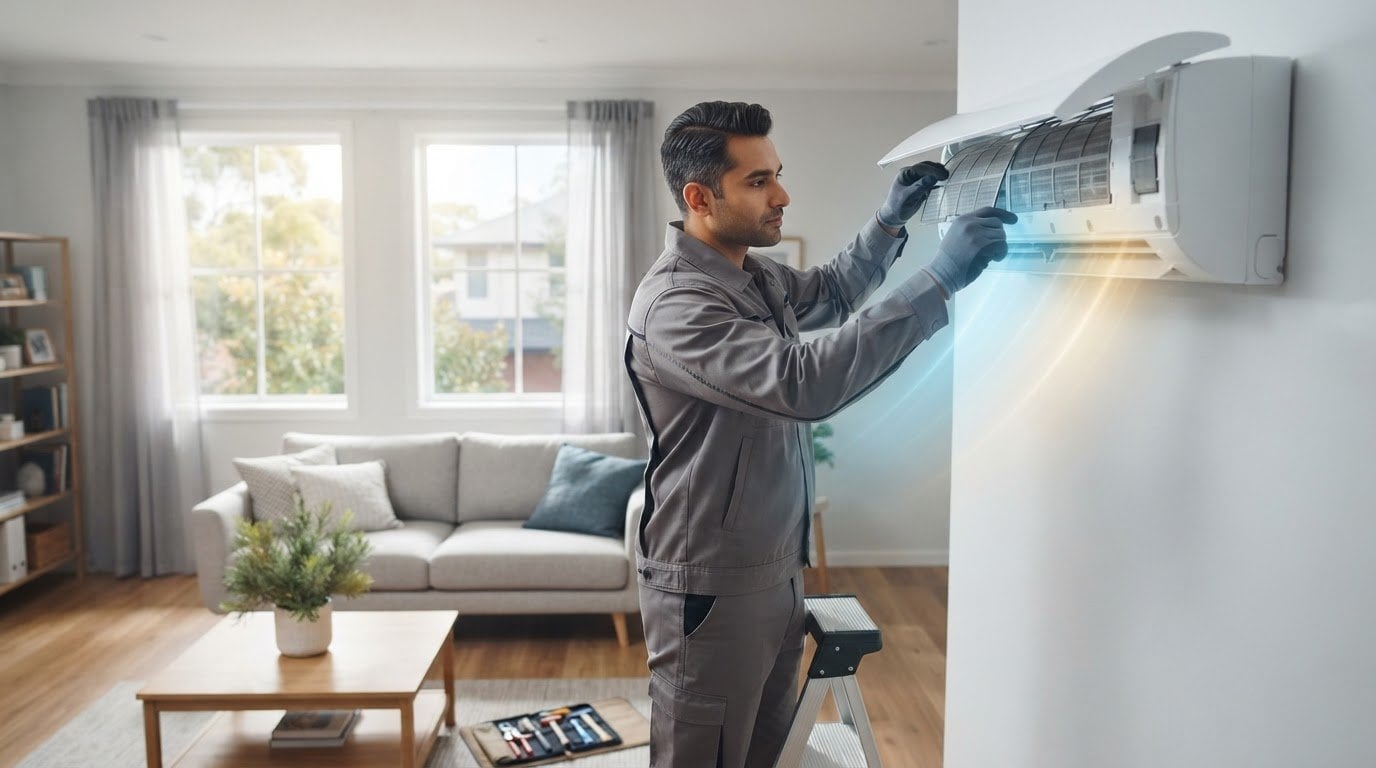
Regular servicing helps an air conditioner work at maximum capacity and supports energy efficiency. For repairs or servicing in Sydney, look for the ARC tick when arranging the work.
NSW incentives are scheme-specific: eligibility depends on the program’s criteria, such as the equipment and upgrade involved. Treat any incentive as separate from routine servicing unless the scheme covers that work.
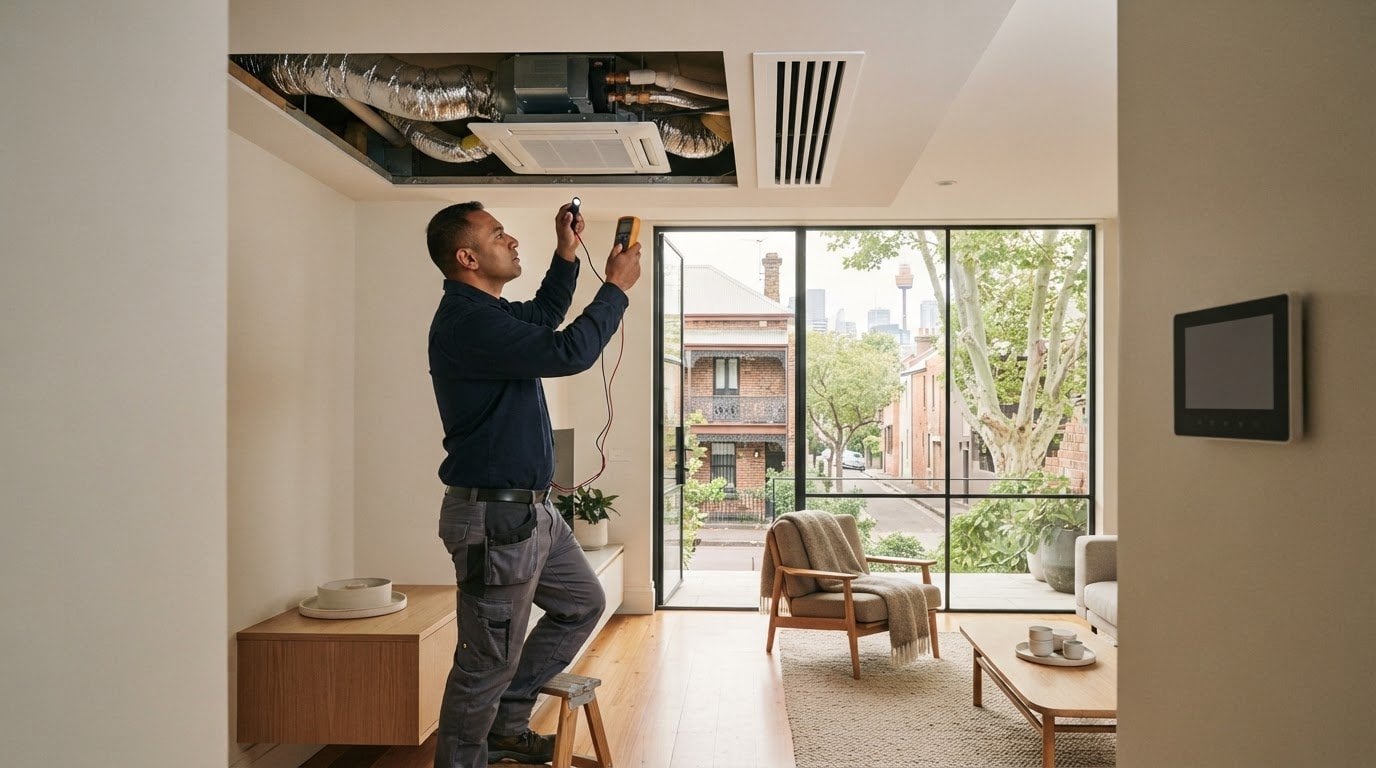
A service visit can assess the system’s operation and identify issues affecting airflow or performance. For a ducted system, note changes such as rooms feeling unevenly heated or cooled, reduced airflow from a discharge grille, unusual sounds or an unresponsive controller. Sharing these observations helps technicians focus their assessment.
Filters and grilles are practical points to keep clean, following the system’s instructions. Dust build-up can restrict airflow, while a blocked return air grille can affect circulation. A professional air conditioning service can assess the system and identify whether maintenance or a repair is needed. Keep the service record with the system details for future visits.
Don’t treat every performance issue as a fault with the main unit. A room that won’t reach the set temperature could relate to airflow, controls or a mechanical problem. Describe when the issue occurs and which rooms are affected. Technicians can use those details to diagnose the fault rather than relying on guesswork.
Cleaning accessible filters and grilles can reduce accumulated dust around air pathways, but it doesn’t replace inspection of the system. If airflow remains weak after routine cleaning, arrange a repair assessment. For a system by Daikin or Fujitsu, provide its model details and explain any recent change in operation.
Inner West households in suburbs such as Marrickville, Newtown, Balmain and Leichhardt can describe their property and the system’s symptoms when arranging servicing. Older homes, renovated terraces and newer apartments may have different access and duct layouts, so mention any restricted roof or ceiling access.
Service coverage across Sydney can include residential and commercial systems. The relevant details are the property location, system type and fault symptoms. A clear description helps organise the visit around the work required, whether the concern is routine maintenance or a repair.
Make a simple note of the controller settings, affected rooms and symptoms before an appointment. For example, record whether weak airflow happens at every discharge grille or only one. Keep the equipment manual and previous service notes accessible, and ask for the findings and recommended next steps to be explained plainly.
For ongoing care, ducted air conditioning servicing can help identify maintenance needs and developing faults. Regular attention supports reliable operation and helps the system deliver heating or cooling across the home.
Choosing ducted air conditioning for an Inner West home means matching system design to the building, not just its floor area. Sydney’s Inner West has average temperature lows of 6°C in July and August, so consider winter heating as well as summer cooling. A useful first step is listing the rooms you want conditioned and how they’re used.
In a terrace in Newtown, for example, narrow rooms and limited ceiling access may shape duct routes and grille positions. An open-plan home in Marrickville may need airflow planned differently across living and sleeping areas. These examples show why a property assessment matters: the shape of the building affects where equipment and ducts can go.
A ducted system sends warm or cool air through hidden ducts to multiple rooms, controlled from one central unit. Its visible indoor components are the controller, return air grille and discharge grilles. Think about where those grilles can sit without clashing with lighting, cupboards or furniture. A simple room plan helps show which areas need coverage.
Inner West homes vary in age and layout. For an older home, roof or ceiling access can affect how discreetly ducts fit. In a new build, duct routes can be considered alongside ceiling plans. For an apartment or business, equipment placement and access through shared or occupied areas may shape the installation plan. Record these constraints before comparing proposals.
Brand names matter less than whether the proposed system suits the home and its use. Compare specifications from brands such as Daikin, Mitsubishi and Fujitsu, then look at the proposed capacity, controls and room coverage. Ask for the design to show equipment locations, duct routes and grille positions. That makes it easier to compare like with like.
Use this practical checklist before deciding:
Also check that the installer is licensed for the relevant work, and ask what the licence covers. A fully licensed team should be able to explain the proposed installation in clear terms. If you’re planning a new system or reviewing options for an existing property, discuss your Inner West ducted air conditioning requirements.
Peninsula Air Conditioning (PenAir) can help Inner West households planning a ducted system or maintaining an existing one. Its Ducted Systems, Service & Maintenance and repair work address practical needs such as whole-home climate control, routine upkeep and system faults.
If your home suits room-by-room control better, Split Systems and Multi-Split Systems are also available. Share which rooms you want to heat or cool, your property layout and any current performance issues. These details help guide a conversation about the system and service that fit your needs.
Contact Peninsula Air Conditioning (PenAir) to discuss your home’s air conditioning needs.
Comfort at home is shaped by more than equipment alone. Think about how your household uses each room, what you want from your controls and how you’ll keep the system maintained over time. These priorities can help focus a conversation about ducted air conditioning in the Inner West and keep the next decision practical.
Peninsula Air Conditioning (PenAir) offers Ducted Systems and Service & Maintenance for installation planning and ongoing care. If room-by-room control better suits your household, Split Systems are another option to discuss. Share your property layout, comfort priorities and any concerns about an existing system so the conversation can centre on what matters to you.
Contact Peninsula Air Conditioning (PenAir) to talk through your air conditioning needs and decide on a considered next step for your home.
Peninsula Air Conditioning (PenAir) provides installation, service and repairs for residential and commercial air conditioning systems across Sydney, including the Inner West. Its team is fully licensed and insured. Before making an enquiry, note your suburb, system type and what you need done, such as a new installation, a fault assessment or routine maintenance. Sharing these details helps make the conversation specific to your property and requirements.
PenAir’s Sydney service area includes the Inner West and surrounding suburbs. Inner West communities include Marrickville, Newtown, Balmain and Leichhardt. When arranging work, provide your exact suburb and property type, such as a terrace, apartment or commercial site. That helps establish the location and any access details relevant to the installation or service. Service coverage can include more than one suburb, so use your full address when making an enquiry.
Ducted systems suit households wanting heating or cooling distributed across several rooms through one central system. A split system focuses on one room or area, which can suit an apartment or a home where only the living room needs conditioning. In a shared building, consider where outdoor equipment can sit and whether installation access is practical. The best fit depends on how many rooms need conditioning and how independently occupants want to manage them.
There isn’t one suitable capacity for every Inner West home. A specialist sizes a system by assessing the rooms to be conditioned, ceiling height, insulation, window exposure, building orientation and the home’s layout. For example, a shaded, well-insulated home can have different heating and cooling demands from a sun-exposed home with large windows. Provide a floor plan and identify rooms used regularly to support an accurate assessment.
Approval requirements depend on the property’s planning controls and the installation’s physical scope. External equipment, visible changes to a building and work affecting shared apartment areas can bring additional considerations. Before installation, review the planning requirements that apply to your address and the building’s approval process, if relevant. For strata properties, include the owners corporation’s requirements in your planning so equipment placement and access are considered early.
Running costs depend on how often the system operates, the temperatures selected, the home’s insulation and the system’s condition. Keep filters and return air grilles clear, and arrange regular professional servicing to support performance. If a controller behaves unexpectedly or a system repeatedly stops, record when it happens and which rooms are affected. Those notes help technicians investigate the fault. Look for the ARC tick when arranging servicing or repairs.