
An air conditioner shouldn’t wait until it stops cooling to get attention. The practical answer to how often to service an aircon in Australia is generally every 1-2 years, depending on how often it runs and local conditions. Many manufacturers recommend annual servicing, while systems that work hard or sit in dusty or coastal areas may need attention more often.
It’s easy to assume that cleaning the filter is the whole job. Regular filter care helps keep airflow clear, but a professional service also involves inspecting, cleaning and testing the system to identify issues household cleaning may not address.
This guide explains how servicing intervals vary for split and ducted systems, what you can safely maintain yourself, and when to book a professional service. The season, your system’s workload and warning signs such as weak airflow or unusual smells can all affect the timing. A clear routine helps you prepare for Sydney’s changing seasons and keep your air conditioner working comfortably.
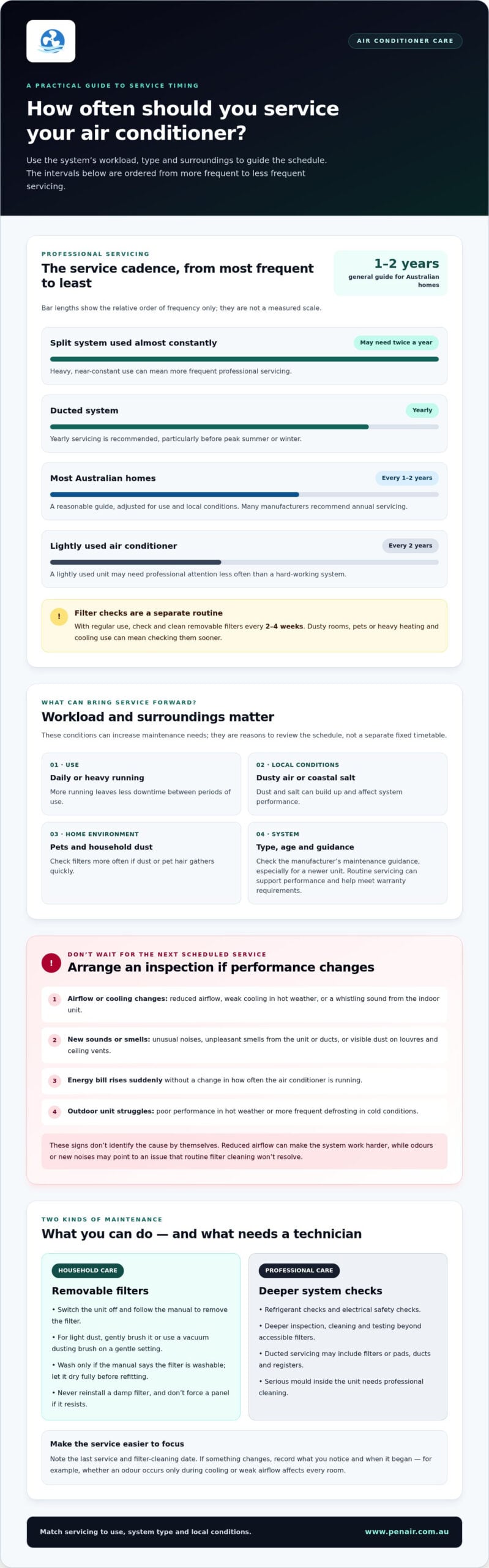
For most Australian homes, professional servicing every 1-2 years is a reasonable guide, depending on use and local conditions. Most manufacturers recommend annual servicing, while a lightly used air conditioner may need professional attention every two years. Ducted systems are recommended for yearly servicing, particularly before peak summer or winter.
How often to service an air conditioner in Australia depends on its workload, age and surroundings. A system used daily, or exposed to coastal salt or dusty air, may need more frequent attention. Check the manufacturer’s maintenance guidance, especially for a newer unit, as routine servicing can support performance and help meet warranty requirements.
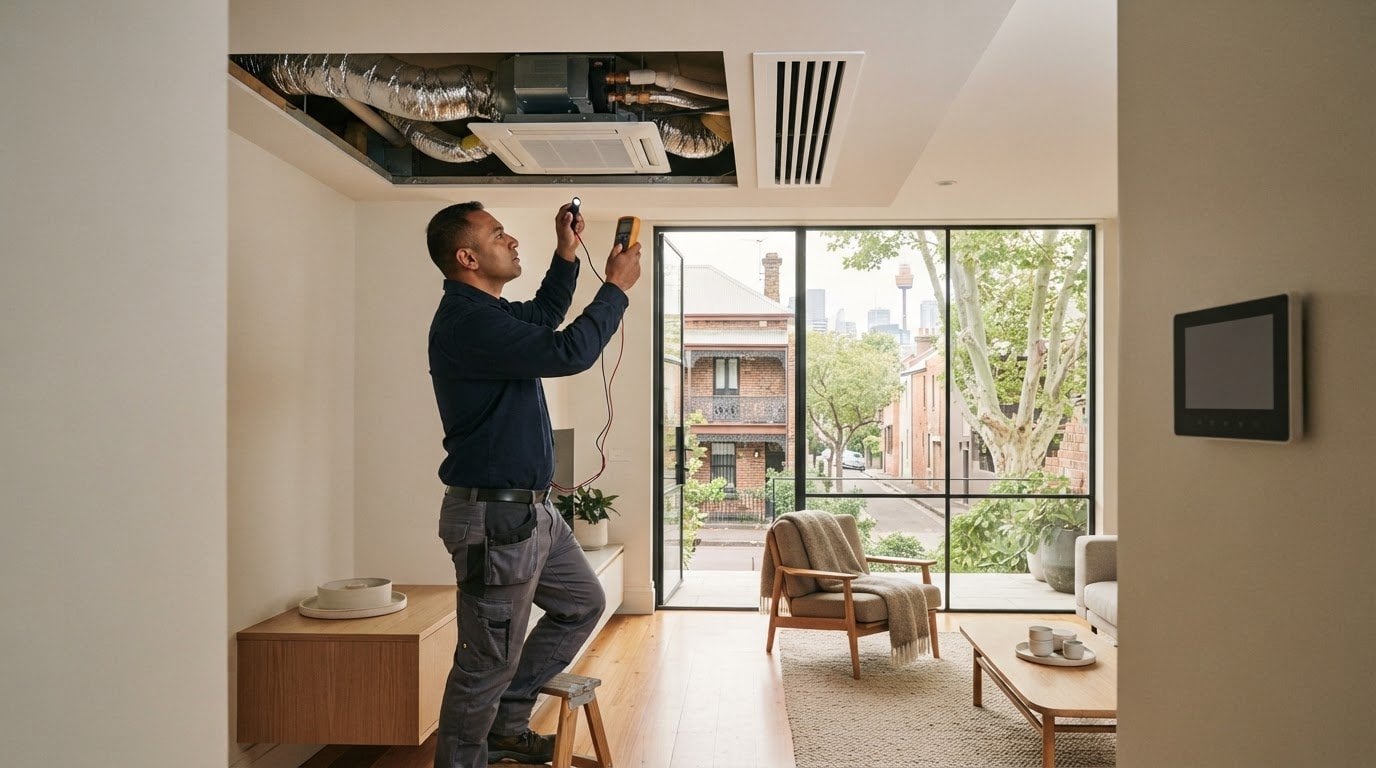
There isn’t one servicing interval for every household. Consider the recommended schedule alongside how the system performs. A professional service includes inspection, cleaning and testing by a technician. For a ducted system, servicing may also involve cleaning filters or pads, ducts and registers. These checks can reveal dirt build-up or developing faults that a quick look at the indoor unit won’t uncover.
Australian homes don’t all have the same legal servicing schedule. In Victoria, technicians working on air conditioners must hold a Refrigerant Handling Licence issued by the Australian Refrigeration Council. Refrigerant work requires an appropriately licensed technician. Routine filter cleaning is a separate household maintenance task.
Arrange an inspection sooner if you notice a change from normal operation. Common warning signs include:
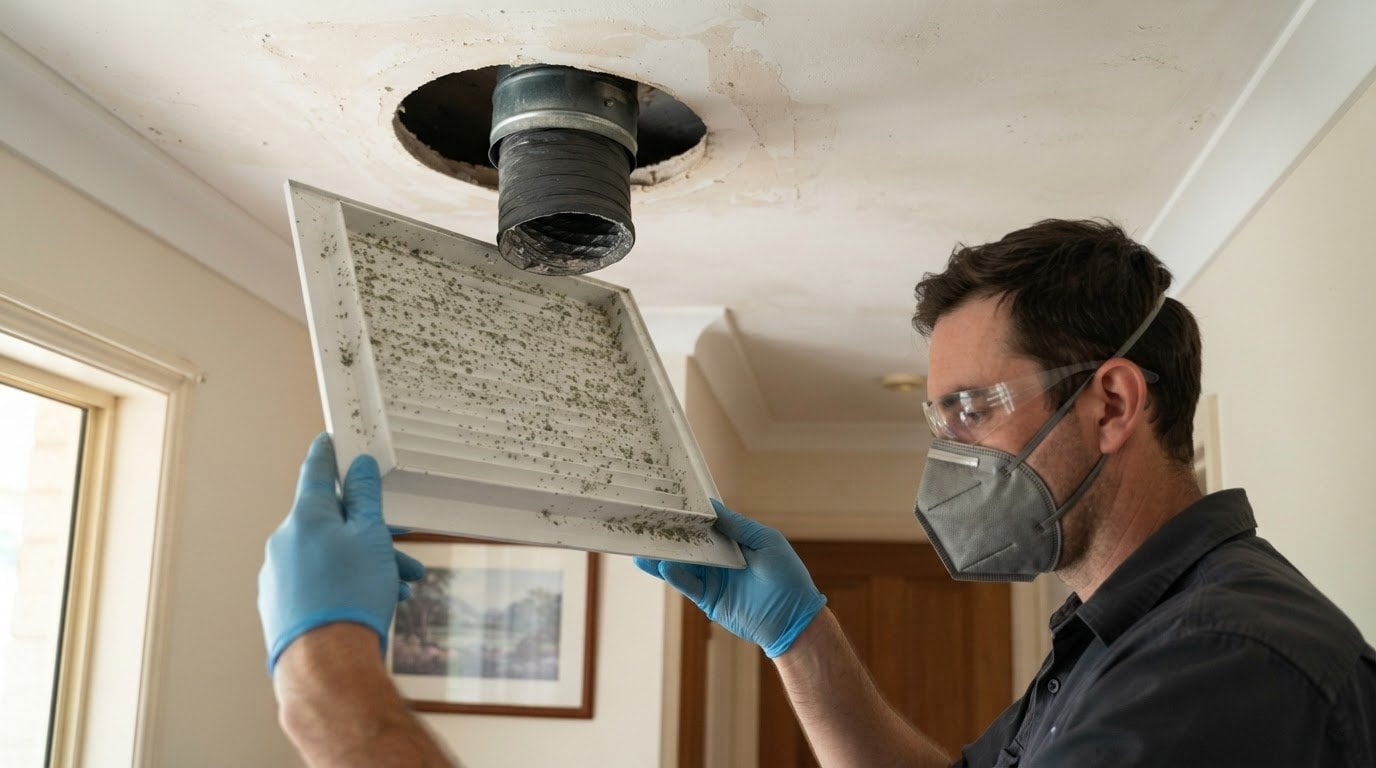
Reduced airflow deserves prompt attention because restricted airflow can make the system work harder. A noticeable smell may point to mould or bacteria inside the unit, while new noises can signal a fault that may worsen if left unchecked. These signs don’t identify the cause by themselves, but they suggest routine cleaning may not be enough.
When arranging a service, describe the symptoms and when they began. For example, mention whether the odour occurs only during cooling or whether weak airflow affects every room. Those details help the technician assess the system and focus the inspection. Note the last service and any filter cleaning, too. A simple maintenance record makes performance changes easier to spot.
Filter cleaning is a useful household task, but it doesn’t replace professional servicing. If you use your air conditioner regularly, check its filters every two to four weeks. Dusty rooms, pets or heavy heating and cooling use can make filters collect dirt sooner. A blocked filter restricts airflow, reducing system capacity and potentially causing a fault.
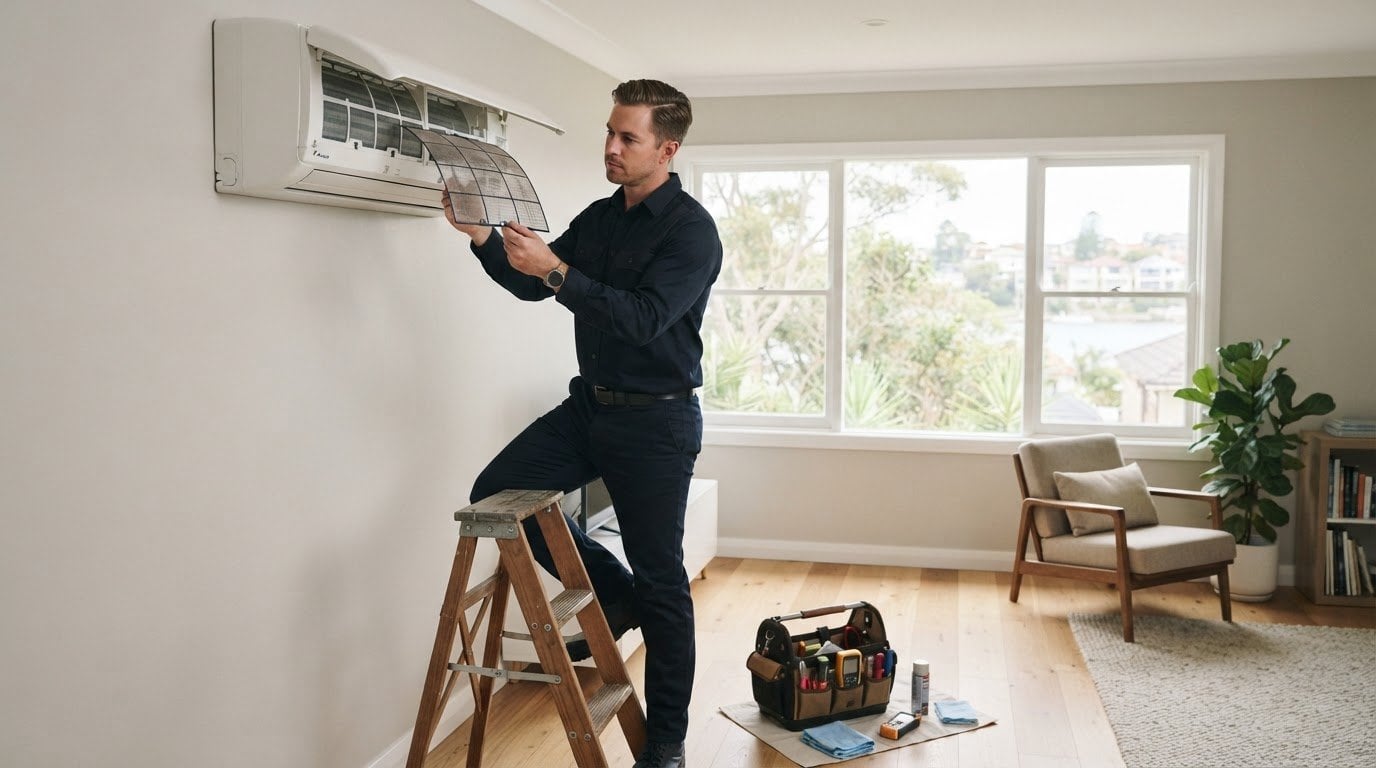
Switch the unit off, then follow the manual’s instructions to find and remove its filters. Split-system filters are usually accessible behind the front panel, but designs vary. If the manual shows a different removal method, follow its directions rather than forcing the panel. This simple check helps you see whether dust is restricting the filter mesh.
For light dust, gently brush the filter or use a vacuum cleaner’s dusting brush on a gentle setting. Take very dusty filters outside to avoid spreading dust through the home. If the filter is washable, clean it with warm, soapy water, then let it dry fully before refitting. Never reinstall a damp filter. Check the manual before washing, as not every filter is designed for water.
Make filter checks part of your seasonal routine. For example, inspect them before regular summer cooling or winter heating begins, then keep checking during sustained use. Dust can build up faster in a dusty environment, sometimes becoming visible on indoor surfaces or furniture. Check and clean ducted-system filters as needed, following the system’s instructions.
DIY care covers accessible filters and visible dust, not every component inside an air conditioning unit. A technician is needed for refrigerant checks, electrical safety checks and deeper maintenance. These tasks involve components and system functions beyond routine household cleaning. If the unit has a serious mould infestation, arrange professional cleaning rather than trying to remove it from internal components yourself.
Consider professional cleaning when dust or contamination remains beyond the removable filter, or when the system needs checks that household care cannot provide. Keep a simple record of filter-cleaning dates and any changes in airflow. This can help distinguish a dirty filter from an issue that needs a technician. A professional inspection is also appropriate if cleaning the filter doesn’t resolve an airflow problem.
For help with a deeper clean or maintenance checks, contact the team about air conditioner servicing.
System type and workload both shape a sensible servicing interval. Ducted, evaporative and split systems need maintenance suited to their design and use.
Heavy use, pets, dust and coastal salt can increase a system’s maintenance needs. More running leaves less downtime between periods of use, while dust and salt can build up and affect performance. A split system used almost constantly may need servicing twice a year. Check filters more often if household dust or pet hair gathers quickly.
Yearly professional servicing is recommended for ducted air conditioning, particularly before peak summer or winter. A service can include cleaning filters or pads, ducts and registers, which matter across a whole-home system. Ducted evaporative equipment also uses pads, so include them in the system’s professional cleaning and maintenance. Keep accessible vents clear and note rooms with uneven airflow before the technician arrives.
Split systems generally need professional servicing every 1-2 years, depending on usage. For a heavily used household unit, arrange servicing at least annually; near-constant operation can warrant twice-yearly attention. A technician can inspect, clean and test the system, including its indoor and outdoor components. The checks help identify build-up or developing faults that cleaning a removable filter cannot address.
Commercial systems and equipment in heavily used spaces may need more frequent servicing than household units. Frequent operation places different demands on equipment than occasional household cooling, so a commercial schedule should reflect operating hours and conditions. In Perth, commercial air conditioners are advised to be serviced every 3 months. Keep a record of service dates and usage changes to make the maintenance schedule more practical.
A reverse-cycle system needs attention for heating as well as cooling, so plan a service before its main heating period. April and May are good months to arrange a professional heater service before the cold months. Autumn is also a suitable time for a heating-system check. Booking before regular winter use gives the technician time to assess performance before you rely on the system for warmth.
Choose the timing based on the coming season and the system’s workload. For instance, a ducted system that runs through summer and winter may suit yearly servicing, while a lightly used split system may follow a longer interval. If the system works harder, or dust and coastal conditions affect it, bring maintenance forward. Regular servicing can support performance and help extend the system’s useful life.
Plan servicing before the season puts your air conditioner under its greatest demand. In Australia, spring is a practical time to prepare for summer cooling, with October or November recommended for a professional service. Consider servicing a system that has been installed for a year or more, then schedule future visits according to its use and condition.
Timing also depends on whether your system provides heating. If you rely on reverse-cycle air conditioning through winter, autumn is a suitable service window, before regular heating begins. Arranging checks ahead of the coming season gives a technician time to inspect the system before you need it most. For an air conditioner used for both heating and cooling, choose the season before its busiest period.
Frequency matters alongside the calendar. Many manufacturers recommend annual servicing, while a lightly used system may need professional attention every two years. Yearly servicing is recommended for ducted systems, particularly before peak summer or winter. Usage, dust and coastal conditions can affect the interval, so note when the system runs heavily and whether its performance changes between services.
A professional service should involve inspection, cleaning and testing by a technician. For ducted air conditioning, the work should include removing and cleaning filters or pads, ducts and registers. A split-system service assesses the system beyond its removable indoor filter. Regular maintenance can help identify developing issues and support efficient operation. Australian Government energy-efficiency advice also links regular maintenance with reduced running costs through improved efficiency.
Don’t wait for a planned seasonal visit if performance changes. Arrange an inspection for poor airflow, reduced cooling, unusual noises or odours, visible leaks, or higher energy bills without a change in use. For example, a split system that struggles to cool a room before summer may need attention before the hottest weather arrives. An outdoor unit that performs poorly in hot weather also warrants assessment.
Before the technician arrives, note the last service date and any symptoms, including when they occur. For example, record whether a noise starts during heating or cooling, or whether a leak appears near the indoor unit. These details help focus the inspection. Keep accessible filters clean and leave internal checks, refrigerant work and electrical safety checks to a professional.
Choose a seasonal service date that suits your system’s workload, then arrange an air conditioner service before peak use.
Peninsula Air Conditioning (PenAir) provides ducted systems and service and maintenance for households planning routine care or responding to performance changes. If your ducted air conditioner is due for a seasonal service, or airflow and comfort have changed, professional maintenance can help assess the system and identify what needs attention.
PenAir also works with split and multi-split systems, with servicing suited to the type of air conditioner in your home. Get in touch before peak seasonal use, or when unusual operation makes you consider an earlier inspection.
Contact Peninsula Air Conditioning (PenAir) to discuss your air conditioning service needs.
Your air conditioner’s workload can change as household routines, room use and seasonal needs shift. Revisit its maintenance plan when those changes occur rather than relying on an old calendar reminder. Keeping a simple record of filter care, performance changes and professional visits can help you decide when the next service is due.
If you’re still weighing how often to service your aircon in Australia, use the system’s age, usage and operating conditions to guide your plan. A new noise, odour or drop in comfort is also a reason to bring forward a professional assessment. Addressing changes early can help prevent disruption to your home’s comfort.
Peninsula Air Conditioning (PenAir) provides Service & Maintenance for ducted and split systems. If you’d like help with your system’s care, contact Peninsula Air Conditioning (PenAir) to discuss the next step. A considered maintenance routine can help you stay prepared for the seasons ahead.
During summer, check the filters every two to four weeks if you use the air conditioner regularly. Switch the unit off before removing accessible filters, and follow the manual’s instructions. Brush away dust or vacuum gently. Wash only filters designed to be washed, then dry them fully before refitting. If dust returns quickly, inspect them more often. Filter cleaning is household care, not a substitute for professional servicing.
Annual servicing is a sensible routine for many homes, and most manufacturers recommend it. A lightly used unit may suit a longer interval, while frequent operation or dusty and coastal conditions can call for more attention. Follow the manufacturer’s maintenance instructions and consider the system’s workload. A recurring calendar reminder can help you plan a service before the period when your household relies most on heating or cooling.
Look for changes from the unit’s usual behaviour, such as weaker airflow, unfamiliar sounds, odours or less effective cooling. To describe the issue, note which room is affected and whether it happens during heating, cooling or both. Compare energy bills with your usual use, too. A sudden unexplained increase or a visible leak is a reason to arrange an inspection.
Consider the system’s age, usage and environment together, rather than applying the same schedule to every home. For example, a unit running frequently in a dusty area may need more attention than one used occasionally in cleaner surroundings. Keep the manufacturer’s maintenance instructions and service records with your household documents. If the system is new, routine care can also support its warranty requirements.
A technician inspects, cleans and tests the air conditioning system, assessing its condition rather than just its visible surfaces. For a ducted system, servicing can include attention to filters or pads, ducts and registers. Before the visit, write down changes you’ve noticed, such as a sound that occurs only during heating. This gives the technician a clear example to investigate.