
A bigger air conditioner isn’t always the answer to a hot upstairs. To understand how to cool a two-storey house in summer, start by limiting heat through the roof and windows, then balance airflow between levels and use a correctly sized, well-maintained air conditioner. Warm air rises, so the upper floor can need particular attention.
It’s frustrating when downstairs feels comfortable but upstairs bedrooms stay warm. In summer, ceiling fans set to rotate anti-clockwise create a cooling breeze, while insulation and reflective roof sarking help limit heat entering through the roof. Together, these measures can make your Sydney home more comfortable without relying on air conditioning alone.
This guide explains how fan direction, insulation, roof sarking, and air-conditioner selection and upkeep work together. It also covers why system sizing and installation quality matter in a two-storey home, and what a professional can assess when cooling is uneven or the system isn’t performing as expected.
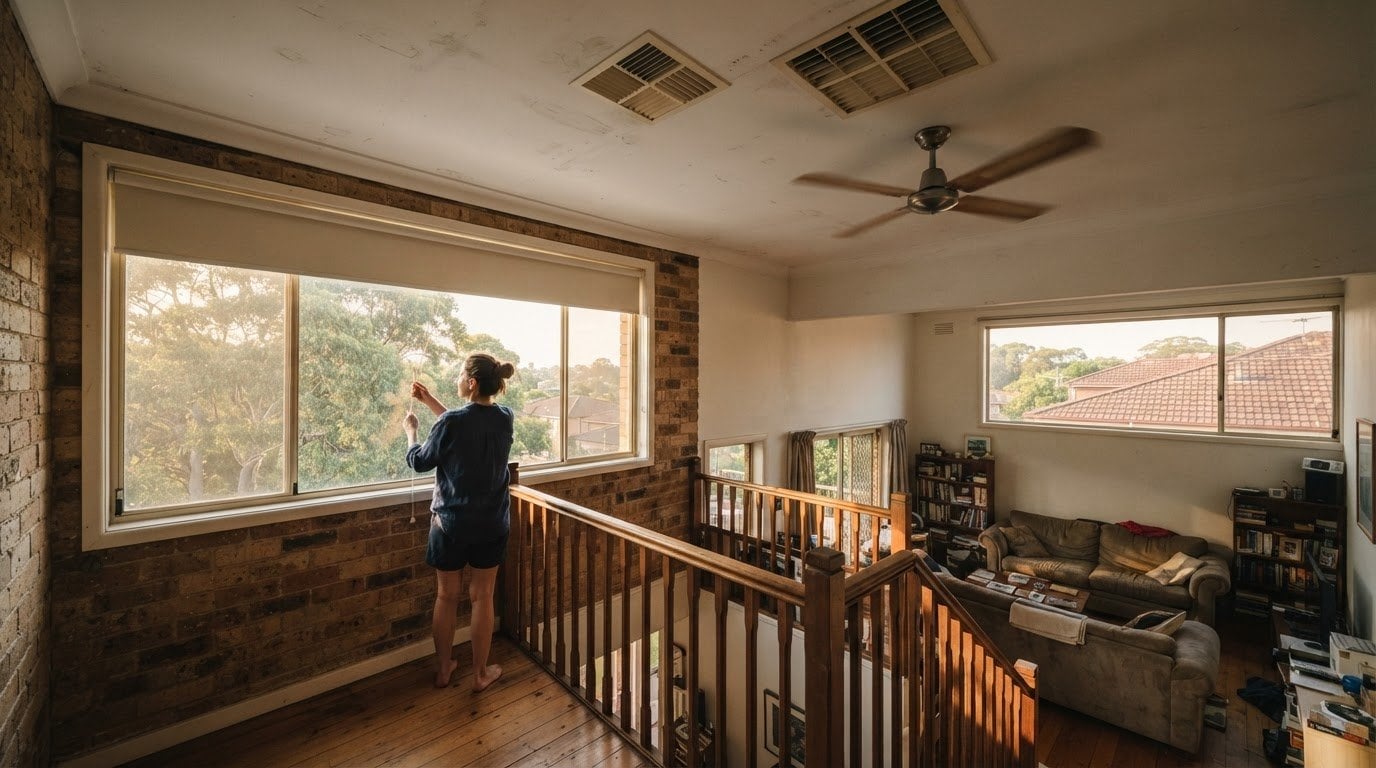
In summer, set ceiling fans to rotate anti-clockwise. This pushes air down and creates a breeze across people in the room. Warm air rises, so upstairs rooms can feel hotter than downstairs. Use the fan’s direction switch to change its rotation with the season. In winter, clockwise rotation helps draw cooler air upwards and circulate warmer air near the ceiling. A fan supports comfort, but it cannot replace an air conditioner when the room itself needs cooling.
Do ceiling fans cool rooms, and how much do they cost to run in Australia? Fans make people feel cooler by moving air across the skin, but they don’t lower the room’s temperature. Running costs depend on the fan’s electricity use, how long it runs, and the household’s electricity tariff, so there’s no single cost for every home.
For a more comfortable upstairs bedroom, combine airflow with personal comfort measures. Cotton sheets and loose, lightweight clothing can help you stay cool while sleeping. In the evening, ventilation can release heat when outdoor air becomes cooler. A fan can then move that air through occupied spaces. These measures improve comfort, while an air conditioner removes heat from indoor air.
If one floor stays warmer, a professional cooling-load assessment can help identify why. The assessment considers the home’s rooms, windows, doors, storeys, insulation and building materials, rather than relying on floor area alone. The professional can then assess airflow and system capacity across both levels. A single split system near the bottom of the stairs won’t reliably cool upstairs bedrooms. Across Sydney homes, the layout, window exposure and roof conditions all affect how cooling reaches each floor.
What are the risks of relying on portable air conditioners in a two-storey house? A portable unit cools the room where it operates, so it may not address heat in other rooms or upstairs. Its exhaust hose must also discharge warm air outside, which can make whole-home cooling less practical than a system designed for the house.
How can a professionally designed cooling system help during a heatwave while reducing electricity bills? Correct sizing and airflow planning can direct cooling to the rooms and floors that need it, instead of overworking an unsuitable system. A professional can also consider separate systems or zones for each level. Setting the air-conditioner thermostat to 26°C is one suggested way to balance comfort and energy use.
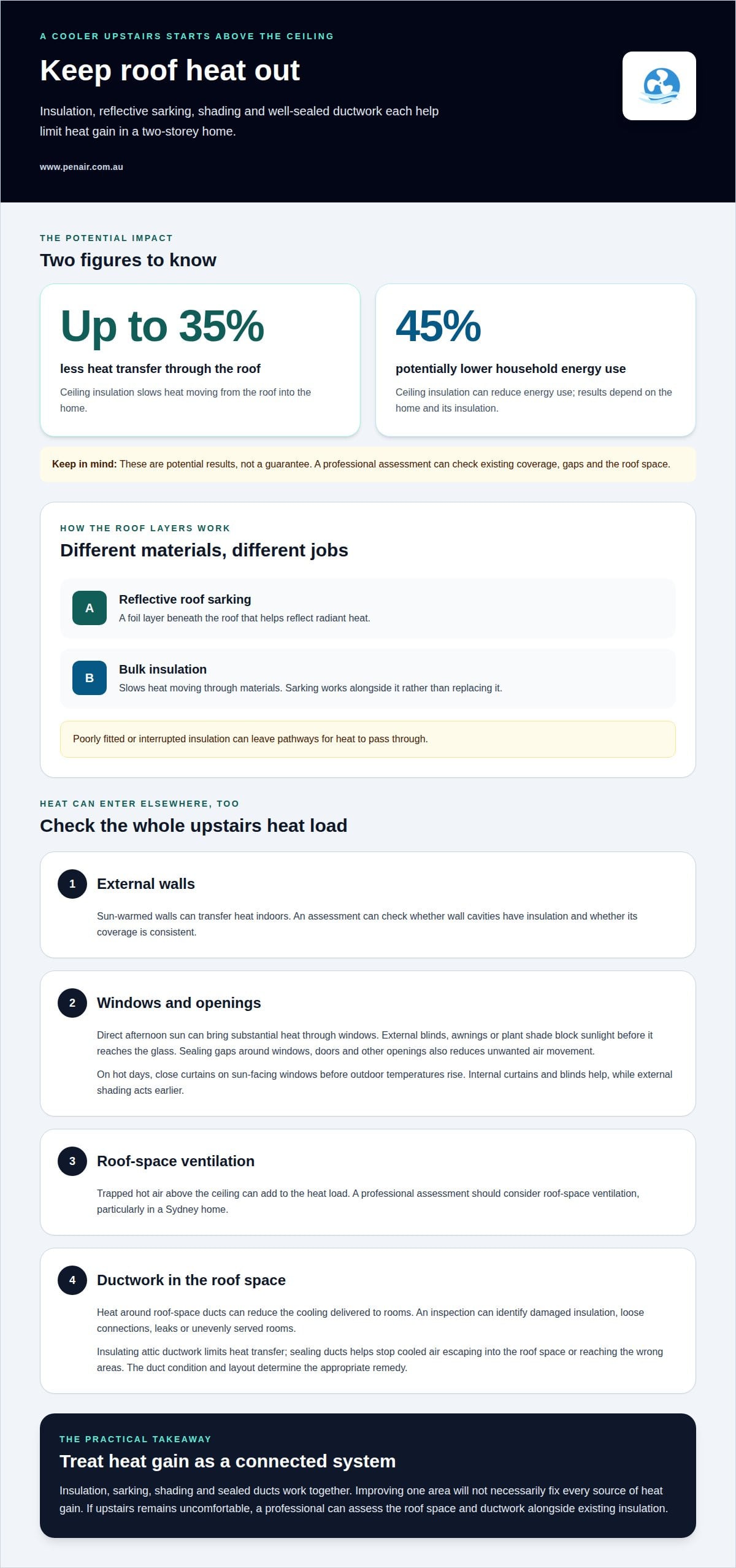
In a two-storey home, heat entering through the roof can build up above the ceiling and make upstairs rooms harder to cool. Ceiling insulation slows that heat transfer. It can reduce heat transfer through the roof by up to 35%, and can cut household energy use by 45%. These results depend on the home and the insulation. A professional assessment considers existing coverage, gaps and the roof space before recommending improvements.
Reflective roof sarking is a foil layer beneath the roof that helps reflect radiant heat. It works alongside bulk insulation rather than replacing it: the foil reflects radiant heat, while bulk insulation slows heat moving through materials. A professional can inspect the roof construction and existing layers, then recommend an approach suited to the home. Poorly fitted or interrupted insulation can leave pathways for heat to pass through.
Wall insulation also matters, especially where sun-warmed external walls transfer heat indoors. An assessment can identify whether wall cavities contain insulation and whether coverage is consistent. Sealing gaps around windows, doors and other openings reduces unwanted air movement. In a Sydney home, a professional should also consider roof-space ventilation, as trapped hot air can add to the heat load above the ceiling.
Windows can admit substantial heat, particularly when exposed to direct afternoon sun. External blinds, awnings, or shade from plants can block sunlight before it reaches the glass. Internal curtains and blinds help too, but external shading acts earlier. On hot days, close curtains on sun-facing windows before outdoor temperatures rise to help limit heat entering upstairs bedrooms.
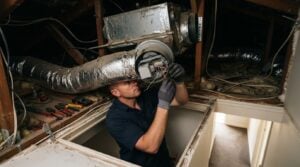
Ductwork in a roof space can absorb heat from its surroundings, reducing the cooling delivered to rooms. A professional inspection can identify damaged insulation, loose connections, leaks, and ducts serving rooms unevenly. Insulating attic ductwork helps limit heat transfer, while sealing ducts helps prevent cooled air escaping into the roof space or reaching the wrong areas. The condition and layout of the ducts determine the appropriate remedy.
Insulation, sarking, shading and sealed ducts work together; upgrading one area won’t fix every source of heat gain. If upstairs remains uncomfortable despite the existing insulation, a professional can assess how the roof space and ductwork affect cooling performance. For help with a ducted system’s airflow and condition, contact us about ducted cooling.
Choosing an efficient air conditioner starts with a cooling-load assessment, not a guess based on floor area. A professional considers each storey, room use, insulation, window size and orientation, roof colour, ceiling insulation, and building materials. These factors affect how much heat enters the home and the cooling capacity required. A high-star-rated model can use energy efficiently, but it still needs correct sizing. An oversized unit may cycle on and off more often and remove less moisture from indoor air. For Sydney homes, the assessment should account for rooms exposed to strong afternoon sun.
For separate upstairs and downstairs needs, zoning or separate systems can improve temperature control. A single split system near the stairs won’t reliably cool upstairs bedrooms. A professional can assess whether a split system, multi-split setup, or ducted system suits the layout. The choice depends on room arrangement, how the household uses each space, and the existing system. In a ducted home, closing too many outlets can affect system pressure and performance, making one room cooler while another remains uncomfortable.
Thermostat settings also affect comfort and running costs on hot days. In warm weather, increasing the thermostat setting by 1°C can reduce an air conditioner’s running cost by about 10%. The setting should suit occupants and the home’s heat load, rather than being pushed unnecessarily low. A professional can assess system operation and room conditions, then explain how settings and zoning work together. For households considering how to cool a two storey house in summer, room use and sun exposure help shape those decisions.
Ceiling fans can support air conditioning by moving cooled air around an occupied room. They help people feel cooler but don’t lower the room temperature. A professional considers fan placement alongside supply grilles, which should distribute air across the room. Air shouldn’t blow directly onto a bed, lounge, or dining table. This can help prevent cold spots and make occupied areas more comfortable. It’s one part of planning how to cool a two storey house in summer, not a replacement for suitable air conditioning.
Evaporative air conditioners need airflow through the home to work effectively. Some doors and windows should remain open so outdoor air can enter and warmer air can leave. This differs from refrigerated air conditioning, where closed windows help contain cooled indoor air. A professional considers the home’s layout and ventilation needs when recommending a system, especially when several rooms need cooling.
Are there Australian rebates or regulations for home cooling and energy-efficient upgrades? Rebate eligibility depends on the specific NSW or Australian programme and the upgrade it covers. An air conditioner doesn’t automatically qualify. Equipment selection and incentive eligibility are separate considerations.
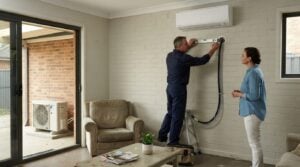
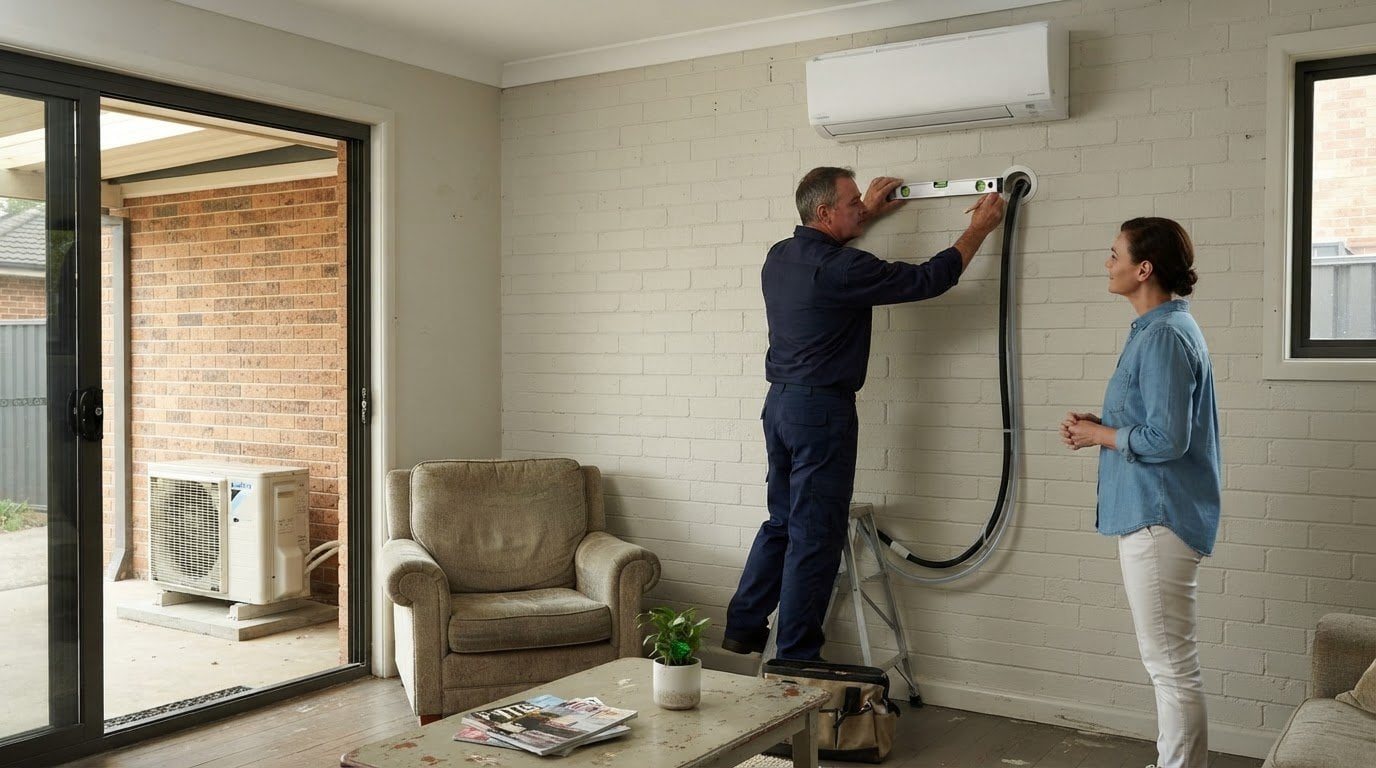
Even a well-chosen air conditioner depends on careful installation. In a two-storey home, the installer needs to consider how air will reach both floors, where indoor units or supply grilles should sit, and whether ductwork is sealed and supported. Poorly placed outlets can leave one room uncomfortable while another gets too much airflow. Grilles should distribute air across the room, not blow directly onto beds, lounges, or dining furniture.
Installation quality also depends on details that aren’t visible during everyday use. Refrigerant pipework should be correctly installed and tested, condensate drains should fall properly, and electrical work should comply with requirements. Ducts need suitable support and sealed joins to help cooled air reach the intended rooms. Outdoor units need ventilation clearance and access for maintenance. A professional installation checks these details together, rather than treating the indoor unit as the whole job.
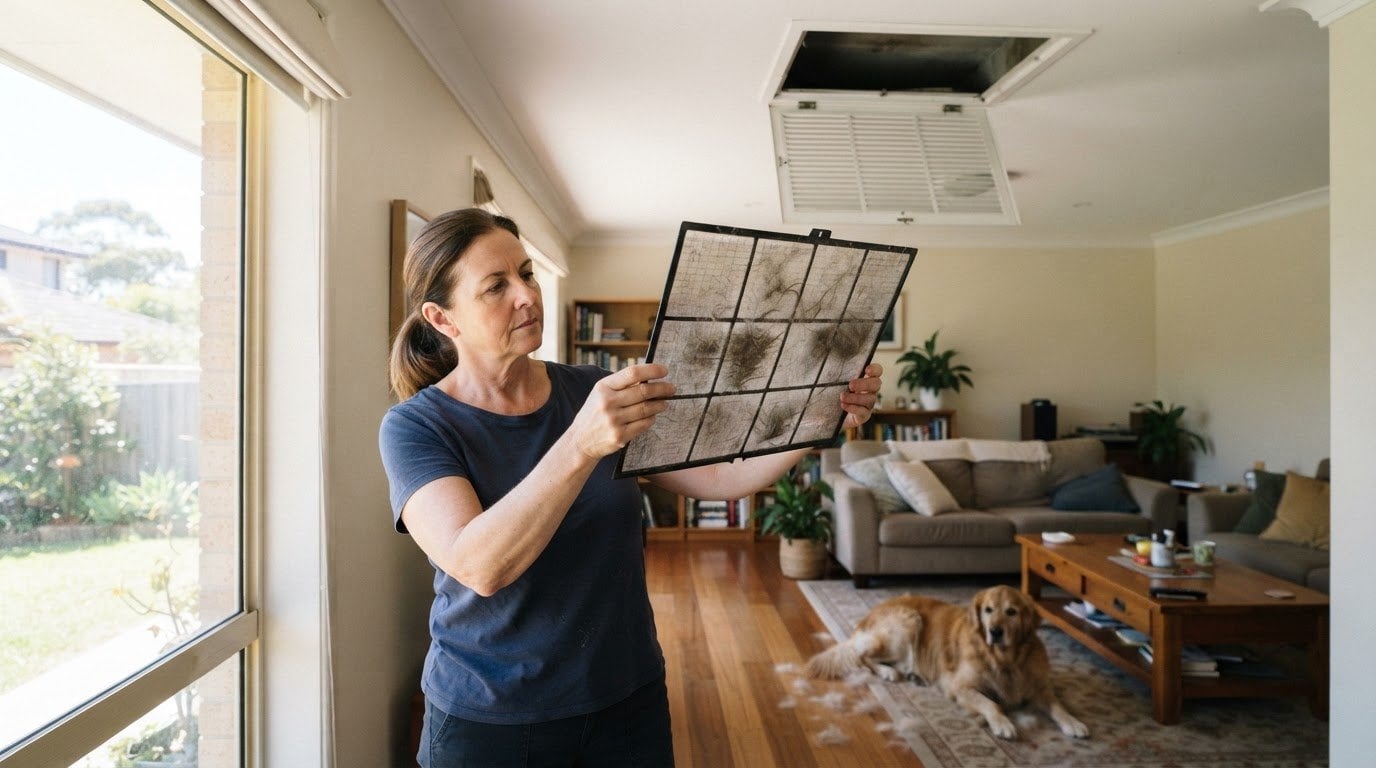
Regular maintenance helps keep performance steady through changing weather, from summer cooling to winter heating. Clean filters as recommended, because accumulated dust can restrict airflow. Keep outdoor units clear of leaves and debris that can obstruct airflow around the equipment. A maintenance visit can also assess system operation and identify airflow issues before they cause a bigger disruption.
In a ducted system, closing too many outlets can affect system pressure and performance. For example, shutting several upstairs grilles to direct more cooling into one downstairs room may unbalance airflow. A technician can assess the outlets, ductwork, and system response, then address the cause instead of relying on closed vents. This is particularly relevant when temperatures differ between floors despite the air conditioner running.
Maintenance can include inspecting filters and cleaning ducts where needed. Ducts that leak or have damaged insulation may lose cooled air before it reaches a bedroom or living area. The technician can also check the outdoor unit’s clearance and general condition. With good maintenance, an air-conditioning system may last about 20 years, though its condition and use affect its lifespan.
Sun control still plays a part in system performance. Awnings that shade exposed windows can reduce direct sun entering rooms, while furniture placement should leave supply grilles unobstructed. If cooling has become uneven or the system needs servicing, book air-conditioning maintenance to have its condition and airflow assessed.
Peninsula Air Conditioning (PenAir) can identify why a two-storey home stays unevenly cool and what may improve comfort. We assess the air-conditioning system, airflow, and household needs, then provide suitable installation, repair, or maintenance. Depending on the home’s layout, options include ducted, split, or multi-split systems. For example, persistently hot upstairs bedrooms may call for a closer look at system capacity and how air reaches each level, rather than simply lowering the thermostat.
If your system struggles during Sydney’s summer weather or needs attention before the next hot spell, contact Peninsula Air Conditioning (PenAir) to discuss your home’s cooling needs.
Every two-storey home has different cooling needs. Start by connecting your household’s comfort priorities with the system’s condition and the home’s layout. Note which rooms become uncomfortable, when the problem occurs, and whether it affects one floor or both. These details help focus a professional assessment on the issues that matter in your home.
Peninsula Air Conditioning (PenAir) helps Sydney households choose suitable cooling options and ongoing care, including Ducted Systems, Split Systems, and Service & Maintenance. If you’re working out how to cool a two storey house in summer, talk with PenAir about your home’s needs and the next steps.
Arrange a conversation with Peninsula Air Conditioning (PenAir) and take a considered step towards a more comfortable home.
Combine passive heat reduction with cooling that suits how your household uses each floor. For example, shade sun-exposed rooms before afternoon heat builds, use ceiling fans in occupied spaces and avoid cooling empty rooms unnecessarily. In a Sydney home, note which rooms heat up first and when. That pattern helps identify whether the main issue is sun exposure, poor airflow or an air-conditioning system that doesn’t suit the home.
Prioritise the roof and windows that receive direct sun, as they can contribute to heat building upstairs. A professional can assess insulation coverage, roof sarking, and gaps that let hot air enter. External shading can stop sunlight reaching the glass, while evening ventilation can release accumulated warmth when outdoor conditions are cooler. The best combination depends on the home’s roof structure, window orientation, and available airflow paths.
A professional can consider window orientation, shading, which windows open, and whether air has a clear route through the home. For example, windows on opposite sides may support cross-ventilation when outdoor air is cooler, while restricted openings or closed internal doors can interrupt airflow. The assessment also considers rooms where heat lingers, helping distinguish a ventilation issue from one that needs mechanical cooling.
The best choice depends on the floor plan and how many rooms need cooling. A split system suits a specific area, while a multi-split system provides individual climate control for multiple rooms from one outdoor unit. Ducted air conditioning can condition more than one room or area. A professional can match the system type to the household’s room-by-room needs and the home’s layout.
Have a professional assess the upstairs rooms as part of the whole home, rather than sizing a system from floor area alone. The assessment should consider insulation, glass areas, window coverings, roof and ceiling insulation, building materials, and how the rooms are used. A bedroom beneath a sun-exposed roof may have different cooling needs from a shaded room. Correct sizing helps avoid a system that struggles or cycles too frequently.