
The “perfect” air conditioning system for your home isn’t actually a simple choice between two technologies; instead, it’s a structural calculation of your house’s vertical airflow and cavity access. We understand the frustration when your top floor is consistently five degrees hotter than the ground floor. It’s a common Sydney challenge that often leads to high energy bills, especially since heating and cooling account for approximately 40% of the average household’s total energy usage. If you’re weighing up ducted vs multi-split for two-storey house living, you need a solution that balances comfort with your property’s unique layout.
Our 2026 guide will help you discover the most efficient way to cool your home by comparing structural requirements, zoning benefits, and long-term costs. We’ll walk you through the latest 7-star thermal performance standards and provide expert advice on Sydney-specific constraints to help you achieve a consistent temperature throughout every room. We’ll also look at how modern, discreet installations can add property value while keeping your family comfortable and providing true peace of mind.
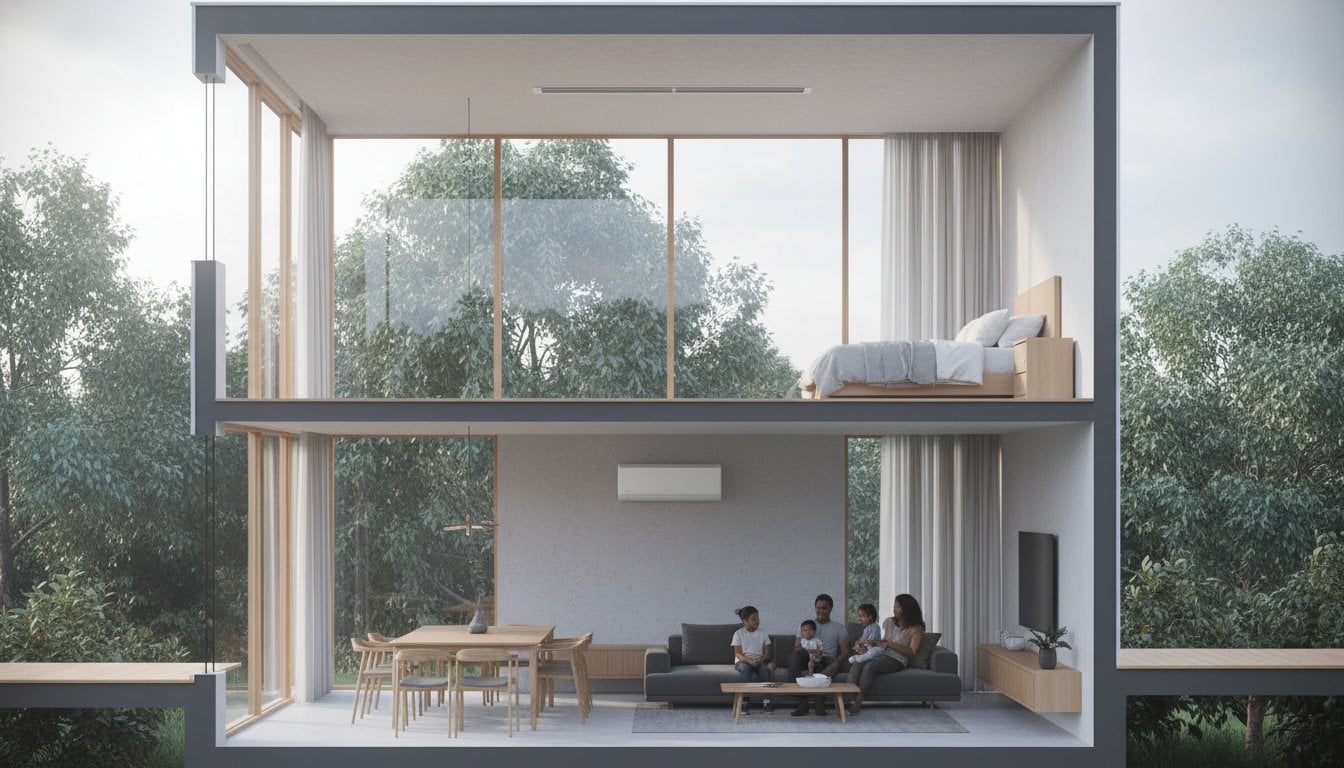
Sydney summers are legendary for their intensity, but for those living in multi-level homes, the heat presents a unique architectural puzzle. You’ve likely felt the frustration of a ground floor that feels like a cellar while your upstairs bedrooms feel like a sauna. This isn’t just a minor inconvenience; it’s a result of the “Stack Effect.” In simple terms, warm air is less dense than cool air, so it naturally rises through your stairwell and accumulates at the highest point of your home. When we design a strategy for Air conditioning, we have to account for this constant vertical movement of heat.
Modern Sydney homes, especially those with brick-veneer construction, face an additional hurdle known as thermal mass. The external bricks absorb solar energy throughout the day and slowly radiate that heat into your living spaces long after the sun sets. Because heat rises, the upper level becomes a trap for this energy. A cooling strategy that works for a single-storey cottage will almost certainly fail in a vertical layout. If you don’t address the specific needs of each level, you’ll end up with a system that works too hard, costs too much, and still leaves you sweating in bed at night.
Heat stratification occurs when layers of air at different temperatures sit on top of each other. In a two-storey house, your stairwell acts as a chimney. Hot air gathers in upper-level hallways, creating a thick blanket of warmth that resists cooling. This is often exacerbated by large glass windows that are common in many Sydney suburbs. These windows allow significant solar gain, heating the upstairs rooms directly. You might find yourself cranking the downstairs unit to its lowest setting just to get a bit of relief upstairs. This usually results in a ground floor that feels freezing while the bedrooms remain stifling.
To solve this, we focus on precision control through zoning. This is a central part of the ducted vs multi-split for two-storey house debate. We often implement “Day vs Night” zoning to match your family’s lifestyle patterns. This allows you to direct cooling to the kitchen and lounge during the day and switch it entirely to the bedrooms at night. Independent floor control is essential for energy conservation because it prevents you from cooling empty rooms. Modern sensors now monitor the temperature delta between levels, automatically adjusting the airflow to maintain a consistent environment. This targeted approach ensures your system looks after your comfort without wasting electricity.
A central ducted system is widely regarded as the ultimate solution for year-round comfort in larger Sydney residences. Unlike other major types of HVAC systems, a ducted setup uses one powerful indoor unit, usually hidden in the roof cavity, to distribute air through a network of concealed channels. When we look at the choice of ducted vs multi-split for two-storey house applications, the ducted system stands out for its ability to deliver a balanced climate to every corner of the home simultaneously. It’s a cohesive approach that treats your house as a single, controlled environment rather than a collection of separate rooms.
Property value and aesthetics play a significant role in this choice. Many of our neighbors in Sydney prefer ducted systems because they don’t require bulky indoor units mounted on the walls. This minimalist approach keeps your interior design front and center, which is a major plus for resale value. Beyond the looks, there’s the benefit of near-silent operation. Since the mechanical “hum” of the fan and compressor is located far from your living areas and bedrooms, you can enjoy a peaceful home environment without the constant background noise associated with smaller, individual units.
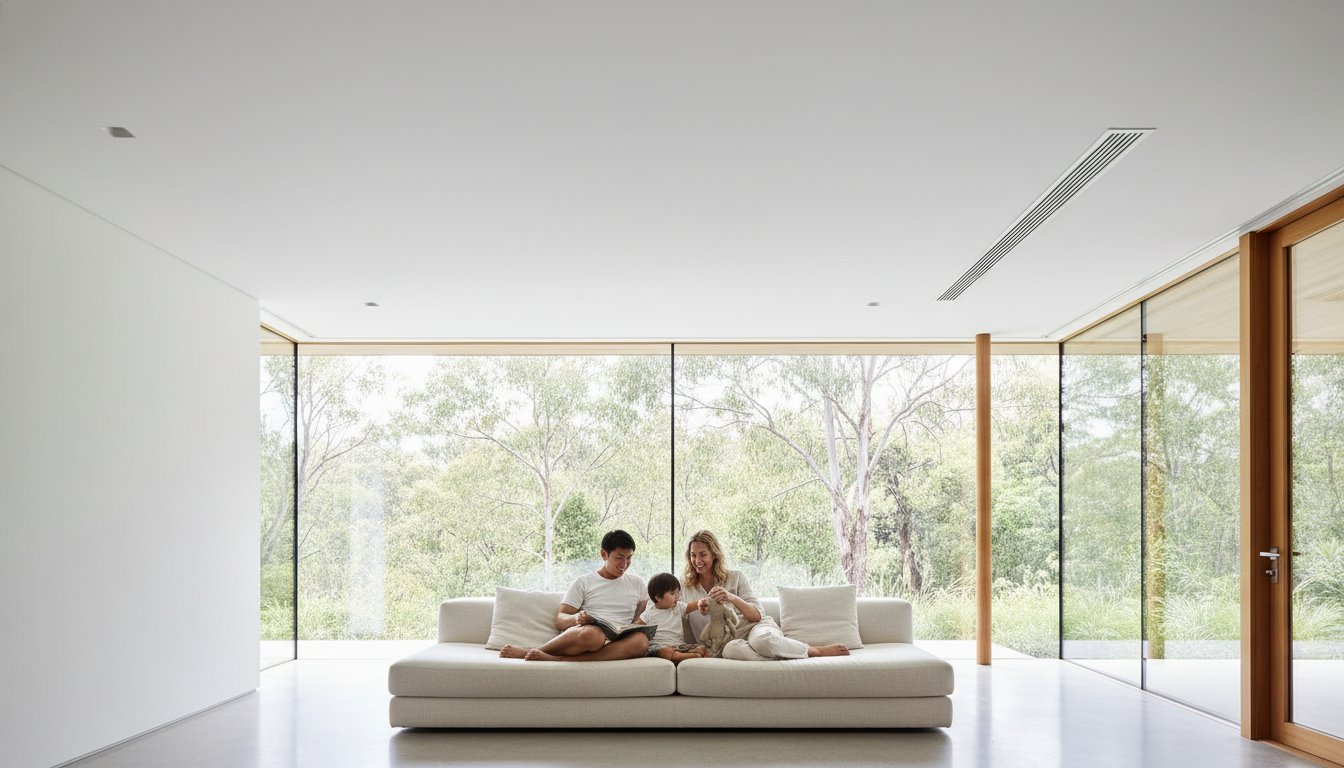
Modern ducted systems are designed to be felt, not seen. You can choose from various vent styles, such as sleek linear grilles that blend into modern architectural lines or traditional circular vents for a more classic look. Because the bulk of the system is tucked away in the ceiling or between floors, it maintains the clean aesthetic of luxury homes. This “invisible” nature is particularly valuable for two-storey properties where you want to maintain a high-end finish across both levels. If you’re curious about how this might look in your specific layout, our team at PenAir can provide a consultative view on your installation options.
We frequently recommend Daikin air conditioning for two-storey homes because of their industry-leading control systems. Using the Daikin Airbase app or a ZoneController, you have total command over your home’s climate from your mobile device. This means you can precisely set a gentle 22 degrees for the upstairs nursery while maintaining a crisp 18 degrees in the downstairs lounge. High-tech individual room sensors are a game-changer here, as they automatically detect when a room is empty and scale back the airflow to prevent energy wastage in unoccupied spaces. This level of smart integration ensures your home remains efficient even during the peak of a Sydney heatwave.
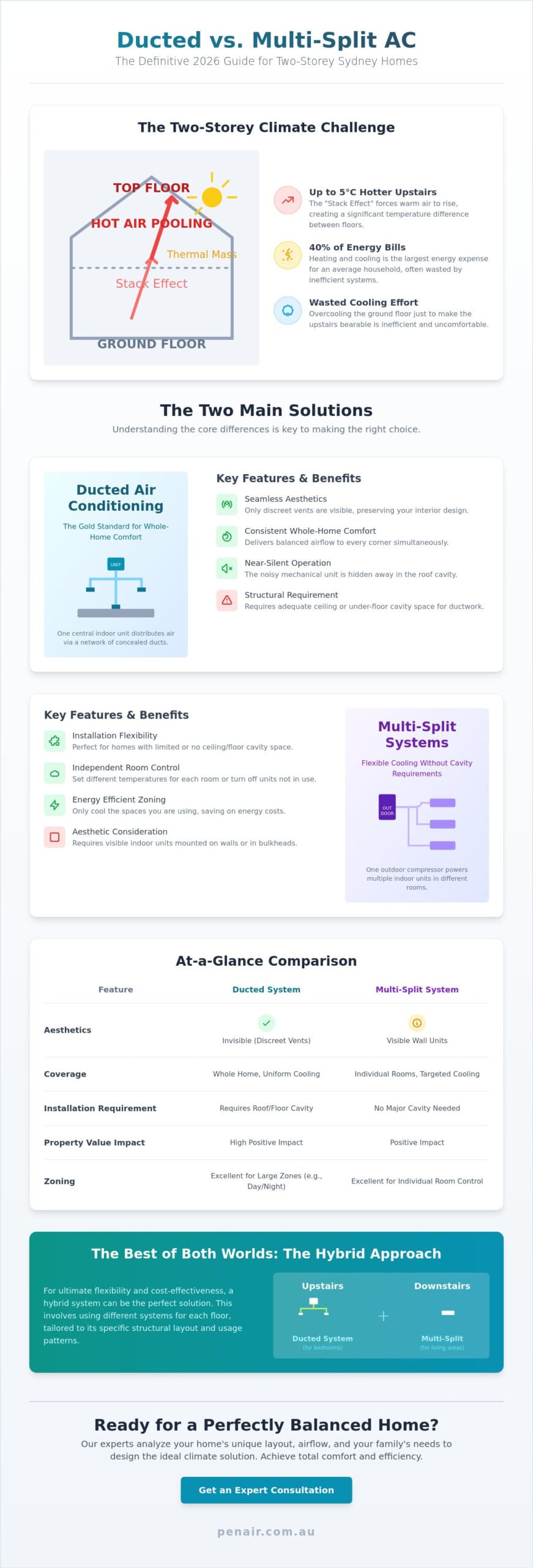
While we often highlight central systems for their seamless look, the structural reality of many Sydney homes means a ducted layout isn’t always the right fit. If your home lacks the necessary roof space or floor cavities to house large ducts, you don’t have to compromise on comfort. A multi split system offers a versatile alternative by connecting up to five indoor units to a single outdoor compressor. This setup is particularly effective for the ducted vs multi-split for two-storey house comparison when you need to cool specific rooms across different levels without major structural renovations.
One of the biggest advantages of this technology is the level of individual room autonomy it provides. In a busy household, everyone has different temperature preferences. Modern units, much like those detailed in this guide on Ductless Mini-Split Air Conditioners, allow each family member to set their own climate. Teenagers can keep their upstairs bedrooms crisp and cool for gaming while the downstairs home office stays at a moderate temperature. This targeted approach is not only great for family harmony but also helps manage running costs since you’re only cooling the spaces you’re actually using.
For our neighbors living near the coast, we pay special attention to the outdoor environment. Sydney’s salt air can be incredibly harsh on mechanical components. When we install these systems, we prioritize outdoor units with specialized anti-corrosion coatings to protect the heat exchanger from premature wear. This local expertise ensures your investment lasts longer in our unique climate.
Many two-storey homes in Sydney feature flat roofs or raked ceilings that leave zero room for traditional ducting. Additionally, running bulky ducts between the first and second floor of an existing home can be a logistical nightmare that requires extensive plasterwork and “bulkheads” to hide the pipes. Multi-split systems solve this by using small, flexible refrigerant pipes that can be easily tucked away. It’s a high-performance alternative that preserves your home’s structure while delivering powerful cooling exactly where you need it.
Efficiency in 2026 is about precision. Multi-splits excel here because they eliminate the energy loss that can sometimes occur through long duct runs. You can focus your energy usage on “active” rooms during the day, like the kitchen or home office, and then switch focus to the master bedroom at night. The outdoor unit also has a compact footprint, making it ideal for the tight side-passages often found in Sydney’s suburban blocks. This allows us to keep the equipment tucked out of sight, maintaining your home’s curb appeal while ensuring every room stays comfortable.
Many homeowners believe that installing ducted air conditioning in an existing two-storey property is an impossible task. While it’s true that new builds offer the simplest path for ductwork, our experience across Sydney has shown that clever retrofitting is often achievable with the right structural approach. The choice of ducted vs multi-split for two-storey house comfort usually comes down to how much ceiling and void space we can find during a professional inspection. We don’t just look at the rooms; we look at the bones of the house.
Operating efficiency is another major factor in your long-term satisfaction. Modern Daikin systems offer impressive Energy Efficiency Ratios (EER) and Coefficients of Performance (COP), but these numbers only matter if the installation is sound. For our neighbors on the Northern Beaches or near the harbour, we also have to consider the environment. Salt air corrosion can shorten the life of your system if the outdoor units aren’t properly protected and maintained. Regular air conditioning service Sydney wide is the best way to ensure your investment stands up to our coastal conditions.
Our team focuses on finding “vertical paths” to connect the ground floor to the main unit in the roof. We often use the back of linen cupboards or walk-in robes to create a “chase” for the pipes and ducts. If your home has no natural voids, we can install bulkheads. These are small, boxed-in sections of the ceiling that house the ductwork without ruining the room’s aesthetic. Because every house is different, a site audit is the only way to confirm if a ducted system is feasible or if a multi-split approach is more realistic for your layout.
While a multi-split system allows you to scale your initial investment by installing units room-by-room, a zoned ducted system often provides better whole-home efficiency. By using smart sensors to manage the temperature delta between floors, you avoid the energy waste of running multiple independent compressors. If you’re unsure which path fits your floorplan, we recommend you book a structural assessment with our specialist team to evaluate your home’s vertical voids.
| Feature | Ducted Systems | Multi-Split Systems |
|---|---|---|
| Aesthetics | Seamless; only minimalist vents are visible. | Visible wall-mounted indoor units. |
| Control | Centralized with advanced zoning options. | Individual control for every room. |
| Cost | Higher initial investment; adds property value. | Scalable; pay for the rooms you need. |
| Installation | Complex retrofit; requires roof/void space. | Simpler; minimal impact on plasterwork. |
Choosing between ducted vs multi-split for two-storey house comfort is about more than just picking a brand. It’s about understanding how your family uses every square metre of your home. We’ve seen that the most successful installations are the ones that respect the architectural “bones” of the property while catering to the daily rhythms of the household. Whether you’re cooling a new build or retrofitting a classic Sydney home, the goal is always a reliable environment where you don’t have to think twice about the temperature.
We often caution our neighbors against falling for the “cheapest quote” trap. In our experience, an unusually low price often points to shortcuts in component quality or a lack of consideration for Sydney’s harsh coastal conditions. Low-quality outdoor units without proper anti-corrosion treatments won’t last long against the salt air and humidity. When a system is poorly designed for a two-storey layout, it works harder than it should, leading to higher energy bills and premature repairs. Investing in a professional design adds genuine property value and provides the peace of mind that comes from a job done right.
Sometimes, the most efficient path isn’t a single system but a combination of technologies. We frequently implement a “hybrid approach” for homes where running ducts to the ground floor is structurally impossible. In this scenario, we might install a ducted system exclusively for the upper-level bedrooms. This ensures silent, even cooling for a better night’s sleep. For the downstairs living areas, we can install a powerful single split system or a multi-split configuration. This strategy gives you the premium feel of ducted comfort where it matters most while avoiding the need for invasive structural work on the ground floor.
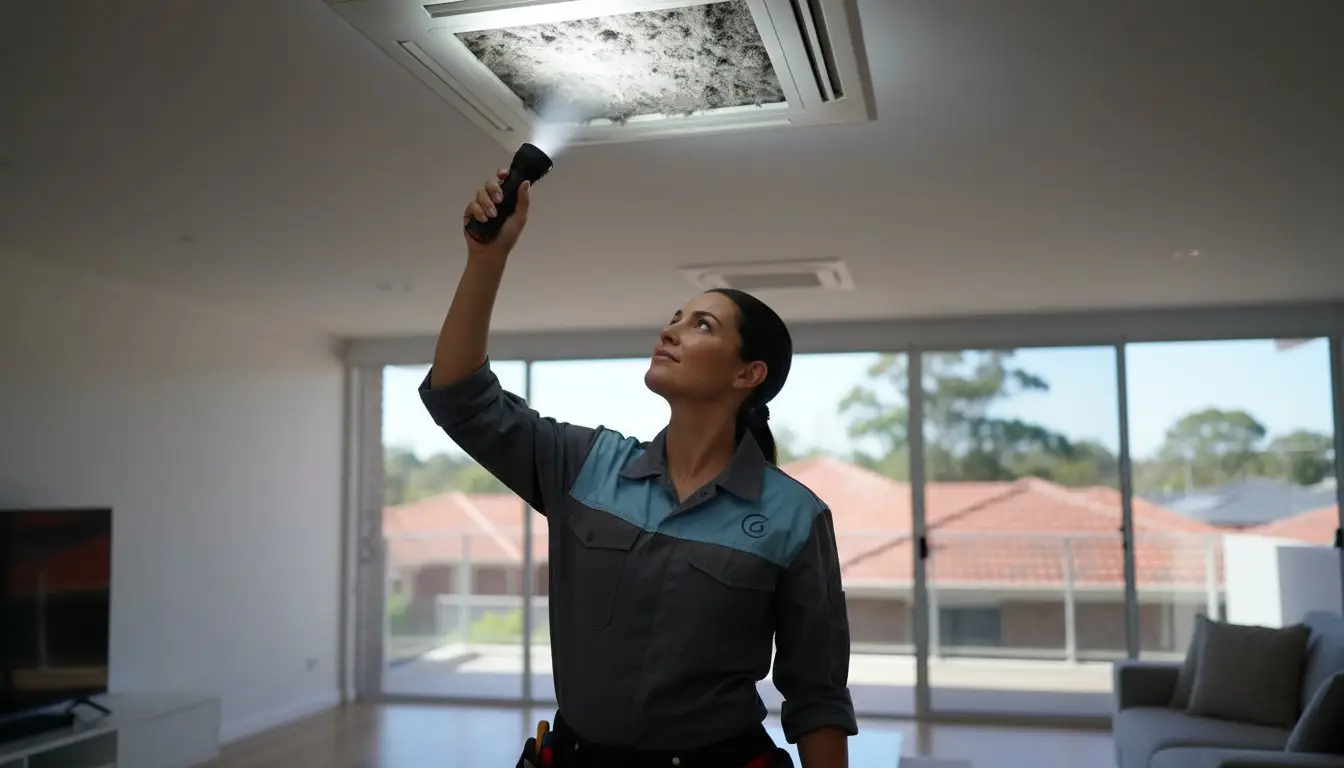
You should be wary of any company offering a firm quote over the phone for a multi-level property. Two-storey homes have too many variables, such as roof pitch, internal support beams, and the location of existing plumbing. During a professional site inspection, our team at PenAir looks for hidden vertical voids and assesses your electrical board’s capacity. We also identify the best placement for outdoor units to ensure they are protected from the elements and don’t disturb your neighbors. This consultative process is the only way to guarantee a system that performs as promised. If you’re ready to find the perfect fit for your home, Contact Peninsula Air Conditioning for a custom two-storey AC design and let our local specialists guide you through the process.
We’ve explored how the right climate solution depends on your property’s unique layout and your family’s specific lifestyle needs. Whether you prioritize the seamless look of a central system or the targeted flexibility of individual units, the key is a design that accounts for Sydney’s vertical airflow challenges. We understand that the choice of ducted vs multi-split for two-storey house installations can feel complex; however, it’s really about matching modern technology to your home’s structural reality.
As a family-owned Sydney business serving our community since 1999, we take pride in being a Daikin Specialist Dealer. Our team of fully licensed and insured HVAC experts is here to ensure your investment provides lasting peace of mind. We’re ready to help you navigate the technical details, from identifying linen cupboard voids to designing custom bulkheads that preserve your home’s aesthetic.
Don’t leave your comfort to chance with an over-the-phone estimate that might miss critical structural details. Request a Free Site Audit for Your Two-Storey Home today and let us help you create the consistent, efficient environment your family deserves. We look forward to looking after your household well-being.
Yes, you can install ducted air conditioning in an existing two-storey home by utilizing internal voids, cupboards, or bulkheads. While new builds are simpler, our team specializes in identifying “chases” within your structure to hide the necessary ductwork. A professional site audit is the best way to confirm the feasibility of a ducted vs multi-split for two-storey house installation for your specific property layout.
Efficiency depends entirely on how you use your home. Multi-split systems are highly efficient for cooling individual rooms because they eliminate duct-related energy loss. However, a modern ducted system with advanced zoning can be more efficient for whole-home cooling by managing the temperature delta between floors. We recommend looking at the Energy Rating Labels to compare the performance of specific models.
A ducted system typically adds more to the resale value of a Sydney home than wall-mounted units. Potential buyers often view ducted cooling as a premium, “invisible” feature that preserves the architectural integrity of the house. In competitive Sydney real estate markets, a seamless climate control solution is a significant selling point that suggests a high standard of home maintenance and long-term comfort.
The total investment for a two-storey installation varies based on several structural and technical factors. Your final quote will depend on the number of indoor units or zones required, the complexity of navigating between floors, and the specific brand you choose. We focus on providing a solution that balances your initial budget with long-term energy savings and property value without compromising on quality.
You can cool the upstairs independently by using a zoned ducted system or individual multi-split heads. For ducted systems, we set up “Day vs Night” zones that allow you to shut off airflow to the ground floor living areas while you sleep. Multi-split systems offer this naturally, as each indoor unit operates on its own thermostat and can be turned off when it’s not needed.
We recommend Daikin as a top choice for coastal Sydney homes due to their specialized engineering. Daikin units often include high-grade anti-corrosion coatings on the outdoor heat exchangers, which is vital for homes near the Northern Beaches or the harbour. This protection helps your system withstand the harsh salt air and high humidity that define our local climate.
Most two-storey air conditioning installations are completed within one to three days. A standard multi-split setup might only take a single day, while a complex ducted retrofit involving bulkheads or vertical chases often requires a bit more time. We always provide a clear timeline after our site audit so you can plan your week with total peace of mind.
Many whole-home systems require a dedicated electrical circuit and an upgrade to your switchboard. To comply with Australian Standard AS/NZS 3000, your installation must have RCD protection and sufficient power capacity to handle the startup load of a large compressor. We’ll check your existing board during our inspection to ensure your home’s wiring is safe and ready for the new system.