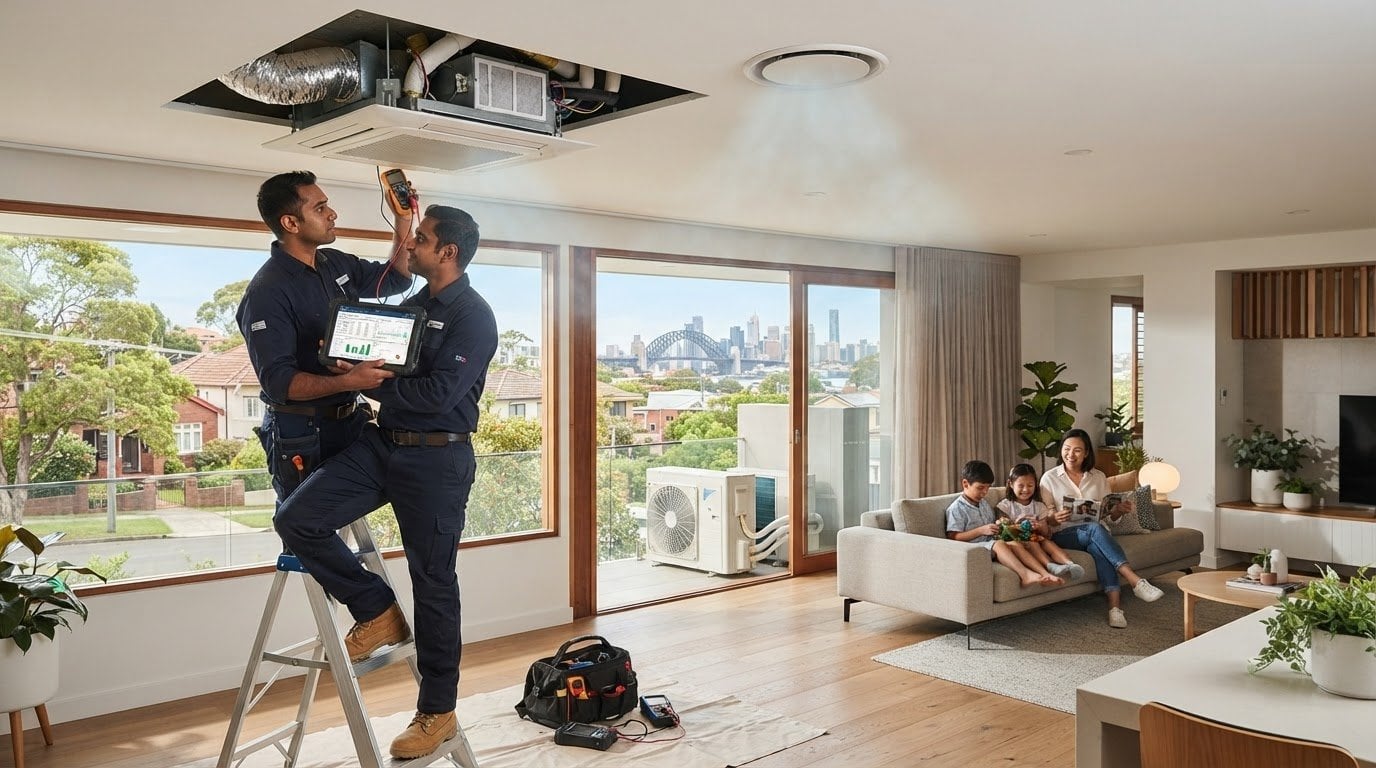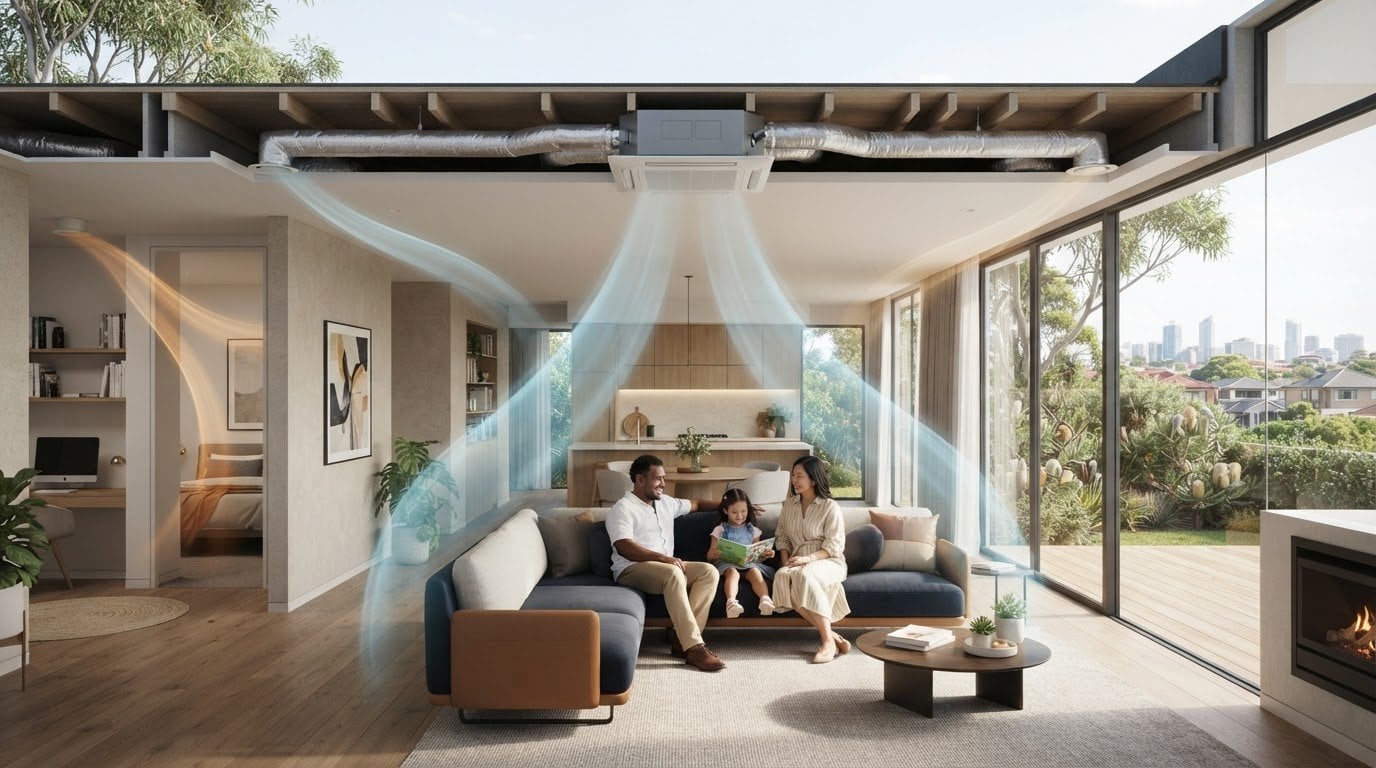

The cheapest quote for a split system installation often ends up being the most expensive investment you make for your home. It sounds backward, but ignoring factors like salt-air corrosion in coastal suburbs or poor unit placement can lead to a 30% spike in your quarterly energy bills. We know it’s frustrating to compare “basic” quotes when you’re worried about hidden fees or whether a 2.5 kW unit is actually enough for your living space.
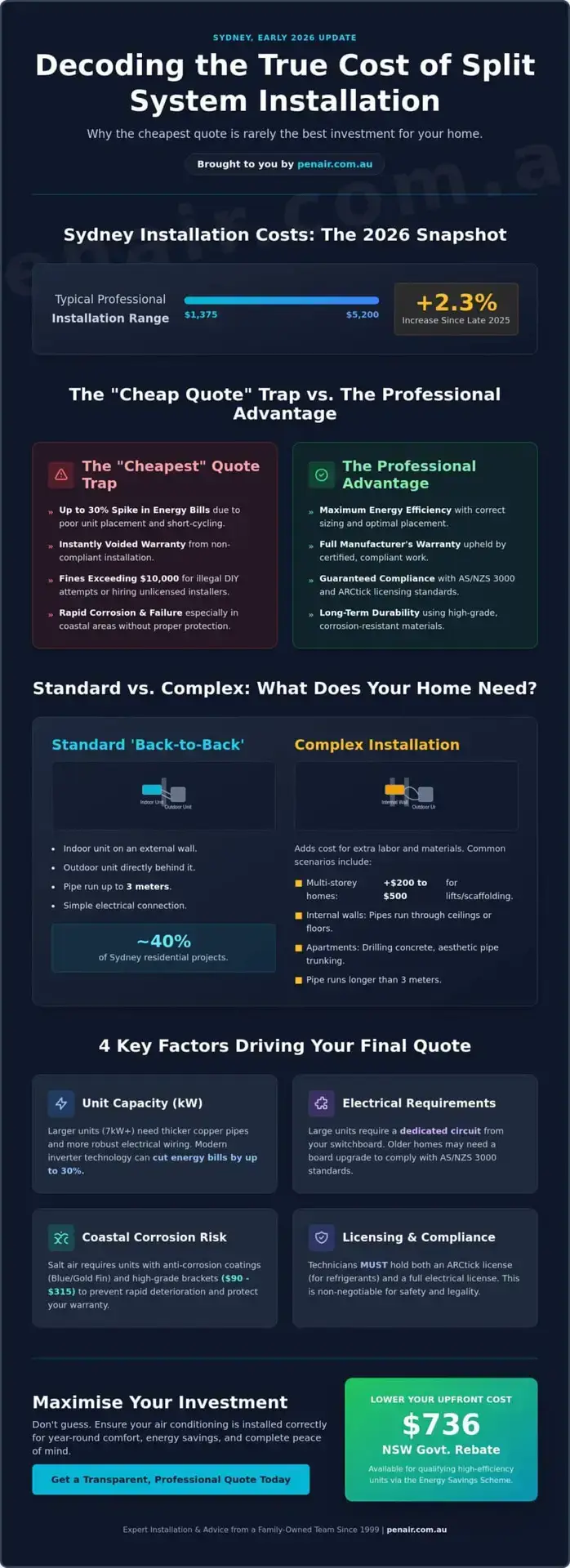
As a family-owned team, we believe in total transparency and helping our neighbors make informed choices. In early 2026, professional installation costs in Sydney range from $1,375 to $5,200, reflecting a 2.3% increase since late 2025. We’ll show you how to manage these variables, from securing your $736 NSW government rebate to avoiding the $10,000 fines linked to illegal DIY attempts. This guide breaks down the July 2025 refrigerant regulations and explains how the right placement ensures your system meets Australian standards while keeping your family comfortable all year round.
Many Sydney residents are surprised when an initial quote for a split system installation doubles after a site visit. This usually happens because the “standard” prices advertised by big-box retailers assume a very specific, simple scenario that doesn’t account for the reality of Sydney’s diverse architecture. Whether you live in a heritage terrace in Paddington or a modern apartment in Parramatta, your home has unique requirements that a generic one-size-fits-all package won’t cover. We’ve seen a 2.3% increase in labor and material costs in early 2026, making it more important than ever to understand exactly what you’re paying for before the technicians arrive.
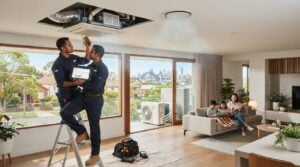
Legally, any technician working on your unit must hold an ARCtick license and a valid electrical license. This ensures they can safely handle refrigerants and high-voltage wiring, which are core components of how split system air conditioners work. Our family-owned team has been navigating these standards since 1999, ensuring every install is compliant with Australian Standard AS/NZS 3000. Skipping professional certification isn’t just a safety risk; it can lead to fines exceeding $10,000 and will instantly void your manufacturer’s warranty.
A back-to-back setup is the industry baseline for pricing because it’s the most straightforward method. In this scenario, we mount the indoor unit on an external wall, with the outdoor compressor sitting directly on the ground or a bracket on the opposite side of that same wall. This setup typically includes a pipe run of up to 3 meters and basic electrical connection to a nearby circuit. It’s the most affordable way to manage a split system installation, yet it’s only the reality for about 40% of Sydney residential projects due to our city’s varied building styles.
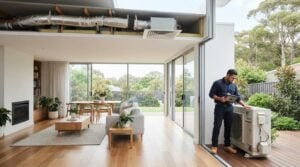
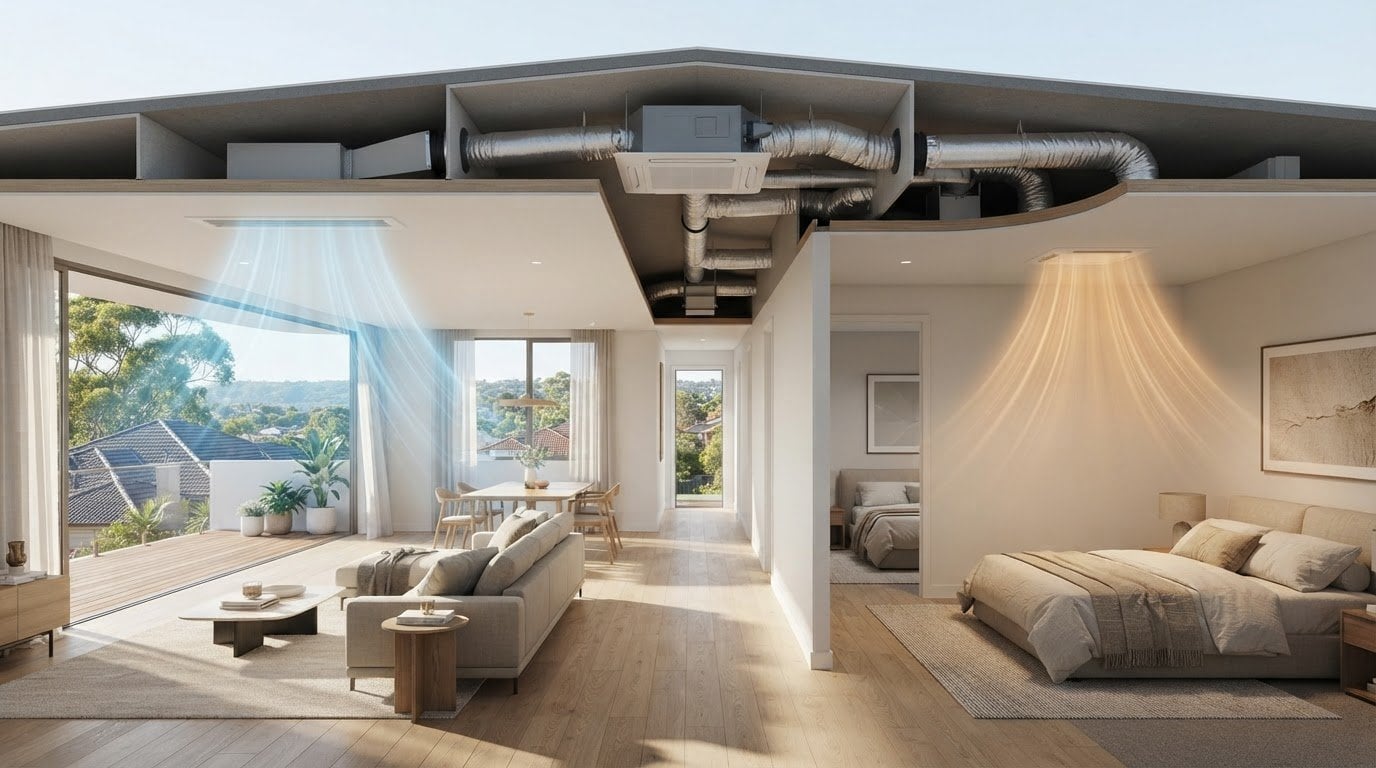
Complexity increases whenever we move away from that simple “wall-to-wall” layout. If you’re in a multi-storey home, we often need scaffolding or specialized lifting equipment to safely position the outdoor unit, which can add a surcharge of $200 to $500. Internal wall mounts are also common in modern open-plan layouts. These require running pipes through ceiling cavities or under floorboards, adding to the labor time and material costs. Apartment living brings its own challenges, such as drilling through reinforced concrete or installing aesthetic trunking to hide pipes. These aren’t hidden costs; they’re the necessary steps to ensure your system runs efficiently and looks great in your home.
A transparent quote for your split system installation requires a deep look at what’s behind your walls and the specific environment surrounding your home. While the base labor for a standard job sits between $600 and $1,000, Sydney’s 2026 market has seen a 2.3% increase in overall costs due to trade shortages and material price hikes. We’ve found that the most accurate quotes aren’t based on floor plans alone but on the physical variables that dictate how hard your system has to work to keep you comfortable.
The size of your unit, measured in kilowatts (kW), directly dictates the thickness of the copper piping and the electrical load on your home. Smaller 2.5 kW units can often be integrated into existing circuits, but larger 7 kW or 9 kW models almost always require a dedicated circuit back to your switchboard. Under the AS/NZS 3000 electrical standards, our licensed electricians must ensure your board can handle this new demand. If your Sydney home hasn’t had an electrical update in the last 15 years, you might need a switchboard upgrade to remain compliant. Investing in modern inverter technology during this process can reduce your quarterly energy bills by up to 30%, making the initial electrical work a smart long-term move. If you’re unsure about your home’s current capacity, we recommend a professional site assessment to avoid surprises on installation day.
Living in the Northern Beaches or eastern suburbs brings the challenge of salt-air corrosion. Standard outdoor units can deteriorate rapidly in these conditions, leading to gas leaks and component failure. We prioritize units with specialized anti-corrosion coatings, often referred to as Blue Fin or Gold Fin technology. These protective layers are a non-negotiable for coastal durability. Additionally, the hardware matters just as much as the machine. We use high-grade wall brackets, which in 2026 range from $90 to $315, to ensure your outdoor unit stays secure and rust-free despite the humid, salty environment. Strategic placement under eaves or behind screens can further minimize salt spray exposure, extending the life of your investment by years.
Physical accessibility also plays a significant role in your final quote. If we’re working on a double-storey home, a surcharge of $200 to $500 is common to cover the safety equipment and additional labor required for height work. Similarly, if the distance between your indoor and outdoor units exceeds the standard 3 meters, expect to pay between $30 and $50 per extra meter for piping and cabling. We believe in being upfront about these variables so you can take full advantage of the $736 NSW Energy Savings Scheme rebate without any hidden costs eating into your savings.
Choosing where to buy your unit is only half the battle. Many Sydney homeowners opt for retail installation packages because they seem convenient at the checkout. However, there’s a significant difference between a general sub-contracted electrician and a dedicated HVAC team. While an electrician is qualified to handle the power supply, they may lack the specialized diagnostic tools and deep thermodynamic knowledge required for a high-performance split system installation. We’ve seen many cases where a generalist treats the unit like any other home appliance, ignoring the complex calibration needed for long-term efficiency.
Precision commissioning is where specialists truly stand out. This process involves far more than just turning the machine on. We ensure the refrigerant levels are perfectly balanced for Sydney’s specific humidity levels, which is vital since the July 1, 2025, ban on high-GWP HFC refrigerants for small multi-head systems. If the gas charge is even slightly off, your unit will work harder, consume more power, and likely fail years before its expected lifespan. Our family-owned team takes the time to pressure test and vacuum the lines correctly, ensuring your home comfort is in safe, capable hands.
A “budget” install often cuts corners on the details you won’t notice until it’s too late. Poorly designed drainage is a common issue; if the condensate pipe isn’t pitched correctly, water backs up into your wall cavity. This leads to hidden mould growth and expensive structural repairs that aren’t covered by standard warranties. Additionally, incorrect refrigerant charging is a leading cause of premature compressor failure. To ensure you aren’t falling for these traps, we’ve put together a checklist for finding aircon installers near me that covers the essential red flags to watch out for before you sign a contract.
When you work with a specialist dealer, you’re getting a system designed for your specific home, not just a box that fits the room dimensions. We perform detailed heat-load calculations that account for window orientations and insulation types. This ensures your split system installation is sized perfectly to avoid “short-cycling,” which wastes electricity. As a family-owned business, we prioritize reliability by using premium hardware and specialized diagnostic tools. Our team has specific training in Daikin systems, ensuring every install meets the strict criteria required for a successful warranty claim. For a deeper look at why we recommend certain brands for our local climate, check out our Daikin air conditioning Sydney guide.
Professional support doesn’t end when we pack up our tools. If a retail contractor finishes a job and moves on, finding them again for a warranty issue can be a nightmare. We’ve been part of the community since 1999, which means we’re here to look after your family’s comfort for the life of the system. We don’t just fix machines; we build relationships based on quality service you can trust.
We believe that a professional split system installation is about more than just mounting a unit on a wall. It’s about providing a seamless experience that respects your time and your home. Since 1999, our family-owned business has focused on building trust with our Sydney neighbors through absolute transparency. We know that the 2.3% increase in industry costs seen in early 2026 makes every dollar count. That’s why we provide fixed, detailed quotes that eliminate the “surprises” often found in basic retail packages. When our team arrives, they bring a commitment to craftsmanship and a level of care that only a local, family-run team can offer.
Every successful project begins with a technical audit. We don’t rely on guesswork or simple floor area measurements. Our technicians assess the total room volume, the orientation of your windows, and the specific insulation levels of your walls and ceiling. These factors are critical because a north-facing window in a Sydney summer can significantly increase the heat load on your unit. During this audit, we also identify the most efficient “line of run” for your piping and drainage. We’ll discuss aesthetic preferences for your indoor unit placement, ensuring it provides maximum airflow without disrupting your room’s interior design.
Commissioning is the technical heart of the split system installation. This stage is where our ARCtick licensed expertise ensures your system’s longevity. We perform rigorous pressure testing on the copper lines to guarantee the refrigerant circuit is 100% leak-free. After testing, we use specialized pumps to vacuum the system, removing any trace of moisture or air that could cause internal corrosion. Once the system is charged, we conduct a final performance check. We measure airflow speeds and temperature differentials to confirm the unit meets the high-efficiency standards promised by brands like Daikin. This precision helps you achieve that 30% reduction in energy costs compared to older, poorly commissioned models.
Our job isn’t finished until your home is as clean as we found it. We use drop sheets to protect your flooring and perform a thorough cleanup of the workspace. Before we leave, we’ll provide a personalized briefing on your new system. We’ll show you how to navigate the thermostat settings and use the energy-saving modes effectively. We want you to feel confident that your home comfort is in safe, capable hands for years to come. Ready to upgrade your home comfort with a team that cares? Contact us for a transparent, fixed-price quote today.
The final step in securing a high-performance split system installation is ensuring the unit is positioned to work with your home, not against it. Even the most expensive, high-efficiency model will struggle if the thermostat is constantly tricked by a draft or direct sunlight. We’ve seen how poor placement can negate the 30% energy savings promised by modern Zoned Energy Rating Labels. As a family-owned business, we take the time to ensure your investment is optimised for the long haul, protecting your comfort and your wallet from rising electricity costs in 2026.
Strategic placement involves more than just finding a clear spot on the wall. We look for locations that avoid direct sunlight hitting the unit’s internal sensors, which can cause the system to overwork and spike your energy bills. Unobstructed airflow is equally vital for both the indoor head and the outdoor compressor. If the outdoor unit is tucked into a tight corner without 200mm to 300mm of clearance, it can’t dissipate heat effectively. This leads to “short-cycling,” where the system turns on and off rapidly, wearing out the compressor years before its time. To see how different models handle these placement challenges, you can compare options in our split system air conditioner Sydney guide.
Thermostat positioning is another area where specialist HVAC dealers provide more value than a general electrician. We ensure the sensor isn’t placed near kitchens, lamps, or electronics that generate “false heat.” By getting the placement right during the initial split system installation, we create a “set and forget” environment where your home stays at a consistent temperature without the unit constantly hunting for the correct setting. This precision is what separates a standard job from a professional climate control solution.
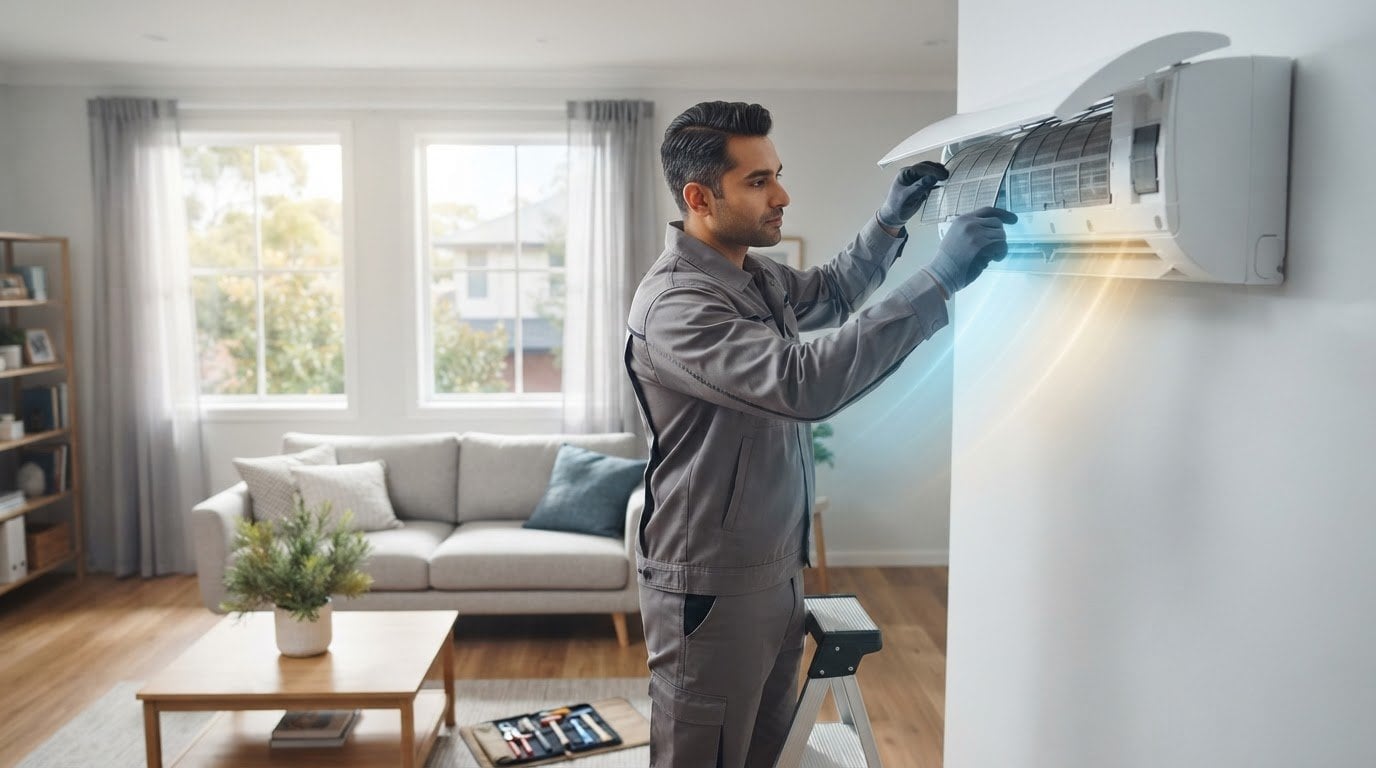
A professional installation is the foundation, but regular maintenance is the insurance policy. For brands like Daikin, the first 12-month service is a critical requirement to keep your manufacturer’s warranty valid. This service isn’t just about cleaning filters; it involves checking refrigerant pressures, inspecting electrical connections, and ensuring the condensate drains are clear of debris. In Sydney’s humid climate, neglected drains can quickly become breeding grounds for mould, impacting your family’s indoor air quality. You can find a full breakdown of what we look for in our complete maintenance guide.
We’ve been looking after Sydney families since 1999, and we know that peace of mind comes from knowing your home’s climate is in safe, capable hands. We don’t just install a box and disappear; we provide the local support and expertise needed to keep your system running at peak efficiency for a decade or more. If you’re ready for a transparent, professional experience from a team that treats your home like their own, contact PenAir today for a professional split system installation quote.
Investing in a high-quality cooling setup is about more than the initial price tag. You now understand how professional placement prevents short-cycling and why specialist commissioning is the only way to protect your home’s long-term energy efficiency. By choosing a team that prioritizes craftsmanship over the fastest possible turnaround, you avoid the hidden structural risks and high electricity costs that often follow a basic retail install.
Our family-owned and operated team has been serving the Sydney community since 1999. As an Authorised Daikin Specialist Dealer, we provide the technical accountability your home deserves. Our fully licensed and insured Sydney technicians ensure your split system installation meets every Australian safety standard, giving you a reliable solution you can trust for years to come.
Ready to enjoy a perfectly balanced home climate? Request a Professional Installation Quote from PenAir today. We’re here to make sure your home stays comfortable, no matter what the Sydney weather brings.
A standard back-to-back split system installation typically takes between 3 and 5 hours to complete. This timeframe allows our licensed technicians to securely mount both units, connect the refrigerant lines, and perform the essential commissioning tests. If your home has complex access or requires long pipe runs through a ceiling cavity, the process may take a full day to ensure every connection meets our strict quality standards.
Most residential installations on the Northern Beaches don’t require a formal council permit as they fall under “exempt development” rules. However, you must still comply with state noise regulations to ensure the outdoor unit doesn’t disturb your neighbors. If you live in a heritage-listed home or a strata-managed apartment, you’ll likely need written approval from your owners’ corporation or local council before we can begin the work.
You can purchase your own unit and hire us for the installation, but there are significant benefits to a dealer-supplied package. When we provide a Daikin system, we take full responsibility for the warranty and any future service needs. If you buy a unit from a retailer and a fault occurs, you may have to manage the claim yourself, which often leads to frustrating delays and extra service call-out fees.
Online “from” prices usually only cover the simplest back-to-back scenario with less than 3 meters of piping. Your specific quote might be higher due to site-specific factors like extra pipe runs ($30 to $50 per meter), the need for wall brackets ($90 to $315), or a double-storey surcharge ($200 to $500). We provide a transparent breakdown of these costs upfront so you aren’t hit with unexpected charges on the day of the job.
Yes, having a professional split system installation performed by an ARCtick licensed technician is a legal requirement to keep your Daikin warranty valid. Manufacturers will reject claims if the system wasn’t installed and commissioned according to Australian standards. We provide an Electrical Compliance Certificate and a refrigerant handling record with every job, ensuring your 5-year warranty is fully protected from day one.
Most modern systems, particularly those over 7 kW, require a dedicated electrical circuit run directly from your main switchboard. This work must comply with the AS/NZS 3000 wiring rules to ensure your home’s electrical system isn’t overloaded. If your Sydney home has an older switchboard, we may need to install a new safety switch or upgrade your circuit breakers to safely accommodate the new cooling load.
Determining the correct size requires a heat-load calculation that considers your room’s volume, window orientation, and insulation quality. A small 2.5 kW unit is usually sufficient for a 20sqm bedroom, but a 60sqm open-plan living area with large west-facing windows might require a 7.1 kW or 8 kW model. We’ll help you choose the right capacity to ensure your system runs efficiently without wasting electricity through short-cycling.