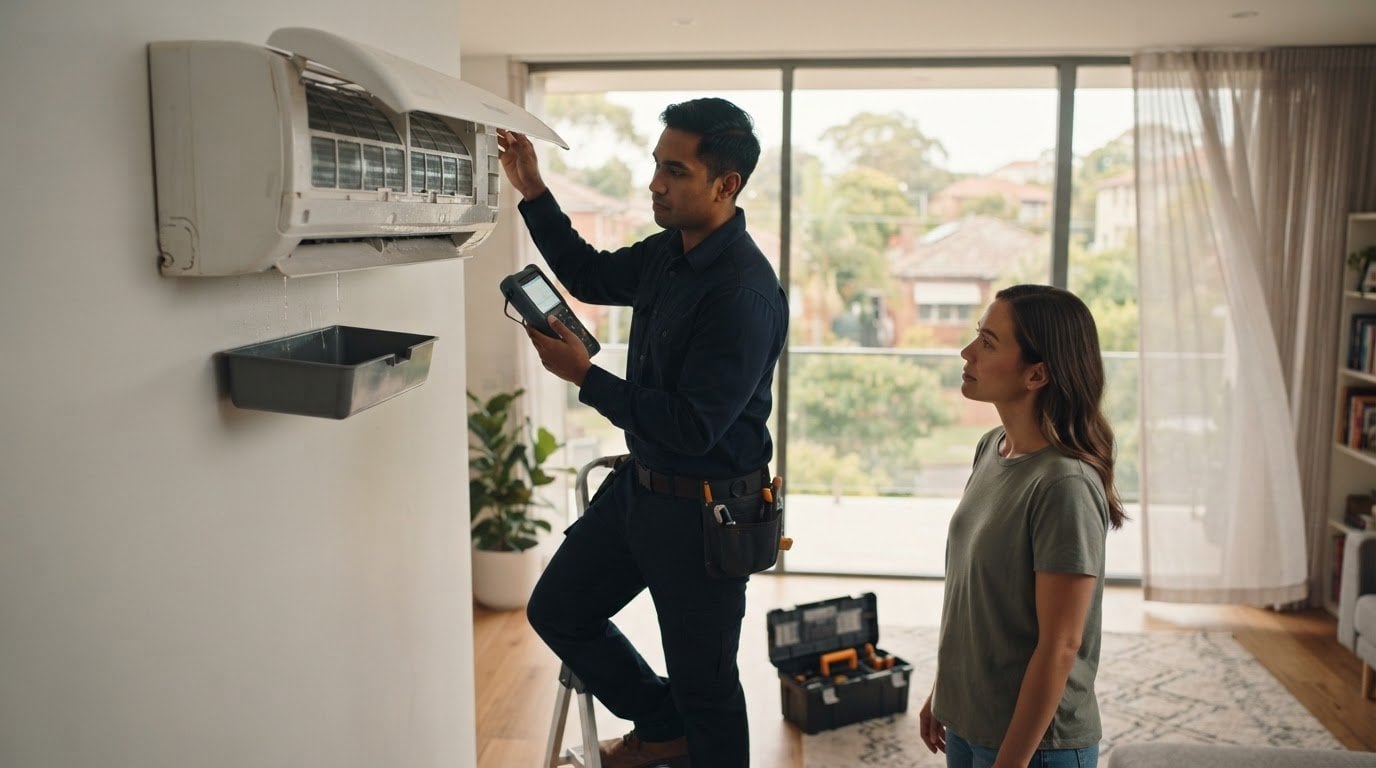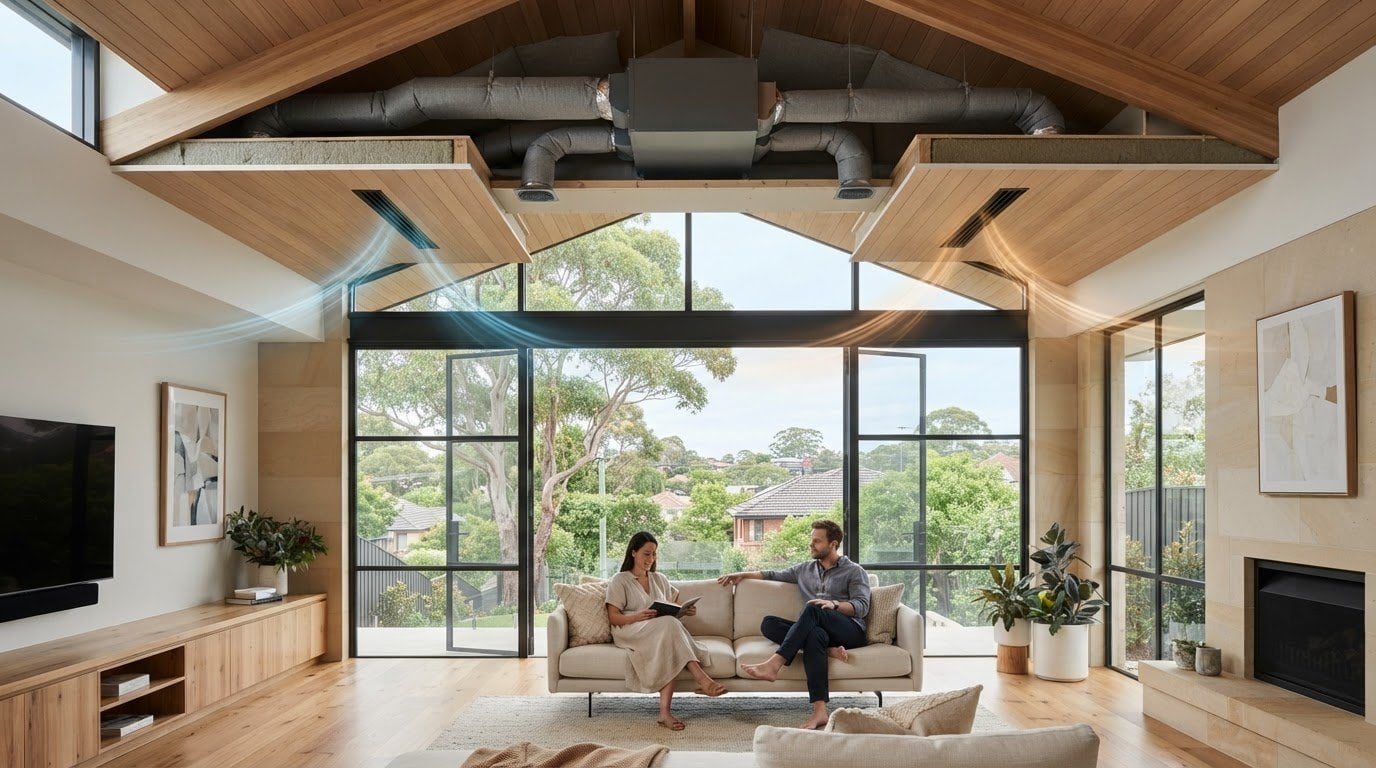

A struggling air conditioner doesn’t automatically mean it’s time for a new one. If your Sydney home feels warm and sticky while the system is running, it’s natural to wonder whether the fault is urgent, safe to check or a job for a technician. Knowing what to look for before arranging ac repair can help you take sensible first steps without guessing at the cause.
Weak airflow, warm air, unusual noises, water leaks or a system that keeps switching off can all point to a fault. You can safely check the thermostat settings, inspect or clean the filter if the manual allows, and make sure vents and the outdoor unit aren’t blocked. Leave electrical components and refrigerant alone. Switch the system off if you notice a burning smell or another immediate hazard.
This guide covers common AC problems, safe checks and what professional diagnosis involves. PenAir’s family-owned team repairs residential and commercial split, multi-split and ducted systems across Sydney. We’ll explain how a technician can investigate a fault and outline repair options, so you can make an informed decision before assuming replacement is the only answer.
AC repair means identifying and correcting a fault in an air conditioning system. It’s different from cleaning filters or carrying out planned maintenance: a technician investigates why the system isn’t operating as it should, then determines what repair, if any, is needed. Weak airflow, unfamiliar noises, warm air and repeated shutdowns are useful clues, but no single symptom confirms a particular fault.
Air conditioners move heat rather than create cool air, and the process involves several connected components. A basic overview of how air conditioning works can help explain why one symptom may have several possible causes. Settings, airflow and system components can all affect comfort, so it’s worth noting what you observe without trying to diagnose the equipment yourself.
Weak airflow may relate to a dirty filter, a blocked outlet or an issue elsewhere in the system. If one room feels warm while another is comfortable, the airflow or system performance may be uneven. Warm air can also result from incorrect settings, so check the selected mode and temperature before assuming a component has failed.
Water around an indoor unit may point to a drainage or condensation issue. Rattling, buzzing or grinding sounds can come from different parts of the system, while a unit that repeatedly starts and stops can also have several possible explanations. These are observations, not a diagnosis. Don’t open the system to investigate.
Arrange a professional assessment if a symptom persists, returns or stops your air conditioner from maintaining a comfortable temperature. During Sydney’s hot, humid weather, unreliable cooling can quickly make rooms uncomfortable. An assessment can help clarify what’s happening without jumping to conclusions about the cause or the need for replacement.
Switch the system off if you notice smoke, a burning smell or another electrical concern. Don’t keep restarting it to see whether the problem clears. If there’s no immediate safety warning but the unit is noisy, leaking or cooling poorly, avoid repeatedly running it and arrange an assessment.
Don’t remove covers, work on wiring or attempt refrigerant repairs. These aren’t safe homeowner checks. A professional can inspect the equipment and establish whether the cause is a minor issue or a fault that needs repair. Note when the symptom occurs and whether it affects one room or several, as those details can help guide the assessment.
A reliable diagnosis is a step-by-step process, not a guess based on one noise or temperature change. The technician considers what you’ve noticed, inspects the equipment and checks relevant parts of the system. This helps distinguish a component fault from an airflow, control or maintenance issue before repair work is recommended.
Symptoms guide an inspection, but they don’t prove a specific fault. A warm room, for example, could relate to settings, restricted airflow or a system component. The checks depend on the air conditioner type, the problem you report and what the technician finds during the visit.
Be ready to describe when the problem began, whether it happens constantly or comes and goes, and if performance changes as the system runs. This context gives the technician a useful starting point. A diagnostic visit may involve steps such as these:
Split, multi-split and ducted air conditioners have different layouts, so an inspection is tailored to the equipment and fault. The sequence above is a guide. Not every visit involves identical checks or outcomes.
Replacing or adjusting a part without checking the underlying cause may leave the original problem unresolved. For example, poor airflow might relate to an accessible filter or an issue elsewhere in the system. An assessment helps distinguish these possibilities and directs attention to the cause, rather than treating only the symptom. That’s a more considered starting point for ac repair.
Before work proceeds, the technician should explain what they’ve found and the proposed repair in clear terms. PenAir’s team diagnoses faults across residential and commercial split, multi-split and ducted systems, tailoring checks to the equipment and symptoms. If your air conditioner isn’t performing reliably, contact PenAir about an assessment.
The right next step depends on whether your air conditioner has developed a fault, needs planned upkeep or may no longer suit your home. These options can overlap, but they aren’t interchangeable. An assessment helps clarify what the system needs before you decide how to proceed.
| Option | When it may apply | What it involves |
|---|---|---|
| Repair | The system has an active or recurring fault, such as failing to cool, shutting down or behaving differently from usual. | Diagnosing the fault and correcting the identified issue. |
| Routine servicing | The system is operating but is due for planned inspection and upkeep. | Checking and maintaining the system to support its ongoing operation. Servicing isn’t a guaranteed fix for an existing fault. |
| Replacement assessment | The system’s overall condition, recurring problems or performance raise questions about whether it remains suitable. | Reviewing the unit and your property’s needs to weigh up repair and replacement options. |
If the unit stops cooling, repeatedly switches off, makes an unfamiliar noise or leaks water, an AC repair assessment is relevant because something may be malfunctioning. A technician can investigate the cause before recommending work. Servicing, by contrast, is planned maintenance for an operating system, not a substitute for diagnosing an active fault. Read more about air conditioning servicing if you’re looking for upkeep information.
Replacement may be worth discussing if an assessment finds significant wear, persistent faults or performance that no longer meets your household’s needs. The technician can consider the system’s condition, how well it cools the space and whether the setup remains suitable for the property. One symptom alone doesn’t mean the unit needs replacing.
Ask for a clear explanation of the findings and options. Depending on the diagnosis, repair may be practical. In other cases, comparing repair work with replacement may help you make an informed decision. A recommendation should follow an assessment of the system, not an assumption based only on its age or one problem.
Talk with PenAir about your AC issue if you’d like to discuss the next step.
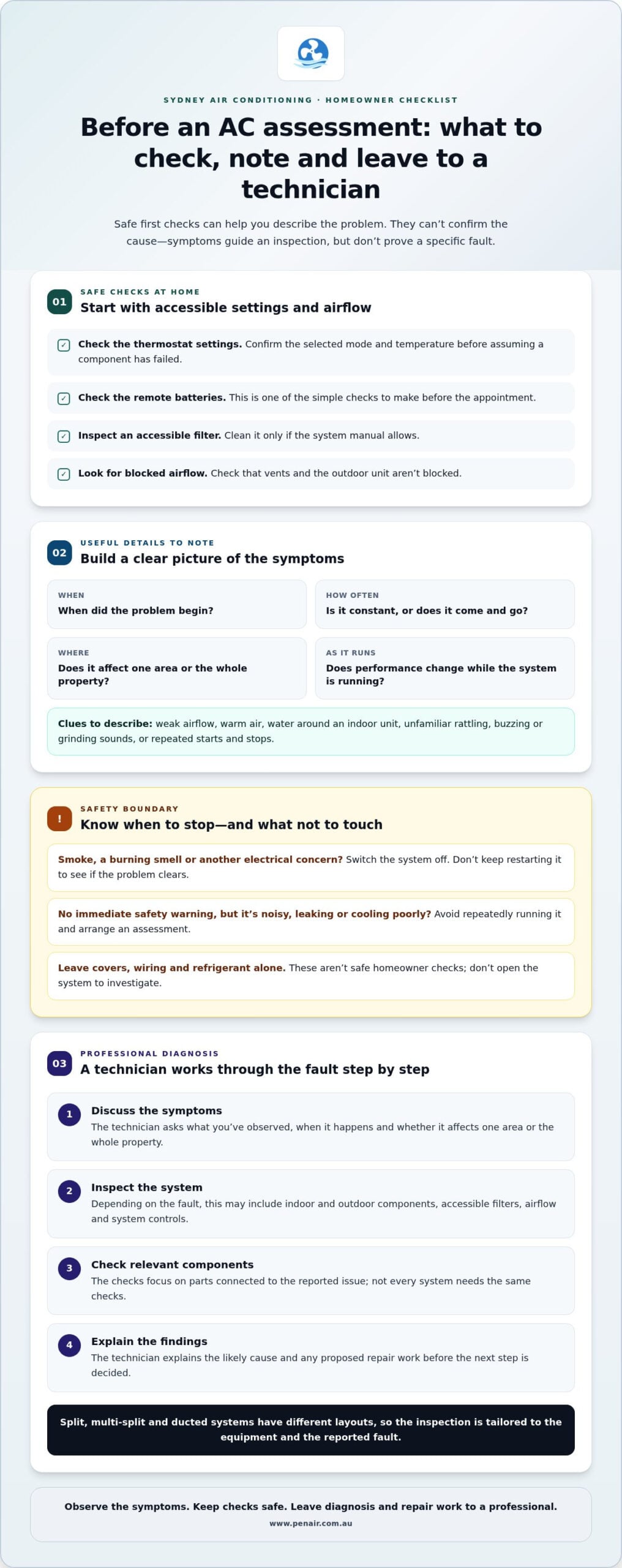
A few simple checks can help you describe the problem clearly before arranging ac repair. Stick to the controls and parts intended for user access. You don’t need to diagnose the fault yourself. Your observations give the technician a useful starting point and can help focus the investigation.
If you see damage, smell burning or notice another electrical concern, switch the system off and leave it alone. Don’t remove covers, touch wiring, attempt refrigerant repairs or reset or bypass a safety device to make the unit run. These checks and repairs belong with a qualified technician.
Make a short note of what the system is doing and when it happens. Does the issue begin as soon as you turn the unit on, appear after it has been running for a while, or come and go? Note whether it affects one room or the whole property, and whether you’ve seen water, heard a new sound or noticed an error code.
If it’s easy to see, record the system’s make and model, along with any code displayed on the controller. Don’t dismantle the unit to find a label or investigate a fault. Mention whether you have a wall-mounted split system, a multi-split setup or ducted air conditioning. This gives the technician useful context about the equipment.
Clear access can also make an assessment more straightforward. Move loose items away from the indoor unit and, where it’s safe to do so, the outdoor unit. Don’t climb, shift heavy objects or enter an unsafe area to reach equipment. PenAir serves Sydney, including the Northern Beaches, North Shore, Inner West and Eastern Suburbs.
With these details ready, you can give the technician a clearer picture of the issue. Contact PenAir to discuss your air conditioning repair.
A faulty air conditioner can make a Sydney home or workplace uncomfortable, especially during hot, humid weather. PenAir is a family-owned and operated Sydney business that has been helping customers since 1999. Our team repairs residential and commercial split, multi-split and ducted systems, with experience across different system types and property needs.
Good repair work starts with understanding the problem. Rather than relying on a symptom alone, a technician listens to what you’ve noticed, assesses the system and explains the findings. That gives you a clearer picture of the fault and the proposed next step, whether the system is at home or in a commercial space.
Tell us what the system is doing, when the issue occurs and whether it affects one area or the whole property. Our fully licensed and insured team uses those details to guide an assessment of the equipment and its operation. After investigating the cause, we explain the findings and relevant repair work so you can make an informed decision.
PenAir is also an authorised Daikin Specialist Dealer, with specific expertise in Daikin systems. We repair a range of air conditioning systems, not only Daikin equipment. If your system is operating normally and you’re looking for planned upkeep instead, see our air conditioning servicing information.
We support homes and businesses across the Northern Beaches, North Shore, Inner West and Eastern Suburbs. Whether your property has a wall-mounted split system, several indoor units connected to a multi-split system or ducted air conditioning, sharing the system type helps us understand your enquiry.
When you get in touch, include your suburb, the type of system and a brief description of the symptoms. You can also mention when the issue started, whether it comes and goes, and any error code visible on the controller. These details give the conversation a useful starting point. You don’t need to diagnose the fault yourself.
For professional ac repair in Sydney, contact PenAir about AC repair. Tell us what’s happening with your system, and our team can help with the next step.
Weak airflow, unusual sounds or inconsistent cooling can point to a fault, but symptoms alone don’t reveal the cause. Check only simple, user-accessible items, note what the system is doing and leave electrical or refrigerant work to a technician. A proper diagnosis helps clarify whether the next step is repair, routine servicing or a discussion about replacement.
PenAir is family-owned and operated in Sydney, serving customers since 1999. Our fully licensed and insured team repairs residential and commercial split, multi-split and ducted systems across the Northern Beaches, North Shore, Inner West and Eastern Suburbs. As an authorised Daikin Specialist Dealer, we also bring specific expertise to Daikin systems.
If your air conditioner isn’t keeping your home or workplace comfortable, take the next step towards a clear assessment. Contact PenAir about AC repair and tell us what you’ve noticed.
It depends on what you’ve noticed. If there’s smoke, a burning smell, unusual electrical sounds or visible damage, switch the unit off and arrange professional advice. For less serious performance problems, avoid repeatedly running the system if it’s behaving unusually. Don’t remove covers or attempt electrical or refrigerant work yourself. A technician can assess the fault and explain what to do next.
You can check simple user-level items, including the thermostat settings, remote batteries and accessible filters, following the manufacturer’s instructions. These checks may reveal an easy issue, but they can’t confirm why the system is faulty. Don’t open the unit, handle wiring or attempt refrigerant repairs. If it remains unreliable after the basic checks, arrange an assessment so a technician can investigate and explain the findings.
A system that has stopped working properly, makes unusual noises or cools inconsistently may need a repair assessment. Routine servicing is planned inspection and upkeep, and it doesn’t necessarily resolve a fault that’s already affecting performance. As symptoms can have different causes, an assessment can help clarify whether repair, maintenance or further evaluation is appropriate. Note what the system is doing and when the issue occurs.
A technician will usually ask about the symptoms, inspect relevant parts of the system and investigate possible causes. The checks depend on the air conditioner type and the fault, so each appointment may differ. Once the findings are clear, the technician can explain the repair options and next steps. Before the visit, note when the problem began, what you’ve observed and any error code displayed.
It may be repairable, but warm air alone doesn’t identify the cause. The settings, airflow, controls or a system component could be involved. Check the selected mode and accessible filter, then note whether the issue affects every room or comes and goes. A technician can investigate the system rather than relying on guesswork, then explain whether a repair is appropriate based on the diagnosis.
Yes. PenAir repairs residential and commercial split, multi-split and ducted air conditioning systems across Sydney, including the Northern Beaches, North Shore, Inner West and Eastern Suburbs. Its fully licensed and insured team can assess the reported problem and explain relevant next steps. When making an enquiry, share your suburb, system type and the symptoms you’ve noticed to give the team useful context.