
Can you really achieve whole-home comfort in a heritage-listed terrace without turning your backyard into a noisy mechanical yard or losing your original ceilings? Most Sydney homeowners know the struggle of living in these beautiful, narrow houses where space is a luxury and the walls are often paper-thin. You want to stay cool during a sweltering January, but heritage rules and strict noise regulations can make it feel like you’re solving an impossible puzzle. Finding the best air conditioning for a terrace house Sydney involves more than just picking a powerful unit; it’s about balancing high-performance cooling with local compliance and aesthetic subtlety.
We understand that your home is a significant investment, and you shouldn’t have to choose between modern comfort and historical charm. We’ll show you how to navigate the 2026 regulations and space constraints to find a cooling solution that stays hidden and whisper-quiet. This guide previews the most effective multi-split and ducted options available today, ensuring your multi-level home stays consistently cool while respecting NSW EPA noise limits and strata requirements. From managing council permits to choosing discreet hardware, we’ve gathered everything you need to make an informed decision for your household’s well-being.
Sydney is famous for its rows of Victorian and Federation architecture, but these charming properties weren’t built with modern climate control in mind. When you’re looking for the best air conditioning for a terrace house Sydney, you quickly realize that what works for a spacious suburban villa won’t fit here. The “Terrace Problem” is a combination of narrow footprints, shared party walls, and vertical living that creates a unique engineering puzzle. Unlike modern homes, Australian terrace houses often lack the structural flexibility needed for standard HVAC installations.
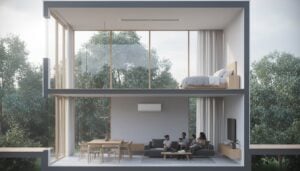
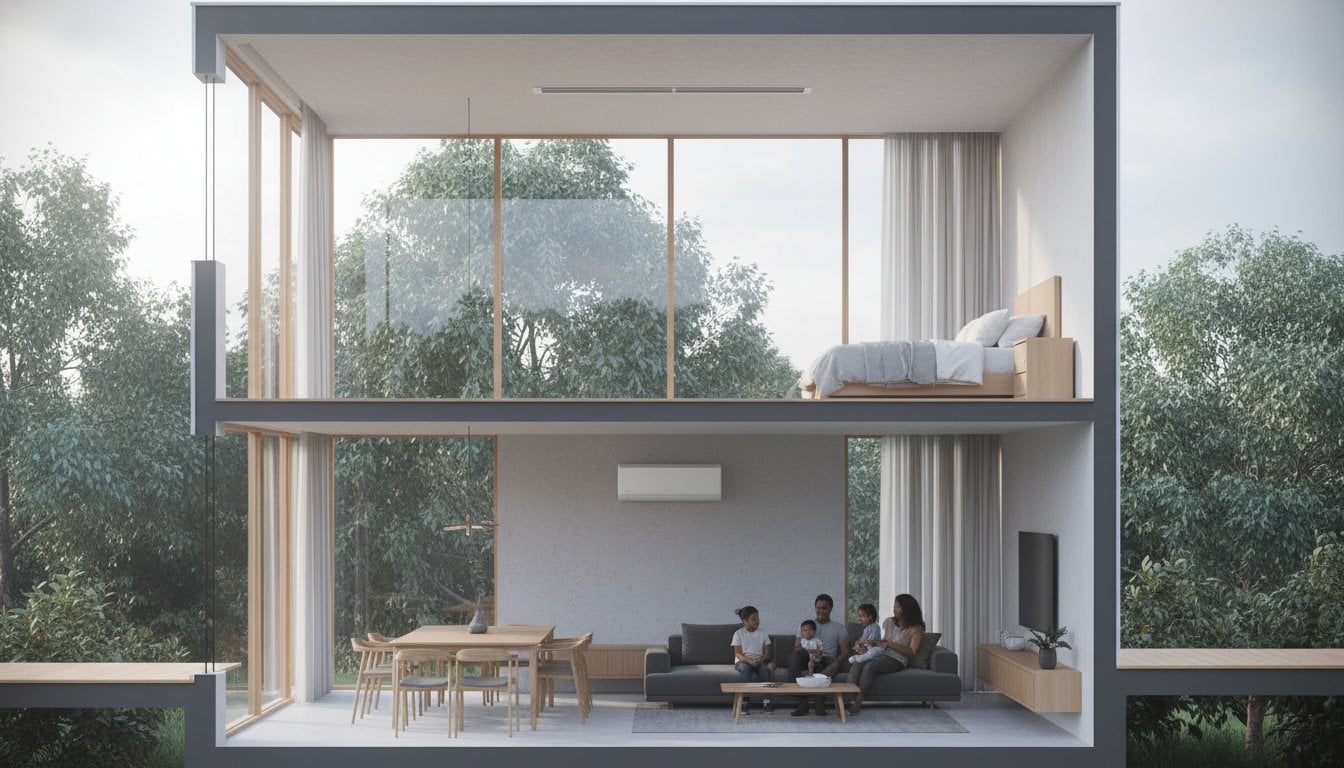
Traditional ducted air conditioning northern beaches residents enjoy often fails in the inner city because there’s simply no roof space. Many terraces have had attic conversions or feature flat skillion roofs, leaving zero room for bulky indoor units or large flexible ducts. You’re also fighting the “Chimney Effect.” In a three-story terrace, heat naturally gathers in the narrow stairwell and rises to the top floor, leaving the ground level chilly while the bedrooms upstairs feel like a sauna. Balancing this temperature without a massive, visible system is the primary goal for any local homeowner.
Heritage and council regulations add another layer of difficulty. In suburbs like Paddington or Glebe, your front facade is usually protected. This means you can’t just bolt a condenser unit to the balcony or run plastic trunking down the front of the house. Every piece of hardware must be hidden from street view, often requiring creative placements that test the limits of standard pipe runs.
In a terrace, every centimeter counts. Most properties have zero-clearance side passages, meaning you can’t place a condenser unit along the side of the house without blocking access. Tiny rear courtyards are often the only option, but you don’t want a loud, vibrating machine taking up your entire outdoor entertaining area. Identifying a vertical “void” for pipe runs is usually the biggest hurdle. Without a central cavity, installers must find clever ways to route refrigerant lines through wardrobes or behind bulkheads to reach every floor.
Shared walls mean your cooling choices affect the people next door. In the narrow “canyons” between Sydney terraces, sound reverberates and amplifies. NSW EPA regulations are strict; your unit shouldn’t be audible in a neighbor’s habitable room during late-night hours. Specifically, noise shouldn’t exceed 5 dB(A) above the background level during the day. We prioritize vibration isolation and whisper-quiet technology because a noise complaint from a neighbor can lead to council orders to move or remove your system entirely.
Choosing the right technology is the next step once you understand the structural hurdles of a terrace. In our experience, the best air conditioning for a terrace house Sydney homeowners can choose is one that prioritizes a small outdoor footprint without sacrificing indoor power. We see many residents struggle with the choice between a full ducted setup and multiple individual split systems. However, modern engineering has given us specialized options that sit perfectly in the middle of those two extremes. It’s about finding a balance between cooling capacity and the physical limits of your property.
When selecting your system, it’s helpful to consult an energy-efficient air conditioner guide to understand how different configurations impact your long-term running costs. In the tight confines of the Inner West or Eastern Suburbs, efficiency isn’t just about the environment; it’s about getting the most cooling out of the limited electrical capacity common in older switchboards. In 2026, split and multi-split systems continue to be the dominant choice for urban Sydney homes because they offer this exact flexibility.
A multi split system is often the gold standard for terrace living. By connecting up to five indoor units to a single outdoor condenser, you save precious courtyard space while maintaining independent temperature control in every room. We frequently install Daikin Multi-Split technology because their outdoor units are remarkably compact. This setup allows you to cool the ground-floor lounge and the third-story attic bedroom simultaneously without needing a fleet of noisy fans outside. It’s a practical, reliable solution that respects your neighbor’s peace and quiet.
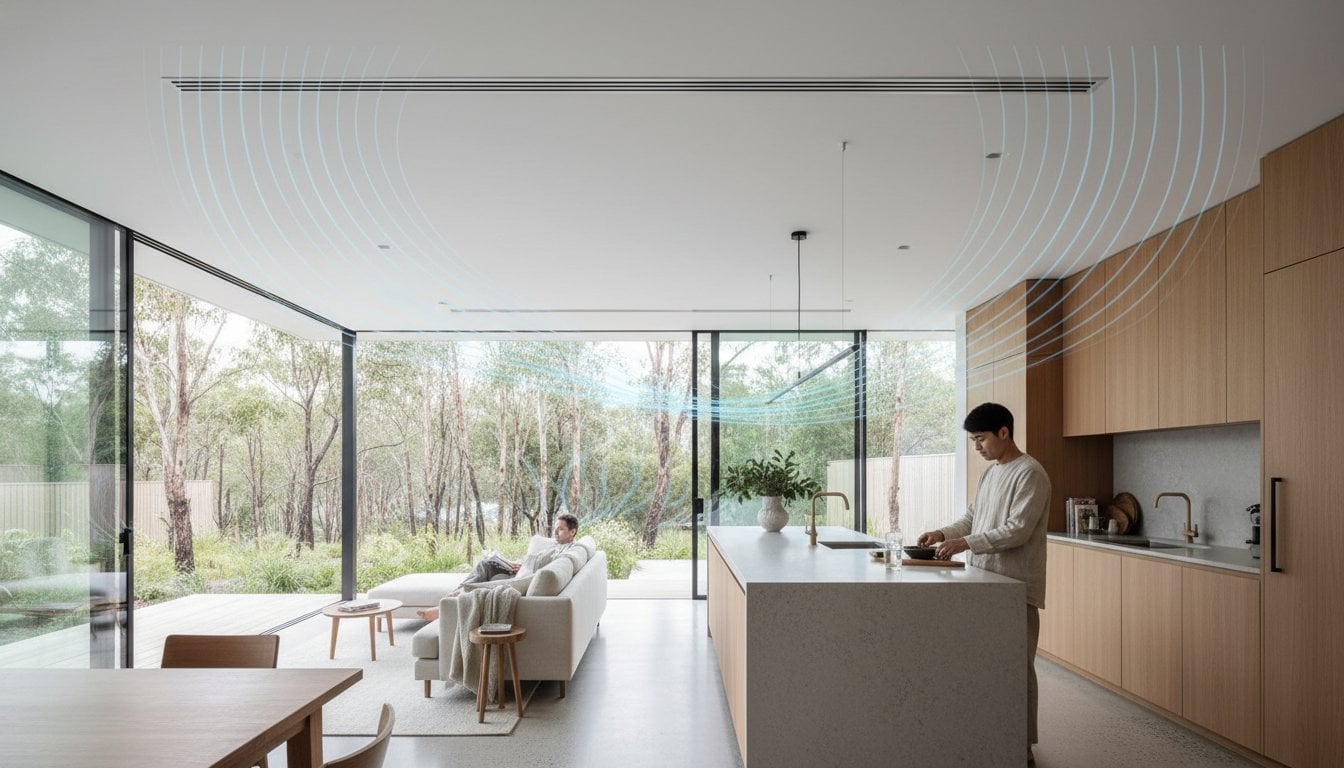
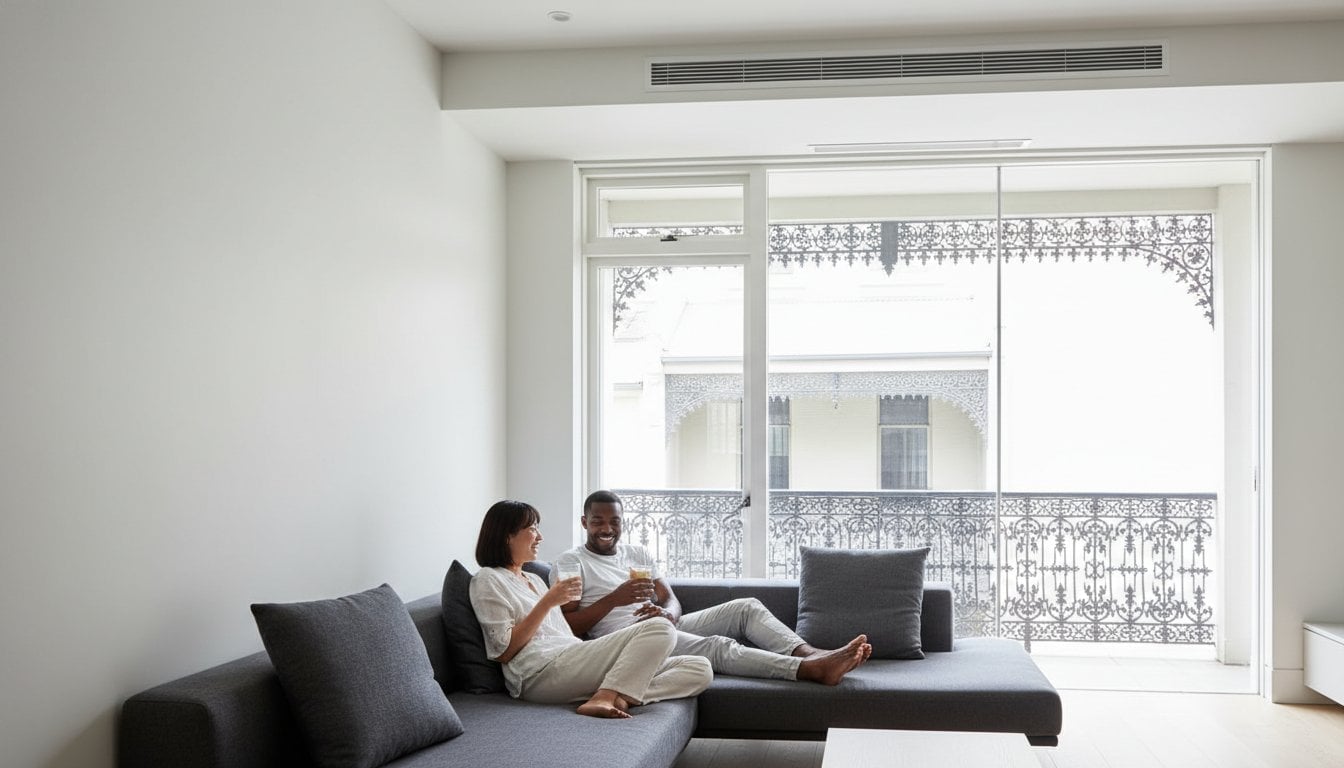
Bulkhead units are the secret weapon for terrace renovations and kitchen extensions where you want a seamless look. These are low-profile indoor units hidden inside a false ceiling or the top of a wardrobe. They offer the aesthetic of a ducted system because only the discharge grilles are visible. If you’re preserving heritage cornices but want modern cooling, bulkheads are ideal. They provide a high-end finish that won’t disrupt the character of your home. If you’re unsure which configuration fits your floor plan, you might want to chat with our local team for a tailored recommendation.
For larger, four-story terraces, we sometimes look toward VRV or VRF systems. These are high-capacity versions of multi-splits that can handle longer pipe runs and more significant height differences between floors. While premium wall-mounted splits remain popular for their ease of installation, we always focus on hiding the conduits within internal voids or decorative trunking to keep your home looking its best.
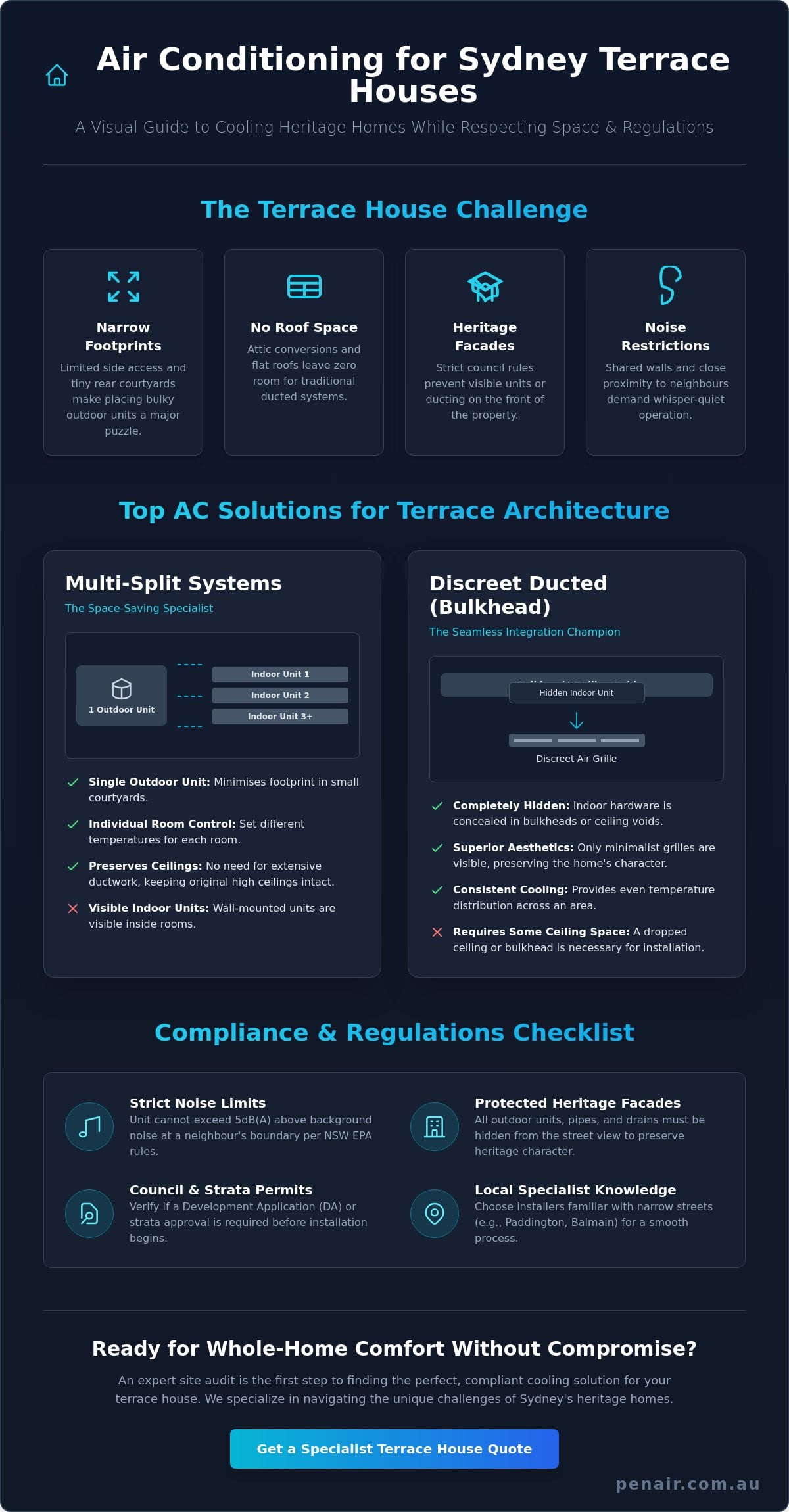
Local councils like the City of Sydney and Inner West have specific standards for what they call “Exempt Development.” This is good news for homeowners because it means many installations don’t require a formal Development Application (DA) as long as they meet certain criteria. However, when you’re seeking the best air conditioning for a terrace house Sydney, you have to be mindful of the fine print. These rules are designed to protect the character of our historic neighborhoods and the peace of your neighbors. If your property is heritage-listed or sits within a Heritage Conservation Area (HCA), the requirements become much stricter, often mandating that all external hardware stays completely hidden from the street view.
The 5dB Rule is the most critical noise regulation to remember. According to NSW EPA guidelines, your condenser unit shouldn’t exceed the background noise level by more than 5 decibels when measured at a neighbor’s window. In the narrow corridors of Paddington or Surry Hills, sound bounces off brick walls and amplifies quickly. We often recommend using acoustic enclosures or specialized screening to dampen this sound. If you go this route, it’s vital to ensure the screen doesn’t restrict airflow, as this can lead to overheating and might even void your Daikin warranty. We can help you find a balance that keeps the council happy and your system running efficiently.
Finding the right spot for your outdoor unit is a game of centimeters. While rear lane access is a popular choice for terrace owners, it’s not always an option. Rooftop placement can work, but it requires careful structural consideration and council approval. We always prioritize using vibration-dampening mounts. These small but effective tools prevent the low-frequency hum of the compressor from traveling through shared brickwork into your neighbor’s living room. Proper airflow clearance is also non-negotiable; without enough “breathing room,” your unit will work harder, use more energy, and wear out faster.
Maintaining the visual integrity of a classic Sydney terrace is just as important as the cooling itself. We don’t recommend “back-to-back” installations for heritage homes because they often leave messy conduits visible on the exterior. Instead, we look for ways to hide internal pipework within decorative cornices or by creating internal “chases” that are plastered over and painted. To make the external parts blend in, we often suggest color-matching conduits to heritage paint schemes, such as the Dulux Heritage range. This attention to detail ensures your modern comfort doesn’t come at the cost of your home’s historic charm.
Before you commit to a specific unit or installation plan, a thorough site audit is essential. Because every property in Sydney’s inner suburbs is unique, a “one size fits all” approach usually leads to complications during the build. We recommend a systematic walkthrough of your home to identify the physical and regulatory boundaries of your project. This preparation ensures you choose the best air conditioning for a terrace house Sydney has to offer for your specific floor plan. Taking these five steps now will save you from unexpected costs or council disputes later.
Many Victorian terraces were originally wired for a few lights and a toaster. Installing a whole-home multi-split system often necessitates a 3-phase power upgrade to ensure the compressor has a stable, high-capacity energy source. While a smaller, high-efficiency system might fit your current board, the long-term benefit of a power upgrade is that it future-proofs your home for other modern appliances. A dedicated circuit is a safety requirement for all AC installs. We always check your peak load capacity during our initial visit to prevent tripped breakers during a heatwave.
Measuring the distance to the nearest “habitable room” window is the only way to guarantee compliance with local noise laws. If your courtyard is tight, we often look at modern Daikin systems that feature a “Night Quiet Mode,” which reduces the compressor frequency during sleeping hours. In cases where the unit must be placed close to a shared wall, we can discuss custom acoustic shrouds that dampen sound without restricting the necessary airflow. If you’re ready to start your own assessment, contact our team for a professional site audit.
Installing a climate control system in a heritage-listed home requires more than just mechanical skill; it requires a deep respect for Sydney’s architectural history. With over 25 years of experience working in the narrow, winding streets of Paddington, Balmain, and Surry Hills, we’ve seen every possible structural hurdle. We believe the best air conditioning for a terrace house Sydney owners can invest in is one that remains invisible to the eye but indispensable to their comfort. Our “No-Visible-Conduit” philosophy ensures that we find internal voids and creative routing paths to keep your home’s facade and interior cornices exactly as they were intended to be.
As a family-owned business, we prioritize long-term community relationships over quick transactions. We don’t use high-pressure sales tactics because we know our reputation is built on the quality of our work and the peace of mind we provide to our neighbors. When we step into your heritage terrace, we treat it with the same care and attention to detail as if it were our own home. Our team understands the specific nuances of inner-city living, from navigating tight rear-lane access to managing the acoustic requirements of shared-wall properties.
Our status as a daikin air conditioning Specialist Dealer is a mark of superior installation training and technical expertise. This partnership gives us access to Daikin’s most advanced compact technology, including slimline bulkhead units and low-noise outdoor condensers specifically designed for tight urban footprints. For homes near the harbor or coast, we utilize units with specialized salt-corrosion protection to ensure longevity in Sydney’s humid, salt-heavy air. Whether you need a multi-split setup for a two-story terrace or a high-capacity VRV system for a larger renovation, we have the specialized hardware to make it work.
If you’re tired of living through sweltering summers and inconsistent cooling, it’s time for a professional assessment. You can book a comprehensive site audit with our Warriewood-based team to explore your options. Our process is highly organized and logical, moving from a council-compliant design phase through to professional commissioning and ongoing maintenance. We take the guesswork out of heritage regulations and electrical upgrades so you can simply enjoy your home. Contact PenAir today for a specialized terrace air conditioning quote and let us help you achieve year-round comfort without compromise.
Cooling a vertical, narrow terrace doesn’t have to be a source of stress. You’ve seen how modern multi-split systems and bulkhead units stay hidden while providing powerful relief from the Sydney heat. By respecting the 5dB noise rule and navigating Heritage Conservation Area guidelines, you protect both your home’s value and your relationship with your neighbors. Finding the best air conditioning for a terrace house Sydney is ultimately about merging these technical requirements with the unique layout of your inner-city property.
Our team is here to help you solve the terrace puzzle with ease. As a Daikin Specialist Dealer since 1999, PenAir brings decades of experience to every Heritage Conservation Area installation. Our fully licensed and insured Sydney technicians prioritize your home’s architectural integrity while ensuring peak efficiency. When you’re ready to upgrade your comfort, Get a Professional Site Audit for Your Sydney Terrace. We look forward to helping you create a perfectly cooled sanctuary in the heart of the city.
Yes, you can install air conditioning in a heritage-listed terrace, provided the external components aren’t visible from the street. Most councils allow these installations under “Exempt Development” rules as long as the unit is ground-mounted behind the building line or hidden on a rear balcony. We specialize in finding discreet locations that satisfy heritage inspectors while ensuring your system performs at its peak without compromising the historic facade of your home.
The best location for an outdoor unit in a narrow terrace is typically a rear courtyard, a flat rooftop, or a rear lane access point. Because space is limited, we focus on areas that allow for at least 300mm of clearance for proper airflow. We often use wall-mounted brackets or vibration-dampening pads to keep the unit off the ground and prevent noise from traveling through shared brickwork into your neighbor’s living areas.
Daikin systems are widely considered some of the quietest options for homes with shared walls, especially when equipped with “Night Quiet Mode.” This feature reduces the compressor’s operating noise during late hours to ensure you remain compliant with Sydney’s strict noise regulations. To further reduce sound, we always install high-quality rubber mounts that isolate vibrations, preventing the low-frequency hum that often bothers neighbors in high-density areas.
The cost of installing the best air conditioning for a terrace house Sydney depends on several variables, including the number of floors, the complexity of pipe routing, and your home’s current electrical capacity. While we don’t provide flat rates without a site audit, factors like upgrading your switchboard or installing specialized bulkhead units will influence the final investment. We provide transparent, detailed quotes that reflect the specific engineering requirements of your terrace.
You often don’t need formal council approval for a standard installation in the Inner West if it meets the criteria for “Exempt Development.” However, you must still follow specific rules regarding noise levels and proximity to boundaries. If your home is heritage-listed or located in a conservation area, different rules apply. It’s always best to check your specific street’s zoning before starting, as we can help ensure your design meets all local standards.
A multi-split system is usually better for a three-story terrace because these homes rarely have the roof cavity required for traditional ducted systems. Multi-splits allow you to place independent indoor units on each floor, which effectively combats the “Chimney Effect” where heat rises through the stairwell. This configuration provides targeted cooling for bedrooms on the top floor while keeping the ground-floor living areas comfortable without wasting energy on unoccupied levels.
We hide pipes in solid brick terraces by using internal “chases” or routing refrigerant lines through existing voids like non-functional chimneys and wardrobes. If an internal route isn’t available, we can install low-profile bulkheads or hide pipes behind custom-made decorative cornices that match your original heritage features. This approach ensures a clean, modern finish that respects the architectural integrity of your home without leaving unsightly plastic trunking visible on your walls.
Yes, high-quality air conditioning is a significant value-add for Sydney terrace properties, particularly in suburbs like Paddington and Balmain. Buyers in these areas view climate control as an essential feature rather than a luxury. By installing the best air conditioning for a terrace house Sydney, you make your property much more competitive in the local market. It’s an investment that improves your daily comfort while securing your home’s long-term resale appeal.