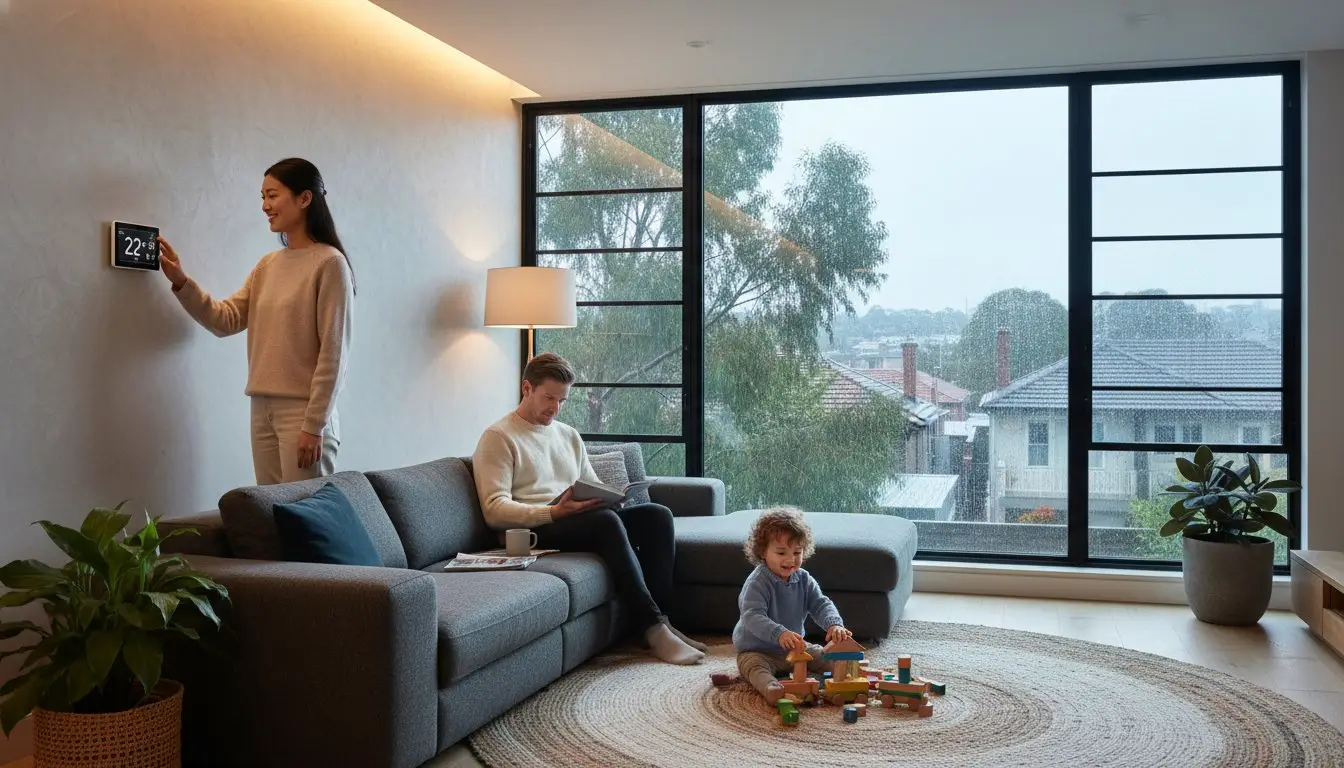

Did you know that nudging your thermostat up by just one degree can hike your heating energy consumption by as much as 15 per cent? With average NSW residential electricity bills sitting around $1,850 this year, we know many Sydney families are feeling the pressure as the winter chill arrives. It’s a common struggle to balance a warm home against the reality of rising costs, especially when you’re dealing with dry air or rooms that never seem to reach the right temperature.
We’re here to help you find the sweet spot where your home stays perfectly cosy without the dreaded bill shock. In this guide, we’ll share the best temperature for reverse cycle heating in winter and explain how to make the most of your system’s efficiency. We’ll also cover smart zoning and essential maintenance tips to ensure your household stays comfortable and your energy usage stays low throughout the 2026 season. By making a few simple adjustments to how you use your split or ducted system, you can enjoy a healthier home environment while keeping your running costs under control.
Finding the right balance for your home can be tricky when the winter chill sets in. Most Sydney residents find that 18°C to 20°C is the best temperature for reverse cycle heating in winter. It is high enough to take the edge off a crisp morning but low enough to keep your electricity usage in check. In our experience, many households are tempted to crank the dial up to 24°C or 25°C the moment they feel a draft. However, doing this creates a massive workload for your system. Every single degree you set above 20°C can add approximately 10 per cent to your heating costs. With NSW electricity prices rising by 8.2 per cent this year, these small adjustments on your remote make a huge difference to your quarterly statement.
Your system’s efficiency is also tied to what is happening outside. Understanding how heat pumps work helps explain why your unit might struggle on the coldest nights. These systems move heat from the outdoor air into your living space. When the Sydney air drops below 5°C, the unit has to work much harder to find that thermal energy. By keeping your indoor set point at a modest 19°C, you reduce the strain on the compressor and prevent it from running at maximum capacity for hours on end. This consultative approach to heating doesn’t just save money; it extends the life of your unit by avoiding unnecessary wear and tear.
Our local climate is quite unique compared to the rest of the country. While our neighbours in the southern states deal with sub-zero mornings, Northern Beaches homes usually enjoy more moderate conditions. Setting your unit to 18°C or 20°C helps prevent the system from entering frequent “defrost cycles.” This is when the outdoor unit pauses its heating function to melt ice off the coils. If you have a well-insulated room, you will find that 18°C feels remarkably comfortable because reverse cycle technology provides a steady, consistent warmth rather than the harsh, dry heat of a portable electric heater.
Health experts often suggest that a slightly cooler room leads to better sleep quality. For most people, 16°C to 18°C is the ideal range for the bedroom. As a Daikin air conditioning leader, we often recommend using the built-in “Sleep Mode” found on modern remotes. This feature gradually adjusts the temperature throughout the night, saving energy while you are under the covers. Instead of waking up to a freezing house, you can program a slow ramp-up for 6:00 am. This gently warms the air before you step out of bed, ensuring you are cosy without running the heater at full tilt all night long.
It might seem like magic, but your air conditioner is actually a clever heat mover. While an old-fashioned electric bar heater creates heat by making a wire glow red hot, a reverse cycle system simply moves heat from one place to another. Even on a chilly night in Eastern Sydney, there is still thermal energy present in the outdoor air. By reversing the refrigeration cycle used in summer, the unit absorbs this outdoor heat and pumps it inside. This process is incredibly efficient, often reaching levels of 300 per cent or more. This means for every 1kW of electricity the unit consumes, it can produce 3kW or more of actual heating for your home.
The refrigerant inside your system is the secret to this efficiency. It is designed to boil at extremely low temperatures, allowing it to capture heat even when you think it is freezing outside. In our local coastal environment, the humid winter air actually holds a fair bit of energy, but it also presents some unique challenges for the outdoor coil. If you find your system isn’t reaching the best temperature for reverse cycle heating in winter as quickly as usual, it might be due to the unit managing this moisture. Keeping your unit well-maintained ensures the refrigerant can do its job without the compressor having to work overtime.
Have you ever noticed your indoor unit suddenly stop blowing air while the “Heat” light flashes? Don’t worry, your heater isn’t broken. This is the defrost cycle in action. In Sydney’s damp winters, ice can form on the outdoor unit’s heat exchanger. The system temporarily reverses itself to warm up the outdoor coil and melt the frost. You might hear some whirring or see steam rising from the outdoor unit. This is perfectly normal and usually only lasts a few minutes before the cosy warm air returns. Coastal humidity can trigger these cycles more often, so don’t be alarmed if it happens a few times on a misty morning.
When comparing systems, we look at the Coefficient of Performance (COP). This measures how much heating you get for every unit of energy you put in. According to official government recommendations, choosing a high-efficiency system is one of the best ways to combat rising energy prices in 2026. Premium brands like Daikin are engineered to maintain a high COP even when temperatures dip, ensuring your running costs stay predictable. If you are unsure if your current setup is still performing at its peak, feel free to reach out to our local team for a quick chat about your home’s needs.
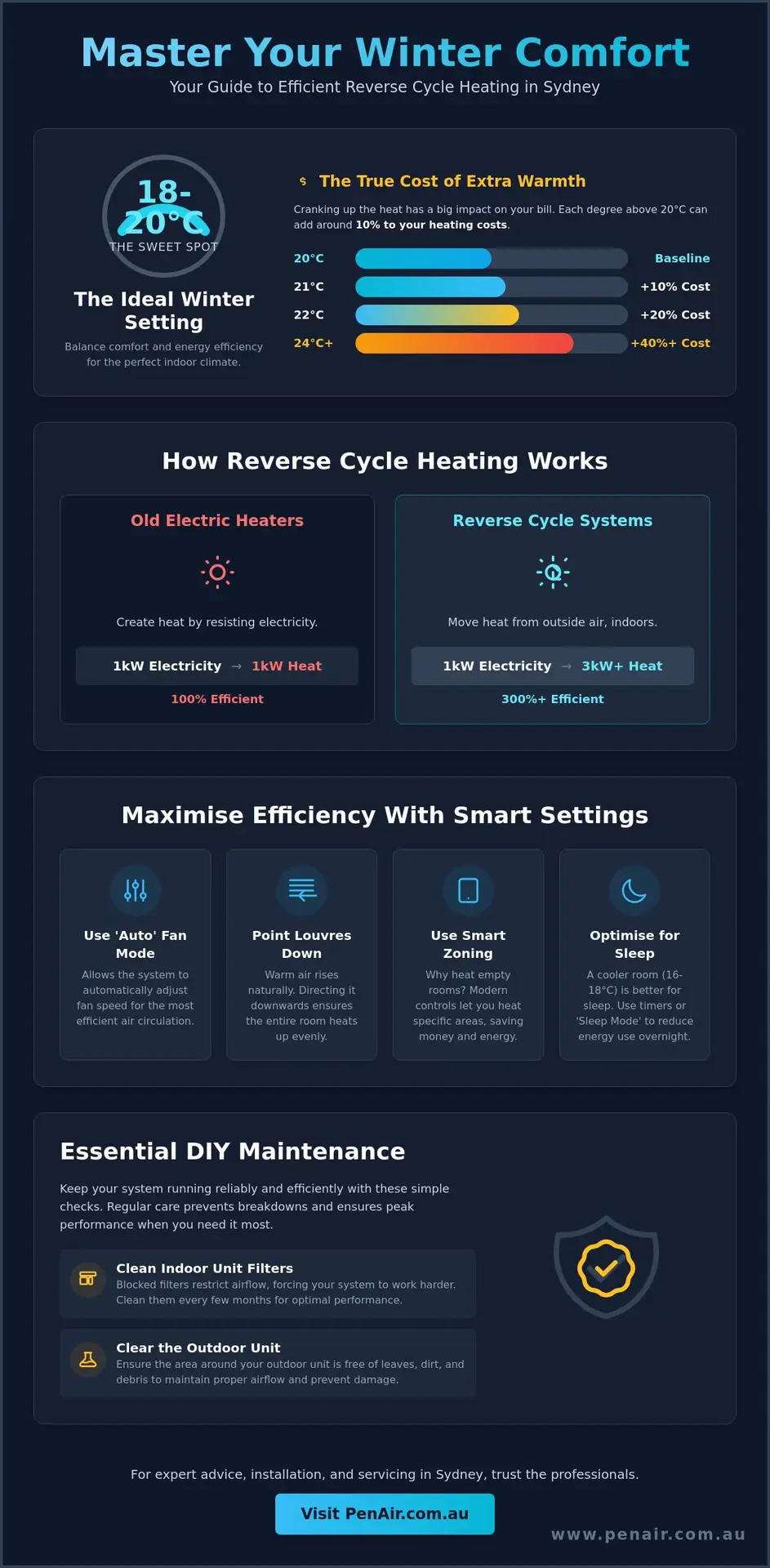
Setting the best temperature for reverse cycle heating in winter is a great first step, but it is only half the battle. To truly keep those 2026 energy bills under control, we need to look at how that heat is distributed and kept inside your home. One of the most effective things you can do is adjust your unit’s fan speed and vane direction. While it is tempting to set the fan to “High” to warm up a room quickly, “Auto” is almost always the smarter choice. In “Auto” mode, your system uses its internal logic to modulate power, slowing down as it nears your target temperature. This prevents the stop-start cycle that wastes electricity and causes unnecessary wear on the compressor.
For our customers in Mona Vale or Palm Beach, salt air is a constant factor that impacts performance. Salt can build up on your outdoor coils, acting as an insulator that forces the system to work harder to extract heat. Regular service and maintenance ensures these coils stay clean and efficient. Since heat naturally rises, we always recommend pointing your louvres or vanes downwards. This pushes the warm air toward the floor, ensuring it circulates through the living space where you actually feel it, rather than just pooling at the ceiling.
Heating a house with gaps under the doors or thin glass windows is like trying to fill a sieve with water. In many older Sydney homes, draughts can account for a significant portion of heat loss. We suggest simple steps like closing heavy drapes before sunset and using floor rugs on timber boards to create a thermal barrier. This helps maintain that 18°C to 20°C range without the unit needing to run constantly. You will also find that slightly higher humidity indoors makes the air feel warmer, so keeping the house sealed helps retain the natural moisture that prevents that “dry” winter feeling.
Most modern split systems feature a “Vertical Swing” or “3D Airflow” function. This is particularly useful in open-plan areas where cold spots often linger near windows or far corners. By using these settings alongside the “Auto Fan” mode, you ensure the air is mixed thoroughly throughout the room. This provides a more even temperature and prevents the thermostat from getting a false reading from a single hot spot near the indoor unit. If your system seems to be struggling with uneven temperatures, it might be time for a professional check to ensure the sensors are calibrated correctly.
Even if you have dialed in the best temperature for reverse cycle heating in winter, you can still waste significant energy by heating parts of the house that nobody is using. This is where modern technology really shines for Sydney families. By using smart controls and advanced zoning, you can tailor your home’s climate to your specific daily routine. Whether you are managing a large family home or a smaller apartment, these tools give you the precision needed to stay comfortable without paying for unnecessary heating.
One of the best features in the Daikin range is the “Intelligent Eye” presence sensor. This clever piece of tech detects when a room is empty for more than 20 minutes and automatically switches the unit to an energy-saving mode. Once someone walks back into the room, it returns to your original set point. It is a “set and forget” solution that ensures you aren’t accidentally heating the lounge room while everyone is in the kitchen. If you want to see how this technology can work in your home, learn more about our ducted air conditioning solutions and how they integrate with your lifestyle.
For those with ducted systems, a “Day/Night” zoning strategy is often the most effective way to manage costs. During the day, you can focus the heating on the living areas and home office, while keeping the bedrooms switched off. At night, simply flip the zones. We often remind our customers that there is no need to heat the laundry, hallways, or spare bathrooms. By closing off these zones, you reduce the volume of air the system needs to treat, which protects your equipment from overworking during those long July cold snaps.
In 2026, smart home integration has become the standard for modern comfort. Using apps like Daikin D-Mobile or Airbase, you can control your system from your smartphone while you are at the supermarket or heading home from work. You can even set up IFTTT (If This Then That) recipes to automatically adjust your heating based on the Sydney weather forecast. For example, if the temperature is predicted to drop below 10°C, your system can pre-warm the house 30 minutes before your alarm goes off. If you are ready to upgrade your home’s IQ, contact our expert team today to discuss the best smart control options for your system.
Even if you have carefully selected the best temperature for reverse cycle heating in winter, your system won’t perform if it’s struggling against dust and debris. Reliability is built on regular care. For our neighbours on the Northern Beaches, this care includes protecting your unit from salt-air corrosion. Salt can eat away at the delicate aluminium fins on your outdoor coil, which reduces the system’s ability to exchange heat. A clean system runs quieter, lasts longer, and ensures your home stays warm without the compressor working double-time.
A well-maintained unit is also a healthier unit. Over time, dust and moisture can lead to mould growth inside the indoor head unit, which then circulates through your living areas. This often causes that “musty” smell when you first turn the heater on in June. By staying on top of your maintenance schedule, you ensure the air your family breathes is clean and fresh. It is the most effective way to avoid the dry, irritating air that many people associate with winter heating.
Cleaning your split system filters is a simple task that makes a massive difference to your airflow. To start, gently pop open the front cover of your indoor unit and slide the mesh filters out. You can vacuum away the loose dust or wash them in luke-warm water with a tiny bit of mild detergent. Make sure they are completely dry before you slide them back in. During the peak of a Sydney winter, we recommend checking these filters every fortnight. If you find they are consistently caked in grime, our professional air conditioning cleaning services can provide a deeper sanitisation of the internal coils and barrel fan.
A professional check-up goes far beyond what you can do with a vacuum. Our technicians test the refrigerant gas levels and inspect every electrical connection to ensure everything is tight and safe. We also pay close attention to the condensate drain. In winter, moisture still builds up inside the unit during the defrost cycle. If this drain is blocked by sludge or mould, you might end up with a messy leak inside your home. You can book a service with our expert team to get ahead of these minor issues before they turn into a mid-July breakdown.
Finally, keep an eye on your outdoor unit. Autumn leaves and garden debris often pile up around the base of the compressor during the lead-up to winter. This restricted airflow forces the motor to run hotter and use more electricity. We suggest keeping a one-metre clear zone around your outdoor unit to ensure it can breathe properly. This simple step, combined with your indoor maintenance, keeps your system running at peak efficiency all season long.
Finding the best temperature for reverse cycle heating in winter is about more than just comfort; it is about making your home run as efficiently as possible. By keeping your thermostat between 18°C and 20°C, you can enjoy a cosy living space while avoiding the sharp price increases seen in 2026. Remember that small changes, like using smart zoning or simply cleaning your filters, go a long way in protecting your system from unnecessary wear. Whether you are in a classic home on the North Shore or a coastal property on the Northern Beaches, these strategies ensure your environment remains healthy and your bills stay manageable.
We’ve been looking after local families since 1999, and as an Authorised Daikin Specialist Dealer, we know exactly what it takes to keep your system in peak condition. Our family-owned team is here to help you get the most out of your heating throughout the colder months. Keep your Sydney home cosy this winter, book a professional Daikin service with PenAir today. We look forward to helping you create a comfortable home for the season ahead.
The best temperature for reverse cycle heating in winter for energy saving is between 18°C and 20°C. This range provides a healthy indoor climate while keeping your power bills manageable. Every degree you set your thermostat above this point can increase your system’s energy consumption by up to 15 per cent, so it pays to resist the urge to turn the dial up on those particularly crisp Sydney mornings.
It is usually more cost-effective to use your system’s timer or smart controls rather than leaving it on all day. While maintaining a steady temperature can be efficient in a highly insulated home, most Sydney houses lose heat through windows and doors. We recommend heating your living spaces about 30 minutes before you arrive home or wake up to ensure comfort without paying for warmth while you are out.
Your unit might blow cool air for a few minutes while it prepares to heat the room. This is often part of the “warm start” feature, which prevents a blast of cold air before the indoor coil has reached the right temperature. If the air stays cold for an extended period, it could be a sign that the system is in its defrost cycle or that there is an underlying issue requiring a professional inspection.
Reverse cycle systems don’t actually remove moisture from the air in heating mode like they do when cooling. However, because warm air can hold more moisture, the relative humidity in the room may drop, making the air feel drier. This effect is much less pronounced than with gas heaters or electric bar heaters, which can be far more dehydrating for your skin and eyes during the winter months.
Heating and cooling account for roughly 40 per cent of Australian household energy use. In Sydney, running a modern 5-star rated reverse cycle unit is significantly cheaper than using portable electric heaters. While exact costs depend on your energy plan and usage habits, upgrading to a high-efficiency system can save a household up to $600 per year compared to older, less efficient models with lower star ratings.
You should always select the ‘Heat’ mode (often represented by a sun icon) during winter rather than ‘Auto’. In ‘Auto’ mode, the system might accidentally switch to cooling if the room warms up from afternoon sunlight. By locking it into ‘Heat’ mode and setting the fan to ‘Auto’, you ensure the system only provides warmth and modulates its power usage based on the actual temperature in the room.
Modern reverse cycle systems are designed to operate effectively even when outdoor temperatures drop toward zero. While their efficiency can decrease slightly in extreme cold, premium units incorporate advanced heat pump technology to maintain steady output. You might notice more frequent defrost cycles on very cold, misty mornings, but the unit will continue to keep your home cosy as long as it is well-maintained.
We recommend checking and cleaning your filters every two to four weeks during the peak of winter. If you have pets or live near busy roads, dust can build up more quickly, forcing the system to work harder. Keeping these filters clear ensures optimal airflow and prevents the unit from consuming extra electricity to maintain your desired temperature throughout the day.