
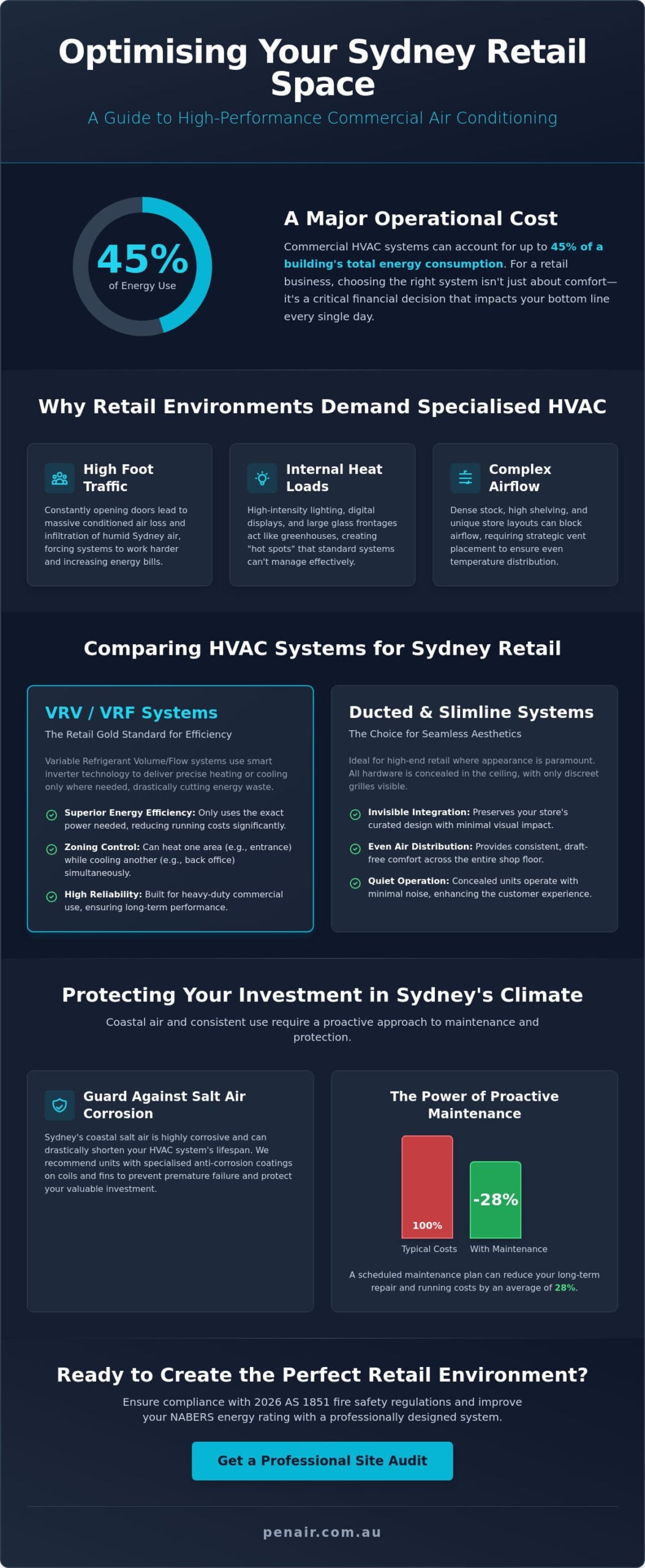
Did you know that commercial HVAC systems are responsible for up to 45% of a building’s total energy consumption? For local business owners, finding the right commercial air conditioning for retail shops Sydney is about more than just staying cool; it’s about protecting your bottom line. We understand the frustration of hot spots near your display windows or the worry that salt air corrosion from the coast might be shortening your system’s lifespan. It’s a lot to manage when you’re focused on providing a great shopping experience for your customers.
This guide will help you choose, install, and maintain a system that balances aesthetic appeal with heavy-duty performance. We’ll explore the new 2026 AS 1851 fire safety regulations and the latest NABERS energy ratings specifically for retail spaces. You’ll also learn how a proactive maintenance plan can reduce your long-term costs by an average of 28%. We’ve put this together to show you how to create a comfortable, energy-efficient environment that keeps your customers browsing longer.
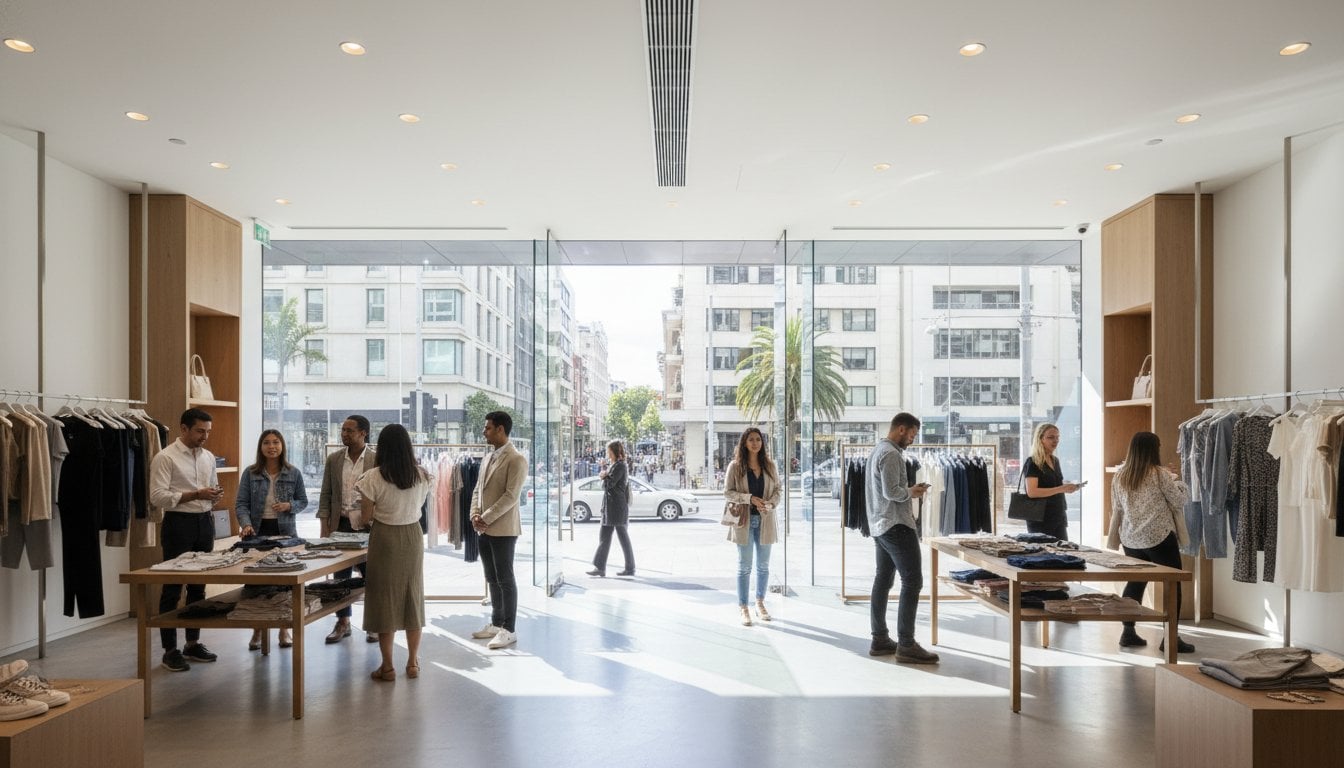
Retail shops aren’t static boxes. Unlike a standard office where employees sit at desks for eight hours, a store is a revolving door of activity and changing conditions. This constant movement creates a massive challenge for Heating, ventilation, and air conditioning (HVAC) systems. When we design commercial air conditioning for retail shops Sydney, we look at the “sensible heat” and “latent heat” through a specific retail lens. It’s not just about the floor’s square meterage. We have to calculate how much heat the space generates internally and how much it loses every time a customer walks through your door.
In a busy Sydney boutique or showroom, your front door might open hundreds of times a day. Every time it does, your expensive conditioned air escapes, and the humid, salty Sydney air rushes in. This forces your system into a constant high-load duty cycle. We often suggest strategies like “thermal curtains” to create an invisible barrier at the entrance. Even with these measures, the system needs enough “grunt” to recover the temperature quickly. Over-speccing the capacity of your unit isn’t about selling you a bigger machine; it’s about ensuring your system doesn’t burn out by running at 100% capacity all day long. A system that’s too small will struggle, leading to higher energy bills and a shorter equipment lifespan.
Retailers rely on high-intensity lighting and digital displays to make products stand out. While modern LEDs are cooler than old halogens, a shop filled with hundreds of them still generates significant internal heat. Combine this with large glass shopfronts that act like greenhouses in the afternoon sun, and your internal temperature can skyrocket. We also have to consider your stock density. High shelves and packed clothing racks can physically block airflow, creating “hot spots” where customers feel uncomfortable. A well-designed system accounts for these variables:
Getting these calculations right is the difference between a shop that feels like a sanctuary and one that feels like a furnace. By focusing on these retail-specific needs, we help you keep customers in the store longer. After all, a comfortable customer is much more likely to browse and buy. This is why specialized commercial air conditioning for retail shops Sydney is a vital investment for your business’s success.
Once you understand the thermal loads your shop faces, the next step is choosing the hardware that can handle them. Selecting the right architecture for commercial air conditioning for retail shops Sydney is a balance between upfront costs and long-term performance. We see many business owners struggle with this choice; they want a system that’s powerful enough for a summer heatwave but discreet enough not to ruin the store’s carefully curated aesthetic. The right choice depends heavily on your floor plan, ceiling height, and whether you own or lease your space.
Variable Refrigerant Volume (VRV) systems are widely considered the gold standard for high-traffic retail environments. These systems are incredibly smart. They use inverter technology to vary the flow of refrigerant to multiple indoor units, meaning they only use the exact amount of energy needed at any given moment. If your shop floor is packed with customers but your back office is empty, a VRV system can adjust the output accordingly. This precision provides massive energy savings compared to older, fixed-speed units. We often recommend brands like Daikin for these setups because of their legendary reliability and the ability to heat one zone while cooling another; a lifesaver for boutiques with sensitive inventory in one area and a busy counter in another.
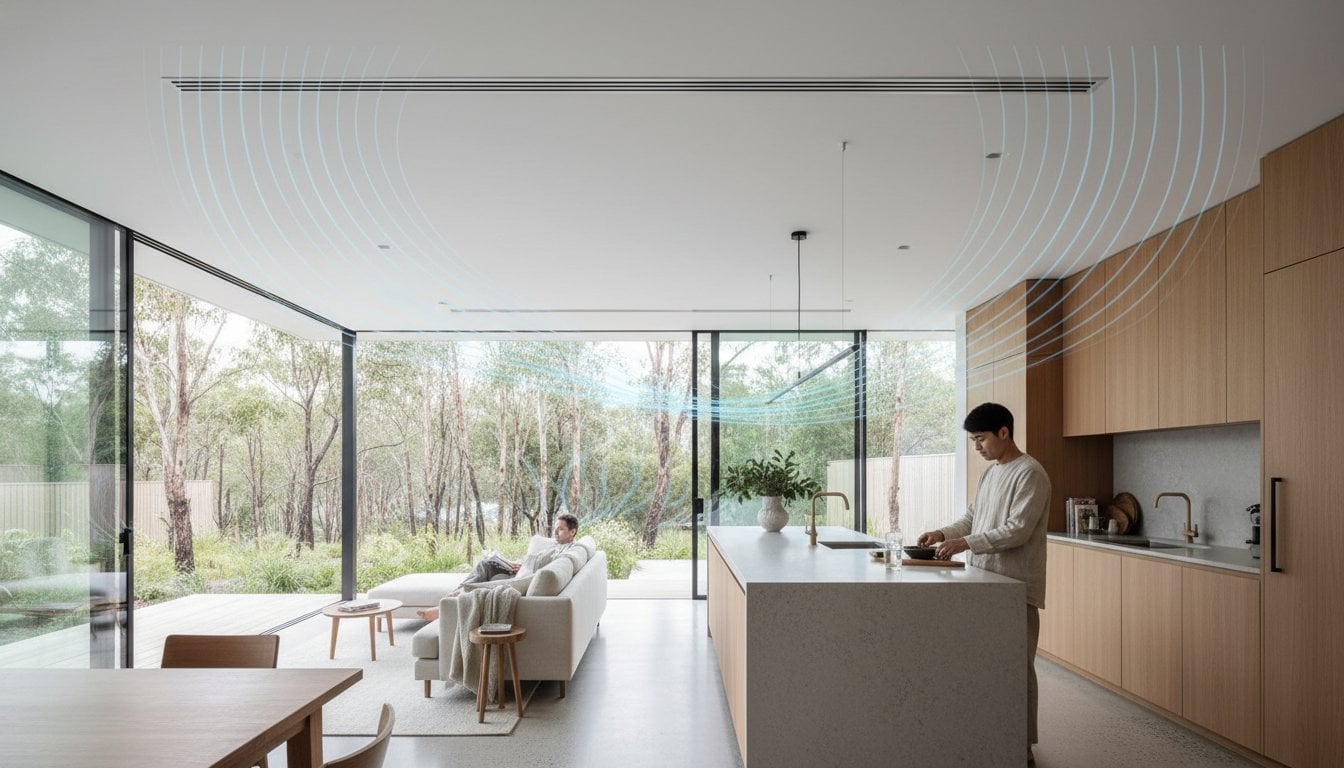
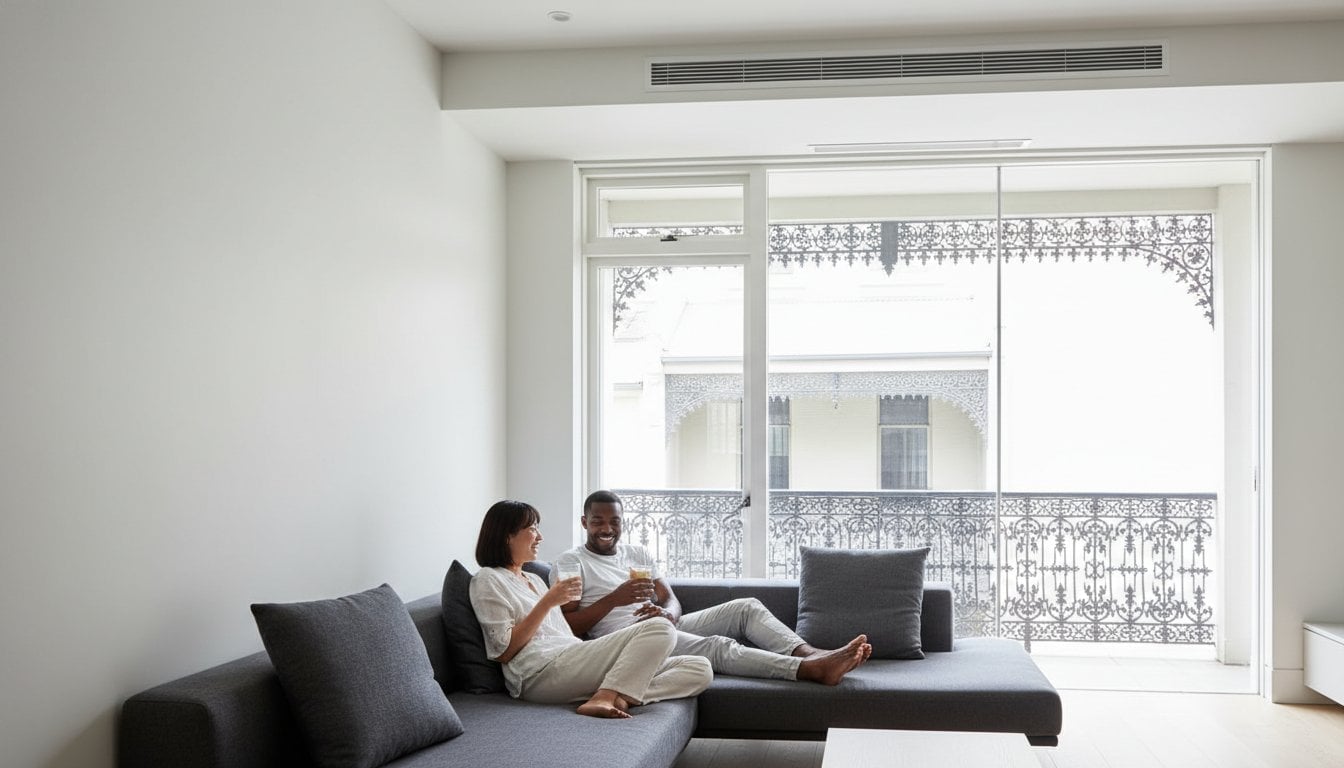
For high-end retailers where the look of the shop is everything, a concealed system is often the best path. Many premium stores choose ducted air conditioning northern beaches retailers trust for its seamless integration. By hiding the indoor unit in the ceiling space and using stylish linear grilles, you maintain a clean, minimalist look. If you have limited ceiling space, slimline bulkhead units are a fantastic alternative. These can be built into a small decorative drop in the ceiling, preserving your precious vertical space.
Choosing between these options doesn’t have to be overwhelming. If you’re trying to figure out which configuration will give you the best return on investment, our team can provide a retail HVAC assessment to help you decide. We focus on finding a solution that keeps your shop comfortable without blowing your monthly budget.
Sydney’s beautiful coastline is a major drawcard for retail strips, but the salt-laden air is relentless on mechanical equipment. For business owners, the local environment presents a unique challenge that standard maintenance guides often overlook. Without specific care, the lifespan of commercial air conditioning for retail shops Sydney can be cut short by years. We’ve seen outdoor units in coastal suburbs show significant rust and coil failure in half the time of their inland counterparts. Protecting your investment isn’t just about fixing things when they break; it’s about a specialized strategy to combat the local climate.
The financial argument for regular care is clear. Data from May 2026 shows that moving from a reactive “fix it when it breaks” approach to a preventative maintenance program can reduce your total costs by an average of 28%. When you consider that emergency repairs in the middle of a summer heatwave can be three times more expensive than a scheduled visit, the value of a planned program becomes obvious. Beyond the savings, documented maintenance is now a legal necessity. From 13 February 2026, the Australian Standard AS 1851 is a legislated requirement in New South Wales for HVAC systems that form part of a building’s fire and smoke control strategy. This means your service logs aren’t just for your warranty; they’re for your compliance too.
If your shop is anywhere near the water, salt air corrosion is your biggest threat. It eats away at the delicate aluminium fins on your outdoor condenser, reducing the system’s ability to shed heat. We look for early signs of “white rust” or pitting during every air conditioning service Sydney retailers book with us. To fight this, we recommend units with specialized anti-corrosive coatings, often referred to as “Blue Fin” or “Gold Fin” technology. Regular coil cleaning is also essential to wash away salt deposits before they can bond to the metal and cause permanent damage.
Sydney’s high humidity doesn’t just make customers uncomfortable; it can ruin stock. Excessive moisture in the air leads to mould growth on fabrics and can damage sensitive electronics. A well-maintained system acts as a giant dehumidifier, pulling moisture out of the air to keep your inventory crisp and fresh. Modern commercial air conditioning for retail shops Sydney also benefits from high-grade filtration. By using HEPA or advanced pleated filters, you remove dust and allergens from the air. This creates a “clean air” sanctuary that encourages customers to stay longer, especially during the humid summer months or high-pollen days in spring. Keeping your drainage lines clear is equally important to prevent leaks that could damage your ceiling or shop floor. Beyond climate control, staying organized is key to protecting your assets; for example, you can explore LabelWriter 5XL to streamline your inventory labeling and storage management.
Closing your doors for even a single day can hurt your weekly targets. We know that for Sydney business owners, the biggest hurdle to upgrading a system isn’t just the cost; it’s the fear of losing trade during the process. Installing commercial air conditioning for retail shops Sydney requires a logistical plan that works around your opening hours. Whether you’re in a busy CBD thoroughfare or a quiet suburban strip, the goal is a seamless transition where your customers hardly notice the work is happening.
Our approach centers on flexibility. We often coordinate major works during your quietest periods or outside of standard trading hours. This is especially relevant given that the 2026 AS 1851 regulations may require after-hours testing to ensure your HVAC system integrates correctly with the building’s fire safety strategy. By planning these technical requirements in advance, we prevent unexpected interruptions to your daily operations.
We use a structured process to ensure every project stays on track and within budget. This framework helps us manage the complexities of a retail environment without the chaos.
Sydney retail spaces often come with a web of red tape. If your shop is part of a “shop-top” housing development, we have to be mindful of strata rules and noise restrictions for outdoor condenser units. In the Sydney CBD, crane permits or street access for equipment delivery must be cleared with the council well in advance. We handle the heavy lifting of these technical details, ensuring your installation meets all Australian Standards for commercial HVAC without causing friction with your neighbours or local authorities.
A successful installation is built on clear communication and local knowledge. If you’re ready to upgrade your space with minimal fuss, you can contact our team for a commercial air conditioning quote tailored to your shop’s needs. We’ll help you find a solution that keeps your business running smoothly throughout the entire process.
PenAir has been a part of the Sydney business community since 1999. As a family-owned and operated company, we’ve spent over two decades building a reputation for professional reliability and local warmth. We don’t just see ourselves as contractors; we’re your neighbors. When designing commercial air conditioning for retail shops Sydney, we believe in providing a service that focuses on the long-term health of your business rather than a quick transaction. Our team is fully licensed and insured, giving you the peace of mind that your retail environment is in safe, capable hands.
Being an Authorised Daikin Specialist Dealer allows us to provide premium product support that many other installers cannot match. We understand the technical precision required for retail climate control. Whether you’re operating a high-end boutique in the Eastern Suburbs, a bustling showroom on the North Shore, or a coastal shop on the Northern Beaches, we tailor our solutions to fit your specific geographic and structural needs. We take pride in our craftsmanship and our commitment to the local community.
Our experience spans a diverse range of retail formats. We’ve worked with everything from small corner stores to large-scale commercial showrooms. This variety has taught us that every space has its own rhythm. We take the time to listen to your concerns, whether it’s about rising energy costs or system noise disrupting your customers’ shopping experience. Beyond new installations, we’re dedicated to keeping your current systems running at peak performance. If your unit is struggling, our team provides expert air conditioning repairs that focus on long-term reliability rather than just a temporary fix. We prioritize integrity and fair pricing in every job we take on.
Preparing your shop for the year ahead starts with a clear understanding of your current system’s performance. We encourage Sydney retailers to request a comprehensive site audit. This allows us to identify potential efficiency gains or maintenance issues before they become expensive problems. We can also help you explore energy-efficient upgrade options, including systems that qualify for the NSW Energy Savings Scheme (ESS) discounts. These upfront discounts can be as high as $736 for high-efficiency systems in 2026, depending on the unit’s size and rating.
Our Warriewood-based team is ready to provide the expert advice you need to make an informed decision. We provide a steady, organized approach to climate control that looks after your business’s well-being. If you’re looking for a knowledgeable specialist who truly cares about the residents and businesses we serve, we’re here to help. Contact us today to discuss how we can make your retail space more comfortable and efficient for the years to come.
Choosing the right commercial air conditioning for retail shops Sydney is a strategic investment in your business’s comfort and long-term energy efficiency. We’ve explored how modern systems like Daikin VRV can handle high foot traffic while protecting your inventory from Sydney’s coastal humidity. Staying ahead of the 2026 fire safety and maintenance regulations ensures your shop remains compliant and safe for every customer who walks through your doors. Getting these details right today prevents costly headaches down the road.
At PenAir, we’ve been serving the local community since 1999. As an Authorised Daikin Specialist Dealer and winner of Local Business Awards, our team has the expertise to help you navigate these technical choices with ease. We focus on building long-term relationships through reliable service and honest advice. We’re here to look after your shop’s well-being so you can focus on what you do best.
Ready to optimize your shop’s climate control? Request a Professional Site Audit for Your Sydney Shop today. We look forward to helping you create a welcoming space where your business can truly thrive.
A high-wall split system or a multi-split system is often the most practical choice for a small retail shop. These units are cost-effective to install and provide excellent localized cooling for compact spaces. For boutiques where floor space is at a premium and aesthetics are a priority, a slimline bulkhead ducted unit can be hidden in the ceiling to maintain a clean, professional look. We usually recommend systems with inverter technology to handle the temperature swings caused by customers entering and leaving throughout the day.
The total investment for commercial air conditioning for retail shops Sydney depends on the system type, the size of your floor plan, and any structural requirements. Factors such as the length of refrigerant piping and the complexity of the electrical work will influence the final cost. We suggest checking the current NSW Energy Savings Scheme (ESS) for potential upfront discounts on high-efficiency models. A professional site audit is the most reliable way to get an accurate quote tailored to your shop’s specific layout and thermal needs.
Most retail systems should be serviced at least twice a year to maintain peak efficiency and indoor air quality. If your shop is located in a high-traffic area or near the Sydney coast, quarterly servicing is often necessary to prevent salt air corrosion and heavy dust buildup. Regular maintenance is also a legal requirement under the 2026 AS 1851 standards for systems integrated with a building’s fire safety strategy. Our team can help you set up a schedule that ensures you remain compliant and your warranty stays valid.
You can certainly use a split system in a smaller retail space, but larger showrooms usually require commercial-grade ducted or VRV systems. The main difference lies in the “duty cycle,” which is how hard the unit can work over long periods. Commercial units are built with more robust components to handle constant door openings and the high internal heat generated by retail lighting. We’ll help you determine if a heavy-duty split system or a full commercial setup is the better long-term investment for your specific business.
A standard split system installation usually takes one day, while more complex ducted or VRV systems can take between three to five days. We understand that time is money in the retail world, so we plan the work in stages to keep your shop floor accessible. For larger projects, we can often schedule the most intrusive work outside of your peak trading hours. We provide a clear timeline during the planning phase so you can manage your staff and stock with minimal disruption.
Upgrading to a modern, high-efficiency system can significantly reduce your monthly energy consumption. Systems featuring the latest inverter technology and a high Zoned Energy Rating Label (ZERL) are designed to use less power while maintaining a steady temperature. Moving from an older, fixed-speed unit to a new commercial air conditioning for retail shops Sydney can lower your cooling costs by a noticeable margin. We focus on selecting units that provide the best balance of cooling performance and long-term energy savings for your budget.
A well-maintained commercial HVAC unit in Sydney typically lasts between 10 and 15 years. This lifespan can vary based on your proximity to the coast, as salt air can accelerate the wear on outdoor condenser coils. Regular servicing and the use of anti-corrosive coatings are essential to reaching the upper end of this range. If a system is neglected or undersized for the space, it may need replacing much sooner due to the strain of constant operation at maximum capacity.
You don’t always need council approval, as many installations fall under “exempt development” if they meet specific noise and placement criteria. However, if your shop is in a heritage-listed building or the outdoor unit is visible from a main road, you may need to lodge a Development Application (DA). We recommend checking with your local Sydney council or building manager before starting any major work. Our team can provide the technical drawings and noise data needed for these applications if they are required for your site.