Did you know that heating and cooling can account for up to 40% of your total household energy use according to Australian government data? We understand that for many Sydney families, the sound of a rattling outdoor fan brings a sense of dread about skyrocketing bills and unreliable performance. You deserve a home that remains a sanctuary during a 38 degree January scorcher without the constant worry of a total system failure. As a family-owned business, we believe you should feel confident and informed when you need to repair air conditioning unit components during the height of the season.
This guide is designed to help you master the early warning signs of a breakdown and determine exactly when it’s time for a fix versus when a full replacement is the more economical choice. We’ll walk you through a clear diagnosis of common Sydney HVAC issues, explain the cost-benefit ratio of modern energy ratings, and help you find a local specialist who values honest service over a quick sale. By the end of this article, you’ll have a clear plan to restore your home comfort and keep your cooling costs under control for 2026 and beyond.
Living in Sydney means your AC works harder than in most other Australian cities. By 2026, we have seen local humidity levels regularly spike above 75 percent during the summer months, which places a massive strain on domestic systems. Your HVAC setup relies on a delicate balance between the indoor evaporator and the outdoor condenser. To understand the basics of this cycle, you can research How HVAC Systems Work to see why even a small blockage causes trouble. When you need to repair air conditioning unit components, it’s usually because one of these parts has been pushed past its limit. Small electrical faults, like a blown capacitor, are common and affordable to fix. However, if you ignore strange grinding sounds, you risk a mechanical failure that could cost thousands.
Most homeowners don’t realize that Sydney’s coastal air can accelerate the wear on external components. Salt spray and high moisture levels lead to corrosion that doesn’t affect inland units as quickly. We find that catching a minor fault during a routine check saves our customers from the stress of a total system breakdown during a 38 degree heatwave. Our team focuses on identifying these issues before they escalate, ensuring your home remains a sanctuary.
We often call the compressor the heart of your air conditioner. It pumps refrigerant through the system to keep your family cool. In Sydney, outdoor units often get clogged with dust, pet hair, or garden debris. This debris blocks the condenser coils, preventing heat from escaping. When this happens, the compressor runs hotter than its design limit. You might notice a faint smell of burning electrical components or a clicking sound when the unit starts. If you catch this early, we can usually save the motor before it burns out completely.
A common myth is that AC units need a gas top-up every few years. This isn’t true. Modern systems are hermetically sealed. If your refrigerant is low, you have a physical leak that requires a professional to repair air conditioning unit pipework. Leaking refrigerant is particularly harmful in the Sydney basin, where local environmental regulations strictly control chemical discharge. Pressure imbalances often cause ducted systems to blow warm air in one room while freezing up in another. Fixing a leak early prevents the internal pressure from dropping so low that it destroys the entire cooling cycle.
Your air conditioning system rarely fails without giving you a few warnings first. Recognising these red flags early can save you from a total breakdown during a 35 degree Sydney January. When you decide to repair air conditioning unit components at the first sign of trouble, you often prevent small mechanical hitches from turning into expensive compressor failures. Our team has found that early intervention is the most effective way to protect your home comfort and your hip pocket.
Listen closely to your system. Different sounds indicate specific internal struggles:
Weak airflow is another common complaint we hear from homeowners. If the air coming from your vents feels more like a whisper than a breeze, check your filters immediately. Industry data suggests that 40% of airflow restrictions are caused by dust-clogged filters. However, if a clean filter doesn’t fix the issue, your blower motor might be reaching the end of its lifespan. You may also notice inconsistent temperatures, where the lounge room is freezing while the bedrooms remain stifling. This often indicates a ductwork leak or a failing zone motor in ducted systems.
Short-cycling is a particularly frustrating phenomenon. This occurs when your unit turns on and off every 10 to 15 minutes without ever reaching your desired temperature. This cycle puts immense strain on the electrical components and causes your energy bills to skyrocket. It is a clear signal that your system is struggling to maintain its cooling cycle. If your system fails completely during a heatwave, knowing how to quickly find a repair air conditioner near me in Sydney can make the difference between a same-day fix and a sleepless night.
Keep an eye on the physical condition of your indoor and outdoor units. Ice formation on the copper pipes or the indoor coil is a major warning sign; it usually indicates a refrigerant leak or severe airflow blockage. You should also watch for water leaking from aircon unit areas, which can damage your plasterboard or flooring. For those living near Sydney’s coastal suburbs, salt air corrosion is a real threat. If left untreated, external casing rust can compromise the internal coils in under 5 years. If you notice these signs, booking a professional inspection can prevent a messy and costly structural repair later.
Sydney’s humid climate makes air conditioners susceptible to biological growth. A musty, “dirty sock” smell often means mould is growing on the evaporator coil or inside the drain pan. This doesn’t just smell bad; it impacts the respiratory health of your family. Acrid or chemical smells are more urgent, as they typically signal an electrical short or a refrigerant leak. Regularly maintaining your air conditioner ensures that the air circulating through your home remains crisp and healthy. As a family-owned business, we know that your home’s air quality is just as important as the temperature.
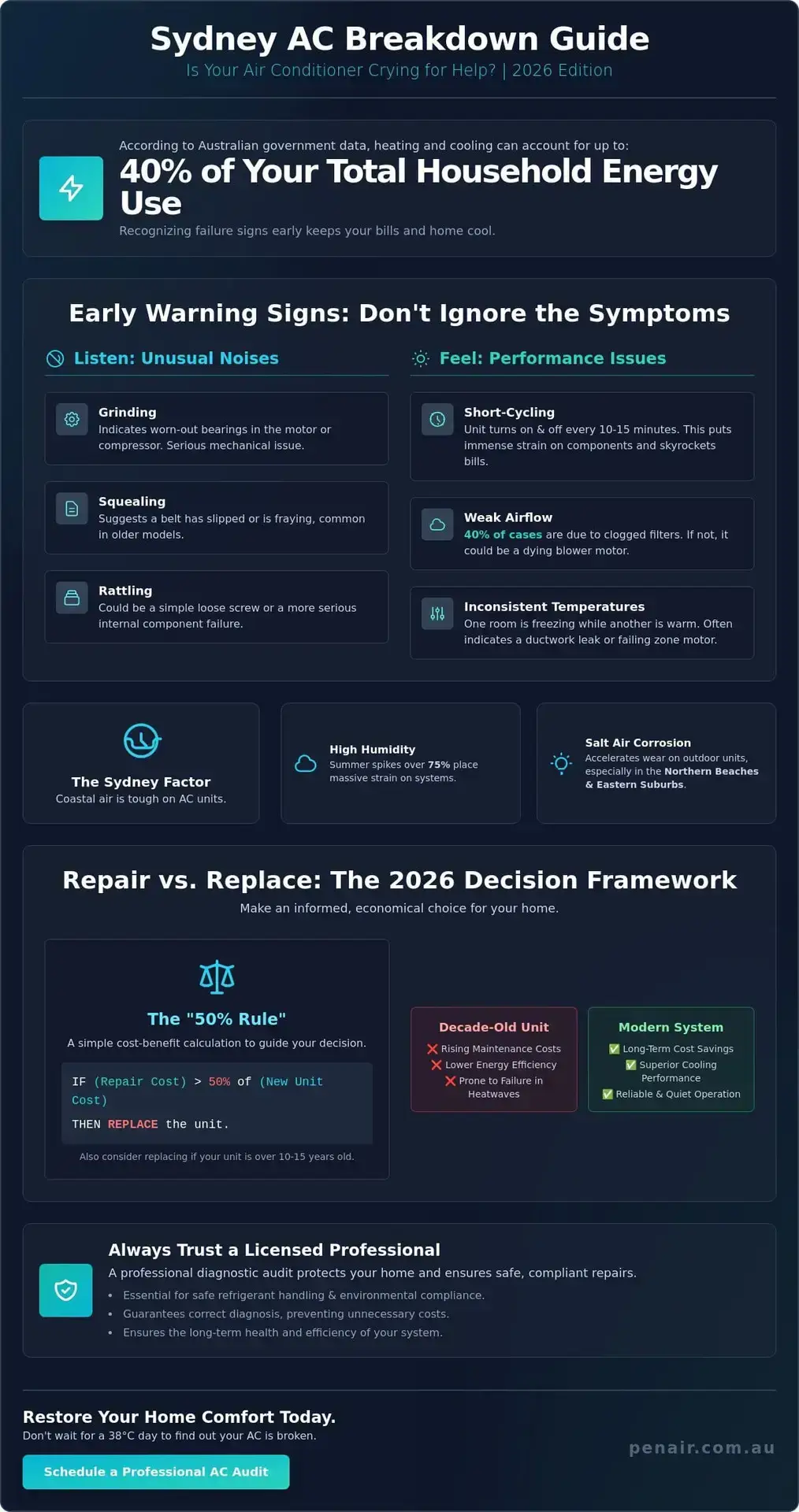
Living in Sydney means enjoying the Pacific breeze, but that same air carries a hidden cost for your home comfort. If you reside in the Northern Beaches or Eastern Suburbs, your outdoor condenser unit faces a relentless salt-laden environment. This salt air causes aluminium heat exchanger fins to deteriorate up to 3 times faster than systems located further inland in suburbs like Penrith. When salt crystals settle on these delicate components, they trigger a chemical reaction called galvanic corrosion. This process turns the metal brittle and reduces its ability to transfer heat, which eventually forces you to repair air conditioning unit components that would normally last 15 years.
Our team sees the impact of the “Sydney Factor” every day. Proximity to the shoreline dictates your maintenance schedule more than any other variable. For homes within 2km of the ocean, the typical lifespan of a standard outdoor unit can drop from 12 years to just 6 or 7 without proper intervention. We recommend specific protective measures to shield your investment from the harsh coastal climate. Our comprehensive guide to air conditioning repairs in Sydney covers the latest refrigerant regulations and coastal-specific maintenance strategies that every homeowner should know.
Homeowners living within 5km of the coast should regularly inspect their outdoor unit for “white rust.” This appears as a chalky, powdery substance on the aluminium fins. It is the precursor to pitting, where the metal actually begins to dissolve. To combat this, we often install units with specialized coastal coatings, such as “Gold Fin” or “Blue Fin” technology. These epoxy layers provide a barrier against salt and moisture. If your unit lacks this coating, a simple maintenance habit can save you thousands. We suggest a gentle fresh-water rinse of the outdoor coil every 30 days to wash away salt deposits before they can bond to the metal.
Sydney’s high humidity, especially when the dew point climbs above 18°C in February, puts immense pressure on your system’s drainage. When moisture doesn’t exit the house efficiently, it creates a damp environment where algae and mold thrive. This biological sludge is the leading cause of blocked drain lines. If water backs up, it often overflows onto the internal electronics. These Signs of an AC Leak are frequently the first indicator that a major PCB (circuit board) failure is imminent.
In many cases, a professional deep clean is the first step we take to repair air conditioning unit issues related to poor airflow. We use specialized antimicrobial treatments to clear the internal coils and drainage trays. This doesn’t just fix the immediate leak; it improves your indoor air quality and ensures the system isn’t working overtime to compensate for a “suffocating” indoor unit. Keeping your system clean is the most effective way to avoid the A$400 to A$900 cost of replacing a fried circuit board due to water damage.
Deciding whether to repair air conditioning unit components or invest in a new system is a common dilemma for Sydney homeowners. We use the “50% Rule” as a primary benchmark for our customers. If the quote to fix your current system exceeds 50% of the cost of a brand-new installation, replacement is almost always the smarter financial move. Most systems enter the “red zone” between 12 and 15 years of age. By this point, internal components like compressors and fan motors have undergone significant wear from Sydney’s humid summers. Finding replacement parts for discontinued brands from the early 2010s has become increasingly difficult and expensive in 2026, often leading to long wait times during heatwaves. For urgent situations where your system fails completely, our emergency air conditioning repair Sydney resource guide covers current A$ benchmarks and what to expect from a same-day service call.
Efficiency gaps have widened significantly over the last decade. A 10-year-old unit typically operates at roughly 60% of the efficiency found in 2026 Daikin models. This gap translates to hundreds of Australian dollars in wasted electricity every year. When your system reaches the 12-year mark, even a successful repair doesn’t fix the high running costs you’ll face every month.
When you choose to repair air conditioning unit parts for the third or fourth time in two years, you’ve fallen into the “Band-Aid” trap. These minor costs add up quickly, often equaling a significant down payment on a modern system. Choosing a new split system air conditioning unit delivers a high ROI by combining lower monthly energy bills with a fresh 5-year manufacturer warranty for total peace of mind.
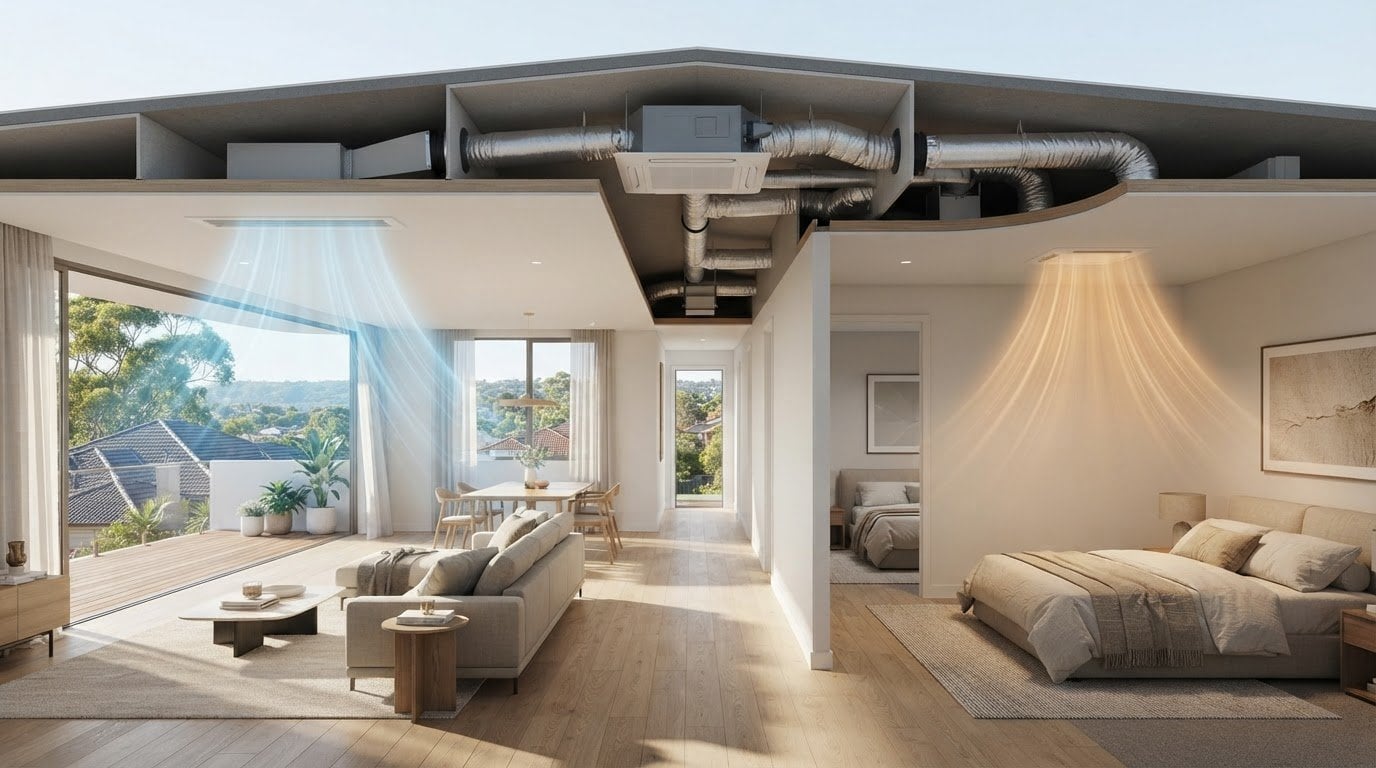
Modern ducted air conditioning systems now offer sophisticated smart home integration and precision zone control. This allows you to cool the living area without wasting energy on empty bedrooms. For Sydney families dealing with seasonal allergies, 2026 systems include Flash Streamer technology and HEPA filtration to remove 99.9% of dust and allergens. In high-density Sydney suburbs, the quiet operation modes of modern units are essential. New outdoor condensers now operate at noise levels as low as 45 decibels, which is about the same as a quiet library, ensuring you stay cool without disturbing the neighbors.
Unsure if your system has one more summer left in it? Ask our friendly team for a professional system health check and get an honest recommendation you can trust.
Our status as a Daikin Specialist Dealer provides a distinct advantage for Sydney homeowners. This partnership ensures we have priority access to genuine spare parts and the latest technical bulletins directly from the manufacturer. While generalist contractors might struggle to source specific components during the peak of summer, our streamlined supply chain means we can often complete repairs in a fraction of the time. We combine this technical edge with a commitment to quality service you can trust, ensuring your system runs at peak efficiency long after we leave your property.
PenAir is a family-owned and operated business, which shapes how we treat every customer. We prioritize honest pricing and long-term community relationships over quick, high-pressure sales. Our team understands the specific challenges of the Sydney environment, including how the local electrical grid handles peak loads during 40-degree days. This local knowledge allows us to diagnose electrical faults that others might miss. To help you stay ahead of potential issues, we offer tailored maintenance plans. These proactive checks are designed to identify wear and tear early, effectively preventing the need for an emergency repair air conditioning unit call during the most humid months of the year.
Ready to restore your home’s comfort? When you call to book a service, please have your unit’s model number and a list of symptoms ready, such as unusual noises or weak airflow. This information allows our technicians to arrive prepared with the most likely parts required for your specific system. During extreme Sydney heatwaves, we prioritize emergency repairs for households with vulnerable residents. Contact PenAir today to schedule a professional system health check or a rapid repair. We are here to ensure your family stays cool and comfortable regardless of the temperature outside.
Sydney’s coastal environment means salt-air corrosion can degrade external condensers up to 20% faster than in inland regions. Whether you’re identifying early diagnostic signs or using the 2026 decision framework to evaluate a ten-year-old system, proactive maintenance is vital. Choosing to repair air conditioning unit components early often prevents the need for a total system overhaul and keeps your seasonal energy bills manageable.
At PenAir, we’ve served the community as a family-owned and operated business since 1999. Our team consists of fully licensed and insured technicians who prioritize your peace of mind over a quick sale. As an Authorized Daikin Specialist Dealer, we combine technical authority with the warmth of a local specialist who truly cares about your family’s comfort. We’re here to provide the honest, expert guidance you need to make the right choice for your home’s climate control.
Book an Expert AC Repair in Sydney with PenAir
We look forward to helping you get your system back to peak performance and ensuring your home stays cool all year round.
Repairing an air conditioning unit in Sydney typically costs between A$250 and A$800 for common mechanical issues. Most local technicians charge a call-out fee ranging from A$120 to A$200, which covers the initial diagnostic work. Your final price depends on whether you need simple electrical components or more expensive parts like a replacement fan motor or compressor. We always provide a clear, upfront quote after our initial inspection so you can make an informed decision.
It is usually not cost-effective to repair a unit older than 10 years if the repair bill exceeds 50% of the cost of a new system. Older units often use R22 refrigerant, which was phased out in Australia by 2020, making gas refills and related repairs significantly more expensive. Modern systems from brands like Daikin or Brivis are up to 30% more energy efficient. Upgrading often saves you more on Sydney electricity bills than keeping an aging unit running.
A standard visit to repair air conditioning unit components usually takes between 1 and 3 hours to complete. Simple tasks like replacing a capacitor or clearing a blocked condensate drain are often finished in under 60 minutes. If your system requires specialized parts that aren’t stocked on our service vans, we might need to schedule a follow-up visit. Our team prioritizes efficiency to ensure your home returns to a comfortable temperature as quickly as possible.
You shouldn’t attempt to repair your own air conditioner because Australian law requires a licensed ARC technician to handle refrigerants and internal electrical wiring. Attempting a DIY repair can void your manufacturer’s warranty and poses a significant safety risk to your family. You can safely maintain your unit by cleaning the filters every 3 months. For anything involving the internal mechanics or the 240V power supply, it’s best to call our professional team to ensure the job is done safely.
Sydney homeowners frequently deal with sensor malfunctions and refrigerant leaks caused by the vibration of the unit over time. Dust and debris from local construction often clog outdoor condenser coils, which forces the system to work harder and eventually fail. In coastal areas, salt air corrosion is a major issue that degrades the outdoor unit’s fins faster than in inland suburbs. We see these specific local issues daily and have the expertise to fix them permanently.
Standard home insurance policies generally don’t cover repairs caused by general wear and tear or a lack of maintenance. However, you might be covered if a power surge or a severe Sydney storm physically damages your outdoor unit. Many policies include “fusion cover,” which specifically protects you against motor burnout in household appliances. We recommend checking your Product Disclosure Statement for these specific terms, and we can provide the technical reports your insurer will require for a claim.
You likely need a simple service if your unit hasn’t been inspected in 12 months or if you notice a slight decrease in airflow. A major repair is necessary if the system makes grinding noises, emits a burning smell, or leaks water inside your home. If the unit won’t turn on at all or keeps tripping your safety switch, it indicates a serious electrical fault. Our technicians can quickly diagnose the issue to determine if a basic tune-up will solve the problem.
Your air conditioner blows warm air when the compressor fails to start or the refrigerant levels have dropped due to a leak. Sometimes the outdoor unit is simply too dirty to disperse heat, which is common during a 35 degree Sydney summer day. It could also be a simple thermostat calibration error or a blown fuse in the outdoor isolator switch. We’ll check the gas pressures and electrical signals to find the exact cause and restore your cool air immediately.