Imagine waking up on a 35-degree January morning in Sydney only to find a steady drip-drip-drip onto your polished hardwood floors. It’s a moment of instant dread that many homeowners face during the peak of summer. You know that a water leaking from aircon unit is more than just a minor annoyance; it’s a direct threat to your home’s interior and your family’s comfort. We understand how stressful it is to worry about damp carpets and the uncertainty of repair costs when you just want to stay cool.
At Peninsula Air Conditioning (PenAir), our family-owned team believes you deserve peace of mind and a dry home. This diagnostic guide is designed to help you take control of the situation before a small drip becomes a big problem. You’ll discover exactly why your air conditioner is leaking and follow our step-by-step guide to protect your Sydney home from water damage. We’ll walk you through the most common culprits, show you how to identify the cause, and help you determine if a professional repair is required to get your system back in top shape.
Finding water leaking from aircon unit components inside your home is a stressful moment for any Sydney homeowner. Our family-owned team knows that quick action saves you from expensive floor repairs and ceiling damage. Before you call for a professional service, follow these five steps to protect your property and help us diagnose the issue faster.
It’s vital to distinguish between a functional byproduct and a system failure. Seeing water drip from the outdoor condenser unit is usually 100% normal. This happens because of the condensation process that occurs when your system pulls moisture from the air. To better understand the mechanics of this process, you can read about how air conditioning works via the vapor-compression cycle. However, water leaking from aircon unit vents inside your home or pooling on the carpet is a red flag. If the moisture is coming from the ceiling space rather than the unit’s plastic casing, you likely have a primary drain blockage or a rusted safety tray in your ducted system.
Water and electricity are a dangerous combination that requires immediate caution. Locate your AC isolation switch, which is typically a dedicated circuit breaker labeled “AC” or “Aircon” in your Sydney switchboard. Don’t touch any internal wiring or try to open the unit’s cover while it’s wet. A leak becomes a fire hazard if you notice a burning plastic smell, see sparks, or hear a persistent sizzling sound. If any of these signs occur, keep everyone away from the unit until a licensed professional arrives. We prioritize these emergency calls to ensure your family stays safe and your home comfort is restored quickly. If your system has completely broken down during a heatwave, our guide to emergency air conditioning repair in Sydney covers current A$ repair benchmarks and how to find a trusted repair air conditioner near me service fast.
Finding a puddle under your indoor unit is a frustrating experience, especially during a humid Sydney summer. At Pen Air, we believe that understanding the “why” behind a fault is the first step to a stress-free home. While a water leaking from aircon unit might seem like a disaster, it is usually tied to one of five specific issues that our team handles daily across the region.
Your air conditioner acts as a powerful dehumidifier for your home by pulling moisture out of the air as it cools. This liquid collects on the evaporator coils and travels through a specialized pipe system that often includes an ‘S-trap’ to prevent outdoor smells or pests from entering your ducting. The condensate process is the transformation of airborne water vapor into liquid droplets that requires a completely clear, unobstructed path to the outdoors to prevent internal damage. If you’re concerned about your system’s drainage, our family-owned team can perform a quick system health check to ensure everything is flowing as it should.
Low refrigerant levels are more than just a cooling problem; they are a leading cause of a water leaking from aircon unit. When the refrigerant gas is low, the pressure in the system drops, causing the coils to freeze over instantly. This leads to the ‘Thaw Effect,’ where a system that seemed fine while running suddenly floods your floor once it’s turned off. Beyond the water, look for signs like a faint hissing sound or a 15% to 20% increase in your monthly energy bill, as these often point to a gas leak that needs professional attention. If you want to understand the full scope of air conditioning repairs in Sydney, including how to diagnose common faults and navigate the latest refrigerant regulations, our 2026 homeowner’s guide to HVAC reliability covers everything you need to know. If you’re weighing up whether to repair air conditioning unit components or consider a full replacement, our Sydney homeowner’s FAQ guide can help you make the most cost-effective decision.

Living in Sydney means dealing with a unique set of environmental challenges that directly impact your HVAC system. While general wear and tear is common, our local climate often accelerates issues like a water leaking from aircon unit. In coastal areas like the Northern Beaches or Cronulla, salt air corrosion is a major factor. Our team frequently sees drain pans in coastal homes rust through 30% faster than those in inland suburbs. This corrosion creates pinhole leaks that allow water to bypass the drainage system entirely. According to ActronAir, understanding the common causes of aircon leaks is the first step in preventing property damage.
Sydney’s seasonal dust storms, particularly the heavy events experienced in 2019, also play a significant role. Fine red dust settles into the indoor cooling coils and mixes with condensation to create a thick, glue-like sludge. This buildup is a primary culprit for blockages in the narrow 20mm PVC drain lines used in most homes. Local wildlife adds another layer of complexity. Small geckos and spiders often seek shelter in the dark, moist environment of a condensate line; their presence creates physical obstructions that force water back into your home.
When Sydney’s humidity climbs above 80%, your air conditioner shifts from simply cooling the air to acting as a heavy-duty dehumidifier. This creates a massive volume of runoff that can overwhelm older or poorly maintained systems. To manage high-humidity days safely, we recommend using the ‘Dry Mode’ setting, which focuses on moisture removal without overworking the compressor. It is also vital to ensure your unit is professionally sized for your specific room. An undersized unit will run constantly, causing the evaporator coil to freeze and eventually result in a water leaking from aircon unit once the ice thaws.
The type of dwelling you live in often dictates the specific drainage failure you might experience. We see distinct patterns across different Sydney property types:
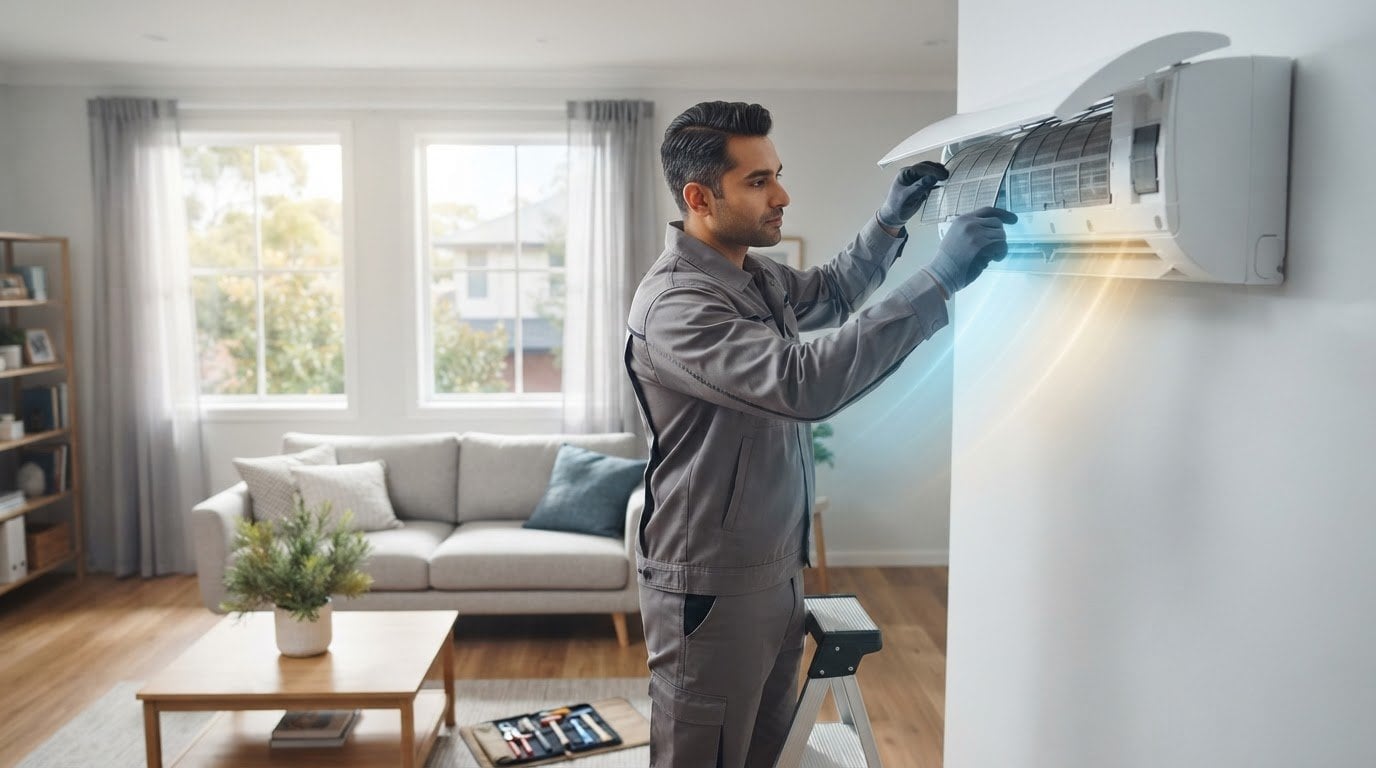
Finding water leaking from aircon unit is a common frustration for Sydney homeowners, but it doesn’t always signal a total system failure. Before you book a service call, there are several safe checks you can perform to identify the culprit. Start by inspecting your indoor unit for any visible dust buildup. If your filters are clogged, the airflow drops, causing the evaporator coil to drop below freezing. When that ice melts, it creates more water than the drain pan can handle.
Next, step outside and locate the PVC drainage pipe. In our local area, mud-wasps often build nests inside these small openings during the warmer months. If you see a blockage at the tip of the pipe, gently clear it with a stiff wire. For minor internal clogs, some residents find success using a wet/dry vacuum. By placing the vacuum hose over the end of the outdoor drain line for 30 seconds, you can often pull out the “sludge” or algae that prevents water from flowing freely.
It’s also vital to check the physical position of your wall-mounted unit. A split system should be level or have a very slight 1 to 2-degree tilt toward the side where the drain pipe exits. If your house has settled or the bracket has shifted, the water will pool and overflow the internal tray. After performing these checks, turn the system off at the isolator switch for 10 minutes to reset the electronics and see if the leak persists.
Cleaning your filters is the most effective way to prevent water leaking from aircon unit. Follow these steps to ensure it’s done correctly:
In Sydney, we recommend cleaning these filters every 3 months. If you live near busy roads or have pets, monthly cleaning during summer is a better standard to maintain high air quality.
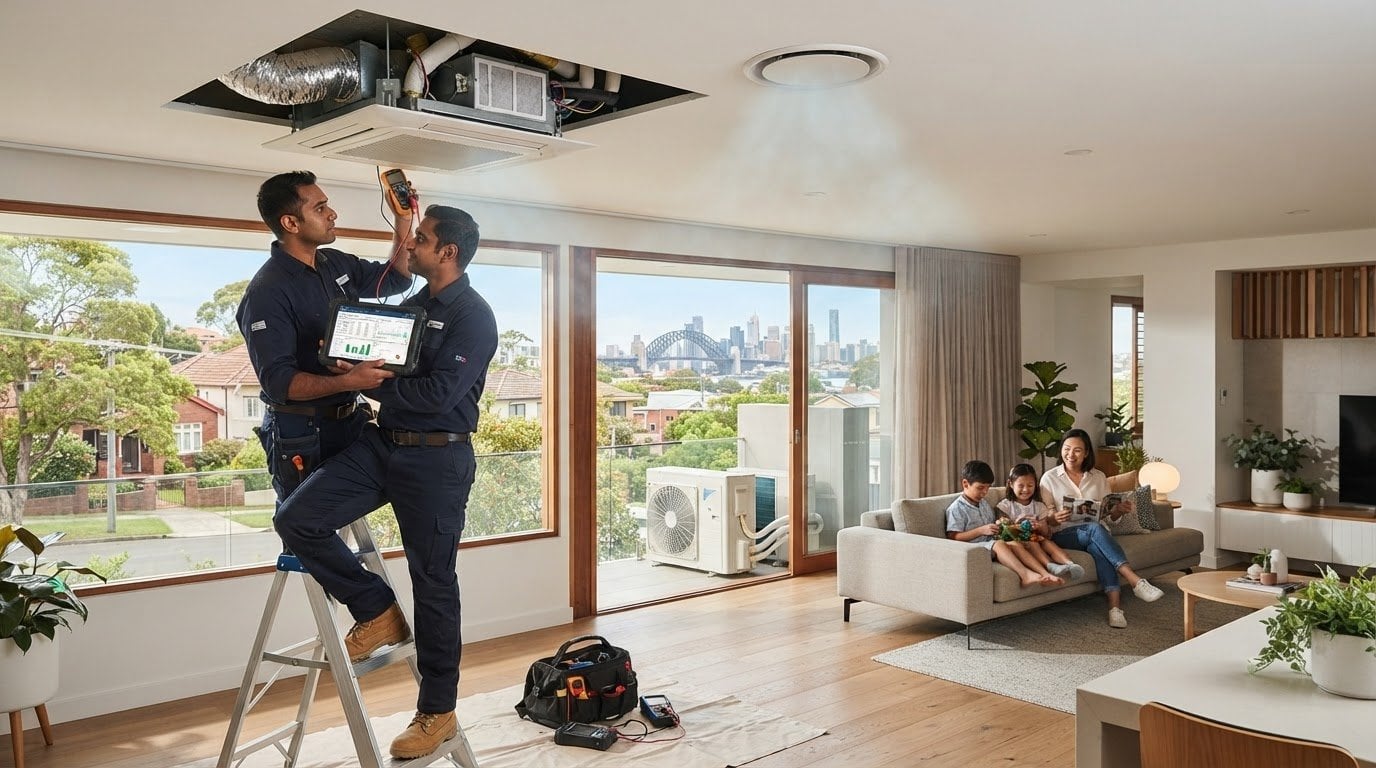
While basic maintenance is helpful, certain issues require our professional touch to protect your investment. If you notice water dripping near electrical components or if the leak continues after cleaning the filters, it’s time to stop. Attempting to dismantle the internal chassis can void your 5-year manufacturer warranty. Our team often identifies mechanical failures, such as a cracked drain pan or a faulty condensate pump, that are invisible to the untrained eye.
Systems like Daikin are highly sophisticated and require specific diagnostic tools to read error codes and pressure levels accurately. As a family-owned business, we pride ourselves on providing honest advice. We won’t suggest a complex repair if a simple adjustment will do. If your system is still dripping, contact our expert team today for a reliable, local solution. For urgent breakdowns where you need to find a repair air conditioner near me in Sydney quickly and at a fair price, our 2026 emergency repair resource guide outlines what to expect and how to avoid inflated call-out fees.
Dealing with a water leaking from aircon unit is a frustration you don’t need when the Sydney humidity peaks in January. At PenAir, we believe the best repair is the one you never have to make. Our team recommends a proactive approach, focusing on annual preventative maintenance before the summer heat arrives. A comprehensive service from our technicians goes beyond a simple filter rinse. We perform deep cleaning of the evaporator coils and thorough flushing of the condensate drain lines. This process removes the sludge, dust, and algae that typically cause blockages and subsequent overflows. By clearing these lines professionally, we ensure your system handles Sydney’s high moisture levels without a hitch.
Routine care does more than just keep your floors dry. It significantly extends the life of your unit by preventing internal rust and corrosion on sensitive components. When coils are clean and lines are clear, your system doesn’t have to work as hard to cool your home. This improved efficiency can lower Sydney electricity bills by up to 20% compared to neglected units. Maintaining a professional service history is also a requirement for manufacturer warranty compliance. We provide the detailed records you need to ensure your Daikin or other high-end system remains covered under its factory guarantee. This documentation protects your home’s value and your long-term investment.
We’ve served the Northern Beaches and North Shore communities for over 25 years. As a family-owned and operated business, we understand the specific needs of Sydney properties, from salt-air exposure on the coast to the intense humidity of the leafy North Shore. Our status as a Daikin Specialist Dealer gives us a distinct advantage. We have specialized training in Daikin’s advanced moisture management technology, allowing us to diagnose why a water leaking from aircon unit is occurring faster than general contractors. We don’t use high-pressure sales tactics; we provide honest, consultative advice to keep your family comfortable. To learn more about how we approach all types of air conditioning repairs in Sydney and what sets a reliable HVAC technician apart, our 2026 homeowner’s guide to HVAC reliability is an essential resource.
Dealing with a water leaking from aircon unit doesn’t have to be a source of stress. Most leaks stem from common issues like clogged condensate lines or the intense humidity we face during a Sydney summer. By following our emergency checklist and performing basic DIY maintenance, you can often prevent minor drips from becoming major repairs. However, when the water doesn’t stop, it’s vital to call in experts who understand the local climate and specific system requirements.
PenAir has served Sydney families since 1999, providing the reliable service you expect from a local, family-owned business. As a Daikin Authorized Specialist Dealer, we bring technical precision to every job. Our fully licensed and insured local technicians focus on long-term solutions rather than quick fixes, ensuring your system runs efficiently year-round. We take pride in our craftsmanship and our commitment to keeping your family comfortable.
If your air conditioner is causing trouble, we’re ready to help with honest advice and professional repairs. Request a Fast Aircon Repair Quote in Sydney today and get your home back to its best. We look forward to looking after you.
Water leaking from aircon unit systems can be dangerous if the liquid comes into contact with electrical components or leads to mold growth. If moisture reaches the internal circuit board, it creates a high risk of short circuits or electrical fires. Additionally, damp environments allow mold spores to colonize within 48 hours, which can trigger respiratory issues for your family. Our team recommends turning off the power at the isolation switch immediately to ensure your home remains safe.
You should not run your air conditioner while it is leaking because the excess moisture can cause permanent damage to your fan motor and home interior. Operating a leaking unit often results in saturated plasterboard, with internal wall repairs in Sydney often costing upwards of A$500. Continuous use might also lead to an electrical failure within the system itself. It is much safer to keep the unit off until one of our friendly technicians can identify the source of the drip.
The average cost for a professional aircon repair call-out in Sydney ranges from A$80 to A$160 per hour based on 2024 industry benchmarks. This initial fee generally covers the expert diagnosis and minor adjustments to the system. If your water leaking from aircon unit requires a specialized part for a brand like Daikin or Brivis, the total price will vary based on the component needed. We always provide a clear, upfront quote so you can make an informed decision without any pressure.
Water dripping from your outdoor unit is usually normal condensation that occurs when the system is working hard during a humid Sydney day. In heating mode, the outdoor coil becomes very cold and draws moisture from the air, which then collects in the base pan and drains away. However, if you notice a large pool of water or ice formation, it could indicate a refrigerant leak or a broken condensate pump. Our specialists can perform a quick pressure test to ensure your gas levels are correct.
You can attempt to clear a blocked drain by using a wet and dry vacuum to suction out debris from the external end of the PVC pipe. Simply hold the vacuum hose against the pipe outlet for 30 seconds to pull out any accumulated algae or sludge. If the blockage is deep inside the split system, DIY methods often fail to reach the source of the clog. We use professional high-pressure flushing tools to ensure the entire drainage line is 100% clear and functional.
Ignoring a small leak typically leads to structural rot and a 40% reduction in your insulation’s effectiveness as it becomes waterlogged. Even a minor drip can ruin your paintwork and encourage the growth of black mold behind your wallpaper or within the wall cavity. Over time, the constant moisture causes the metal casing of your air conditioner to rust, which can shorten the lifespan of your unit by 5 years or more. Addressing a small leak today prevents a much larger bill in the future.
Most Australian home insurance policies cover water damage if the leak was sudden and accidental, but they often exclude damage caused by a lack of maintenance. If an assessor finds that the leak resulted from a drain that hasn’t been cleaned in 2 years, they may deny the claim under a “gradual damage” clause. We recommend checking your specific Product Disclosure Statement for maintenance requirements. Our team can provide the necessary service reports to help support your insurance documentation if a sudden failure occurs.
You should book a professional service every 12 months to keep your system running efficiently and prevent unexpected leaks. During these annual visits, our technicians clean the condensate tray and flush the drain lines to remove the dust and bacterial slime that cause 90% of blockages. This proactive care ensures your unit remains under warranty and operates at peak performance during the peak of summer. Regular maintenance is the most reliable way to protect your home comfort and avoid emergency repair costs.